



By Emmanuella Opara | October 21st 2026
KEY POINTS
- Nigeria has been appointed to lead the development of a regional marine and blue economy policy for nine Gulf of Guinea countries.
- The Federal Ministry of Marine and Blue Economy has prepared two draft documents to guide policy development and implementation.
- The proposed framework aims to strengthen maritime security, promote sustainable ocean governance and attract investment.
MAIN STORY
Nigeria has been appointed to lead the development of a regional marine and blue economy policy for nine Gulf of Guinea countries, in a move aimed at strengthening maritime security, improving ocean governance and expanding regional economic cooperation.
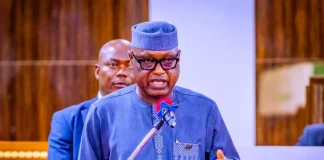
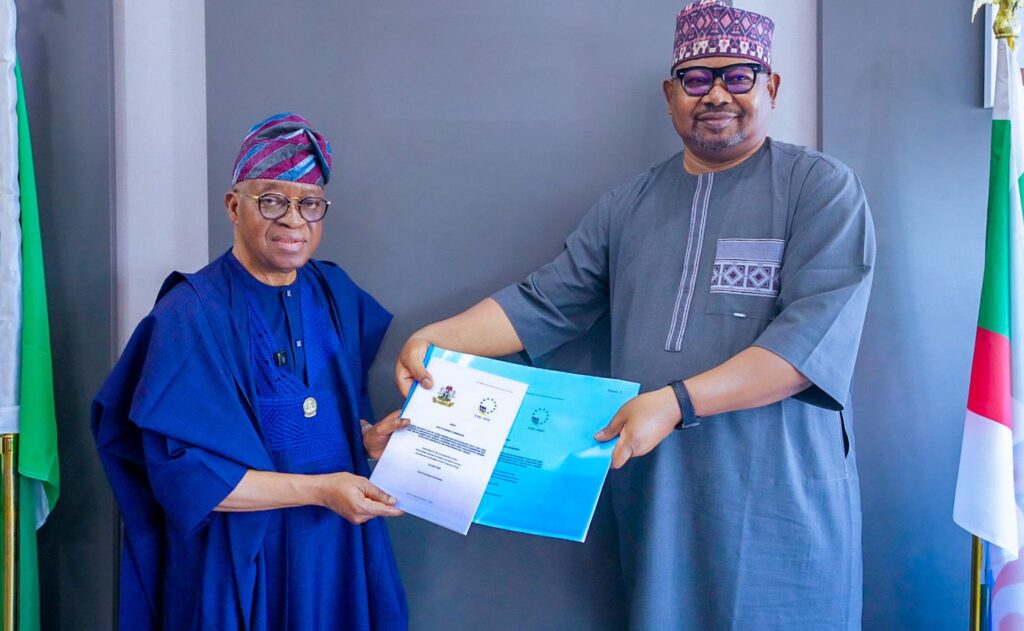
The Executive Secretary of the Gulf of Guinea Commission (GGC), José Abeso, announced the decision during a meeting with the Minister of Marine and Blue Economy, Adegboyega Oyetola, in Abuja.
Abeso, who was represented by the commission’s Deputy Executive Secretary, Obinna Agbugba, said Nigeria’s experience in developing its first National Policy on Marine and Blue Economy provided a foundation for the regional initiative.
The nine countries covered by the proposed policy are Angola, Cameroon, Congo, the Democratic Republic of the Congo, Equatorial Guinea, Gabon, Ghana, Nigeria, and São Tomé and Príncipe.
Abeso commended Oyetola for his role in developing Nigeria’s national policy and expressed confidence in his capacity to coordinate the regional process.
In response, Oyetola said the commission had formally requested his leadership in a letter dated May 7, prompting the establishment of a multi-stakeholder committee within the ministry to develop the necessary policy documents.
He said the committee, comprising technical departments and the ministry’s Department of Planning, Research and Statistics, had produced two draft documents to guide the initiative.
The documents are the draft Strategic Plan for the Development and Operationalisation of a Gulf of Guinea Commission Policy on Marine and Blue Economy for 2026 to 2030, and a draft Policy Framework and Strategy Template.
The proposed framework outlines policy priorities, objectives, implementation measures, performance indicators, timelines, responsible agencies and funding considerations.
Oyetola said the drafts drew on the 2025 Yaoundé Declaration and the work of the United Nations Task Force supporting the commission’s 2026 Work Plan. He added that the documents had been prepared in line with the commission’s objectives and requests.
The minister proposed establishing a steering committee to oversee policy development, coordinate consultations and ensure the participation of relevant institutions across the region. He also recommended that the Federal Ministry of Marine and Blue Economy serve as the committee’s secretariat.
He stressed the need for inclusive consultations involving member states and other stakeholders, alongside clear deadlines and defined responsibilities for reviewing the draft documents and establishing the steering committee.
According to Oyetola, the regional policy could improve cooperation on shared maritime challenges, encourage investment and strengthen efforts to combat illegal, unreported and unregulated fishing.
THE ISSUES
The Gulf of Guinea’s shared marine resources present opportunities for economic growth through fisheries, maritime transport, tourism and other ocean-related activities. However, illegal fishing, maritime insecurity and gaps in regional coordination can undermine these opportunities.
A common policy could help member states coordinate their responses to maritime challenges, establish shared priorities and improve the sustainable management of marine resources. Its effectiveness will depend on the participation of member states, clear institutional responsibilities and the resources available to implement the agreed measures.
WHAT’S BEING SAID
“Nigeria’s initiative has provided an important foundation for the commission’s ambition to establish a regional policy on marine and blue economy,” José Abeso, Executive Secretary of the Gulf of Guinea Commission, said.
“Nigeria remains fully committed to the ideals of regional cooperation, sustainable ocean governance and the shared prosperity of the Gulf of Guinea,” Adegboyega Oyetola, Minister of Marine and Blue Economy, said.
WHAT’S NEXT
The proposed next steps include establishing a steering committee, reviewing the draft policy documents and consulting relevant institutions and stakeholders across the nine member states. The process is expected to define regional priorities, responsibilities and implementation arrangements for the 2026 to 2030 period.
BOTTOM LINE
Nigeria’s appointment to lead the Gulf of Guinea’s regional blue economy policy process places it at the centre of efforts to coordinate maritime governance, protect shared ocean resources and expand sustainable economic opportunities across the region.