










KEY POINTS
- Delegates from 36 African countries examined Nigeria’s Renewed Hope housing model at a public-private partnership forum in Ethiopia.
- The programme aims to deliver 100,000 housing units through private-sector construction supported by government risk-reduction measures.
- Concessionary financing, mortgage support and guaranteed prospective buyers are central to the model, which the ICRC says has reduced effective project costs by about 30 per cent.
MAIN STORY
African countries have expressed interest in adapting Nigeria’s Renewed Hope housing public-private partnership (PPP) model to expand affordable housing delivery, following its presentation at a continental infrastructure forum in Addis Ababa, Ethiopia.
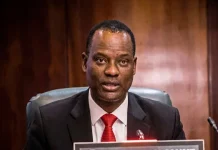
Director-General of the Infrastructure Concession Regulatory Commission (ICRC), Dr Jobson Ewalefoh, presented the model at the Second Forum for Public-Private Partnership Units in Africa, which brought together delegations from 36 countries.
According to a statement issued by the ICRC’s Acting Head of Media and Publicity, Ifeanyi Nwoko, the two-day forum was held at the Africa Hall of the United Nations Economic Commission for Africa (UNECA). It was co-organised by UNECA, the African Development Bank and the African Legal Support Facility under the theme, “Making Social Sector PPPs Work: From Policy Ambition to Effective Service Delivery”.
The discussions covered the use of PPPs to deliver affordable housing, healthcare, education, sanitation and water infrastructure, with participants examining how to make projects financially sustainable while keeping services accessible to intended beneficiaries.
Nigeria was among five countries, alongside Malawi, Kenya, Djibouti and Côte d’Ivoire, that presented projects during the forum’s project clinics.
Ewalefoh said Nigeria’s Renewed Hope Cities programme was designed to deliver 100,000 housing units across selected cities through a joint venture concession arrangement with private-sector partners.
Under the structure, the private partner provides the land, designs the housing units, finances the development and undertakes construction. The Federal Government’s role is to reduce project risks and facilitate financing and demand rather than directly fund construction.
“The beauty of this PPP structure is that it is not the conventional PPP. In this case, the private party owns the land, has the design, is financing it and is doing the construction,” Ewalefoh said.
He identified high borrowing costs as a major constraint on housing delivery, noting that commercial lending rates in Nigeria had exceeded 23 per cent, making it difficult for developers and prospective homeowners to finance projects at prevailing market rates.
To address the financing challenge, the government introduced measures intended to reduce risks for private investors and improve affordability for buyers. These include identifying middle-income federal civil servants as prospective off-takers, committing to access roads for semi-urban project locations and facilitating about $19 million in single-digit-interest funding through the Federal Mortgage Bank of Nigeria.
An additional $20 million in concessionary loans was made available through the Family Homes Fund, according to Ewalefoh. Prospective homeowners are also expected to benefit from reduced mortgage rates through the approximately $112 million MOFI Real Estate Investment Fund.
The government also negotiated sale prices with the developer and restricted purchases to one housing unit per buyer to discourage speculative buying. Ewalefoh said the combined measures had reduced the effective cost of the project by about 30 per cent.
He said approximately $39 million in concessionary funding was helping to unlock a project with a construction cost of about $125 million in private-sector investment.
“The government does not need to finance housing capital projects. It can crowd in private capital through policy, land availability and off-taker facilitation to create a replicable, scalable model for housing delivery,” he said.
The ICRC said the model attracted considerable interest during the forum’s question-and-answer session, with delegates asking how its risk-reduction mechanisms could be adapted to their national housing markets.
Participants focused particularly on the use of identified prospective buyers and concessionary financing to attract private investment while keeping house prices within reach of intended beneficiaries. The discussions also allowed Nigeria and other participating countries to exchange lessons on risk allocation, project structuring and implementation challenges.
THE ISSUES
The Nigerian model attempts to address a central challenge in affordable housing: private developers need a viable financial return, while many prospective buyers cannot afford homes financed at prevailing commercial lending rates.
Instead of paying the full construction bill, the government supports project viability by helping reduce financing risks, improving access to infrastructure, facilitating mortgage funding and identifying prospective buyers.
For Nigeria, the key question is whether these arrangements can deliver homes at prices and repayment levels that match the incomes of the intended beneficiaries. The stated reduction in effective project costs is significant, but the available information does not establish how many units have been completed, sold or occupied, or how affordable the final mortgages are to different income groups.
Other countries seeking to replicate the model would also need to account for differences in land ownership, mortgage markets, public financing capacity and the ability of prospective buyers to repay loans.
WHAT’S BEING SAID
“The beauty of this PPP structure is that it is not the conventional PPP. In this case, the private party owns the land, has the design, is financing it and is doing the construction.” – Dr Jobson Ewalefoh, Director-General, ICRC
“The PPP here is that government agreed to de-risk the project.” – Dr Jobson Ewalefoh, Director-General, ICRC
“The government does not need to finance housing capital projects. It can crowd in private capital through policy, land availability and off-taker facilitation to create a replicable, scalable model for housing delivery.” – Dr Jobson Ewalefoh, Director-General, ICRC
WHAT’S NEXT
The immediate test for Nigeria is the programme’s delivery record, including the number of homes completed, the financing terms available to buyers and the extent to which the promised cost reductions translate into lower purchase prices and mortgage repayments.
For African countries considering the approach, the forum’s discussions provide a starting point for assessing how government-backed risk reduction and concessionary finance could be incorporated into their own housing programmes.
BOTTOM LINE
Interest from other African countries puts Nigeria’s housing PPP structure on the continental policy agenda. Its wider relevance will depend on whether the model can consistently attract private investment while delivering completed homes that intended beneficiaries can afford.
Source: NAN




 ...)