









KEY POINTS
- The European Bank for Reconstruction and Development (EBRD) is providing financing to Beacon Power Services to expand smart metering and digital energy solutions in Nigeria.
- The investment is expected to help electricity distribution companies improve billing accuracy, revenue collection and grid visibility.
- BPS has also committed to measures aimed at increasing women’s representation in technical and leadership roles.
MAIN STORY
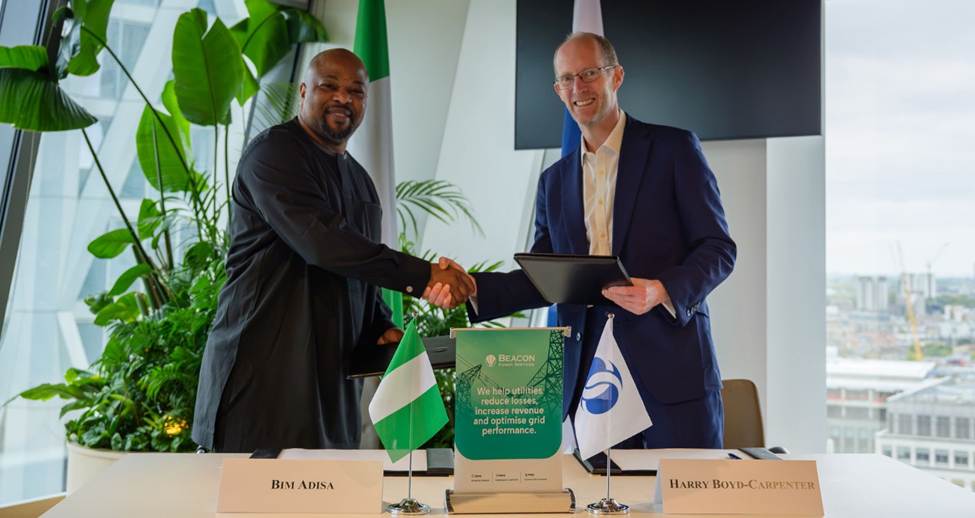
The European Bank for Reconstruction and Development (EBRD) is providing a financing package to African energy technology company Beacon Power Services (BPS) to support the deployment of smart metering and digital grid management solutions in Nigeria.
The investment will support BPS’s work with electricity distribution companies (DisCos), enabling them to deploy smart meters, grid management software and meter data management systems.
These technologies are expected to help distribution companies improve billing accuracy, strengthen revenue collection and gain better visibility into electricity distribution networks.
For electricity consumers, the solutions could also improve access to information about their power consumption and bills through digital platforms.
BPS specialises in software, analytics, smart metering and other digital technologies designed to help electricity utilities improve operational performance, reduce losses and strengthen service delivery across Africa.
The EBRD said the investment would support Nigeria’s wider power sector modernisation by demonstrating how digital technologies can improve electricity distribution and operational efficiency.
Wider adoption of smart metering and grid digitalisation could help address weaknesses in billing and revenue collection, which affect the financial sustainability of distribution companies. Improved network visibility could also help utilities monitor electricity flows and identify operational problems more effectively.
Beyond its technology investments, BPS has committed to the United Nations’ Women’s Empowerment Principles. The company will introduce measures aimed at increasing opportunities for women in technical and leadership positions.
Nigeria became a member of the EBRD and a country of operation in 2025. The bank has invested approximately €175 million across seven projects in the country and committed $100 million in trade finance facilities.
THE ISSUES
Nigeria’s electricity distribution companies face persistent challenges in accurately measuring consumption, billing customers and collecting payments. Smart metering and digital grid management can help address some of these problems by improving the quality of consumption data and giving utilities greater visibility into their networks.
For DisCos, more accurate metering could reduce billing disputes and help align charges more closely with recorded electricity consumption. Better revenue collection could also improve their capacity to meet financial obligations and invest in service improvements.
However, technology alone will not resolve the sector’s challenges. The benefits will depend on effective deployment, reliable data, integration with existing systems and the ability of distribution companies to use the information to improve operations.
For consumers, improved digital access to consumption and billing information could make electricity charges easier to monitor. The actual impact will depend on how the systems are implemented and whether the resulting operational improvements translate into better service.
WHAT’S NEXT
The next stage will involve deploying the supported technologies through BPS’s work with Nigerian distribution companies. The scale of implementation and the extent to which the systems improve metering, billing and revenue collection will determine the investment’s practical impact.
BPS’s planned measures under the Women’s Empowerment Principles will also be relevant to assessing the company’s progress in expanding opportunities for women in technical and leadership roles.
BOTTOM LINE
The EBRD’s financing is aimed at strengthening the digital infrastructure used by Nigeria’s electricity distribution companies. If successfully deployed, the solutions could improve metering, billing and revenue collection, although their impact will depend on implementation and how effectively DisCos use the technology.




 is providing a financing package to African energy ...)