KEY POINTS
• Young Nigerians in agriculture identified access to youth friendly finance, reliable markets and post harvest infrastructure as major barriers to expanding their businesses.
• Participants called for shared processing and aggregation facilities to reduce the cost of meeting required standards.
• Speakers urged financial institutions and development partners to develop patient financing, agricultural insurance and better data systems for young agripreneurs.
MAIN STORY
Nigerian youths in the food and agriculture sector have called for improved access to finance, markets and post harvest infrastructure, saying the gaps are limiting their ability to build profitable businesses across the food value chain.
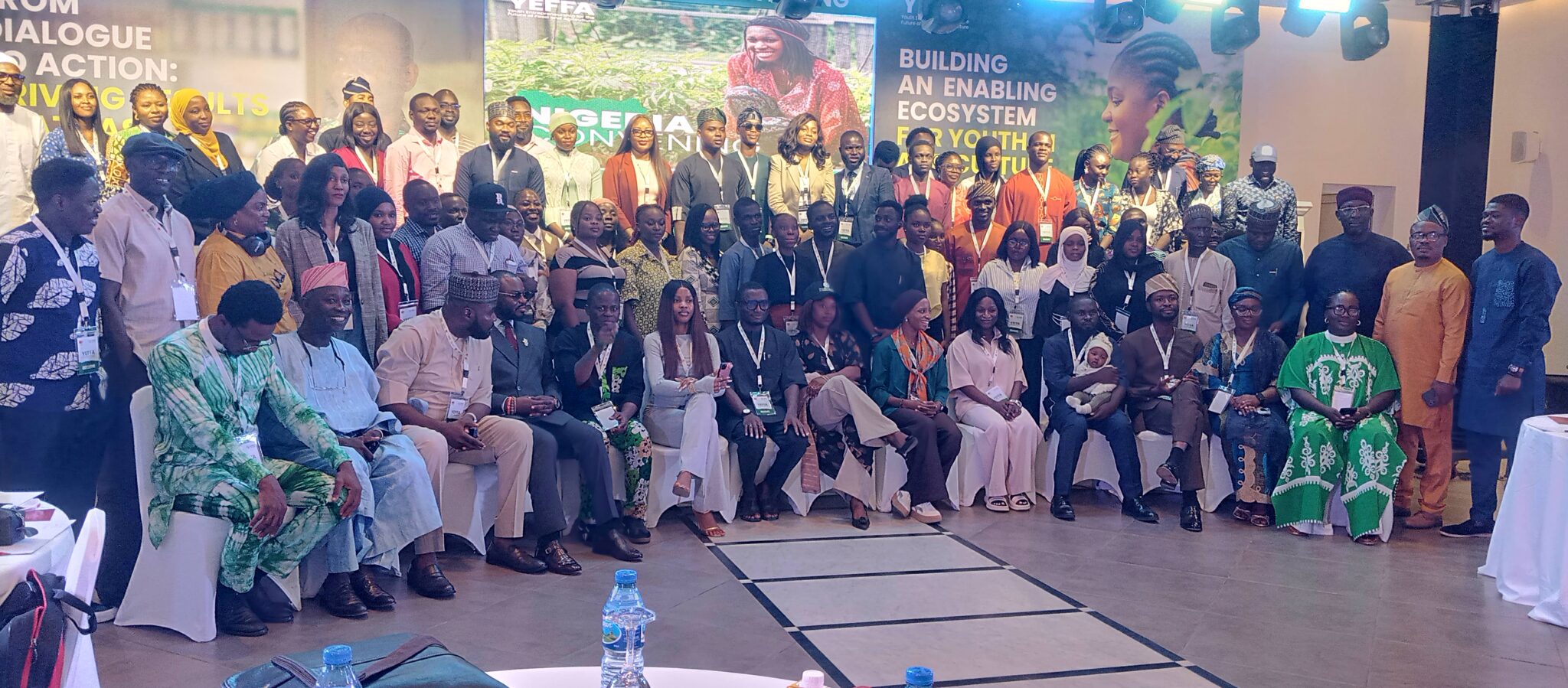
They made the call on Wednesday at the Youth Entrepreneurship for the Future of Food and Agriculture (YEFFA) Nigeria Youth Convening on Youth and Food Systems Transformation in Abuja.
The event, hosted by the Alliance for a Green Revolution in Africa (AGRA) in partnership with the Mastercard Foundation, was held under the theme, “From Dialogue to Action.”
A report by the News Agency of Nigeria (NAN) said the YEFFA programme is a six year partnership between AGRA and the Mastercard Foundation running from 2023 to 2029.
The programme is targeting 10 million young people and aims to support 1.5 million into dignified work, with young women expected to account for at least half of the beneficiaries.
Dr Rufus Idris, Country Director, AGRA Nigeria, said the traditional expectation that young people would become leaders in the future needed to give way to opportunities for them to participate meaningfully in the economy now.
Idris said Nigerian farmers were generally between 50 and 60 years old, while more than 70 per cent of the country’s population was below 30, making youth participation important to the future of food production and agribusiness.
He said opportunities for young people should extend beyond farming into businesses driven by data, technology, innovation and access to wider markets.
Dr Ayodele Olaleye, Programme Lead, Market Systems Development, Mastercard Foundation, said youth programmes should involve young people in their design and implementation rather than being developed without their input.
Olaleye said young participants should also use such platforms to raise issues affecting youths across different parts of the country, including those in rural and urban communities.
The discussions subsequently focused on three major constraints identified by participants: access to youth friendly finance, reliable routes to market and inadequate post harvest infrastructure.
Baliqees Salaudeen, an agripreneur and Regional Coordinator, African Youth Initiative on Climate Change (AYICC), said the lack of suitable processing facilities was particularly difficult for young people seeking to move from primary production into value addition.
She called for shared processing centres and aggregation hubs that meet required standards, arguing that individual young businesses would struggle to afford the equipment needed to process agricultural products to certified standards.
Mr Tobi Olanrewaju, Founder and Agribusiness Leader, said young agripreneurs were also dealing with unpredictable prices, limited access to financing designed around their needs and inadequate support within the wider agricultural ecosystem.
He said farmers who produce at scale without storage or processing capacity could become vulnerable to prices determined by aggregators.
Olanrewaju also called for patient financing and agricultural insurance tailored to young businesses, saying such measures could help protect their investments.
Ifeoluwa Tryphena, Founder, Slate Systems Lab Ltd., identified fragmented agricultural data as another challenge for the sector.
She said the absence of sufficiently integrated farm, market and financial data made it harder for banks, insurers and policymakers to assess risks and make informed decisions.
Tryphena therefore called for better integration of data across the food value chain to help financial institutions and other stakeholders assess and manage risks associated with agricultural businesses.
THE ISSUES
- Access to suitable finance remains central to the concerns raised by the young agripreneurs. The participants were not only seeking more funding but financing designed around the realities of young businesses, including longer timeframes and protection against agricultural risks.
- Market access becomes more difficult when producers lack storage and processing capacity. Without the ability to preserve or add value to their output, young farmers can have less control over when and how their produce is sold.
- Processing infrastructure is also a barrier to moving beyond primary production. Shared facilities that meet required standards could allow smaller businesses to access equipment and processing capacity without each enterprise bearing the full cost.
- Better agricultural data could improve how financial institutions, insurers and policymakers assess the sector. Fragmented information about farms, markets and finances can make it harder to understand risks and determine where support is needed.
WHAT’S BEING SAID
“Africa’s food economy will soon be worth one trillion dollars. The question is how much of that market our young people will command. – Dr Rufus Idris, Country Director, AGRA Nigeria
“As we say, you cannot shave a man’s head in his absence. Programmes for young people must be designed with them and led by them at every stage.” – Dr Ayodele Olaleye, Programme Lead, Market Systems Development, Mastercard Foundation
“Farmers carry the cost of seed, labour and risk. They deserve to be profitable.” – Baliqees Salaudeen, Agripreneur and Regional Coordinator, AYICC
WHAT’S NEXT
The young participants called for greater access to youth friendly finance, reliable market channels, shared processing infrastructure, agricultural insurance and better integrated data to support youth participation across Nigeria’s food system.
BOTTOM LINE
Young agripreneurs say financing, market access and inadequate post harvest infrastructure are limiting their ability to build profitable businesses in Nigeria’s food economy. They want support systems designed around the realities of young enterprises rather than approaches built without their participation.
NAN