






KEY POINTS
• The Federal Government says it has no immediate plan to increase electricity tariffs.
• Power Minister Joseph Tegbe says the government is prioritising grid stability, market discipline and stronger sector governance.

• The ministry reports higher generation and transmission, restored generation capacity and progress in metering, equipment deployment and debt settlement.
MAIN STORY
The Federal Government has ruled out an immediate increase in electricity tariffs as it focuses on stabilising Nigeria’s power sector and addressing weaknesses across the electricity value chain.
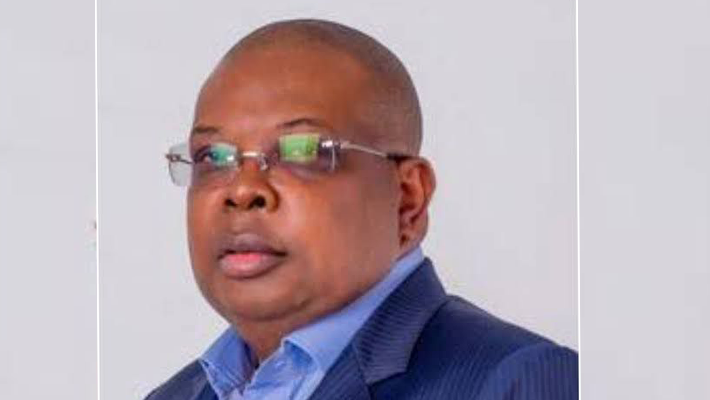
The Minister of Power, Mr Joseph Tegbe, gave the assurance on Monday in Abuja while briefing Power Correspondents on his first 100 days in office.
Tegbe, who assumed office on June 8, said the administration’s immediate priority was to improve the performance of the sector rather than place additional financial pressure on consumers.
He said the first 100 days were spent assessing the sector and implementing measures aimed at addressing constraints affecting gas supply, generation, transmission and distribution.
According to the minister, the initial assessment found that gas supplies to power stations were constrained by damaged pipelines and commercial conditions that discouraged investment.
He also identified ageing thermal generation plants, deferred maintenance, stalled projects and inadequate capacity to deliver available generation to consumers as major challenges.
Payment weaknesses across the value chain were another concern. Tegbe said generation companies received only 27 per cent of their billed payments, limiting their ability to maintain plants and meet obligations to gas suppliers.
The transmission network, he said, was also affected by vandalised towers and lines, overstretched equipment and frequent system trips.
At the distribution level, the minister put aggregate technical, commercial and collection losses at between 30 per cent and 40 per cent. He also cited inadequate metering, estimated billing, damaged infrastructure and weak payment discipline as continuing problems.
Despite the challenges, Tegbe listed several developments recorded since his assumption of office.
The Alaoji open cycle power plant, with a capacity of 375 MW, was restored after remaining offline for three years. Upgrades at substations in Apapa, Ijora, Alausa and Lekki were also said to have unlocked 672 MW, while a new 300 MVA transformer at Katampe in Abuja unlocked another 240 MW.
Tegbe said generation and transmission had exceeded 5,000 MW in recent weeks, compared with between 3,700 MW and 4,700 MW before June. He put the peak at 5,330 MW in August and September.
The minister also disclosed that more than 300 containers containing TCN equipment had been released from the ports. He said solar and mini grid installations across 30 states had delivered 43.6 MW and created 41,735 new connections.
On metering, Tegbe said 350,000 meters were installed within the 100 day period, bringing the cumulative number to 1,004,260 as of August. He added that 90,000 meters had been installed in military formations.
The government has also raised an estimated N1.23 trillion towards settling the N3.3 trillion legacy debt owed to generation companies, according to the minister.
THE ISSUES
- The decision not to pursue an immediate tariff increase places the focus on improving sector performance and addressing existing weaknesses before consumers face additional electricity costs.
- The payment gap remains a major pressure point because generation companies need revenue to maintain plants and meet gas supply obligations. Tegbe’s 27 per cent payment figure highlights the financial strain within the electricity market.
- Generation capacity alone does not guarantee improved electricity supply. Transmission constraints, distribution losses and damaged infrastructure can prevent available power from reaching consumers.
- Metering remains important to the sector’s payment system. The installation of 350,000 meters in 100 days is part of the government’s effort to reduce reliance on estimated billing and improve collection.
WHAT’S BEING SAID
“Upon assuming office, the diagnosis we undertook at the onset revealed constraints at every segment of the electricity value chain.” – Joseph Tegbe
“Our commitments remain clear: a disciplined approach, grid stability through strategic reform, visible improvements in electricity supply, and honest communication.” – Joseph Tegbe
WHAT’S NEXT
Tegbe said the government would use the next six months to deepen grid stabilisation along the Lagos, Enugu Port Harcourt and Abuja Kaduna Kano corridors.
The ministry also plans to develop a transmission super grid, connect electricity supply to productive clusters through bilateral arrangements and prepare infrastructure for future demand, including the proposed Mambilla hydro project.
The minister appealed to Nigerians to support the reforms and help protect electricity infrastructure from vandalism and theft.
BOTTOM LINE
The Federal Government says electricity tariff increases are not an immediate priority as it concentrates on stabilising the power sector. Its next phase will focus on grid reliability, transmission expansion, infrastructure protection and improved electricity supply.