






KEY POINTS
- North Central leaders want the region to shift from raw material exports to local processing and manufacturing.
- They proposed agro processing factories, cold chain logistics and specialised industrial parks across key states.
- Leaders urged stronger coordination between state governments, federal ministries and the North Central Development Commission.
- They identified insecurity, weak regional coordination and limited industrial capacity as barriers to economic transformation.
MAIN STORY
Leaders from Nigeria’s North Central zone have called for a coordinated industrial drive that would end the export of unprocessed agricultural and mineral resources from the region.
The call was made on Monday at a stakeholders’ development summit in Abuja, where participants considered a 20 year economic, infrastructure and social development plan for the region.
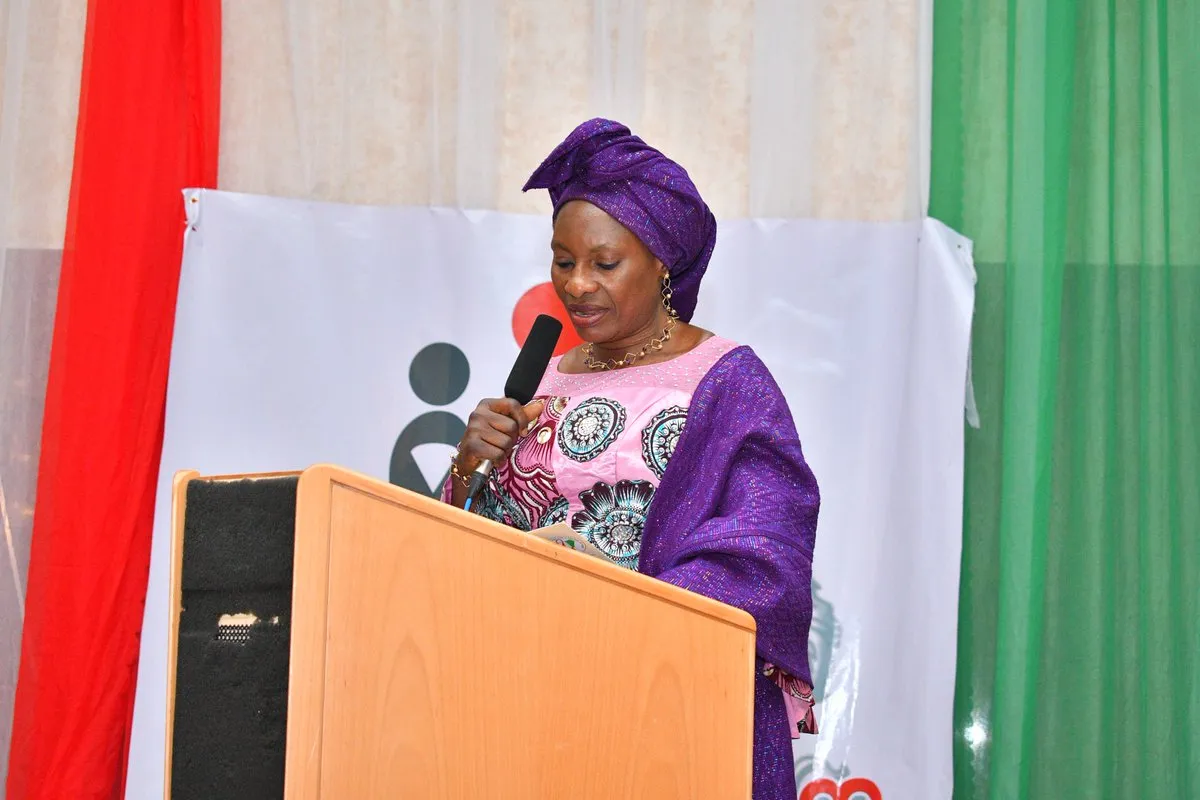
Former Minister of Women Affairs, Pauline Tallen, said the seven states in the zone and the Federal Capital Territory possess the natural resources needed to establish a strong manufacturing and mineral processing base.
The region comprises Benue, Kogi, Kwara, Nasarawa, Niger, Plateau and the FCT.
Tallen said the North Central’s location and resource base gave it an important role in Nigeria’s industrial development, but argued that political fragmentation had prevented the states from pursuing their economic interests collectively.
She called for closer cooperation among governors, federal ministers and the North Central Development Commission (NCDC), which she said should be used to accelerate the establishment of factories and supporting infrastructure.
According to her, the commission’s effectiveness would depend on cooperation from political leaders across the region rather than operating in isolation.
Tallen also warned against allowing development discussions to remain at the level of political declarations, arguing that the region’s mineral resources should be converted into economic value through local processing.
She specifically cited gold, diamonds and lithium among the resources available in the zone and called for women, young people and persons with disabilities to be included in industrial development programmes.
Former Minister of State for Foreign Affairs, Sen. Iyorwuese Hagher, who delivered the keynote address, similarly criticised the region’s dependence on the extraction and export of raw materials.
He said the North Central occupies an important position within Nigeria’s trade network but has not sufficiently converted its agricultural and mineral resources into finished products and industrial wealth.
Hagher said the situation was particularly evident in agriculture, where farmers produce food crops but much of the value is created elsewhere through processing, storage and distribution.
He therefore called for the construction of agro processing factories, cold chain facilities and specialised industrial parks in Benue, Nasarawa, Niger, Kogi and Kwara.
Hagher also linked insecurity in rural communities to the region’s industrial prospects, saying disruption of farming activities and abandonment of communities would weaken the supply chains needed to sustain factories.
He urged the NCDC to function as the economic coordinating centre for the region, with a focus on attracting industrial investment and connecting production across the states.
The former minister further challenged young people in the region to build businesses around processing and technology driven distribution, rather than allowing political activities to dominate their economic opportunities.
He also proposed that Abuja should serve as a major consumer market for goods processed or manufactured within the North Central industrial corridor.
THE ISSUES
- The region’s economic challenge is not simply the availability of raw materials but its limited capacity to convert those resources into higher value products. Without local processing, much of the potential employment, business activity and industrial revenue associated with those resources remains outside the region.
- Regional coordination remains important because industrial supply chains do not necessarily follow state boundaries. Agriculture, mining, transport, power, storage and manufacturing investments can depend on infrastructure and policies spread across several states.
- Insecurity threatens the supply of agricultural and mineral resources required by industries. Where farmers and rural businesses cannot operate consistently, factories may struggle to obtain reliable local supplies.
- The proposed industrial expansion would require substantial infrastructure, particularly processing facilities, storage systems, industrial parks and logistics networks. The ability to attract and sustain private capital will therefore be central to implementation.
- The industrial transition also raises the question of who benefits from new economic activity. Integrating women, young people and persons with disabilities into skills, employment and enterprise programmes would determine how broadly the gains are distributed.
WHAT’S BEING SAID
“What we only lack is the cohesion, the unity, the patriotism, the love to work together.” – Pauline Tallen, former Minister of Women Affairs
“We produce, others process; we harvest, others warehouse. A food basket can still really be a poverty basket, and that must end now.” – Iyorwuese Hagher, former Minister of State for Foreign Affairs
“Peace is infrastructure, and justice is development.” – Iyorwuese Hagher, former Minister of State for Foreign Affairs
WHAT’S NEXT
The summit’s proposed 20 year development plan is expected to provide a framework for coordinating industrial, infrastructure and social development across the North Central zone. The immediate challenge will be translating the calls for regional cooperation and local value addition into factory projects, infrastructure deployment and investment.
BOTTOM LINE
North Central leaders want the region to move beyond supplying Nigeria and other markets with raw resources by building the processing and manufacturing capacity needed to retain more economic value locally. The success of the proposed transformation will depend on coordinated leadership, infrastructure, security and investment.