




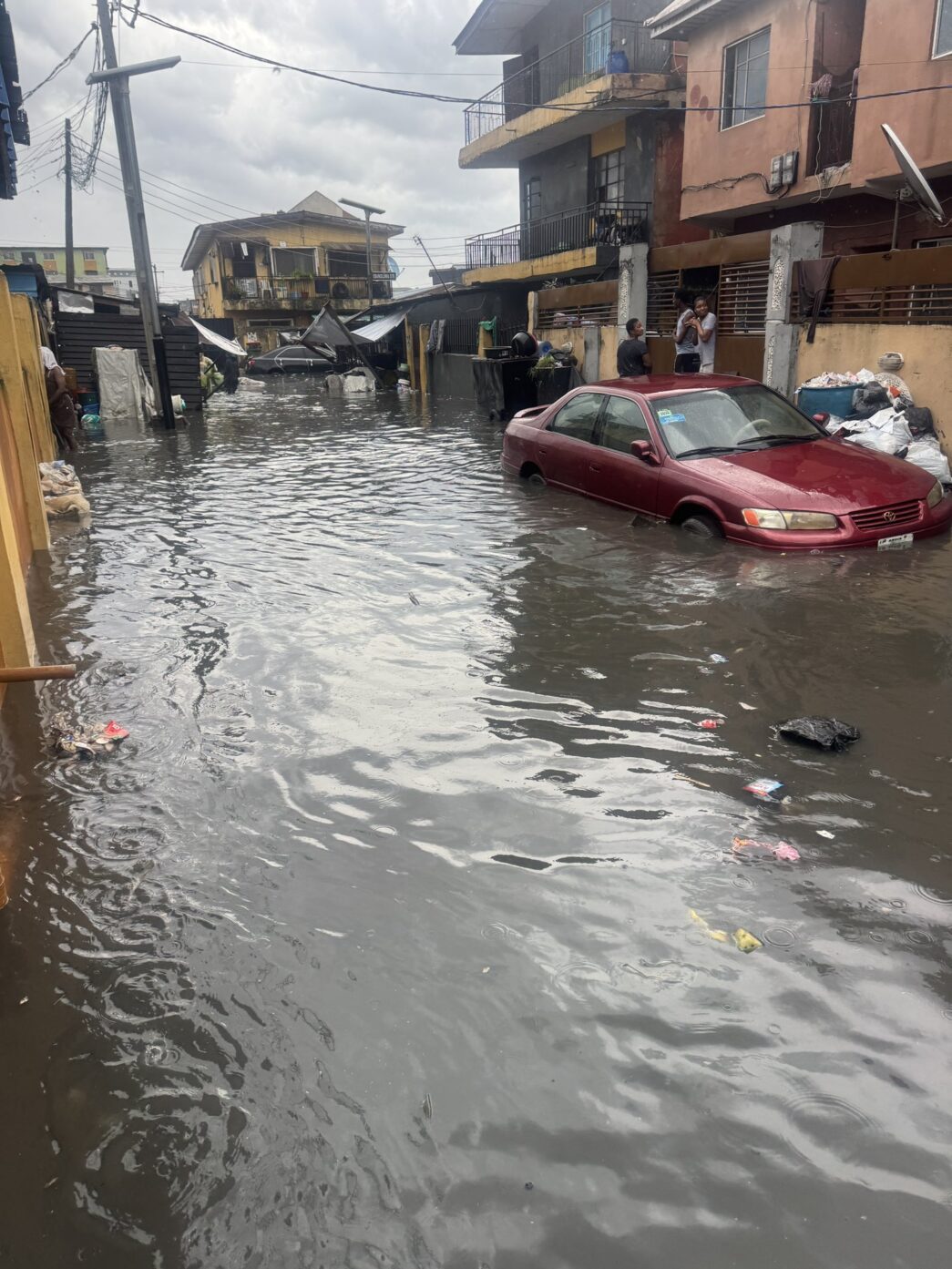
The rain that began falling over Lagos on Sunday has not stopped disrupting lives since. By yesterday, roads had turned into rivers, commuters were stranded for hours, and shopkeepers across the state were tallying losses they had not budgeted for. Behind the submerged streets sits a harder question: after more than N106 billion spent on drainage in little over a year, why does the water keep winning?
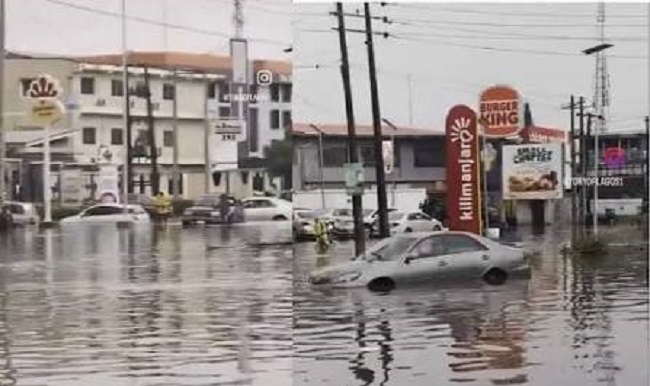
Since Sunday, heavy rainfall has submerged roads and homes, stranded motorists, and disrupted commercial activity across Lagos. Drainage channels meant to carry the water away were overwhelmed instead. The Nigerian Meteorological Agency (NiMet) says the pattern will continue, warning residents of Lagos and other coastal states to brace for flash floods, with light rain and thunderstorms expected in the morning and heavier rainfall moving in later in the day. Lagos, Ogun, Ondo, Rivers, Bayelsa, Delta, Cross River and Akwa Ibom face the highest risk. NiMet had earlier forecast that 2026 would bring above-normal rainfall, with Lagos among the states hit hardest because of its coastal, low-lying terrain.
The Health Warning Behind the Floodwater
For public health expert Dr Godswill Iboma, the standing water is more than an inconvenience, it’s a disease vector. He told The Guardian that contaminated floodwater and stagnant pools create ideal conditions for cholera, typhoid and diarrhoeal disease, while pooled water becomes a breeding ground for malaria-carrying mosquitoes.
He traced the flooding partly to indiscriminate waste disposal blocking drainage channels, and urged residents to boil questionable water, cover food, and use mosquito nets or repellents. He also warned that flooding can push reptiles and other animals out of their habitats and into residential areas.
Physician Babatunde, who posts on X as @enodamade, put it more bluntly: Lagos residents should avoid eating or drinking outside their homes for now, cook at home, and wash their hands regularly, given the volume of sewage and refuse now circulating in the floodwater.
Money Spent, Water Still Rising
An analysis of Lagos State’s Budget Implementation Reports for the fourth quarter of 2025 and the first quarter of 2026 shows the state committed roughly N106.59 billion to flood control and drainage infrastructure over that period. The single largest outlay, N48.63 billion, went to a statewide drainage construction and dredging project. Another N13.90 billion was funded for the rehabilitation of drainage infrastructure across local government areas, and N13.38 billion went to dredging and the construction of drainage elsewhere in the state. A further N24.69 billion cleared outstanfor the ding liabilities on drainage projects. Into 2026, an additional N6 billion has been spent so far against a N27.15 billion budget for the year, leaving N21.15 billion still unspent. Despite that spending, the recurrence of flooding has renewed questions about whether the money is translating into results.
The Economic Toll
The Centre for the Promotion of Private Enterprise estimates that flooding has disrupted transportation, manufacturing, construction, port operations and informal trade across the state. Its CEO, Muda Yusuf, put the Lagos economy at roughly N200 billion a day and projected daily losses of N50 billion to N100 billion during the flooding, before accounting for damage to property, agricultural produce, livestock, poultry and fish. He put the total potential economic loss at close to N500 billion. Separately, economist Vincent Nwani projected Nigeria could lose at least 15 percent of GDP by the end of the rainy season, citing shuttered shops and inundated warehouses.
Homes on the Line
For homeowners, the damage compounds over time. Repeated flooding can lower property values in flood-prone neighbourhoods, weaken foundations through prolonged dampness, encourage mould growth, and push up insurance costs where flood cover exists. Homeowners without insurance or savings may be forced to sell below market value or default on mortgage and construction loans. Developers holding unsold units in flood-prone areas may see falling demand as buyers grow cautious.
Environmentalist Moses Ogunleye, a former president of the Association of Town Planning Consultants of Nigeria, said known flood hotspots, including Lekki Peninsula, Gbagada and Victoria Island, had flooded before and could have been protected with proper drainage. Gbenga Ismail, a former chairman of the Nigerian Institution of Estate Surveyors and Valuers, predicted a gradual, if slow, migration of residents from flood-prone parts of Lekki toward mainland areas such as Surulere and Apapa, tempered by Lagos’s persistent housing shortage.
Government’s Response
Governor Babajide Sanwo-Olu has approved dredging of 28 additional primary drainage channels. Commissioner for the Environment and Water Resources, Tokunbo Wahab, said the rainfall was an extreme weather event that overwhelmed infrastructure in Victoria Island, Lekki, Ikeja, Gbagada, Mushin and Mafoluku, noting similar events hit other African countries and parts of North America the same day. He attributed part of the challenge to Lagos’s complex hydrology, the interaction of the Atlantic Ocean, Lagos Lagoon and tidal water bodies, which slows stormwater discharge during high tide.
Political Voices
ADC presidential candidate Atiku Abubakar offered condolences to affected families, commuters, motorists and business owners. NDC governorship candidate Funso Doherty went further, calling for compensation for affected residents and an independent probe into whether environmental failures tied to major infrastructure projects worsened the disaster. Citing Bureau of Public Procurement documents obtained by his legal team, Doherty said no Environmental Impact Assessment was made available when the N1.1 trillion Lagos Coastal Road contract — which included a N400 million EIA provision, was reviewed and awarded to Hi-Tech Construction. He also criticised an arrangement in which the contractor was responsible for procuring its own EIA, calling it a conflict of interest.
A Regional Pattern
The flooding is not confined to Nigeria. Torrential rain has killed at least 25 people across West Africa. In Accra, Ghana, at least 13 people died, according to the Ghana National Fire Service, which warned the toll could rise. Ghana’s government urged residents to move to higher ground as forecasters tracked another storm approaching from the east. In Abidjan, Côte d’Ivoire, at least 12 people were killed and five injured. Lomé, Togo, also saw widespread flooding, though no deaths were reported there.
Looking Ahead
At the federal level, the National Emergency Management Agency (NEMA) has partnered with PULA Advisors on a pilot flood-protection scheme for 100,000 riverine households in Anambra, Benue, Kebbi and Kogi states, four of the roughly 23 states NEMA’s 2026 Annual Flood Outlook lists as high-risk. NEMA Director-General Zubaida Umar Abubakar said the initiative reflects a shift toward anticipating risk and providing financial protection before disaster strikes, rather than responding after the fact. Anambra’s Commissioner for Agriculture, Benjamin Chucks, recalled that the 2022 floods affected over four million Nigerians and displaced 2.5 million, and said the new scheme would ease the financial burden on state governments.
For now, in Lagos, the rain keeps falling, the drains keep failing, and residents keep counting what they’ve lost, while NiMet says more is on the way.