





Key points
- The governors of Nasarawa, Imo, Abia, and Plateau states presented targeted regional investment opportunities at the Invest Lagos 3.0 Summit.
- Nasarawa State has attracted over $2.3 billion in capital investments, driven by large-scale lithium mining and mineral processing operations.
- Imo State has deployed dedicated infrastructure upgrades, achieving 24-hour electricity supply across key commercial corridors and free trade zones.
- Plateau State unveiled export-focused agricultural expansion frameworks centered on cold-chain infrastructure, animal husbandry, and vegetable processing.
- Governor Babajide Sanwo-Olu positioned Lagos as a strategic operational gateway connecting global financiers to Africa’s 1.4 billion-person market.
Main Story
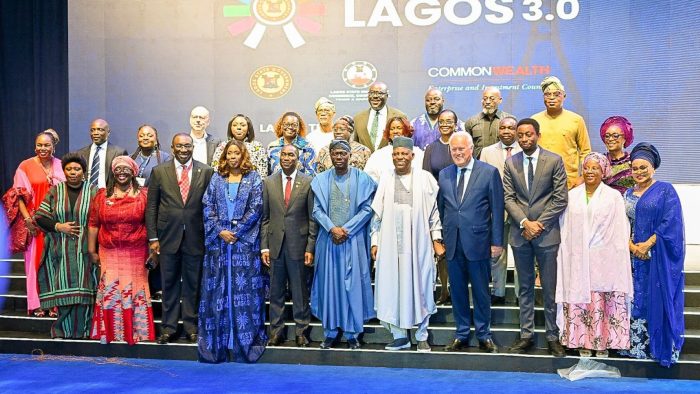
The executive governors of Abia, Imo, Nasarawa, and Plateau states have leveraged the platform of the Invest Lagos 3.0 Summit to showcase high-yield investment opportunities across their territories, seeking to capture domestic and foreign capital to accelerate regional economic growth.
Presenting during the two-day summit themed “Lagos Business Gateway to Africa,” the subnational leaders addressed an audience of international policymakers, development financiers, and corporate executives. Rather than treating the hosting commercial capital as a rival, the visiting administrators argued that states should actively complement Lagos’s established market access to drive national industrialization and economic resilience.
The specific investment pitches highlighted unique regional strengths across the solid mineral and industrial landscapes. Governor Abdullahi Sule of Nasarawa State disclosed that his administration has successfully drawn over $2.3 billion in active capital, largely powered by major lithium mining and industrial processing projects that position the state as a prime mining destination. Concurrently, Governor Hope Uzodinma of Imo State showcased deep structural improvements in logistics corridors and roads, noting that parts of the state now benefit from uninterrupted 24-hour electricity lines. This power stability is designed to feed an energy-focused free trade zone, expanding airport cargo capacity, and new industrial parks.
In the agricultural and manufacturing spheres, the states outlined concrete production frameworks aimed at both local and international consumers. Governor Alex Otti of Abia State re-emphasized that reliable, constant electricity is the foundational core required to build investor confidence and sustain manufacturing plants. Moving toward the North-Central belt, Governor Caleb Mutfwang of Plateau State pitched his territory’s dominance as a leading supplier of fresh potatoes and vegetables to the West African sub-region. To scale up this trade advantage, Plateau is seeking funding for dedicated agro-processing clusters, cold-chain transport networks, and structured livestock value chains targeting global export markets.
Hosting the delegation, Governor Babajide Sanwo-Olu stated that Lagos is continuously upgrading its urban logistics to function as the definitive launchpad for entering the African Continental Free Trade Area (AfCFTA) market. Sanwo-Olu pointed to multi-million-dollar state investments in transport networks, including the operational Blue and Red intra-city rail systems, alongside digital data centers and the upcoming Lagos International Financial Centre. By matching the massive financial framework of Lagos with the diverse natural resources, stable power corridors, and vast agricultural outputs of the inland states, administrators aim to build a interconnected investment pipeline across the federation.
The Issues
- Integrating the mineral and agricultural outputs of inland states with the advanced shipping and financial networks of Lagos.
- Scaling up expensive cold-chain logistics and processing zones to minimize post-harvest food losses across regional transport lines.
- Sustaining 24-hour industrial power grids across beneficiary states amid broader national grid supply fluctuations.
What’s Being Said
- Outlining Nasarawa’s business-friendly regulatory setup for solid minerals, Governor Abdullahi Sule described the state as a: “one-stop shop” for investors and called for deeper collaboration between federal and state governments to unlock economic opportunities.
- Inviting international agribusiness aggregators to leverage the unique weather and fertile land of the middle-belt, Governor Caleb Mutfwang declared: “Plateau is open for business.”
- Summarizing the structural transport and financing pathways being laid out to support continental trade, Lagos State Governor Babajide Sanwo-Olu stated: “If you want to reach Africa, Lagos offers the most viable route.”
What’s Next
- State investment promotion agencies will set up specialized desks to follow up on expressions of interest received from development finance institutions during the summit.
- Nasarawa mining regulators will oversee the deployment of fresh equipment across new lithium processing installation sites.
- Plateau State’s ministry of agriculture will finalize feasibility designs for its proposed cold-chain storage and export livestock corridors.
Bottom Line
The governors of Nasarawa, Imo, Abia, and Plateau states used the Invest Lagos 3.0 Summit to pitch major regional assets—spanning Nasarawa’s $2.3 billion lithium mining boom, Imo’s 24-hour powered trade zones, and Plateau’s agro-export initiatives—positioning their economies to complement Lagos as a unified gateway to the wider African continent.