







Key Points
- The Nigerian Navy and a U.S. Congressional Delegation (CODEL) have strengthened their partnership to enhance maritime security in the Gulf of Guinea.
- The Regional Maritime Awareness Capability (RMAC) was identified as a critical tool for real-time monitoring and coordinated responses to maritime threats.
- RMAC’s effectiveness contributed to Nigeria’s 2022 removal from the International Maritime Bureau (IMB) piracy list.
- The U.S. delegation reaffirmed its commitment to continued cooperation, focusing on capacity building and intelligence sharing.
- Discussions centered on combating sea robbery, crude oil theft, and other illegal maritime activities.
Main Story
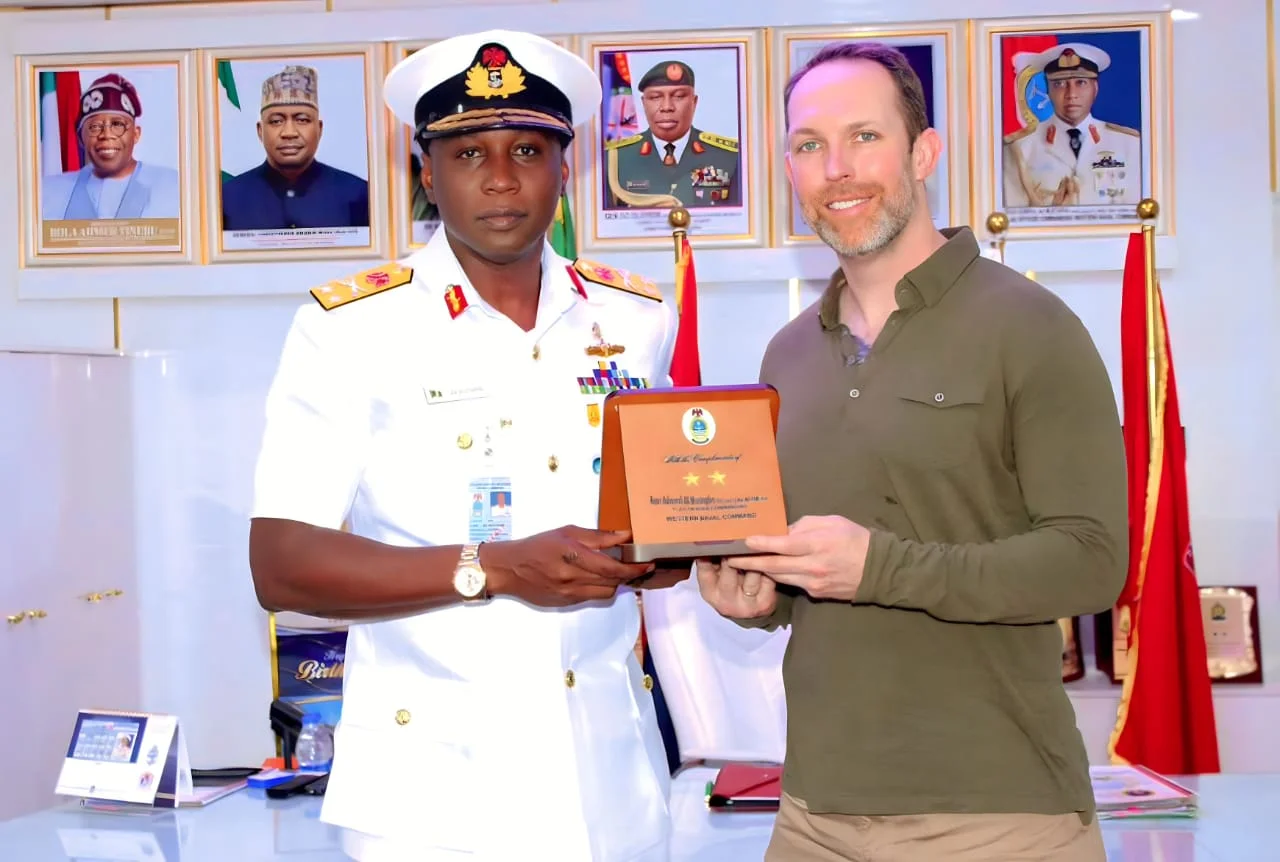
In a high-level meeting at the Western Naval Command Headquarters in Lagos, the Nigerian Navy and a U.S. Congressional Delegation have committed to deepening their maritime security collaboration.
Led by Adam Barker, the delegation met with Rear Adm. Abubakar Mustapha to discuss strategies for safeguarding the Gulf of Guinea.

Mustapha emphasized that international partnerships are vital for addressing evolving threats and providing the technical support necessary for regional stability.
A central focus of the engagement was the Regional Maritime Awareness Capability (RMAC), which allows for the real-time monitoring of Nigerian waters.
The system has been instrumental in the suppression of piracy, leading to a significant drop in illegal maritime activities and a improved global standing for Nigeria’s maritime domain.
The delegation received a comprehensive briefing at the RMAC complex, where U.S. officials commended the Navy’s proactive efforts in securing vital trade routes.
The Issues
- The Navy continues to battle “sea robbery, crude oil theft” and various unauthorized maritime actions.
- Maritime security challenges are constantly shifting, requiring “sustained collaboration” to address.
- Systems like the RMAC require ongoing “technical support” and investment to remain effective.
- Maintaining Nigeria’s status off the “IMB piracy list” depends on consistent enforcement and security results.
What’s Being Said
- The RMAC is a “critical tool for real-time monitoring, information sharing and coordinated responses.” — Rear Adm. Abubakar Mustapha
- Partnerships with the U.S. provide “opportunities for capacity building, technical support and intelligence sharing.” — Rear Adm. Abubakar Mustapha
- “The engagement provided an opportunity to deepen collaboration and address emerging threats.” — Adam Barker
- The U.S. remains committed to “continued cooperation” with the Nigerian Navy’s proactive efforts.
What’s Next
- The Nigerian Navy will likely seek further “technical support” to upgrade and maintain the RMAC system.
- Joint “intelligence sharing” efforts between Nigeria and the U.S. are expected to intensify in the Gulf of Guinea.
- Future operations will focus on ensuring Nigeria remains off the “International Maritime Bureau piracy list” through active suppression.
- Continued “capacity building” programs are anticipated to train personnel on advanced maritime monitoring technologies.
Bottom Line
Nigeria and the United States are scaling up their joint efforts to secure the Gulf of Guinea, utilizing advanced monitoring systems like the RMAC to maintain the suppression of piracy and protect regional trade.