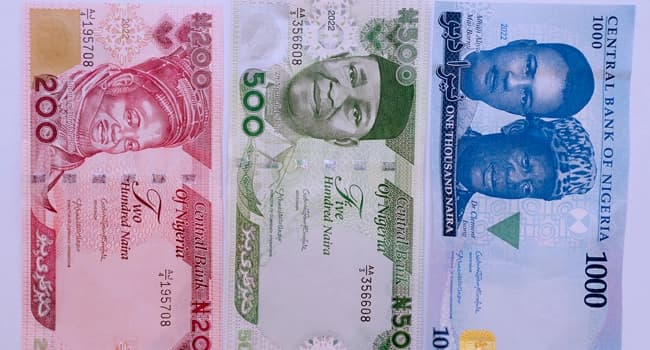
The naira extended its upward momentum against the US dollar at the official foreign exchange window on Wednesday, supported by improved liquidity conditions and fresh interventions by monetary authorities.
Data released by the Central Bank of Nigeria (CBN) showed the local currency appreciated by 0.15 percent at the official segment, closing at ₦1,348.95 per dollar. However, rates remained unchanged in the parallel market, where the naira traded at ₦1,426 per dollar.
The divergence between the official and informal segments highlights ongoing structural differences in demand-supply dynamics within Nigeria’s foreign exchange ecosystem.
Market activity followed the CBN’s approval of up to $150,000 in foreign exchange sales to licensed Bureau de Change (BDC) operators. The measure is aimed at enhancing retail FX supply and narrowing volatility pressures across segments.
Further strengthening sentiment was an uptick in Nigeria’s gross external reserves. The apex bank reported that reserves rose to $47.376 billion, reflecting a $351 million increase from the previous level of $47.025 billion.
The improvement in external buffers has been attributed to sustained foreign exchange inflows, including proceeds from hydrocarbon exports, diaspora remittances, and other capital sources.
In the global commodities market, crude oil prices remained firm, with ICE Brent trading just below $70 per barrel. The resilience in oil prices continues to provide support for Nigeria’s FX earnings outlook.
Oil’s strength comes amid renewed geopolitical concerns following inconclusive nuclear negotiations between the United States and Iran in Oman. Reports have also emerged that the US administration is considering measures targeting sanctioned tankers transporting Iranian crude.
Additionally, the US Department of Transportation has advised American commercial vessels to avoid Iranian waters, escalating concerns about potential disruptions in the region.
Currency traders are closely monitoring developments in both oil markets and external reserves, as these variables remain key determinants of near-term naira performance.