







…Launches $50m Fund to Empower Nigerian Women in Digital Trade
The Director-General of the World Trade Organisation (WTO), Dr Ngozi Okonjo-Iweala, has lauded President Bola Tinubu for stabilising Nigeria’s economy, describing his reforms as steps in the right direction.
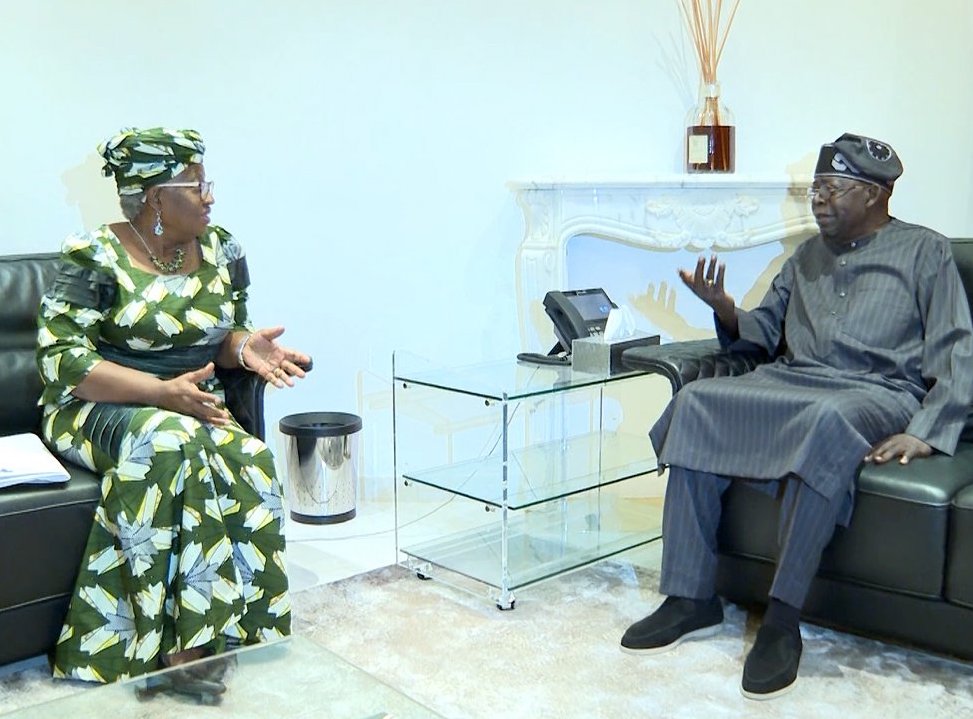
Speaking to journalists in Abuja on Thursday after a closed-door meeting with the President, the former Minister of Finance, who has held the position twice, said the administration had worked hard to restore stability, which she noted was critical for sustainable economic growth.
“We think the President and his team have worked hard to stabilise the economy, and you cannot improve an economy unless it’s stable. So he has to be given credit,” she said. “The reforms have been in the right direction. What is needed next is growth, coupled with social safety nets to cushion the hardship reforms have brought on citizens.”
Okonjo-Iweala urged the Federal Government to prioritise programmes that would protect the most vulnerable while creating jobs and increasing disposable income for Nigerians.
$50m Fund for Women Exporters
Earlier, in collaboration with First Lady Senator Oluremi Tinubu, the WTO chief launched the $50 million Women Exporters in the Digital Economy (WEIDE) Fund, designed to boost women-led enterprises in the global digital marketplace. Nigeria is one of only four countries selected for the initiative, alongside Jordan, Mongolia, and the Dominican Republic.
Co-managed by the WTO and the International Trade Centre (ITC), the scheme—coordinated locally by the Ministry of Trade and Investment and the Nigerian Export Promotion Council (NEPC)—received 67,000 applications from Nigerian women. Of these, 146 were selected for the inaugural cohort.
Sixteen beneficiaries in the “Booster Track” category will each receive up to $30,000 in grants alongside 18 months of technical and business support. Another 100 entrepreneurs will receive $5,000 each, plus a year of business development assistance.
“This is just the beginning,” Okonjo-Iweala said. “We want Nigerian women to weather economic challenges, create jobs, and contribute more to the nation’s growth.”
Tapping into Trillion-Dollar Opportunities
Okonjo-Iweala challenged Nigeria and Africa to position themselves in the $4.25 trillion global digital trade sector, warning that Africa’s share currently stands at just one percent. She emphasised the need for better internet access, affordable electricity, and stronger digital infrastructure to unlock opportunities in digitally delivered services such as IT, consulting, education, and health.
“No nation can truly digitise without a steady supply of electricity,” she said, praising Nigeria’s proposed $2 billion, 90,000-kilometre national fibre optic network but stressing that power reliability remained a critical hurdle.
Highlighting gender gaps, she noted that only 30 per cent of surveyed Nigerian tech companies are owned by women and up to one-third have no female employees. She called for inter-ministerial cooperation to boost women’s participation in the digital economy, arguing that economic empowerment could also improve Nigeria’s low ranking—128th out of 148—in the latest Global Gender Gap Report.
Backed by donors including the United Arab Emirates, the State of Qatar, and the FIFA–Qatar World Cup Legacy Fund, the WEIDE Fund, she said, aims to “give women the tools, knowledge, networks, and resources they need to access global value chains, so their businesses are not just surviving but thriving.”




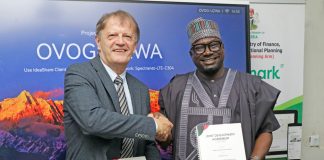
, Dr Ngozi Okonjo-Iweala, has lauded President Bola ...)