




Hello, my fellow Relationship Auditors, Playlists Keepers, and Surviving Nigerians. Welcome back to our weekly sanctuary! Today is Thursday, June 25, 2026. If you spent your morning watching a viral video of someone telling you what “true Nigerian love” looks like, or if you found out your favorite new afrobeats song wasn’t even sung by a human being, pull up a plastic chair. You are in the safest room on the internet.
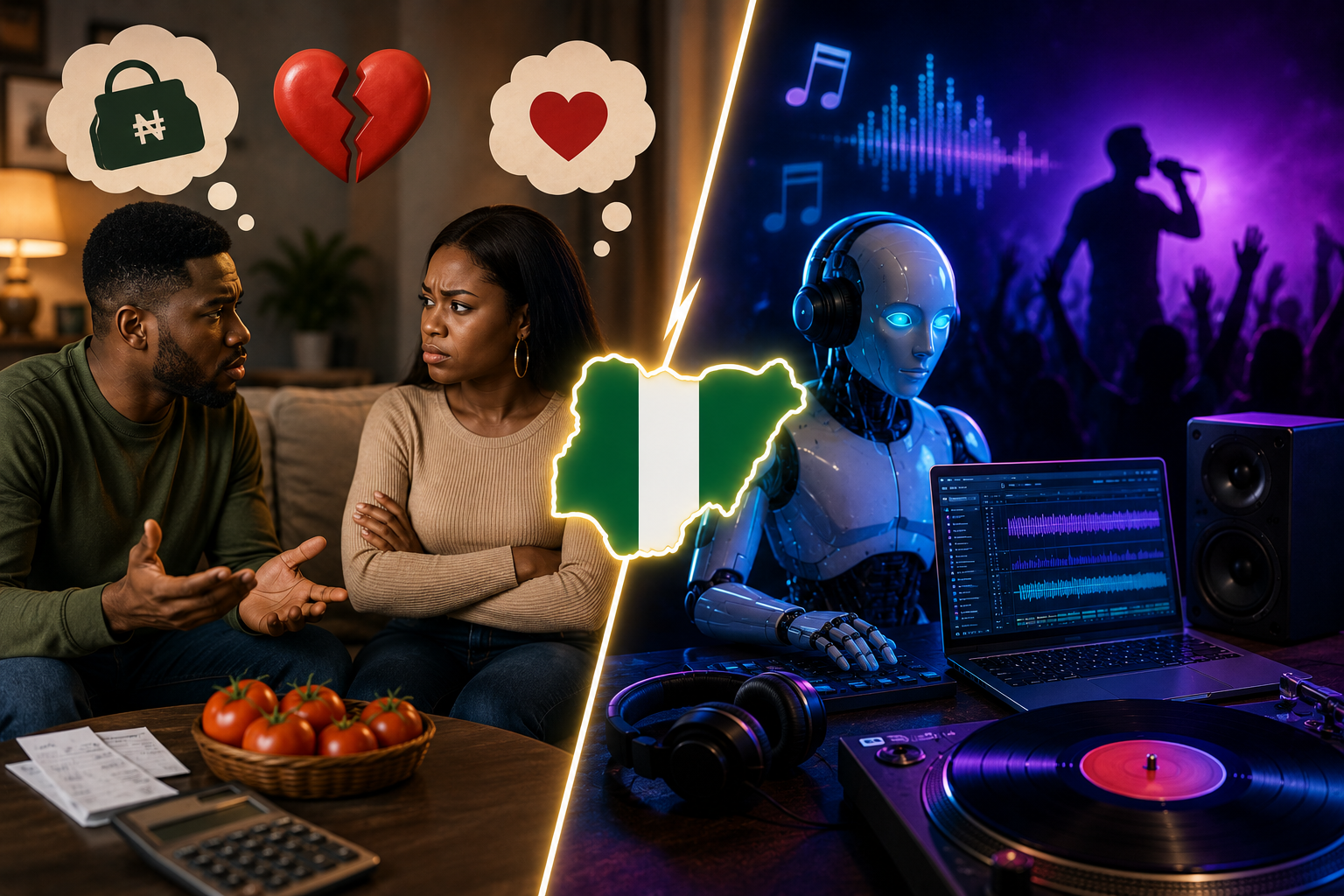
This final week of June, navigating the Nigerian digital space across X (formerly Twitter), Instagram, and TikTok feels like standing in the middle of a loud family meeting. The timeline has completely split into two massive debates: How money dictates modern Nigerian dating, and how artificial intelligence is quietly trying to take over Nigeria’s Afrobeats throne.
Let’s break down these two massive trends with premium street-smart humor, deep empathy, and a clear layman view.
If your internet data survived the week, your feed was definitely hit by a viral video from a popular commentator, Amina Aminu (popularly known as AA). She dropped a bombshell that has divided Nigerian social media into rival trenches: she argued that a woman who genuinely loves a man will feel reluctant to make constant financial demands.
The timeline completely erupted. On one side, Nigerian men have turned the video into a national anthem, quoting it in every comment section as proof that the “soft life” culture has made modern dating too transactional. On the other side, Nigerian women are fiercely pushing back, typing with absolute fury: “If a man can ask for emotional support, why can’t a woman ask for financial help when things are hard?”
The humor in this is peak Nigerian behavior. We are living in an economy where a single basket of tomatoes requires a financial strategy, yet we are online debating whether a girlfriend asking for urgent 2K is a sign of true love or advanced extortion. It highlights a deeply empathetic reality: as the cost of living bites harder, our relationships are facing a massive trust audit. We are trying to find out where genuine affection ends and survival economics begins.
Switch tabs to your music streaming apps, and a quieter but equally wild revolution is happening. If you think the biggest afrobeats song on your playlist right now was made by an artist sweating in a Lagos studio, you might want to check the credentials.
Culture journalists just revealed that the year’s biggest streaming track, Let Me Be by an AI group called The Second Voice, has crossed a staggering 200 million streams globally. This isn’t a human being; it’s a computer prompt generating an Afrobeats rhythm that has everyone dancing. Even veteran artists are jumping on the tech trend, with generative tools like Suno being called out behind viral new singles.
The online panic is real. ‘Nigerian Music’ purists are terrified that the soul of our music — the raw, everyday Nigerian struggle that fuels our lyrics — is being replaced by algorithms. The jokes write themselves: “So you mean the person I am crying with in the comment section over this heartbreak song is just a laptop in Lekki?” It is an eye-opening reminder that as our world goes fully digital, even our creative escapes are being automated.
But beneath the jokes and the quote-tweet battles lies a question that Nigerians have always quietly wrestled with: what do we actually mean when we say these things are ours? ‘Nigerian love’, in the Nigerian imagination, has never been purely romantic — it has always carried the weight of responsibility, provision, and survival. A man who loves you shows up. A woman who loves you holds the home together. These are not transactional distortions of love; they are love’s original language in this context, shaped by generations of economic precarity and communal obligation.
‘Nigerian music’ similarly, has never just been sound — it has been testimony. From Fela’s rage to Burna’s swagger to the unnamed street-corner singer in Mushin, the music has always been autobiographical, bleeding real life into every lyric. So when money becomes the measure of romantic sincerity, and when an algorithm starts generating the pain in our party anthems, the discomfort people feel is not just social media noise. It is the anxiety of a culture trying to hold onto its own definitions of itself.
Your Weekly Advisory: Keep It Authentic
- Don’t let the timeline ruin your relationship: Internet commentators don’t pay your bills or hold your hand when things are tough. Relationships require emotional and practical support; build a balance that works for you and your partner, not the audience on X.
- Protect the human element: While AI music is incredibly catchy and great for party mixes, don’t stop supporting the local, up-and-coming artists who are using their real voices and real instruments to tell our stories.
See you next Thursday, hopefully with a peaceful relationship, a fully human playlist, and a bank account that doesn’t require a forensic audit!