By Boluwatife Oshadiya | June 24, 2026
Key Points
- Local petrol production has risen from near zero in 2023 to about 48 million litres daily
- Nigeria’s petrol import bill dropped from about ₦2.3 trillion in Q1 2025 to below ₦90 billion a year later
- Crude oil and condensate production averaged 1.64 million barrels per day in 2025, up by about 400,000 barrels from 2023
Main Story
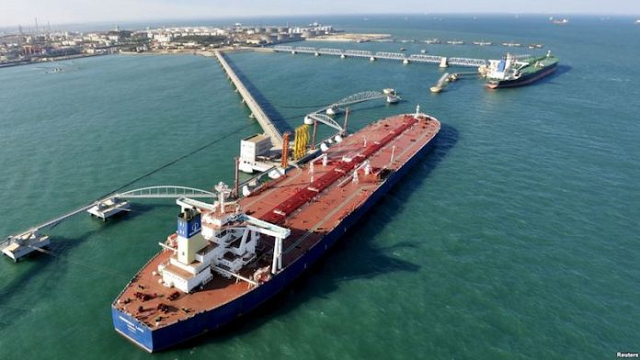
Nigeria’s petrol import bill has fallen sharply from about ₦2.3 trillion in the first quarter of 2025 to less than ₦90 billion a year later, as domestic refining capacity continues to expand, according to the Federal Government.
The Special Adviser to the President on Oil and Gas, Mrs. Olu Verheijen, disclosed the figures during the Nigerian-British Chamber of Commerce Energy Day 2026 in Lagos, where she highlighted the impact of ongoing energy sector reforms on fuel supply, foreign exchange demand and government revenues.
According to Verheijen, local petrol production has increased from virtually zero in 2023 to about 48 million litres per day, enabling Nigeria to refine most of the petrol consumed domestically for the first time in decades. She said the development has significantly reduced demand for foreign exchange previously used to fund fuel imports.
The adviser also noted that crude oil and condensate production averaged 1.64 million barrels per day in 2025, representing an increase of roughly 400,000 barrels per day compared with 2023 levels. She added that more than $4 billion worth of international oil company divestments had been completed, helping indigenous firms expand participation in onshore operations while major oil companies focus on deepwater and gas projects.
Industry data has also shown a significant decline in fuel imports as domestic refinery output rises. Recent figures from the Nigerian Midstream and Downstream Petroleum Regulatory Authority indicate that local refinery supply reached more than 3.18 billion litres in the first quarter of 2026, contributing to a substantial reduction in imported petrol volumes.
The Issues
Nigeria’s dependence on imported petrol has historically placed enormous pressure on foreign exchange reserves and contributed to naira volatility. For decades, fuel imports accounted for one of the country’s largest sources of dollar demand.
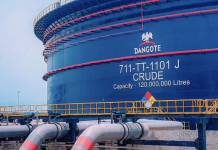
The emergence of large-scale domestic refining, led by the commencement of commercial petrol production by the Dangote Refinery and the gradual rehabilitation of state-owned facilities, is reshaping the downstream sector. While local production has improved supply security, questions remain around pricing dynamics, competition, and the sustainability of refinery operations in a fully deregulated market.
The development also comes as the government seeks to strengthen fiscal revenues following the removal of petrol subsidies and exchange rate reforms, both of which have significantly altered Nigeria’s energy and economic landscape.
What’s Being Said
“For the first time in a generation, the majority of the petrol Nigerians consume is now refined at home. As local refining has risen, petrol imports fell from about ₦2.3 trillion in the first quarter of 2025 to under ₦90 billion a year later,” said Mrs. Olu Verheijen, Special Adviser to the President on Oil and Gas.
“Fewer dollars spent on fuel means less pressure on the naira. Energy security and currency stability are not separate goals. They are the same goal,” Verheijen added.
According to NMDPRA data, domestic refinery output has continued to rise, while petrol imports have declined substantially compared with previous years.
What’s Next
- Further expansion of domestic refining capacity is expected as existing facilities ramp up output
- Government officials are expected to continue monitoring the impact of local refining on foreign exchange demand and fuel pricing
- Industry stakeholders will watch crude production levels and investment inflows as reforms continue through 2026
Bottom Line
The Bottom Line: Nigeria’s sharp reduction in petrol imports marks one of the most significant shifts in the country’s energy sector in decades. If domestic refining capacity continues to expand and production remains stable, the country could substantially reduce its exposure to fuel import shocks while strengthening foreign exchange stability.