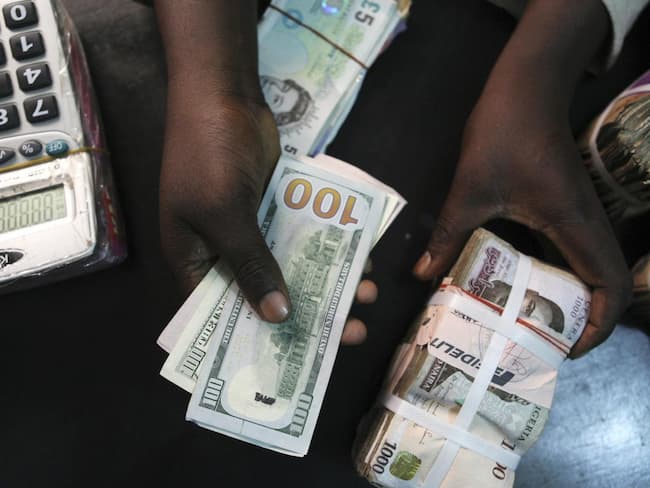
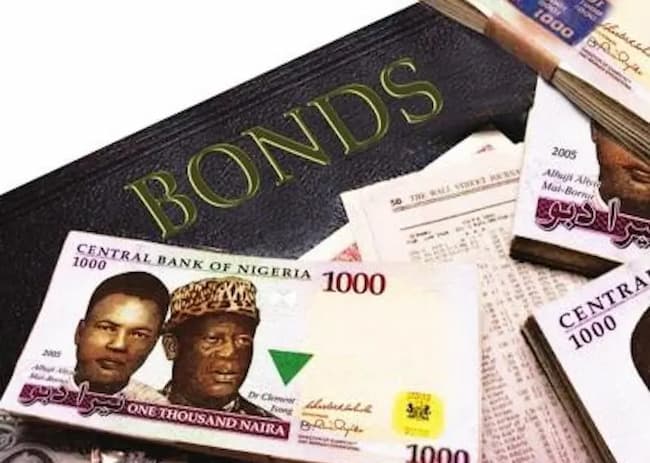
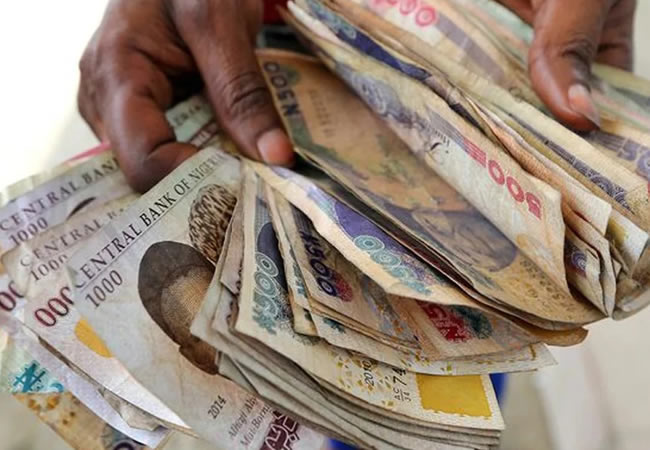
The exchange rate between the Naira and the US dollar, according to the data released on the FMDQ Security Exchange, the official forex trading portal, showed that the naira closed at 1520.00 per $1 on Wednesday, September 24th , 2025. The naira traded as high as 1482.00 to the dollar at the investors and exporters (I&E) window on Tuesday.
Dollar to naira exchange rate today black market (Aboki dollar rate):
The exchange rate for a dollar to naira at Lagos Parallel Market (Black Market) players buy a dollar for ₦1535 and sell at ₦1520 on Tuesday 23rd September, 2025, according to sources at Bureau De Change (BDC).
Please note that the Central Bank of Nigeria (CBN) does not recognize the parallel market (black market), as it has directed individuals who want to engage in Forex to approach their respective banks.
Dollar to Naira Black Market Rate Today
Dollar to Naira (USD to NGN)
Black Market Exchange Rate Today
Buying Rate
₦1535
Selling Rate
₦1520
Dollar to Naira CBN Rate Today
Dollar to Naira (USD to NGN)
CBN Rate Today
Highest Rate
₦1495
Lowest Rate
₦1482
Please note that the rates you buy or sell forex may be different from what is captured in this article because prices vary.
At least 14 people have been confirmed dead and more than 150 remain missing after a natural barrier lake in Taiwan’s eastern Hualien County burst on Tuesday, following days of torrential rain unleashed by Super Typhoon Ragasa.
The decades-old lake, formed by landslides that created a natural dam, collapsed under pressure from continuous downpours. The sudden breach sent torrents of water and thick mud surging through Kuang Fu township, destroying a bridge, inundating homes, and leaving streets buried in sludge.
“It was like a volcano erupting… the muddy floodwaters came roaring straight into the first floor of my house,” said 55-year-old community leader Hsu Cheng-hsiung.
Local officials said 18 people were injured in addition to the fatalities, while the National Fire Agency confirmed that at least 152 people were still unaccounted for in Hualien and neighbouring areas.
Premier Cho Jung-tai, who visited the disaster zone on Wednesday, vowed government support for survivors and accountability for the tragedy.
“For the 14 people who lost their lives, we must find out why evacuation orders were not carried out in the affected area, leading to such a tragedy,” he said. “Our greatest concern right now is locating those still missing.”
Residents described scenes of panic and devastation. Yen Shau, 31, said he narrowly escaped after the water level surged within minutes, trapping people in a supermarket and grocery store.
“Within minutes, the water had risen to halfway up the first floor,” he recalled. “The mud was just too deep, too deep to dig out.”
Footage released by emergency services showed flooded streets, half-submerged cars, and uprooted trees, underscoring the scale of destruction left in the wake of Ragasa.
Rescue operations are ongoing, with authorities racing against time to find survivors amid fears of further landslides and flooding.
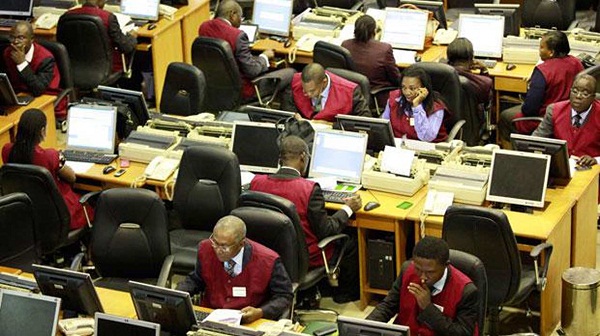
When big funds move, the market rarely whispers — it roars. Institutional investors (pension funds, mutuals, insurers, global asset managers) don’t treat equity trading like a sport; they treat it like a multi-year strategy. They look at where a company is going, not the last few weeks of price noise. You know what? That makes all the difference.
Here’s the thing: in H1 2025 the NGX didn’t just tick up — activity exploded. Equity turnover jumped from about ₦2.6 trillion in H1 2024 to ₦4.19 trillion in H1 2025 — a striking sign that the big players were more active. That surge pushed the All-Share Index higher too: the NGX ASI rose roughly 16.57% in H1 2025 (opening the period near 102,926 points and closing H1 around 119,979 points).
So what does that mean for you? If institutions are piling in, there are two likely explanations: either they’ve done the homework and see durable earnings growth ahead, or they’re repositioning to ride macro tailwinds (policy shifts, FX announcements, sector reform). Often it’s both.
Volume growth before price surges — When turnover expands (as it did in H1 2025), it often means accumulation, not just momentum-chasing. Watch for consistent daily volumes, not single-day spikes. (See the turnover chart above.)
More than price: look at fundraising and listing activity. Rising capital raises — ₦4.63tn in H1 2025 — point to active corporate funding and confidence in doing business via the exchange. That supports sustainable growth in market cap and, by extension, exchange revenues.
Earnings leverage matters. Exchanges, brokers, and market infrastructure firms benefit disproportionately when activity rises. NGX Group’s H1 2025 profit rebound is a textbook example: more trades → more fees → higher operating leverage.
Macro tailwinds are real. Policy moves, FX clarity, and reforms can flip investor sentiment fast. Institutions front-run or react in size; retail investors must monitor the policy calendar as much as quarterly reports.
Institutional favourites often share traits: predictable cash flow, management continuity, margin control, and sector resilience. That’s why names like GTCO, Zenith, Stanbic IBTC, NGX Group, BUA Foods, and others get repeated attention — they combine market position with earnings durability.
I built a quick hands-on table (above) listing 10 companies institutions tend to favour on the NGX, with short notes about why they matter. Use that as your starting checklist: sector exposure, dividend record, margin trends, and evidence of management competence.
A quick, slightly nerdy tip: match the chart rhythm with the filings. When turnover rises and a company’s quarterly margins expand simultaneously, the chance that institutions are buying increases. Not guaranteed — nothing ever is — but it’s a higher-probability signal.
Final thought: your edge as a retail investor is agility and focus. Institutions have size and access; you have speed and selectivity. Study the same metrics they do (volume, fundraising, margins, governance), watch public reports and NGX data releases, and use accumulation phases as opportunities — not emotional traps.
Want me to convert the table and charts into downloadable assets (PNG/PowerPoint) and add shareholding percentages for each of those 10 companies (latest filings) so the piece can publish with full citations and visuals? I can pack that up next.
The Nigerian naira gained ground in the foreign exchange market as sustained growth in external reserves continued to boost investor and market confidence, easing concerns over prolonged dollar shortages.
Market watchers and analysts have expressed optimism that the Central Bank of Nigeria (CBN) will maintain its firm stance on defending the naira through the end of the year. The steady accumulation of foreign reserves, coupled with the absence of capital restrictions, has fueled stronger sentiment in support of the local currency.
Currency trading, however, remains subject to volatility, reflecting the daily balance between foreign exchange demand and the dollar supply in circulation. Despite fluctuations, experts believe the naira is likely to maintain the trading range recorded in the third quarter, with a potential for appreciation in the fourth quarter.
Nigeria’s external position has been buoyed by rising oil output, leading to higher foreign exchange inflows from crude oil sales. Nevertheless, a considerable portion of these revenues has been committed under oil-for-loan agreements facilitated by the Nigerian National Petroleum Company Limited (NNPC).
Fresh figures from the CBN revealed that the naira advanced against the U.S. dollar, appreciating by 0.08% to close at ₦1,487.37/$1. At the official market window, the currency traded as high as ₦1,495 per dollar, while the lowest transaction rate stood at ₦1,482.33. Similarly, at the parallel market, the naira recorded a 0.08% gain to close at an average of ₦1,516 per dollar.
On the reserves front, Nigeria’s gross external reserves inched up to $42.032 billion on Monday from $42.036 billion, supported by steady inflows from multiple sources that continue to strengthen the nation’s financial buffers.
Global oil prices edged lower on Tuesday, sliding under the $66 per barrel mark, as new supply agreements in Iraq reignited market concerns over potential oversupply.
Brent crude futures fell 0.57%, trading at $65.69 per barrel compared with the previous session’s close of $66.07. Similarly, U.S. benchmark West Texas Intermediate (WTI) dropped 0.53% to settle at $61.93, down from $62.26 in the last trading session.
The downturn followed news from Iraq’s Kurdish Regional Government (KRG), which confirmed that an agreement had been reached with Baghdad and international oil firms to resume crude exports.
KRG spokesperson Peshawa Hawramani announced that longstanding disputes between Iraq’s central government, the Kurdish administration, and producing companies had finally been resolved, paving the way for a three-way contract.
The deal comes after the international arbitration court in Paris halted crude shipments from KRG and Kirkuk through Türkiye’s Ceyhan port on March 25, 2023, following legal action filed by Baghdad.
In June, KRG Prime Minister Masrour Barzani had strongly criticized the prolonged suspension, warning that it was damaging the region’s economy and energy sector.
Analysts caution that while oil demand growth remains uncertain, the restart of Kurdish exports could exacerbate supply-side pressures, pushing prices further down.
Meanwhile, Iraq’s State Oil Marketing Organization (SOMO) disclosed that the country’s crude exports averaged 3.38 million barrels per day (bpd) in August, with projections suggesting an increase to between 3.4 million and 3.45 million bpd for September. This rise follows Iraq’s gradual reversal of voluntary production cuts under the OPEC+ pact.
Market watchers are also awaiting the American Petroleum Institute’s estimates on U.S. commercial crude inventories, expected later on Tuesday, for clues on global demand trends. The U.S. Energy Information Administration (EIA) will release official inventory figures on Wednesday.
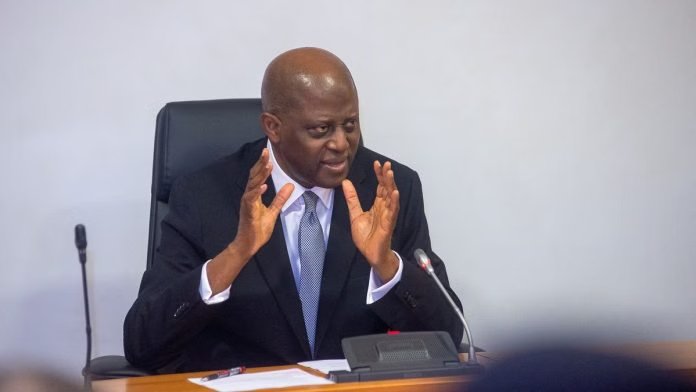
The Central Bank of Nigeria (CBN) has reduced the country’s benchmark interest rate to 27.00 percent, marking the first policy rate cut in five years and the first adjustment under Governor Olayemi Cardoso’s leadership.
The decision was announced by Cardoso on Tuesday during a press briefing in Abuja, following the conclusion of the 302nd Monetary Policy Committee (MPC) meeting held on September 22 and 23, with all 12 members of the committee in attendance.
Cardoso disclosed that the MPC opted to lower the Monetary Policy Rate (MPR) by 50 basis points to 27.00 percent, revise the Standing Facilities corridor to +250/-250 basis points, and increase the Cash Reserve Requirement (CRR) for commercial banks to 45 percent while leaving that of merchant banks at 16 percent. Additionally, the MPC introduced a 75 percent CRR on non-TSA public sector deposits, while the Liquidity Ratio remained unchanged at 30 percent.
“The Committee decided as follows: 1. Reduce the MPR by 50 basis points to 27.00 percent. 2. Adjust the Standing Facilities corridor around the MPR to +250/-250 basis points. 3. Raise the CRR for commercial banks to 45 percent while maintaining that of merchant banks at 16 percent and introduce a 75 percent CRR on non-TSA public sector deposits. 4. Retain the Liquidity Ratio at 30 percent,” Cardoso announced.
Reasons Behind the Rate Cut
The Governor explained that the reduction was driven by sustained disinflation over the past five months, projections of further moderation in inflation for the rest of 2025, and the need to provide stimulus for economic growth.
Nigeria’s inflation eased notably in August, with headline inflation dropping to 20.12 percent from 21.88 percent in July. Food inflation declined to 21.87 percent from 22.74 percent, while core inflation slowed to 20.33 percent from 21.33 percent. On a month-on-month basis, inflation fell significantly to 0.74 percent in August compared with 1.99 percent in July.
This marks a turnaround from six consecutive rate hikes in 2024 and three successive pauses earlier in 2025. The last time Nigeria witnessed a rate cut was in September 2020, when the CBN reduced the MPR from 12.5 percent to 11.5 percent.
Economic Outlook and Growth Trends
The MPC also highlighted Nigeria’s improved economic performance, noting that GDP expanded by 4.23 percent in Q2 2025, up from 3.13 percent in Q1. The growth was largely supported by a resurgence in the oil sector, which recorded a massive 20.46 percent growth compared with just 1.87 percent in the previous quarter.
The committee praised the Federal Government’s ongoing security measures in oil-producing regions, emphasizing that improved crude output would help strengthen external reserves and stabilize the exchange rate.
Nigeria’s reserves rose to $43.05 billion as of September 11, 2025, up from $40.51 billion at the end of July, translating into 8.28 months of import cover. Meanwhile, the current account balance posted a surplus of $5.28 billion in Q2, up from $2.85 billion in Q1.
Banking Sector Stability
The CBN also highlighted progress in the banking sector, confirming that 14 commercial banks had already met the recapitalization requirements. Cardoso stressed that the industry remains resilient, with key financial soundness indicators within prudential thresholds.
However, the MPC warned about excess liquidity in the banking system resulting from fiscal injections and noted that the new CRR policies were designed to absorb surplus funds and enhance monetary policy effectiveness.
Global Context
Nigeria’s decision comes amid a wave of monetary easing across Africa. Ghana recently slashed its policy rate by 350 basis points to 21.5 percent, while Kenya lowered its benchmark to 9.5 percent in August.
Despite the cut, Nigeria’s policy rate remains the highest in Africa, reflecting the country’s persistent inflationary pressures. The MPC expressed optimism that disinflation would continue, driven by exchange rate stability, declining fuel prices, and the harvest season. The next MPC meeting is scheduled for November 24 and 25, 2025.
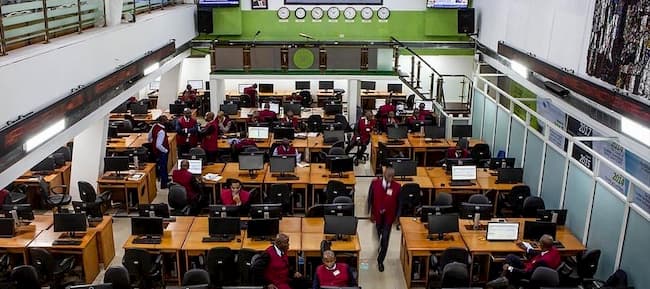
The Nigerian Exchange (NGX) closed in the red on Tuesday, with the All-Share Index (ASI) retreating by 40 basis points, as investors exited positions in key financial and energy stocks.
The bearish trend, largely fueled by profit-taking in banking and oil-related equities, weighed heavily on market sentiment and pushed the ASI down by 0.40%, closing at 140,929.60 points. This marks the second consecutive trading session of decline in year-to-date returns.
Market capitalization also fell in tandem, shedding 0.4% to settle at ₦89 trillion. Consequently, the year-to-date performance of the local bourse moderated to 36.92%.
Profit-taking was most evident in medium- and large-cap stocks such as ARADEL, ACCESSCORP, and FIRSTHOLDCO, which drove the market downturn.
Despite the negative close, overall market activity showed mixed dynamics. Trading volume rose by 10.75%, reaching 460 million units, while transaction value amounted to ₦17 billion across 20,535 deals.
FIRSTHOLDCO emerged as the most actively traded stock, accounting for 100 million units out of the total volume. Meanwhile, GTCO topped the value chart with transactions worth ₦4.1 billion.
Analysts say the sell-offs reflect cautious investor behavior in response to macroeconomic uncertainties and sector-specific pressures, particularly in financial services and oil-related equities.
The global cryptocurrency market staged a rebound on Tuesday, with total market capitalization rising 69 basis points to $3.91 trillion, powered by gains in Bitcoin, Ethereum, and several altcoins despite recent selling pressure.
Bitcoin, which had slipped below $112,000 earlier in the week—erasing last week’s one-month high—remained trapped within a narrow trading band of $112,000 to $113,000. As of press time, Bitcoin recovered 0.63% in 24 hours to trade at $113,308. Ethereum also climbed, trading at $4,224, with its market cap reaching $509.104 billion. Trading volume for Ethereum spiked to $39 billion, signaling renewed investor confidence.
Despite the price recovery, spot Bitcoin and Ethereum ETFs recorded no inflows on Monday. Bitcoin ETFs registered a net outflow of $363 million, while Ethereum ETFs shed $75.95 million, according to SoSoValue data.
CoinMarketCap data showed Bitcoin’s market capitalization edging higher to $2.257 trillion as $54 billion worth of the token changed hands in 24 hours. Ethereum’s market value also advanced to $509.104 billion with daily trades surpassing $39 billion. However, Ethereum fell around 7% during what has been described as the year’s largest liquidation event.
Data from CoinGlass revealed that over $1.7 billion in leveraged crypto positions were liquidated in just 24 hours. Ethereum led the wipeout with nearly $500 million in liquidations, followed by Bitcoin at $284 million. This sharp correction dragged Ethereum to the $4,100 support zone, with intraday lows hitting $4,077—its weakest level since August.
Institutional players continue to double down on Ethereum despite the volatility. BitMine, the world’s second-largest crypto treasury, disclosed that it had expanded its ETH holdings to 2.5 million tokens last week, aiming to control 5% of Ethereum’s total circulating supply. BitMine currently owns 2,416,054 ETH, or just over 2% of supply, cementing its status as the largest Ethereum treasury globally.
The firm’s digital asset portfolio now stands at $11.4 billion, including 2.4 million ETH, 192 Bitcoin, a $175 million equity stake in Eightco Holdings under its “Moonshot” initiative, and $345 million in unencumbered cash.
Meanwhile, Solana, which had surged earlier in the month, has entered a consolidation phase. Buyers are defending key support levels, but sellers are exerting heavy pressure, leading to heightened price swings. Analysts point to a surge in trading activity, with 24-hour Solana volumes exceeding $12 billion, as the trigger for its sharp volatility.
Nigeria’s government bonds traded on a stronger note in the secondary market as investors positioned ahead of the Central Bank of Nigeria’s (CBN) upcoming Monetary Policy Committee (MPC) decision on interest rates and in anticipation of September’s bond supply.
Market activity showed significant demand for naira-denominated instruments, particularly across benchmark maturities such as JUN-32 (-59bps), JUL-34 (-43bps), JAN-35 (-34bps), and MAY-33 (-30bps). The mid-segment of the yield curve recorded an average drop of 22 basis points.
Overall, the average yield on government bonds fell by 10 basis points to 16.49%, signaling lower borrowing costs for the government and moderating returns for investors. Analysts attribute the decline to improving macroeconomic fundamentals that have fueled stronger appetite for local assets.
Selective trades were also observed in short-to-mid dated instruments, with notable interest in the 2029 maturity at 16.45% and the 2035 maturity at 16.34%. By the end of last week, the domestic fixed-income market closed bullish, as traders remained cautious but optimistic ahead of the MPC outcome.
According to market reports, the average bond yield dropped 8bps week-on-week to 16.59% due to sustained investor demand. Short-tenor bonds recorded the sharpest drop, sliding 18bps to 16.91% per annum (p.a). Mid-tenor instruments edged slightly higher by 1bp to 16.66% p.a., while long-dated maturities held steady at 15.82% p.a., according to Coronation Merchant Bank Research.
The heaviest buying interest was seen in JAN-2026 (-82bps to 17.74%) and MAR-2026 (-132bps to 17.68%). In the Treasury Bills market, yields broadly declined by 30bps to 18.48% p.a., driven by positive sentiment. Short-term bills fell by 13bps to 17.13% p.a., mid-term tenors by 17bps to 18.39% p.a., and long-term bills by 46bps to 19.28% p.a., with the 3-MAR-2026 bill dropping by 126bps to 19.41% p.a.
In the Open Market Operations (OMO) segment, yields also compressed significantly. Average OMO yields dropped by 103bps to 22.02% p.a., with short-term maturities plunging 206bps to 23.32% p.a., mid-tenors down 129bps to 21.05% p.a., while long-dated maturities moved up 169bps to 21.95% p.a.
Market watchers expect cautious trading to continue this week, with the MPC’s interest rate stance likely to set the tone for further movement in yields.
Institutional investors—think pension funds, insurance giants, mutual funds, and global asset managers—wield enormous influence on the Nigerian Exchange (NGX). They’re not chasing daily price swings or glued to candlestick charts hoping for quick flips. Their approach is different: steady, methodical, and built on fundamentals.
That mindset—future-focused and patient—is what sets “smart money” apart. And here’s the twist: retail investors don’t have to be left in the dust. By spotting the same signals institutions use—earnings strength, corporate governance, market leadership—you can ride alongside the big money instead of trailing behind it.
Let’s break down a handful of Nigerian-listed companies that institutions keep close to their chest.
1. GTCO Plc (Guaranty Trust Holding Company)
Sector: Banking/Financial Services
Why institutions like it: GTCO’s pivot into a holding company model was a masterstroke. By adding asset management and payments, it reduced overreliance on banking alone. Add strong digital leadership and a reliable dividend policy, and you see why institutions treat it as a cornerstone holding.
Outlook: Expect steady growth, particularly from fintech and asset management. Long-term valuations remain attractive for accumulation.
2. Zenith Bank Plc
Sector: Banking
Why institutions like it: Zenith is the definition of consistency—earnings stability, risk discipline, and a fortress balance sheet. With high dividend yields, it’s a “defensive growth” play.
Outlook: Even when the macro economy feels shaky, Zenith stays resilient. As stability returns, margins could widen and push share prices higher.
3. Stanbic IBTC Holdings
Sector: Banking/Investment Services
Why institutions like it: It’s not just a bank—it’s also a powerhouse in pensions, stockbroking, and advisory. That diversified revenue mix appeals to funds with long horizons.
Outlook: Nigeria’s pension market is expanding. As Stanbic’s non-interest income grows, institutional flows will likely deepen.
4. United Capital Plc (UCAP)
Sector: Financial Services
Why institutions like it: High margins, lean operations, and consistent return on equity—UCAP ticks the boxes for efficiency. Its investment banking and asset management exposure also add flair.
Outlook: With more Nigerians entering capital markets, UCAP has room to grow. Institutions see it as nimble and high-upside.
5. NGX Group (Nigerian Exchange Group)
Sector: Capital Markets/Exchange
Why institutions like it: Owning NGX is like owning the casino instead of just gambling in it. Monetising trading fees, data, and tech services has only just begun.
Outlook: As IPOs increase and liquidity improves, earnings could surprise positively. Institutions see this as a long-term play on Nigeria’s capital market itself.
6. Vitafoam Nigeria Plc
Sector: Consumer Goods
Why institutions like it: Operational discipline. Even under inflation, Vitafoam keeps margins stable. Add expansion into furniture and home comfort, and the growth story broadens.
Outlook: Urbanisation and housing demand strengthen its position. Dividend consistency also makes it attractive to yield-focused funds.
7. Fidson Healthcare Plc
Sector: Pharmaceuticals
Why institutions like it: Healthcare is booming. Fidson has invested heavily in R&D, expanded production, and built partnerships that give it an edge.
Outlook: Local manufacturing push, policy shifts, and rising demand could send earnings higher. Institutions see it as an early mover in Nigeria’s healthcare evolution.
8. NEM Insurance Plc
Sector: Insurance
Why institutions like it: Insurance penetration in Nigeria is still low—a sleeping giant. NEM’s underwriting discipline and premium growth make it stand out.
Outlook: With regulators pushing for mandatory insurance, NEM could quietly compound wealth for years.
9. Custodian Investment Plc
Sector: Insurance/Financial Services
Why institutions like it: Custodian’s diversification—across pensions, trusteeship, and general insurance—offers multiple income streams. That risk spread is why it’s a natural institutional pick.
Outlook: Expect steady growth and possible foreign investor inflows as it scales further.
10. BUA Foods Plc
Sector: Consumer Goods/Agribusiness
Why institutions like it: BUA Foods dominates staples like sugar, flour, and pasta. With backward integration and cost control, it has become a food security play.
Outlook: Nigeria’s growing population and food inflation make this stock one of the most compelling accumulation stories on the NGX.
Here’s the thing: institutions don’t get spooked by past price appreciation—they buy futures, not history. They favour businesses with strong models, disciplined management, and room to grow.
As a retail investor, your edge is agility. You can pivot faster, enter earlier, or exit quietly. But the real trick is thinking like institutions: zoom out, study the fundamentals, and commit with conviction. Because in a market often driven by noise, the smartest move you can make is to listen to the quiet signals of the smart money—and then move in step with it.
The Nigerian stock market suffered a significant setback on Tuesday as equity investors lost over ₦326 billion, following a wave of profit-taking activities that drove sectoral indexes into negative territory.
Heavyweight stocks such as Guaranty Trust Holding Company (GTCO) (-3.2%), Lafarge Africa (WAPCO) (-4.0%), Dangote Sugar (-10.0%), Access Holdings (-5.0%), and Wema Bank (-8.27%) were among the biggest drags on market performance.
The sell-off was compounded by investor concerns over the recent cut in Nigeria’s benchmark interest rate, which analysts believe could pressure banking sector earnings and reduce the attractiveness of naira-denominated assets in the fixed-income market.
At the close of trading, the Nigerian Exchange (NGX) All-Share Index fell by 0.40%, settling at 140,929.60 points. This decline wiped off earlier year-to-date gains, cutting total market capitalization by ₦326.19 billion to ₦89.20 trillion.
Trading activity presented mixed signals. Share volumes surged by 55.37% to 759.08 million units, while the value of trades climbed 87.53% to ₦25.73 billion. However, the number of deals dropped by 17.34% to 23,657, indicating fewer but larger transactions dominated the session.
Leading the volume chart was Consolidated Hallmark Holdings (CONHALLPLC) with 169.63 million units traded, followed by Zenith Bank with 104.43 million, FBN Holdings (FIRSTHOLDCO) with 100.99 million, Fidelity Bank with 52.53 million, and GTCO with 45.01 million units.
On the value chart, major contributors included Zenith Bank (₦6.91 billion), GTCO (₦4.11 billion), FBN Holdings (₦3.15 billion), MTN Nigeria (₦1.60 billion), and Presco (₦1.23 billion).
Market breadth tilted negative, with 35 stocks declining against 16 gainers. Top gainers were Thomas Wyatt (9.80%), NSL Tech (9.59%), and RT Briscoe (9.50%). On the losers’ side, Dangote Sugar led the chart with a 10% drop, followed by Wema Bank (-8.27%) and NSL Tech (-6.25%).
All key sectors ended in the red, reflecting broad weakness across the market. Oil & Gas recorded the steepest drop at -1.80%, followed by Banking (-1.04%), Commodity (-0.90%), Insurance (-0.79%), Industrial (-0.60%), and Consumer Goods (-0.11%).
Nigeria’s revenue collection has risen sharply to N3.64 trillion as of September 2025, marking a 411 per cent increase from N711 billion in May 2023, according to figures released by the Federal Inland Revenue Service (FIRS) on Tuesday.
Despite the surge, the Federal Government will sustain its borrowing strategy as part of broader fiscal and economic planning, FIRS Executive Chairman, Zacch Adedeji, told State House correspondents during the “Meet-the-Press” briefing organised by the Presidential Communications Team.
Adedeji insisted that borrowing was neither unusual nor problematic, noting that it formed an integral part of the national budget.
“Borrowing is not a problem. Is borrowing not part of the budget we submitted to the National Assembly? Was it not approved? Are we borrowing outside what was approved?” he asked.
He explained that government borrowing was channelled into long-term capital investments rather than recurrent expenditure such as salaries.
“If my expenditure for this year is N100,000 and I plan N80,000 from revenue, I will borrow N20,000. If I’ve already generated N90,000 and only borrow N10,000 in line with the budget, what is the problem with that?” Adedeji said.
The FIRS boss argued that borrowing helps government spread the cost of large-scale projects, avoid future escalations, and sustain infrastructure delivery, citing what he termed the “Matchy Concept,” which supports financing projects with long-term benefits over extended periods.
His remarks come amid rising public criticism of Nigeria’s debt levels, especially after President Bola Ahmed Tinubu in July sought approval for a $21.5 billion external loan package, including a $2 billion foreign currency bond and a N757.98 billion domestic bond to offset pension liabilities.
Adedeji countered concerns by stressing that borrowing supports economic circulation.
“Banks are part of our economic ecosystem. No country or individual survives on income alone. When government borrows from banks, it pays interest. From that interest, salaries are paid, and from salaries, taxes are collected. That is how the system works,” he said.
On revenue performance, Adedeji credited recent fiscal reforms, including streamlined taxation, rationalised incentives, and reduced burdens on small businesses. Non-oil receipts recorded the sharpest rise, jumping from N151 billion to N1.06 trillion, while oil revenue climbed to N644 billion. Value Added Tax (VAT) receipts more than tripled to N723 billion, and customs revenue hit N322 billion. The Nigerian Upstream Petroleum Regulatory Commission (NUPRC) and the Nigerian National Petroleum Company (NNPC) Limited also made significant contributions.
“Revenue growth alone does not remove the need for borrowing. Borrowing is a key component of a viable economic framework. It ensures investments with long-term benefits are realised without overstretching current resources,” he added.
The FIRS chairman also highlighted ongoing measures to sustain revenue growth, including the rollout of a new fiscal policy framework, e-invoicing, updated excise regulations, and the harmonisation of subnational levies. He disclosed that the service is considering presumptive taxation for hard-to-tax groups and corporate tax reductions as part of broader constitutional reforms aimed at expanding Nigeria’s tax base.
Dismissing sceptics, Adedeji described critics of government borrowing as “container economists,” accusing them of offering shallow analyses based on social media narratives rather than sound economic reasoning.
He maintained that borrowing within approved limits is essential for sustainable development, infrastructure expansion, and long-term fiscal stability.
Nigeria’s money market rates experienced a sharp decline as liquidity levels in the banking system surged to over ₦3.2 trillion, buoyed by inflows from Open Market Operation (OMO) maturities and the Central Bank of Nigeria’s Standing Deposit Facility (SDF).
Reports indicate that system liquidity rose by more than ₦1.147 trillion to reach ₦3.237 trillion, as the CBN permitted OMO bill repayments without conducting fresh auctions to replace matured securities.
AIICO Capital Limited noted that the interbank market opened stronger, supported by a liquidity boost from ₦855.79 billion in SDF inflows and ₦254.9 billion from OMO maturities.
Impact on Money Market Rates
With the influx of funds, interbank rates moved in mixed directions. According to Cowry Asset Management Limited, short-term lending rates dropped, signaling improved liquidity conditions. Overnight rates fell by 14 basis points, while one-month rates dipped by 8 basis points.
Conversely, six-month rates increased by 25 basis points, while three-month rates remained flat due to limited funding pressure.
The Open Repo Rate (OPR) and Overnight Lending Rate both reflected the liquidity surge. The OPR declined by 100 basis points to 26.50 percent, while the overnight lending rate fell by 103 basis points to 25.92 percent. Analysts linked the movements to the MPC’s decision to cut the Monetary Policy Rate by 50 basis points to 27 percent.
Treasury Bills Market Trends
The Nigerian Treasury Bills (NTB) secondary market mirrored these divergent movements. Short- to medium-term yields climbed significantly, with one-month, three-month, and six-month rates rising by 20 basis points, 30 basis points, and 56 basis points, respectively.
However, the 12-month yield went against the trend, falling by 30 basis points. Overall, the average NTB yield across the market eased by 5 basis points, settling at 18.36 percent. Analysts interpreted the decline as a sign of increasing investor confidence and improved sentiment in the secondary debt market.
Market Outlook
Financial analysts expect interbank rates to continue trading around current levels unless new funding pressures emerge. With the CBN adopting a more accommodative monetary stance, liquidity conditions are projected to remain favorable in the near term.
Stanbic IBTC Asset Management, a subsidiary of Stanbic IBTC Holdings PLC, has launched the second season of its financial literacy game show, InvestBeta, with the premiere episode now streaming on the Group’s official YouTube channel.
The new season debuted with heightened energy as three contestants competed across three rounds—rapid questions, quick fingers, and risk & reward—for a chance to secure investment funds worth ₦2 million, up from the prize pool of the inaugural season. The opening episode set the tone, with the first winner walking away with an investment portfolio valued at ₦1.4 million.
Designed to fuse entertainment with financial education, InvestBeta challenges participants on core topics such as saving, budgeting and investing, while engaging viewers with practical tips and interactive quizzes. Season 1 captured the attention of Gen Z audiences nationwide, and Season 2 aims to build on that momentum with more relatable contestants, sharper challenges, and broader learning opportunities.
Speaking on the initiative, Busola Jejelowo, Chief Executive of Stanbic IBTC Asset Management, said:
“InvestBeta reflects our deep commitment to making financial education both accessible and exciting. Season 2 is bigger in every way—it has more compelling challenges, more relatable contestants, and more practical lessons for everyday life. We believe that when young people are equipped with real-world financial skills and the confidence to act, they are better prepared to create lasting wealth and achieve their dreams. This show is one of the many ways we are investing in the future of Nigeria’s youth.”
In addition to the show, viewers are encouraged to engage with Beyond Dreams, Stanbic IBTC’s growing digital lifestyle and finance community. With more than 90,000 young members and over 2,100 new investment accounts created to date, the platform offers tools and support to help young people make smarter financial choices and pursue long-term goals.
New episodes of InvestBeta Season 2 will premiere every Friday on the Stanbic IBTC YouTube channel.
The Nigerian Treasury Bills (T-Bills) market witnessed increased demand last week as investors strengthened their positions ahead of the Central Bank of Nigeria’s (CBN) upcoming monetary policy decision.
Market participants are divided over whether the apex bank’s Monetary Policy Committee (MPC) will cut rates to spur economic activity, a view supported by the trend of slowing inflation. Despite this, the country’s benchmark policy rate remains elevated at 27.50%, delivering a 7.38% real return on naira-denominated assets.
This policy uncertainty fueled buying momentum in the secondary T-Bills market, leading to a bullish performance as the average yield contracted by 7 basis points to settle at 18.41%.
According to CardinalStone Securities, investors showed strong preference for instruments maturing on 25 December 2025 and 3 September 2026, dragging their yields lower by 72 basis points and 55 basis points, respectively—the sharpest declines across the curve.
Additional buying interest was observed in the T-Bill maturing on 4 December, quoted at 17.78%/17.17%, as well as the 6 August instrument. On the OMO segment, moderate trading activity centered on the 7 April and 3 March maturities, which pushed the average OMO yield down by 4 basis points to 22.0%.
Across the yield curve, the decline was broad-based. Cordros Capital reported contractions of 2 basis points, 11 basis points, and 7 basis points across the short, mid, and long segments, respectively. The strongest demand was for papers with 80-day, 94-day, and 346-day maturities.
AIICO Capital Limited advised investors to remain cautious despite the ample liquidity in the financial system, noting that trading sentiment is likely to remain conservative until the MPC provides clear guidance on interest rate direction.
Nigeria’s short-term benchmark interest rates tightened last week as strong liquidity conditions in the financial system continued to ease funding costs, limiting the pressure on banks.
With minimal borrowing needs across the market, several cash-heavy lenders opted to sterilize excess cash by channeling more funds into placements with the Central Bank of Nigeria’s (CBN) deposit facility.
Analysts noted that the slowdown in the apex bank’s open market operations (OMO) has boosted available liquidity, reducing banks’ appetite for short-term instruments typically used to enhance returns.
According to data released by AIICO Capital Limited, system liquidity rose by ₦453.21 billion, lifting the market balance to approximately ₦2.12 trillion from ₦1.666 trillion recorded earlier. The surge was supported by a ₦245.4 billion increase in the Standard Deposit Facility (SDF) alongside ₦259.0 billion in coupon inflows.
At the interbank market, performance was mixed. Reports from Cowry Asset Management revealed that the Nigerian Interbank Borrowing Rate (NIBOR) showed varied movement, with the Overnight and one-month tenors climbing by 11 basis points and 18 basis points respectively.
Meanwhile, key money market indicators held steady. The Open Repo Rate (OPR) and Overnight Rate closed unchanged at 26.50% and 26.95%.
Liquidity conditions remained robust throughout the week, opening at ₦2.12 trillion compared to ₦2.09 trillion the previous week, before tapering to ₦1.67 trillion at Friday’s close. Reflecting this adjustment, banks scaled down their placements at the SDF from ₦1.75 trillion to ₦1.45 trillion as they balanced excess reserves with the CBN.
Nigeria’s economy gained more speed in the second quarter of 2025, expanding by 4.23% year-on-year—a noticeable leap from 3.48% in Q2 2024 and 3.13% in Q1 2025. The National Bureau of Statistics (NBS) confirmed this in its latest GDP report, noting that while oil played its part, non-oil industries were still the real heavy lifters.
So, what exactly fueled this growth? Let’s break down the top 10 sectors powering Nigeria’s GDP in Q2 2025, ranked by their share of total output.
1. Trade — 18.28%
Trade sat firmly at the top, contributing nearly a fifth of Nigeria’s GDP. Think of it as the economy’s market square—everything from wholesale deals in Lagos to the corner shops in Kaduna. Retail and wholesale activity are still the bread-and-butter of everyday life, and they thrive even when other sectors wobble. For policymakers, this raises an important question: shouldn’t infrastructure around logistics and supply chains get as much attention as oil pipelines?
2. Crop Production — 17.80%
If trade is the market square, crop farming is the soil beneath it. Agriculture, particularly crop production, remained a cornerstone. Rice, maize, cassava—these staples not only fill kitchens but also support millions of rural households. Yet, the paradox persists: despite its massive GDP share, smallholder farmers often struggle with credit, irrigation, and storage. It’s a classic case of “big on paper, thin on margins.”
3. Real Estate Services — 12.80%
You don’t need to live in Abuja to know real estate is booming. From luxury apartments in Lekki to industrial parks in Ogun State, property continues to generate big numbers. Interestingly, real estate’s contribution reflects both investment appetite and Nigeria’s housing deficit. Developers keep building, but affordability remains a sore point. Investors see opportunity; consumers see price tags that feel out of reach.
4. Telecommunications & Information Services — 11.18%
Here’s where things get modern. Telecoms and ICT together are reshaping Nigeria’s economy faster than any bulldozer. Data consumption, fintech adoption, and mobile banking are turning phones into mini-banks and classrooms. Remember when “recharging airtime” was just for calls? Now it’s the gateway to loans, bill payments, and even farming tips. This sector’s double-digit contribution shows just how digital the Nigerian economy has become.
5. Livestock — 5.90%
From cattle in Kano to poultry farms in Ogun, livestock held its ground as the second-largest agricultural contributor. Beyond food supply, the livestock sector links into leather exports, dairy production, and even cultural practices. But insecurity in grazing areas and rising feed costs remain persistent bottlenecks. Still, the demand is there—Nigeria is a protein-hungry nation.
6. Crude Petroleum & Natural Gas — 4.05%
Oil is back on the list, but not in its old glory. Once the undisputed king, petroleum and gas now account for just about 4% of GDP. Global energy shifts, theft in the Niger Delta, and OPEC+ quotas have clipped its wings. Still, a rebound in output during Q2 helped it stay relevant. The irony? Oil still drives forex earnings even though its share of domestic GDP has shrunk.
7. Construction — 3.60%
Look around Lagos or Abuja, and cranes dot the skyline. From roadworks in rural areas to mega housing estates in cities, construction remains a steady player. It’s not just about cement and steel—it’s jobs for artisans, contracts for SMEs, and infrastructure that supports other sectors. The only downside: rising costs of materials often push projects over budget.
Nigeria’s manufacturing base has its challenges—power supply, for one—but food, beverage, and tobacco are resilient. From Coca-Cola bottling plants to local breweries and indigenous snack companies, this sector feeds both the stomach and the tax purse. The growth here signals consumer demand is alive and well, even as inflation squeezes wallets.
9. Financial Institutions — 2.84%
Banks and financial services made their presence felt. Think of all the digital transfers, loans, investments, and insurance products flowing daily. Nigeria’s financial institutions aren’t just middlemen—they’re the nervous system connecting businesses and households. The Central Bank’s policies around credit and interest rates inevitably show up in this figure.
10. Public Administration — 2.73%
Government itself rounds out the top ten. Salaries, ministries, and administrative structures may not feel “productive” in the traditional sense, but they’re part of the economic machinery. Public administration’s steady contribution reflects Nigeria’s large civil service and government-driven spending patterns.
The Bigger Picture
Put together, these ten sectors show an economy tilting away from oil dependence toward a more diversified structure. Agriculture (through crops and livestock) and trade remain dominant, while digital and real estate sectors are climbing fast.
For investors, it signals opportunity across multiple industries, not just hydrocarbons. For policymakers, it’s a reminder that growth is only as strong as its weakest link—be it poor infrastructure, inflationary pressure, or insecurity in rural areas. And for everyday Nigerians? The numbers may feel abstract, but they’re woven into the price of rice at the market, the rent in the city, the call rates on your phone, and the job you may or may not have.
Nigeria’s 4.23% GDP growth in Q2 2025 is more than a statistic—it’s a story of resilience, change, and untapped potential.
Senator Natasha Akpoti-Uduaghan (Kogi Central) has accused the Federal Government of political persecution and selective justice over criminal defamation charges filed against her.
In a preliminary objection submitted on Monday, the lawmaker asked the Federal High Court and the High Court of the Federal Capital Territory to dismiss the six-count charge brought by the Attorney-General of the Federation (AGF). She argued that the AGF lacked the legal authority to prosecute what she described as a private defamation matter.
The case, filed under the Cybercrimes (Prohibition, Prevention, etc.) (Amendment) Act, 2024, arose from petitions by Senate President Godswill Akpabio and former Kogi State governor Yahaya Bello over remarks the senator allegedly made at a public gathering in Ihima on April 4, 2025, and later during a television interview. Prosecutors claim her comments—accusing Akpabio of instructing Bello to have her killed—were false, malicious, and capable of inciting violence.
Akpoti-Uduaghan pleaded not guilty when she was arraigned on June 20 and was granted bail on self-recognition. The case is being prosecuted by the Director of Public Prosecutions of the Federation, Mohammed Abubakar.
Her defence team, led by four Senior Advocates of Nigeria—Prof. Roland Otaru, Dr. Ehiogie West-Idahosa, J.J. Usman, and M.J. Numa—insists the charges are “unconstitutional, frivolous and designed to intimidate opposition voices.” They argued that defamation should be treated as a civil matter, not a crime, and that prosecuting her statements violates democratic principles of free speech.
The senator further alleged double standards, noting that while her petitions against Akpabio and Bello over alleged threats to her life were ignored, the Federal Government acted swiftly on complaints against her. She claimed the disparity amounted to discriminatory prosecution under Section 42 of the Constitution, linked to her opposition political affiliation.
The court has adjourned the matter to October 20 to hear arguments on her objection.
Meanwhile, civil society organisations have escalated the dispute internationally. On Monday, the Womanifesto Network—a coalition of more than 350 women’s rights groups—petitioned the UN Special Rapporteur on Violence Against Women and Girls, accusing the Senate leadership of gender-based discrimination.
“This is about the integrity of our democracy. If a senator can be silenced for reporting harassment, what hope do ordinary women have?” asked Dr. Abiola Akiyode-Afolabi, the group’s convener.
The petition, signed by Amnesty International Nigeria, FIDA Nigeria, Baobab for Women’s Human Rights, WIMBIZ, and Stand to End Rape, urged the UN to press Nigeria to reinstate Akpoti-Uduaghan in line with a Federal High Court ruling and to initiate an impartial probe into her harassment allegations.
The lawmaker was suspended from the Senate for six months in March following a protest over her seat reassignment, a sanction she described as retaliatory after she accused Akpabio of harassment. Although the Federal High Court later ruled her suspension unconstitutional, the Senate has yet to allow her return, maintaining that the judgment is still subject to litigation.
As of press time, the UN Special Rapporteur’s office had not issued a response.
France has formally recognised the State of Palestine, joining a growing list of countries backing a two-state solution to the decades-long conflict in the Middle East.
President Emmanuel Macron announced on Monday at an international conference in New York, co-chaired with Saudi Arabia, ahead of the annual United Nations General Assembly.
“The time has come to free the 48 hostages still being held by Hamas in Gaza and to stop the bombing, massacres and displacement in the enclave,” Macron said, urging urgent action towards peace.
He stressed that recognition of Palestinian statehood did not undermine Israel’s legitimacy, but rather represented the only viable path to ensure long-term stability. “The recognition of the legitimate rights of the Palestinian people takes nothing away from the rights of the people of Israel. This recognition is the only solution that will allow Israel to live in peace,” he told delegates, who responded with prolonged applause.
France’s move follows similar announcements from the United Kingdom, Canada, Australia and Portugal on Sunday, reflecting renewed international momentum in support of Palestinian statehood.
Saudi Foreign Minister Prince Faisal bin Farhan Al Saud welcomed the decisions, calling them “historic steps” that could help revive hopes for a permanent settlement. “We call on all other countries to take a similar step to support the two-state solution and create a reality where the region can enjoy peace, stability and prosperity,” he said.
Palestinian President Mahmoud Abbas, addressing the gathering via video link, appealed to Israel to engage in negotiations that would “end the bloodshed and bring about comprehensive peace.” He condemned violence against civilians on all sides, including Hamas’s October 7, 2023, attack, and insisted that the militant group and other factions must disarm in favour of a unified Palestinian Authority.
“We want a single, unified state – one legitimate, one armed, and one law,” Abbas declared.
The latest phase of the conference builds on a July session at UN headquarters, which won overwhelming endorsement from the General Assembly. The process aims to keep alive the vision of two states existing side by side.
However, Israel and the United States boycotted Monday’s meeting. Washington also denied Abbas a visa, preventing him from attending in person. Critics warn the growing international pressure on Israel could harden positions and complicate efforts at de-escalation.
The UN General Debate begins on Tuesday, with around 150 world leaders expected to attend, where the Israel-Palestine conflict is likely to dominate discussions.
The Trump administration’s move to impose a $100,000 charge on every new H-1B visa application is set to undermine America’s technological leadership and global competitiveness, while creating opportunities for rival economies such as India and China, according to Nigel Green, Chief Executive of global financial advisory firm deVere Group.
“This policy is designed to protect American workers, but it will likely achieve the opposite,” Green said in a statement shared with MarketForces Africa.
“By pricing out the world’s brightest engineers, data scientists and AI specialists, the US is driving the very talent that built Silicon Valley into the arms of competing economies. India and China are ready to seize the opportunity.”
The H-1B visa programme admits about 85,000 highly skilled foreign professionals annually, with roughly 70 per cent from India and 12 per cent from China. These workers are credited with contributing an estimated $100 billion to the US economy each year and have founded or led many of America’s most successful start-ups.
“For decades, the US imported the world’s best minds while other nations bore the cost of their education. That competitive advantage is now being surrendered,” Green added.
Markets initially reacted negatively to the announcement, with India’s Nifty 50 and Sensex indices dipping as investors factored in higher costs for outsourcing firms reliant on US placements. Analysts, however, expect a quick rebound as global corporations redirect projects offshore.
“When barriers go up in Washington, companies don’t cancel innovation, they relocate it,” Green said, noting that previous visa restrictions spurred growth in India’s delivery centres and research facilities.
India, with annual technology and business-process exports exceeding $280 billion, a steady rupee, a million new engineering graduates each year, and government-backed incentives, is seen as well-positioned to absorb work displaced from the US.
China is also moving swiftly. Beijing recently introduced a streamlined “K Visa” aimed at attracting foreign STEM experts and reversing years of brain drain. Provincial governments are offering research grants, tax breaks and housing incentives to lure talent once destined for Silicon Valley.
Other countries are also stepping in. Canada, the UK, Germany and South Korea are all easing immigration pathways for skilled professionals. Meanwhile, US universities warn that international PhD enrolments—already responsible for more than 60 per cent of American computer-science doctorates—could decline if post-study work prospects shrink.
“Raising the cost of entry does not suddenly create domestic expertise,” Green warned. “It encourages corporations to move high-value projects to places where the talent already exists and where governments welcome it. Capital and research dollars will follow that talent.”
The consequences, he said, could include slower progress in semiconductors, biotechnology and AI; fewer start-ups; reduced tax revenues from relocated firms; and diminished entrepreneurial energy in the US.
“This is a signal for investors to closely watch markets and companies positioned to benefit from talent reallocation,” Green noted. “Indian IT leaders, Chinese AI ventures and multinationals with strong offshore capacity will emerge as clear winners, while US firms reliant on foreign expertise will face higher costs and longer development cycles.”
Concluding, he argued: “Protectionist barriers on skilled immigration have never safeguarded growth—they export it. The $100,000 H-1B levy will not protect American jobs. Instead, it will redirect innovation and investment to India, China, and other countries smart enough to open their doors. The policy is self-defeating, and global markets are already adjusting.”