








Home Blog Page 566

Lionel Messi Signs Contract With Inter Miami

Lionel Messi Signs Contract With Inter Miami

Lionel Messi, the Argentine superstar, has signed a contract agreement with Inter Miami CF through 2025, the Major League Soccer team announced on Saturday.

The Argentine superstar, who will occupy a Designated Player slot, is expected to join the team in the coming days, and his contract will run through the 2025 Major League Soccer (MLS) season.

Messi, who will be unveiled by the squad on Sunday, is expected to join Inter Miami on the field as soon as Friday.

Inter Miami CF Managing Owner, Jorge Mas said that “I am honored to welcome Leo Messi and his family to their new home.

“In 2018, we made a promise to build an ambitious club that would attract the world’s elite players. A club that would transform the global view of fútbol in the United States and ensure that wherever fútbol is discussed, your Inter Miami is part of the conversation.

“A heartfelt thank you to our fans that never stopped believing. Together we will continue to turn dreams into reality.”

The seven-time Ballon d’Or winner said “I’m very excited to start this next step in my career with Inter Miami and in the United States.

“This is a fantastic opportunity and together we will continue to build this beautiful project. The idea is to work together to achieve the objectives we set, and I’m very eager to start helping here in my new home,” Messi said.

Messi is scheduled to make his MLS debut on Friday when Inter Miami hosts Cruz Azul in the Leagues Cup, a new competition between MLS and Mexican league teams.

It’s the most significant boost for the North American League since English great David Beckham, who is now a co-owner of Inter Miami, joined the Los Angeles Galaxy in 2007. After years of searching for a stadium location, he created the MLS team in 2020.

David Beckham said “Ten years ago, when I started my journey to build a new team in Miami, I said that I dreamt of bringing the greatest players in the world to this amazing city.

“Players who shared the ambition I had when I joined LA Galaxy to help grow football in the USA and to build a legacy for the next generation in this sport that we love so much.

“Today that dream came true. I couldn’t be prouder that a player of Leo’s caliber is joining our club, but I am also delighted to welcome a good friend, an amazing person and his beautiful family to join our Inter Miami community.

“The next phase of our adventure starts here, and I can’t wait to see Leo take to the pitch.”
READ ALSO

Lagos Govt To Close Eko Bridge For 24hours

LASG Announces Traffic Diversion At Ikorodu

The Lagos State Government has stated that the Eko Bridge, which connects to the recently reopened Apongbon Bridge, will close for 24 hours on Sunday, July 16, 2023.

According to the state government, the closure is for emergency remedial palliative measures by the Lagos State Public measures Department in collaboration with the Federal Ministry of Works and Housing.

Engr. Abdulhafiz Toriola, Permanent Secretary, Ministry of Transportation, stated on Saturday that the 24-hour shutdown will allow for continuous palliative modification of the bridge.

Torioala, on the other hand, revealed that personnel from the Lagos State Traffic Management Authority (LASTMA) had been deployed to regulate and manage traffic around C.M.S., Marina, Ijora, and other alternate routes on Lagos Island and Mainland.

He explained that the palliative work was required to supplement the recently reopened Apongbon Bridge.

Alternative Routes

The following alternate routes were made available during the maintenance period:

  • For Motorists from Mainland/Surulere going to Lagos Island are advised to make use of Ijora-Olopa/Causeway to Carter Bridge (Idumota) to connect their desired destinations.
  • Connect Costain to Iganmu through Ijora-Oloye via Ijora Causeway to Carter Bridge (Idumota), for their desired destinations.
  • For Motorists from Lagos Island going to Surulere/Mainland are advised to connect Carter Bridge (Idumota) through Iddo/Oyingbo to Herbert Macaulay for their desired destinations;
  • Connect Carter Bridge (Idumota) through Ijora Olopa by LAWMA Headquarters to Eko Bridge inwards Costain/Alaka for their desired destinations.

25 Artificial Intelligence Tools For Content Creators, Journalists, Writers, And PR Professionals

Given the recent advances in artificial intelligence (AI), the disciplines of content generation, journalism, writing, and public relations (PR) have seen substantial transformations in the digital age.

AI tools have transformed several sectors, allowing experts to optimize procedures, increase efficiency, and explore new creative avenues. This post will look at the best 30 AI technologies that may help content creators, journalists, writers, and public relations professionals improve in their industries.

Content Creation Tools:

  1. Grammarly: An AI-powered writing assistant that provides real-time grammar and spelling corrections, style suggestions, and readability improvements.
  2. Copyscape: A plagiarism checker that helps content creators ensure originality and maintain ethical writing practices.
  3. Hemingway Editor: A tool that analyzes text to improve readability by highlighting complex sentences, excessive adverbs, and passive voice.
  4. BuzzSumo: AI-powered content discovery platform that helps identify popular topics, trending articles, and influential industry leaders.
  5. Canva: A graphic design tool with AI-assisted features, allowing users to create visually appealing social media posts, infographics, and banners.

Journalism Tools:

  1. Mention: AI-driven media monitoring tool that tracks online mentions of specific keywords or brands, providing journalists with real-time alerts.
  2. Dataminr: An AI platform that analyzes social media and other data sources to identify breaking news, emerging trends, and relevant stories.
  3. Google Trends: A free tool that showcases the popularity of search terms, enabling journalists to uncover trending topics and tailor their content accordingly.
  4. Automated Insights: Provides natural language generation (NLG) capabilities, generating news stories and reports based on data and predefined templates.
  5. Storyful: An AI-powered news verification tool that helps journalists authenticate user-generated content and identify fake news.

Writing Tools:

  1. ProWritingAid: An AI-powered writing analysis tool that offers in-depth reports on grammar, style, readability, clichés, and more, helping writers refine their work.
  2. Evernote: A versatile note-taking app that uses AI to organize and search notes, capture ideas on the go, and facilitate seamless collaboration.
  3. Scrivener: A writing software that offers AI-enhanced features for organizing, structuring, and editing long-form content such as novels, scripts, and research papers.
  4. Wordtune: An AI-powered writing tool that suggests alternative phrasing, provides synonyms, and helps improve the overall clarity and impact of sentences.
  5. Ulysses: A writing app that leverages AI to offer distraction-free writing environments, seamless syncing across devices, and advanced content organization.

Public Relations Tools:

  1. Meltwater: An AI-driven media intelligence platform that helps PR professionals monitor brand mentions, track media coverage, and analyze sentiment.
  2. HARO (Help a Reporter Out): An AI-enabled platform connecting journalists with expert sources, allowing PR personnel to pitch story ideas and establish media relationships.
  3. Prezly: A PR tool that combines AI with email marketing, contact management, and media outreach features to create engaging press releases and campaigns.
  4. Prowly: An AI-powered PR software that assists with media list building, press release distribution, and tracking of PR campaign results.
  5. Cision: A comprehensive PR and media relations software that employs AI to identify influencers, manage media contacts, and measure campaign performance.

Advanced AI Tools:

  1. IBM Watson: A powerful AI platform that offers natural language processing, data analytics, and cognitive computing capabilities, enabling advanced content generation and analysis.
  2. Google Cloud Natural Language API: Provides developers with AI-powered tools to extract insights, analyze sentiment, and classify text, enhancing content understanding and relevance.
  3. OpenAI GPT-3: An advanced language model that can generate human-like text, making it a valuable tool for content creation, automated writing, and creative brainstorming.
  4. Amazon Rekognition: An AI service that analyzes images and videos, enabling content creators to automatically tag and search visual content for enhanced organization and discovery.
  5. Talkwalker: An AI-driven social listening and analytics tool that helps content creators and PR professionals monitor social media conversations, track brand sentiment, and identify emerging trends.

The introduction of artificial intelligence has transformed the content production, journalism, writing, and public relations sectors, providing professionals with a plethora of sophisticated tools and skills.

These 30 AI technologies provide considerable benefits to content creators, journalists, writers, and public relations people, ranging from boosting writing quality and efficiency to improving media monitoring and campaign management. Professionals in these professions may remain ahead of the curve, create meaningful content, and achieve their goals with better efficiency and efficacy in this ever-changing digital world by properly employing these technologies.

AfDF Commits $101m To Sustainable Water, Sanitation Reforms

AfDF Commits $101m To Sustainable Water, Sanitation Reforms

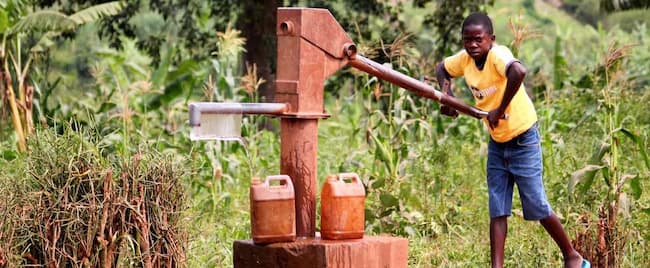
The Board of Directors of the African Development Fund (AfDF) has approved a $101 million loan to finance the Rwanda Sustainable and Resilient Water and Sanitation Program – a policy-based operation to support Rwanda’s water and sanitation sector.

The program aims to improve water and sanitation governance and access to basic water supply and sanitation services. It will also strengthen legal, policy, institutional and regulatory frameworks for delivering basic water supply and sanitation.

“This program will benefit more than 13.2 million people in Rwanda, providing better and long-lasting access to safe water and sanitation services.

“It will also support the management of water resources, reforming policies and enhancing governance in the sector,” Osward Chanda, the Bank’s Director for Water Development and Sanitation, said at the Board meeting.

Rwanda’s Ministries of Finance and Economic Planning, Infrastructure and Environment, Water and Sanitation Corporation Limited, Rwanda Water Resources Board, and the Rwanda Utilities Regulatory Authority will implement the Rwanda Sustainable and Resilient Water and Sanitation Program starting this year through 2026.

The Rwanda Sustainable and Resilient Water and Sanitation Program is the latest infrastructure project supported by the Bank via the Water Development and Sanitation Department. The Bank aims to accelerate Rwanda’s long-term development aspiration of becoming a middle-income economy by 2035, as outlined in its Vision 2050.

The program also aligns with the Bank’s Country Strategy 2022-2026 for Rwanda and the Bank’s Ten-Year Strategy (2013 – 2022, extended to June 2023) for inclusive growth and a gradual transition to green growth.

It will contribute to three of the Bank’s priority areas, also known as the High 5s: Improve the Quality of Life for the People of Africa; Feed Africa, and Industrialize Africa.

Norfund Invests EUR 2 Million In Plastic Recycling In Nigeria

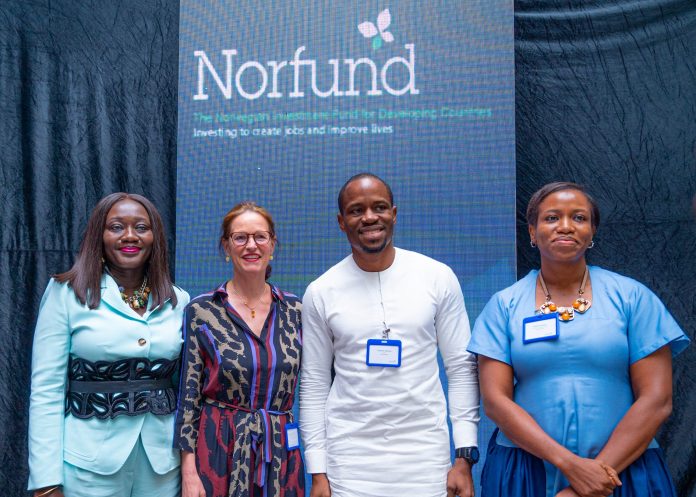
Norfund, the Norwegian Development Finance Institution, has committed EUR 2 million as a convertible loan to Wecyclers Nigeria Limited, a recycling company based in Lagos. The investment will finance a new plant for the recycling of PET bottles for use in new bottles locally and in Europe. The plant will be located in Ogun state in Nigeria and will have a capacity of 12 000 tons per year.

By showcasing a functioning model, we can enable the development of an industry that is crucial in tackling the challenges of plastic pollution while creating a large number of jobs,” says Carl Johan Wahlund, Senior Vice President for Green Infrastructure at Norfund.

Combating plastic pollution

More than 171 trillion pieces of plastic are now estimated to be floating in the world’s oceans, an increase from 16 trillion pieces in 2005, and it could further nearly triple by 2040.

Systems for the collection of plastic are crucial in tackling plastic pollution. Establishing these with incentives and a commercially sound model across the value chain is however complicated even in many high-income countries, and still more challenging in developing countries, where waste regulation and enforcement of extended producer responsibility is lacking.

Wecyclers has managed to establish a model in one of the more difficult areas of the world, with its own collection both directly from households and via kiosks and franchises, combined with a close collaboration with a European plastic producer which will serve to ensure that both the process and the output quality meets highest international standards”, says Carl Johan Wahlund, who heads Norfund’s Green Infrastructure investment area.

Contributing to a circular economy

Serioplast, a leading plastic packaging manufacturer headquartered in Italy has been a minority shareholder in Wecyclers since 2018. Recently, Unilever Nigeria and Bridges Outcomes Partnership also provided Wecyclers USD 2 million in financing to support the expansion of its collection network. The financing was provided using an innovative “Development Impact Bond,” expected to support the collection of up to 30,000 tons of recyclable plastic waste and create up to 700 jobs in the next 5 years.

With these new partnerships, Wecyclers is well positioned to contribute to a truly circular economy where we continue to create more value, support the women and small businesses we work with to increase their income and help build more resilient, healthy, and sustainable communities in the cities where we operate”, says Olawale Adebiyi CEO of Wecyclers.

 “While this plant only tackles a small part of the problem, showcasing a functioning model will gradually enable the development of an industry and the promotion of a culture of waste management. We see Wecyclers as our first of many investments in the recycling sector”, says Wahlund.

Norfund’s investment in Wecyclers adds to its portfolio in West Africa which includes direct investments in Sundry Foods (Nigeria, Equity), Arnergy Solar (Nigeria, Equity), First City Monument Bank (FCMB) (Nigeria, Loan), OH Ecosystems (Nigeria, Convertible Loan), CBI Ghana (Ghana, Equity), Access Bank (Ghana/Nigeria, Loan), First National Bank Ghana (Ghana, Loan), Oasis Africa Fund (Ghana, Fund Investment), Verod Capital Growth Fund III (Nigeria/Ghana, Fund Investment), Valency International (Cote d’Ivoire, Loan), Wave Mobile Money (Cote d’Ivoire, Loan), Nouvelle Mici Embaci (NME) (Cote d’Ivoire, Equity), Aktivco (Burkina Faso/Cote d’Ivoire/Cameroon/Niger, Loan), Baobab+ (Senegal/Cote d’Ivoire/Mali, Equity), ESCOTEL (Regional, Equity & Loan) and Ecobank Transnational Incorporated (Regional, Loan). Norfund is also an investor in platform companies and many private equity funds which are investing in West Africa and the rest of sub-Saharan Africa.

Access Bank Plc (Access) Enters Into Acquisition Agreements With Standard Chartered Bank

Access Bank Plc (Access) Enters Into Acquisition Agreements With Standard Chartered Bank

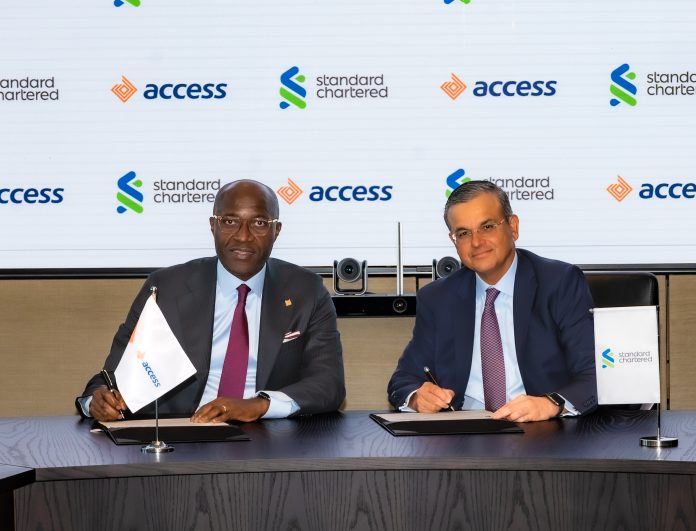
Access Bank Plc (Access) and Standard Chartered Bank have entered into agreements for the acquisition of Standard Chartered’s shareholding in its subsidiaries in Angola, Cameroon, The Gambia, and Sierra Leone, and its Consumer, Private & Business Banking business in Tanzania.

Each transaction remains subject to the approval of the respective local regulators and the banking regulator in Nigeria.

The announcement was made today at Standard Chartered’s Headquarters in London in the presence of senior representatives from both banks. Signed by, Sunil Kaushal, Regional CEO, Africa & Middle East, Standard Chartered, and Roosevelt Ogbonna, Group Managing Director, Access Bank Plc. The agreement with Access for the sale of the bank’s business in Sub-Saharan Africa is in line with Standard Chartered’s global strategy, aimed at achieving operational efficiencies, reducing complexity, and driving scale.

Access Bank will provide a full range of banking services and continuity for key stakeholders including employees and clients in the Standard Chartered businesses across the five aforementioned countries. Access and Standard Chartered Bank will work closely together in the coming months to ensure a seamless transition, with the transaction expected to be completed over the next 12 months.

Commenting on the agreement, Sunil Kaushal, Regional CEO, Africa & Middle East, Standard Chartered, said: “Following on the announcement we made in April last year, the project is now substantially completed with the announcement for the sale of the 5 markets and the furtherance of a partnership with Access Bank.

“This strategic decision allows us to redirect resources within the AME region to other areas with significant growth potential, ultimately enabling us to better support our clients. We look forward to working closely with Access Bank’s team over the coming months to achieve a successful conclusion to this transaction while safeguarding the interests of our valued clients and prioritising our employees.”

Commenting on the agreement, Roosevelt Ogbonna, Group Managing Director, Access Bank Plc, stated, “We are pleased to sign this agreement today and express our appreciation for being selected as the preferred partner to Standard Chartered Bank through this transaction, in which it is exiting four African markets and refocusing in one.

“As a distinguished regional and international bank with a rich heritage spanning over 150 years, Standard Chartered Bank has built a solid presence in these markets for over 100 years.”

For Access, this strategic transaction represents a key step in its journey to build a strong global franchise focused on serving as a gateway for payments, investment, and trade within Africa and between Africa and the rest of the world, anchored by a robust capital base; a relentless focus on execution; and best-in-class customer service & governance structures.

“At Access Bank, we are committed to reshaping the global perception of Africa and African businesses, even as we continue to build toward our vision to be the World’s Most Respected African Bank.

“Our 5-year growth plan will see us build a world-class class payments gateway leveraging the power of technology and supported by a dynamic ecosystem of local and international partnerships, enabling us to serve global payments and remittances efficiently.

“With our recent European expansion and our deepened presence in key trading corridors across Africa, we will bridge the gap between cross-border and domestic transfers across all business segments. More importantly, we are committed to impacting our host communities positively,” Ogbonna added.

In April 2022, Standard Chartered strategically decided to divest from a number of markets, namely Lebanon, Angola, Cameroon, Gambia, Sierra Leone, Zimbabwe and Jordan, and to exit the CPBB (Consumer Private and Business Banking) business in Côte d’Ivoire and Tanzania.

The Bank announced its sale of its business in Zimbabwe earlier in June and in Jordan in March this year. With this announcement, Standard Chartered has substantially completed the divestment process from the markets announced in April 2022, except Côte d’Ivoire where it remains actively engaged in discussions with potential buyers for the sale of its CPBB business in the country.

READ ALSO

Stanbic IBTC Bank Responds To Recent Judgment By The Competition, Consumer Protection Tribunal

Output Returns To Growth, But Cost Pressures Limit Demand - Stanbic IBTC

The attention of Stanbic IBTC Bank PLC has been drawn to press reports about the judgment delivered by the Competition and Consumer Protection Tribunal on 13 July 2023 in the case of Clement Osuya vs Stanbic IBTC Bank PLC.

We wish to express our strong disagreement with the judgment and believe it contradicts the explicit provisions outlined in the Federal Competition and Consumer Protection Act 2018 (FCCPA) and Section 65(1)a of the Banks and Other Financial Institutions Act 2020.

The decision reached by the Tribunal is completely unjust, inequitable and legally incorrect. We firmly believe it disregards the well-established legal framework governing competition and consumer protection in Nigeria. The dissenting judgment of the Chairman of the Tribunal echoes our concerns, and we are confident that it highlights the discrepancies embedded in the majority decision. We trust that on appeal, the judgment will be reviewed and ultimately set aside.

Stanbic IBTC Bank maintains a steadfast commitment to operating in accordance with all applicable laws and regulations. We always strive to provide our esteemed customers with the highest level of service, adhering to industry best practices. The judgment delivered by the Tribunal undermines the regulatory environment and could have far-reaching implications for the banking industry.

In light of this development, we have immediately instructed our External Counsel to file an appeal challenging the judgment. We firmly believe in the strength of our legal position and are confident that the higher courts will rectify this unfortunate outcome.

We assure all our valued customers, stakeholders, and the public that Stanbic IBTC Bank remains committed to upholding the highest standards of integrity, transparency, and professionalism. We will continue to prioritise the best interests of our customers while vigorously defending our rights within the legal system.

As the legal process unfolds, we will regularly update our stakeholders. We appreciate the continued support and trust that you have placed in Stanbic IBTC Bank, and we remain confident that justice will prevail.

READ ALSO

Dangote To Collapse Business Subsidiaries Structure

Dangote To Collapse Business Subsidiaries Structure

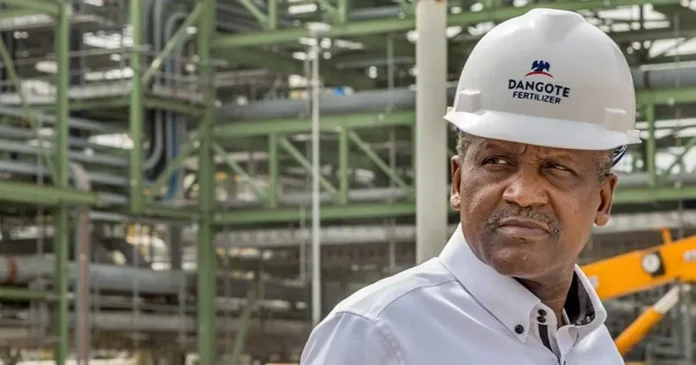
Dangote Industries Limited, DIL, may soon collapse its business subsidiaries structure by merging NASCON Allied Industries Plc, the salt-making arm, with its two other food companies, together.

DIL is the holding company for a raft of firms majority-owned by Africa’s wealthiest man Aliko Dangote.

In a regulatory filing cited by BizWatch Nigeria, the company disclosed that the marriage is expected to unite the salt-maker with Dangote Sugar, owners of sub-Saharan Africa’s largest sugar refinery, and Dangote Rice into a single entity.

While Dangote Rice is not listed yet, both NASCON and Dangote Sugar are quoted companies on the Nigerian Exchange Group, NGX.

This development is, however, coming over two years after the group’s fiercest rival, BUA Group, announced a similar move consolidating its food businesses – rice, sugar, flour, edible oils, and flour – into a new company known as BUA Foods.

BUA Foods would go on to list on the Nigerian Exchange and is currently Nigeria’s biggest consumer goods company by market value, worth over N2.4 trillion as of the market open on Thursday, July 13, 2023, and N649.6 billion in total assets as of 31 March.

Meanwhile, after announcing its intention to buy back its own shares from shareholders on Tuesday, Dangote Cement Plc saw a 9.27% increase in value. This increased purchasing activity on the Nigerian Exchange’s trading floor.

As a result of shareholders’ involvement in the company’s share repurchase, the market price increased by N30.6 in a single day to N360.7. After a protracted period in which MTN Nigeria relinquished its status as the most valuable brand on the local exchange, the market valued Dangote Cement at N6.145 trillion at the conclusion of the trading session.

Godwin Emefiele To Face Criminal Charges By DSS

How DSS Should Handle Emefiele's Investigation - Falana

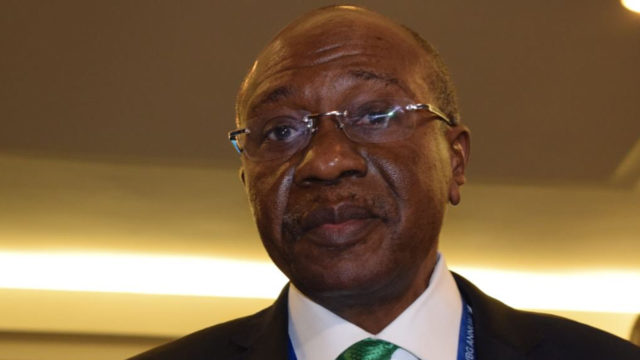
Following a previous order to prosecute him or release him, the Department of State Security (DSS) said on Thursday that it has filed charges in court against Central Bank governor Godwin Emefiele, who is currently jailed and on leave.

Emefiele may be sentenced to lengthy prison sentences if found guilty of misappropriating cash, according to documents submitted by government attorneys. Emefiele was detained by the DSS on June 10 after being suspended by the new president, Bola Tinubu, on June 9.

“Sequel to an Abuja High Court Order of today, 13th July, 2023, the Department of State Services hereby confirms that Mr Godwin Emefiele has been charged to Court in compliance with the order,” the DSS said in a statement. Court papers will be served to Emefiele’s lawyers and the court then will set a day for his arraignment, at which time he will be asked to enter a plea.

On Thursday, no one could be reached to speak with his attorney. The suspension was imposed by President Tinubu less than two weeks after taking office. Shortly after, Emefiele’s announced trading limitations in foreign currencies were removed by the central bank.

Investors were ecstatic about the limitations being removed as part of the new president’s drive to modernize the central bank. According to Nigeria’s constitution, accused individuals cannot be held without charge for more than 48 hours.

According to government attorneys, a lower magistrate court decision to keep Emefiele in custody longer while investigations are ongoing.

Emefiele was scheduled to step down in 2019 after being chosen by former President Muhammadu Buhari for a second five-year tenure. Buhari has advocated for a strong currency because he saw it as a matter of national pride.

NCAA Grounds Max Air Flights Indefinitely

NCAA Grounds Max Air Flights Indefinitely

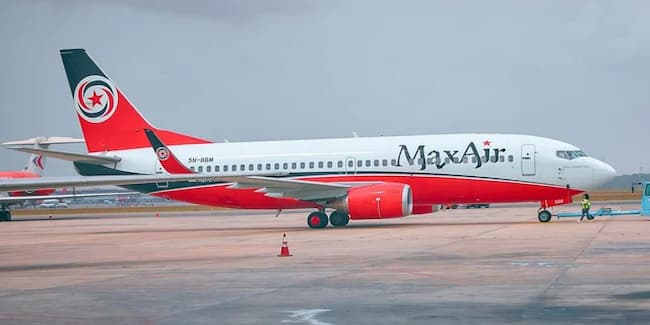
The Nigeria Civil Aviation Authority (NCAA) has grounded all Boeing B737 aircraft operated by domestic carrier Max Air.

According to a letter from the regulator to the domestic airline, the suspension is effective immediately.

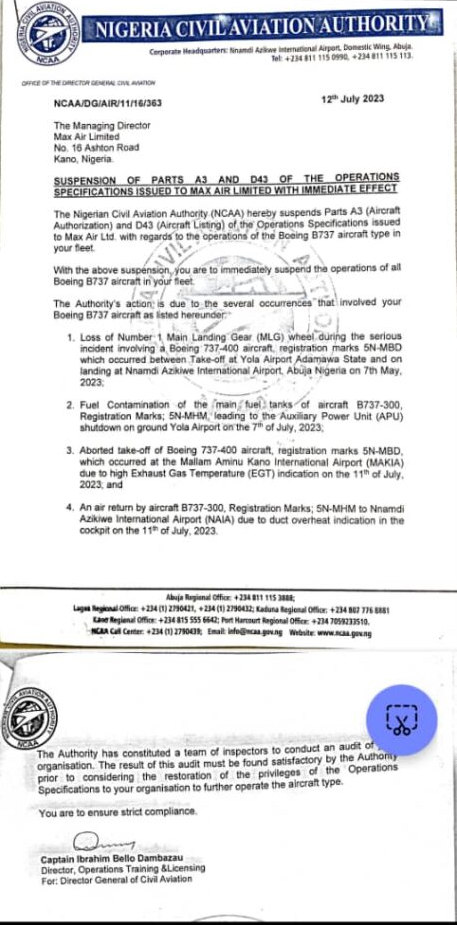
The letter was titled NCAA/DG/AIR/11/16/363 and was dated July 12, 2023. It was captioned ‘Suspension of Parts A3 and D43 of the Operations Specifications Issued to Max Air with Immediate Effect’.

The letter was signed on behalf of NCAA Director General Capt. Musa Nuhu by NCAA Director of Operations, Training, and Licensing, Capt. Ibrahim Bello Dambazau.

NCAA’s letter to Max Air

By extension, the airline’s domestic flights will be halted until the suspension is removed.

“The Authority’s action is due to the several occurrences that involved your Boeing B737 aircraft as listed hereunder,” NCAA said via the letter.

“Loss of Number 1 Main Landing Gear (MLG) wheel during the serious incident involving a Boeing 737-400 aircraft, registration marks 5N-MBD which occurred between Take-off at Yola Airport Adamawa State and on landing at Nnamdi Azikiwe International Airport, Abuja Nigeria on 7th May, 2023.

“Fuel Contamination of the main fuel tanks of aircraft B737-300, Registration Marks; 5N-MHM, leading to the Auxiliary Power Unit (APU) shutdown on ground Yola Airport on the 7th of July, 2023.

“Aborted take-off of Boeing 737-400 aircraft, registration marks 5N-MBD, which occurred at the Mallam Aminu Kano International Airport (MAKIA) due to high Exhaust Gas Temperature (EGT) indication on the 11th of July, 2023.

“An air return by aircraft B737-300, Registration Marks; 5N-MHM to Nnamdi Azikiwe International Airport (NAIA) due to duct overheat indication in the cockpit on the 11th of July, 2023.

“The authority has constituted a team of inspectors to conduct an audit of your organization. The result of this audit must be found satisfactory by the Authority prior to considering the restoration of the privileges of the operations Specifications to your organisation to further operate the aircraft type.”

READ ALSO

Increase In Power Tariff Predicted As Discos Apply For Review

DisCos To Resume Distribution Of Free Metre To Nigerians

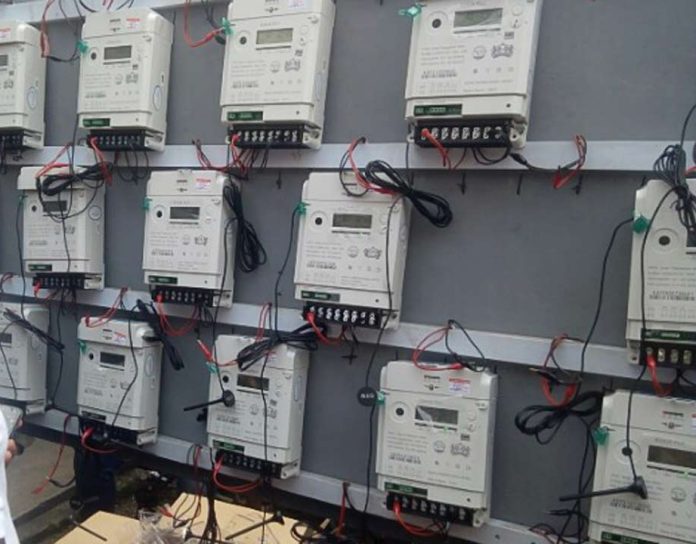
The Federal Government, on Thursday, announced that the 11 power distribution companies in Nigeria have all applied for the reassessment of their various electricity tariffs in order to incorporate the changes in the macroeconomic parameters across the country.

It disclosed this through a notice published by the Nigeria Electricity Regulatory Commission. It added that Discos also stated their reasons for the electricity tariff reassessment were presumed on factors affecting the quality of service, operations and sustainability of the companies.

The NERC stated the application for tariff review by the power firms was in line with the rules contained in the Electricity Act 2023.

Recall that some power distribution companies had announced in June that there would be an increase in power tariff, which was to take effect from July 1, 2023.

The Discos, however, backtracked the next day after widespread criticisms, as they stated that the Nigerian Electricity Regulatory Commission had yet to approve the hike. The development caused apprehension among power users at the time, as many prepaid consumers rushed to buy more electricity units in their meters, while anticipating a possible hike in tariff.

It was, however, observed on July 1, 2023, that Discos did not increase the tariff, an indication that they had yet to get the approval of the power sector regulator.

But on Thursday, the NERC announced that the power firms had applied for a reassessment of their respective tariffs, though it described it as an application for rate review.

In the notice from the regulator, it said, “Pursuant to Section 116 (1) and 2(a&b) of the Electricity Act 2023 and other extant rules, the 11 successor electricity distribution companies have filed an application for rate review with the Nigerian Electricity Regulatory Commission.

Oil Income Reaches N1.68tn As Output Soars

Oil Prices Drop, Here's Why

An examination of the most recent oil production data given by the Federal Government revealed that Nigeria’s crude oil revenues increased to over N1.68tn in June 2023 as a result of an increase in the country’s output last month.

According to information received on Thursday from the Nigeria Upstream Petroleum Regulatory Commission’ (NUPRC)s June 2023 crude oil production report, the nation’s daily oil output increased to 1,248,960 barrels during the review month. Nigeria produced 1,183,691 barrels per day of crude oil in May, which is 65,269 barrels less than it did in June.

According to the updated data, the total amount of crude oil produced in June was 37,468,798 barrels, an increase from the 36,694,427 barrels that were produced in May. This suggested that Nigeria’s oil output increased by 774,326 barrels in June when compared to what it produced in May.

According to World Bank data, a barrel of crude oil will cost on average $74.89 in June 2023. It was inferred by providing a higher production of 37,468,798 in June that the nation made around $2.81 billion from the commodity in June.

According to information from dollar/naira spot exchange rates for 2023, this indicated that the Federal Government’s oil revenues in June increased to N1.68 trillion at an average exchange rate of N600.43/$.

When the average price of crude oil and the exchange rate during that month were $75.70 per barrel and N461.4 per dollar, respectively, it was nearly N1.28 trillion.

The Central Bank of Nigeria combined the country’s currency rates into the Investors and Exporters window on June 14, 2023, enabling market forces to set the rate. As a result, the average exchange rate of the dollar climbed in June.

Nigeria’s oil production has been oscillating throughout the last year; in September 2022, the nation’s oil output reached a low of 0.937 million barrels per day. This was attributed by the federal government and oil industry participants to widespread petroleum theft in Nigeria’s oil-rich Niger Delta.

Additionally, the scenario resulted in financial losses for the nation, foreign oil corporations operating in Nigeria, as well as local business owners in the sector.

But the country’s oil output started improving after September, following concerted efforts by security officials and oil operators, as industry figures showed that crude production rose to 1.014 million barrels per day in October.

This indicated an increase of 0.077mbpd when compared to the 0.937mbpd output in September. In November, the country pumped 1.185mbpd crude, representing an increase of 0.171mbpd when matched against what was produced in October.

The rise in output continued in December last year, as Nigeria produced 1.253mbpd in that month, indicating an increase of 0.05mbpd when compared to its output in November.

The 1.258mbpd oil production in January 2023 was about 23,000bpd higher than the 1.235mbpd crude oil output in December 2022.

The momentum was sustained in February, with an output of 1.31mbpd. But the volume dropped to 1.27mbpd in March, putting an end to the seven-month run in Nigeria’s oil output. It further went down in April to 0.998mbpd.

Latest data from the NUPRC, on Thursday, showed that the rise in oil production in May was sustained in June, as the country pumped 1,183mbpd in May, while its output rose to 1.25mbpd in June.

Senate Approves $800m Loan For Safety Net Programme

Senate Approves $800m Loan For Safety Net Programme

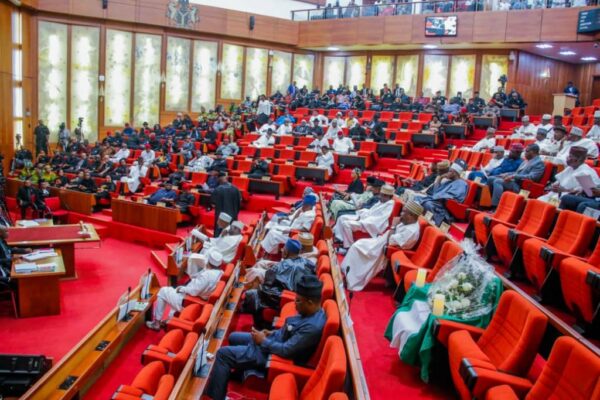
The Senate approved President Bola Tinubu’s proposal on Thursday for a $800 million loan as an additional resource for the funding of the National Social Safety Net Programme established by the National Assembly.

The Senate also modified the Supplementary Budget for 2022.

This was in response to Tinubu’s request for approval. The President’s appeal was contained in a letter he delivered to the upper chamber via the Senate President, Godswill Akpabio, and was read aloud on the Assembly floor during plenary.

Tinubu said that the Federal Executive Council, led by ex-President Muhammadu Buhari, had accepted a $800 million loan facility from the World Bank to fund the Social Safety Net Programme.

The President also stated that the facility’s objective was to enhance coverage of shock responsive safety net supports for all and vulnerable Nigerians in order to pay the expense of their basic needs.

“Request for approval of additional financing of the National Social Safety Net Programme set up by the National Assembly. It is with pleasure that I refer the above matter to you,” the statement partly read.

“Please note that the Federal Executive Council led by President Muhammadu Buhari GCFR had approved an additional loan facility to the tune if USD800 million to be secured from the World Bank to finance the Social Safety Net Programme, copy of the Federal Executive Council is extract is attached here.

“You may also wish to know that the purpose of the facility is to expand coverage of shock responsive safety net supports for all and vulnerable Nigerians and the cost of meeting basic needs.

“You may further wish to note that under the conditional cash transfer window of the programme, the Federal Government of Nigeria will transfer the sum of N8,000 a month to 12 million poor and low income households for a period of six months with a multiply effect on about 60 million individuals.

“In order to guarantee the credibility of the process, digital transfers will be made directly to beneficiaries accounts and mobile wallets .

“It is expected that the programme will stimulate economic activities in the informal sector and improve nutrition, health and education outcomes for beneficial households.

“Giving the above, I wish to invite the Senate to kindly grant approvals for additional loan facilities USD800milliom to be secured from World Bank for the National Social Safety Net Programme.

“While hoping that this submission will receive an expeditious consideration by the Senate. Distinguished Senate President and distinguished members, please accept the assurances of my highest regards.”

After reviewing the letter, the Senate President forwarded it to the Committee of the Whole for further legislative action.

After deliberation, the Committee modified the 2022 Supplementary Budget and approved Tinubu’s request.

READ ALSO

NBS- Foreign Investments In Manufacturing Drops By 35%

Nigeria Reports ₦927.16bn Trade Surplus In Q1 2023

According to the National Bureau Of Statistics (NBS), Foreign investments to the manufacturing sector dropped by 35 per cent from $392.5m in the fourth quarter of 2022 to $256m in the first quarter of 2022, the National Bureau of Statistics’ capital importation report for 2023 Q1 has shown.

According to the report, the total capital importation into Nigeria in Q1 2023 stood at $1.1bn, lower than US$1.5bn recorded in Q1 2022, indicating a decrease of 28 per cent.

Despite the fall in capital importation, capital importation into the production sector ranked second with 22 per cent share of total investments, while the banking sector recorded the highest inflow of $304.5m, representing 26.89 per cent of total capital imported in Q1 2023.

In recent months, the Manufacturers Association of Nigeria had warned that the increasingly harsh business environment, occasioned by high energy costs, lack of access to funding, multiple taxation, among others, had scaled down investments into the sector.

According to the Manufacturers Association of Nigeria Bi-Annual Economic Review, investment in the manufacturing sector dipped to N145.59bn in the second half of 2022, in comparison to N160.88bn in the corresponding half of 2021, representing a decline of N15.29bn or 10 per cent.

It further declined by N32.8bn or 18 per cent when compared with N178.39bn recorded in the first half of the year. Manufacturing investment totalled N323.98bn in 2022 as against N305.02bn recorded in 2021.

According to MAN, the decrease in investment during the period was mainly caused by the government’s debt issues, high borrowing and energy expenses, and weak consumption.

The President of the Manufacturers Association of Nigeria said that more international manufacturing companies may leave the country should power distributors implement the planned tariff hike.

He stated that some international manufacturing organizations had already left Nigeria as a result of the power crisis, coupled with the unpredictability of the country’s foreign exchange rate before it was recently unified.

Meshioye said, “Manufacturers provide almost every infrastructure by themselves. Outside the major roads, you find out that manufacturers provide water, power, security, etc. So, when you look at it, you find out that the cost of doing business is so huge.”

NGX Witnesses Largest Daily Loss as Banking Stocks Fall

Stock Market Maintains Downward slope, Investors Lose N20 Billion

The banks stocks continued to fall, and the Nigerian exchange was unable to stop the downward trend. The stock market saw a loss of roughly N707 billion, which moderated the return for the year. Due to the pessimistic sentiment of investors, the exchange lost almost N1.6 trillion in two days.

According to market statistics, losses suffered by FBNH (-9.82%), STANBIC (-10%), ETI (-9.94%), ACCESSCORP (-9.54%), GTCO (-5.56%), FIDELITY (-10%), and MTNN (-4.64%) were the cause of Thursday’s decline. A few banks have little upside potential, according to equity research analysts at Futureview Financial Services little, who earlier in the week recommended selling or, at best, holding most of the tickers.

Key performance metrics fell by 2.03%. Trading statistics revealed that the benchmark NGX All-Share Index continued to drop at the Lagos Stock Exchange. The index dropped by 203 basis points to end the day at 62,748.94 points, closely mirroring its poor performance on Wednesday at 64,046.93 points.

As investor wealth decreased by almost 1.59 trillion in just two days at the close of the trading session, the year-to-date return declined to 22.43%, according to a market report from Atlass Portfolios Limited. According to stockbrokers, market activity has decreased as a result of the Thursday trading pattern seen on the local marketplace. Trading volume and value both decreased by 31.36% and -17.69%, respectively.

In 10,296 trades, about 798.47 million units worth $10,449.33 million were exchanged, according to a report to investors from stock market experts. UBA accounted for 12.41% of the total amount of trades and was the most actively traded stock in terms of volume.

Following the Pan African Lender in the top 5 on the volume table were FBNH (9.11%), TRANSCORP (8.62%), FCMB (8.51%), and GTCO (6.42%). Due to its size advantage, GTCO was the most actively traded company in terms of value, making up 16.95% of all deals on the exchange.

With a price increase of 10 percent, JOHNHOLT led the list of today’s advancers, followed by DANGSUGAR (9.94%), NASCON (+9.91%), SKYAVN (+9.80%), GOLDBREW (+9.73%), and fourteen other stocks.

According to statistics from the local market, 56 stocks declined. With price declines of -10.00% apiece, TRANSCOHOT, FIDELITYBK, SOVRENINS, STANBIC, WEMABANK, and OMATEK were the biggest losers. ETI dropped by 9.94%, UNITYBNK down by 9.94%, STERLINGNG dropped by 9.92%, UACN dropped by 9.91%, and FBNH dropped by 9.82%. The market breadth finished broadly negative, with 19 gainers and 56 losers, as the bears tightened their hold.

Four out of the five major market sectors were down, which contributed to a negative closing sector performance. Following the banking index’s decline of 6.63% was the insurance sector’s decline of 4.13%. The Consumer Goods sector fell by 0.09 points, the Oil & Gas index slowed by 0.74%, and the Industrial index increased by +0.69%.

Overall, the equities market recorded a large daily loss of ₦706.77 billion, representing a drop of -2.03%, to close at ₦34,167.42 trillion from ₦34,874.19 trillion the previous day.

President Tinubu Declares State Of Emergency On Food Security

President Tinubu Declares State Of Emergency On Food Security

Nigeria’s President Bola Tinubu has proclaimed a state of emergency on food security.

Dele Alake, the presidential spokesman, stated this to a State House correspondent on Thursday.

The President directed that all issues concerning the availability and affordability of food and water, as vital livelihood goods, be brought under the purview of the National Security Council.

The instruction was believed to be in accordance with the Tinubu administration’s stance on supporting the most needy.

According to Alake, the President is aware of the rising cost of food and its impact on citizens’ pockets.

To alleviate the effects of the subsidy elimination, the President also instructed the prompt supply of fertilizers and cereals to farmers and households.

“There must be an urgent synergy between the Ministry of Agriculture and the Ministry of Water Resources to ensure adequate irrigation of farmlands and to guarantee that food is produced all-year round.” the President was quoted as saying.

“We shall create and support a National Commodity Board that will review and continuously assess food prices as well as maintain a strategic food reserve that will be used as a price stabilisation mechanism for critical grains and other food items. Through this board, government will moderate spikes and dips in food prices.

“To achieve this, we have the following stakeholders on board to support the intervention effort of President Bola Ahmed Tinubu: The National Commodity Exchange (NCX), Seed Companies, National Seed Council and Research institutes, NIRSAL Microfinance Bank, Food Processing/ Agric Processing associations, private sector holders & Prime Anchors, small holder farmers, crop associations and Fertilizer producers, blenders and suppliers associations to mention a few.

“We will engage our security architecture to protect the farms and the farmers so that farmers can return to the farmlands without fear of attacks.”

The President stated that the Central Bank of Nigeria will continue to subsidize the agricultural value chain.

He stated that 500,000 hectares of land have already been mapped in order to increase the availability of arable land for farming.

Tinubu stated that earnings from agricultural and food exports would be enhanced.

READ ALSO

LCCI Advises Federal Government To Expand Tax Net

LCCI Hints On Tech Disruptions

The Lagos Chamber of Commerce and Industry (LCCI) has advised the Federal Government to expand its tax net and bring it more taxpayers instead of increasing the burden on existing taxpayers.

The chamber said this in a statement signed by its President, Michael Olawale-Cole.

According to the statement, the recent appointment of Taiwo Oyedele as the chairman of the Presidential Committee on Fiscal Policy and Tax Reforms, established to remove barriers impeding business growth in Nigeria, is a decisive affirmative action.

The chamber further said that it was clear by the pronouncement that the President recognised the importance of a sound fiscal policy environment and an effective taxation system for the functioning of the government and the economy.


The statement read in part, “The committee’s primary objective would be to enhance revenue collection efficiency, ensure transparent reporting, and promote the effective utilsation of tax and other revenues to boost citizens’ tax morale, foster a healthy tax culture, and drive voluntary compliance.

“Your Excellency, it would be important for the committee to focus on expanding the tax net to avoid overburdening existing taxpayers. Other issues of revenue leakages, such as oil theft, should also be properly addressed. These would ensure that the government can earn more revenue and that there will be less dependence on internal and external borrowings to fund the budget.”

It added that those efforts would improve the country’s revenue profile and create a more conducive and internationally competitive business environment.

Nigeria Partner Canada On Coffee Exportation

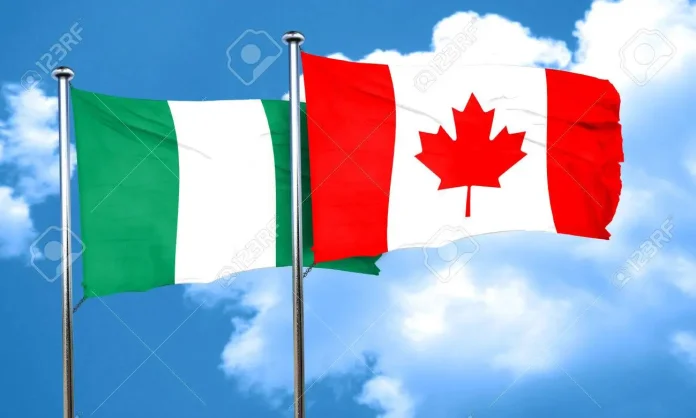
The West African Specialty Coffee Association has announced the establishment of the Nigerian-Canadian Coffee Exchange Corridor, an initiative that aims to strengthen bilateral trade between Nigeria and Canada and promote the exportation of Nigerian coffee to the international market.

According to a statement, Nigerian-Canadian Coffee Exchange Corridor aims to facilitate coherent trade and foster long-term partnerships between Nigerian coffee producers and Canadian coffee importers, roasters, and retailers.

It stated that by leveraging that corridor, Canadian businesses would gain access to a diverse array of high-quality Nigerian coffee beans, contributing to the growth of the coffee market.

It added that the initiative would focus on promoting sustainable practices throughout the entire coffee value chain.

“WASCA, in collaboration with key stakeholders, is committed to ensuring that coffee cultivation in Nigeria adheres to stringent environmental and social standards.

“This commitment not only safeguards the delicate ecosystems but also empowers local communities, ensuring fair trade and sustainable livelihoods for coffee farmers,” the statement continued.

The President of WASCA, Larry Segun-Lean, said the Nigerian-Canadian Coffee Exchange Corridor marked an exciting chapter in the history of Nigerian coffee.

He said, “Through this partnership, we aim to share our rich coffee heritage with the world while fostering economic growth and collaboration between Nigeria and Canada. We are confident that the Nigerian-Canadian Coffee Exchange Corridor will be a catalyst for innovation, quality improvement, and sustainable development within the coffee industry.”

According to him, as part of the collaboration, WASCA plans to organise educational programmes, workshops, and trade events to facilitate knowledge exchange and foster a deeper understanding of Nigerian coffee within the Canadian market.

Development Bank (DBN) Raises N23bn For Small-Scale Businesses

Development Bank's Unpaid Loans Rise by 110% To N214bn in 2020

The Development Bank of Nigeria (DBN) has raised N23bn bond at 14.40 per cent due in 2028 for into small scale businesses.

According to the bank, the N23bn issued would be used to expand its capacity to provide funding for Micro, Small and Medium Enterprises (MSMEs) in facilitation of its main corporate goal.

The Managing Director DBN, Tony Okpanachi, stated that this was the bank’s first local raise since it began to raise funds.

Speaking at the signing ceremony in Lagos on Thursday, Okpanachi, said, “So we have mobilised capital from outside the shore of Nigeria. That was the first step.

“As an institution going forward, we will also be able to catalyse some fundraising within the economy itself to lend to the micro, small, and medium enterprises. We are expanding our funding base beyond the development partners we received funding from.

“Now we are raising funds, locally because if you remember, the need of that segment in the economy is huge.”

DBN exists to alleviate financing constraints faced by MSMEs in Nigeria by providing financing, partial credit guarantees, and technical assistance to eligible financial intermediaries on a market-conforming and financially sustainable basis.

The Executive Director and Chief Financial Officer DBN, Mrs Ijeoma Ozulumba, noted that about 20,000 small businesses were likely to benefit from this fund. She stated that the fund would help institutions have access to finance.

She added that the rates were affordable and that as the economy improved and interest rates moderated, it would also reflect on the instrument.

Ozulumba said further issuances would depend on the market conditions, the utilisation of available funds, and when shareholders and advisers gave a go-ahead.

DBN noted that its bond was over-subscribed as it set out to raise an initial N20bn debut issuance under its N100bn medium-term note programme.

Dollar To Naira Exchange Rate Today (Fri. July. 14, 2023)

Dollar To Naira Exchange Rate Today (Mon. July. 24, 2023)

Dollar to naira, on Friday, July 14, 2023, opened at (undisclosed) at the Investors & Exporters FX window ( I&E FX Window), where the currencies officially trade.

According to the data at the FMDQ Security Exchange where forex is traded officially, the dollar to naira exchange rate stood at (undisclosed).

This would mean that the Nigerian currency dropped in value against the United States dollar, as the foreign exchange (forex) trading closed at ₦746.28 per $1 on Thursday, July 13.

How much is the dollar to naira at the black market today?

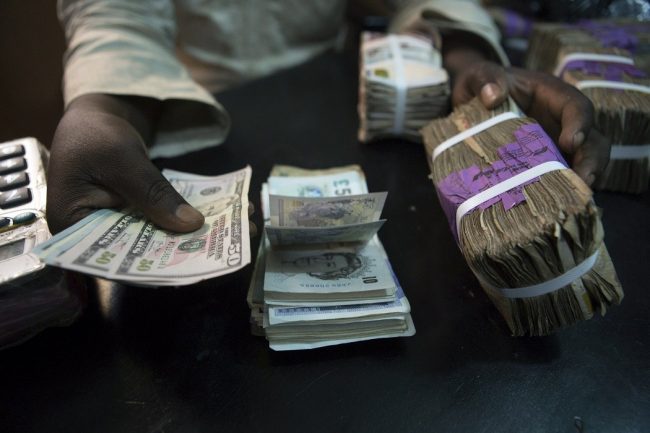
Going by sources at the Bureau De Change (BDC) in Lagos, the dollar to naira last exchanged between ₦808 and ₦815 with an average of ₦812.67 in the black market in the state.

It is, however, pertinent to note that the Central Bank of Nigeria (CBN) does not recognise the parallel market (black market), as it has directed individuals who want to engage in forex to approach their respective banks.

BizWatchNigeria.Ng
Privacy Overview

This website uses cookies so that we can provide you with the best user experience possible. Cookie information is stored in your browser and performs functions such as recognising you when you return to our website and helping our team to understand which sections of the website you find most interesting and useful.