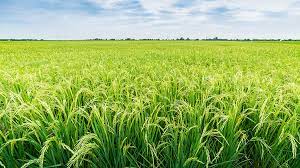
Agricultural investment institution, AGRA, has said it hopes to unlock $80 million for investments in agriculture for three flagship states in the country.
AGRA’s Vice-President, Policy and State Capacity, Dr. Apollos Nwafor, said the planned intervention was contained in its new five-year document, aimed at impacting over 1.2 million farmers in the country.
Speaking at the launch of the AGRA 3.0 Strategy (2023 – 2027) which also witnessed the signing of a Memorandum of Understanding (MoU) between AGRA and the Ministry of Agriculture and Rural Development, Nwafor said its strategic interventions will focus on enhancing the productivity and profitability of smallholder farmers, improve market access and value chain development, promote climate-smart agriculture, and foster an enabling policy environment over the next five years.
He said AGRA is determined to leave no one behind as well as ensure that the benefits of its initiatives reached all segments of society, particularly women, young people, and historically marginalised groups.
On his part, Permanent Secretary, Federal Ministry of Agriculture and Rural Development, Dr. Ernest Umakhihe, on behalf of the federal government, commended AGRA for its past programmes in the country which he said were successful and impactful.
He pointed out that the federal government’s policy on agriculture aligns with AGRA’s strategic plan in its objectives and mandates.
Umakhihe also expressed hope that the MoU between both parties would further bring about transformation in the country’s food systems.
Nwafor, however, explained that AGRA and the federal government have been in strategic partnership for the past 15 years.
He said the institution had invested over $32 million to support inclusive agricultural transformation in the country between 2007 and 2022.
According to him, investments in farmer and system development had so far benefitted 964,260 farmers including 260,350 women and 703,910 men in maize, rice, and soybean value chains out of the 1.5 million farmers targeted across Kaduna and Niger States in the last strategy.
Under the new framework, AGRA will also partner with the government to address the challenge of low budgetary allocation to agriculture by tracking budget approvals, releases and actual expenditures in order to assure adequate funding for program implementation.
AGRA Board Member, Ms Ada Osakwe, said the interventions would assist to accelerate Nigeria’s food systems transformation, adding that the institution will continue to support the country stakeholders to take advantage of new technologies and innovation opportunities that could facilitate knowledge sharing and local actions that enable greater participation in food systems decision making that work for the people.
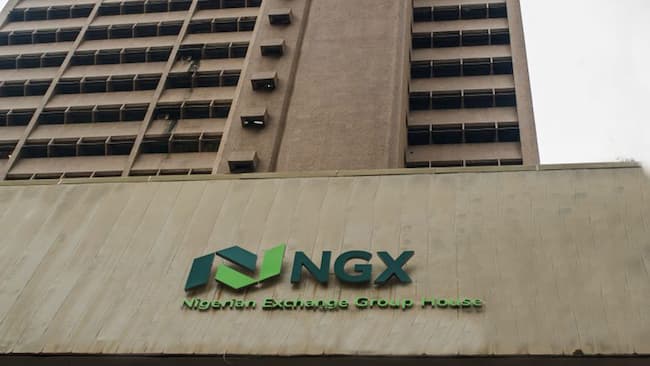
Amid recent optimistic sentiments in Nigeria’s stock market, the Board and Management of Nigerian Exchange Group Plc (NGX Group) have said that they are open to working with the Federal government, as well as stakeholders towards improving the country’s credit profile and creating a favorable environment for both local and international.
This was disclosed by the Group Chairman, NGX Group, Alhaji Umaru Kwairanga, during the Group’s 62nd Annual General Meeting (AGM) held in Lagos.
Addressing shareholders at the meeting, Kwairanga, praised President Bola Tinubu-led administration for the various reforms that have resulted in the impressive performance of the market.
“The capital market community is excited by the new government and the steps it has so far taken with respect to the economy as reflected in the tremendous growth in our market indicators. As a group, we are committed to working with the government to stimulate further growth in the economy, address higher capital costs, as this will go a long way to enhance Nigeria’s credit profile, and create a favourable environment for both domestic and foreign investors, ”he said.
Kwairanga further noted that the Federal government needs to get by more friendly market policies that will ensure growth, as consistent and faithful implementation of market policies will help businesses to flourish. He added that the group is hopeful that the planned Initial Public Offer (IPO) of the NNPC Limited will be fast-tracked by the Tinubu-led administration.
Speaking on the performance of the group, Kwairanga noted that NGX Group demonstrated resilience in 2022, achieving a 10.3 per cent increase in gross earnings to N7.5 billion, despite a challenging economic environment. The Group’s total revenue grew primarily due to a 6.8 per cent increase in revenue to N6.2 billion, and a 30.1 per cent increase in other income to N1.3 billion.
The growth in its revenue was further strengthened by a 51.2 per cent increase in treasury investment income and a 9.0 per cent increase in transaction fees. However, its total expenses rose by 35.5 per cent to N8.8 billion, primarily due to interest costs on borrowed funds used for strategic acquisitions.
“Achieving an efficient capital mix and broadening our access to capital remain fundamental to our mission. The Board will continue to assist the Management team in addressing long-term risks, strengthening the global NGX brand, and assessing progress toward our goal of being Africa’s preferred exchange hub, “emarked Kwairanga.
While welcoming the new board members, Kwairanga commended the contributions of the outgoing board members to the growth and development of the organization.
Commending the group’s performance, the Group Chief Executive Officer, Oscar Onyema, said the performance reflects NGX Group’s commitment towards driving growth in Nigeria and Africa’s capital markets. Onyema further added that the group is proud to have generated multiple income streams that enabled it to overcome economic headwinds.
Speaking on the group’s outlook, Onyema expressed optimism around the opportunities and challenges ahead and emphasized the group’s commitment to leveraging its strengths and expertise to drive growth and value creation in Nigeria and other financial markets Africa.
“NGX Group will continue supporting its operating subsidiaries, associates, and investee companies to deliver sustainable value creation for its shareholders. We will look to enhance our performance by continuously striving to optimize operations, increase revenue streams and expand our market reach. We are confident that these measures will enable us to build on the positive momentum we have achieved in recent years and drive growth in 2023 and beyond”, he said.
Shareholders approved all resolutions on the agenda, which included the appointment of six Directors of Nigerian Exchange Group Plc: Mr Nonso Okpala (Non-Executive Director), Mr Sehinde Adenagbe (Non-Executive Director), Mr Ademola Babarinde (Non-Executive Director), Mrs Mosun Belo – Olusoga (Independent Non-Executive Director), Mr Mohammed Garuba (Non-Executive Director) and Mrs Fatima Wali- Abdurraham (Independent Non-Executive Director).
David Dada, an information security specialist said that device users who use the internet over free WiFi inadvertently expose their passwords and other crucial bank details to hackers.
Dada, who spoke on Channels Television’s program on Monday, stated that one of the fundamentals of securing online transactions is to avoid connecting to free WiFi in public locations since it compromises every user’s privacy.
“When you are using unsecured WiFi, a lot of your transactions have been spoofed by someone else, and somebody else is watching what you are doing.
“You go to the supermarket, you go to the airport, you go to public places and you see unsecured WiFi and you decide to log in. The moment you log on to that, it is very dangerous,” he stated.
Dada said he has the power to build up what he refers to as the ‘evil twin’ network and make it free, adding that those who are lured to it inadvertently give up something in exchange.
“When you see free WiFi, you are actually paying for it in a way. I give you free internet but I am going to take your information.
“I am gonna your passwords, your username, and tokens and I will store it somewhere. You get off my network, I go somewhere and pick all the things in your bank accounts and I go home and you can’t trace me anywhere,” he said.
According to the expert, regardless of the security platform a user has on his or her mobile device, once free WiFi is utilized, digital footprints are left behind.
“The moment you get onto that free WiFi, you have excluded all security for your phone, so it is safer to stay away from it,” he said.
Dada further stated that the mix of phishing and social engineering accounts for around 90% of people’s vulnerability.
Unilever Nigeria and UNICEF announced the launch of the Future-X Campus Ambassadors Program (FUCAP) to empower 3 million Nigerian youths and equip 700,000 of them between the ages of 16 and 24 with the requisite skills to succeed in the workplace of the future by 2026.
This aligns with the Unilever Compass commitments to equip 10 million young people worldwide with essential skills to prepare them for job opportunities by 2030 and UNICEF’s Generation Unlimited Nigeria initiative – a public-private-youth partnership aimed to support 20 million young Nigerians by 2030 with skills and opportunities to transition from learning to earning, through shared-value partnerships around digital skills development, workforce readiness programmes, and young people engagement.
The FUCAP initiative was launched on UNICEF’s Yoma and U-Report Platforms, a youth-centered platform, to ensure an extensive reach of young people in universities and other higher institutions across Nigeria.
Speaking on the initiative, the Managing Director, Unilever Nigeria, Tim Kleinebenne, said, “FUCAP is targeted at students in Universities and Polytechnics across Nigeria. This is part of our commitment to helping young people in Nigeria reach their full potential and contribute to the development of Nigeria.”
On his part the Human Resources Director, Unilever West Africa, Ola Ehinmoro said, “our target for FUCAP which is a three-year program is to equip 700,000 young people with skills to become entrepreneurial-minded and prepared to keep re-inventing themselves for the future of work annually in the first year of kick off.”
“We will also engage 100,000 students through hybrid campus seminars that will provide students with information about the skills they need to succeed in the workplace and opportunities to network with employers and other young people. Unilever Nigeria will provide 15 Graduate Internship placements through the FUCAP initiative to immerse these talents into its workforce.” He added.
“UNICEF is happy to partner with Unilever Nigeria on this important initiative that focuses on developing critical 21st-century skills for young people,” said Cristian Munduate, UNICEF Nigeria Representative.
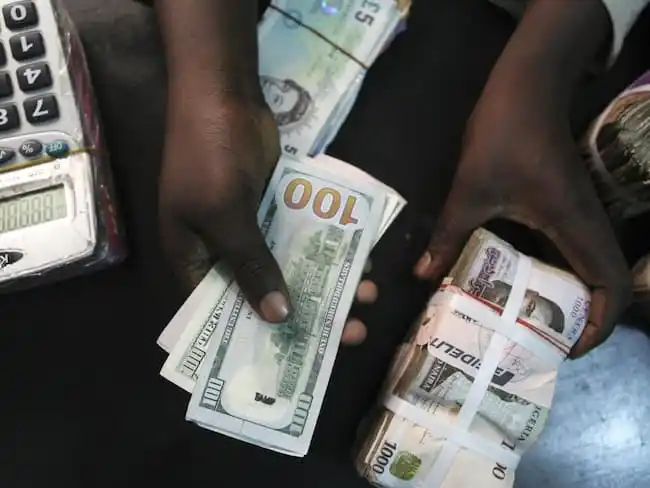
According to the data at the FMDQ Security Exchange where forex is traded officially, the dollar to naira exchange rate stood at (undisclosed).
This would mean that the Nigerian currency dropped in value against the United States dollar, as the foreign exchange (forex) trading closed at ₦803.90 per $1 on Thursday, July 13.
How much is the dollarto naira at the black market today?
Going by sources at the Bureau De Change (BDC) in Lagos, the dollar to naira last exchanged an average of ₦812.00 in the black market in the state.
It is, however, pertinent to note that the Central Bank of Nigeria (CBN) does not recognise the parallel market (black market), as it has directed individuals who want to engage in forex to approach their respective banks.
inDrive, the globally recognized mobility and urban services platform, has revealed a transformative launch for its peer-to-peer ride-hailing in 15 new Nigerian cities and freight services in Lagos Nigeria.
The announcement was made at the esteemed Lagos Startup Week, an event that celebrates entrepreneurship and innovation in Africa.
inDrive’s commitment to community empowerment through fair, transparent urban mobility, and delivery solutions is underlined by this new expansion within Nigeria. The company sees vast opportunities within this dynamic country and is eager to engage and serve new local markets.
The ride-hailing service has already achieved a triumphant operation in Lagos, Abuja, and Ibadan. With the forthcoming grand launch this July, the service will further extend its reach to Kano, Kaduna, Benin City, Nnewi, Aba, Onitsha, Jos, Enugu, Warri, Abeokuta, Akure, Owerri, Calabar, Ado, Ekiti and Uyo. These metropolitan areas stand to gain immensely from the access and convenience that InDrive provides.
Alongside this ride-hailing expansion, inDrive also introduces a pioneering solution named inDrive.Freight, designed to meet the pressing needs of commercial businesses, SMEs, and private individuals.
This on-demand, same-day delivery service caters to freight weighing from 20kg to 20tn. The unique peer-to-peer model allows customers to choose from various delivery options and a wide range of vehicles for city deliveries.
Headquartered in Mountain View, California, inDrive has already made significant strides in the ride-hailing industry, with its app being downloaded more than 175 million times and currently operating in 655 cities across 48 countries.
Echoing its core values of challenging unfairness and promoting innovative solutions, transparency, and fairness, inDrive’s expansion in Nigeria serves as a strategic step toward driving global impact and facilitating inclusive opportunities for all.
As it looks ahead, inDrive continues to focus on growth and innovation. With its unique peer-to-peer model, the company is set to reshape the mobility and freight landscape in Nigeria and beyond.
There are vivid signs the Federal Government may consider the request by power distribution companies for a reassessment of their tariff, as the government spending on electricity subsidy has risen to N2.8tn.
In a new report by the Nigerian Electricity Regulatory Commission (NERC), it is indicated that past increase in electricity tariffs by Discos saved the government from paying additional N1tn in subsidy to power firms annually.
The July 2023 NERC report was titled, ‘Overview of the Nigeria Electricity Supply Industry.’
Providing an update on the country’s tariff review journey, the commission stated that “between January 2020 and January 2023, tariff increased from 55 per cent of cost recovery to 94 per cent.
It added, “Without the tariff reviews that commenced in 2019, subsidies payable by the government would have grown to about N1tn per annum by 2023. Service-Based Tariff was instrumental in the transition to cost-reflective levels.”
On subsidy payable, the NERC stated that subsidy (tariff shortfall) paid by the Federal Government between 2015 and 2022 rose to N2.8tn in December last year.
It added that between January and April this year, subsidy on electricity gulped N57bn, adding that the Service-Based Tariff scheme help in reducing the amount spent by the government on power subsidies.
“Annual subsidy reduced from N528bn in 2019 to N144bn in 2022. Subsidy in 2023 year-to-date (January to April 2023) stood at N57bn.
“Service-Based Tariff was instrumental to the reduction of tariff subsidy. The financial burden of tariff subsidies between 2015 and 2022 stood at NGN2.8tn,” the NERC stated.
The yearly hikes in power tariffs by the Federal Government through the NERC have been targeted at ending subsidies on electricity.
On Friday, it was made known to the public that the 11 power distribution companies in Nigeria had applied for the reassessment of electricity tariffs so as to incorporate the changes in Nigeria’s macroeconomic parameters.
The report stated that the NERC disclosed this in a notice, as it said the Discos stated that their reasons for the rate review were presumed on factors affecting the quality of service, operations and sustainability of the companies.
Meanwhile, some power distribution companies had announced on Sunday, June 25, 2023, that there would be an increase in tariff, projected to take effect from July 1, 2023.
The Discos, however, backtracked the next day after widespread criticisms, as they stated that the Nigerian Electricity Regulatory Commission had yet to approve the hike.
The development caused apprehension among power users at the time, as many prepaid consumers rushed to buy more electricity units in their meters, while anticipating a possible hike in tariff.
It was, however, observed on Saturday, being July 1, 2023, that the Discos did not raise the tariff, an indication that they had yet to get the approval of the power sector regulator.
“The request for rate review is premised on the need to incorporate changes in macroeconomic parameters and other factors affecting the quality of service, operations and sustainability of the companies.”
However, speaking on the requests by Discos for tariff, on Sunday, a senior official at the NERC stated that the commission would ask the power firms to further state why they were bent on having a hike in tariff during the proposed meeting.
“If you study their (Discos) Performance Improvement Plan, the number of transformers they are supposed to buy, did they buy it? And what is the justification for this increase they are asking for?
“How many transformers, lines, meters, etc, are they bringing on? How many customers are they going to migrate from four hours to eight hours, from eight hours to 10 hours, etc?
“These are the justification for rate increase. Although they may likely argue about the increase in foreign exchange rates, but they should know that the price of gas has reduced.
“So, they will need to let us know some of these things,” the NERC official, who pleaded not to be named, due to lack of authorisation, stated.
In the notice published on the NERC website, the commission invited “the general public for comments on the rate review applications by the distribution licensees.”
It stated that “interested stakeholders are advised to review and take into consideration the excerpts of the rate review applications filed with the commission by the respective licensees.”
Commenting on the development, energy economists stated that it was high time that all forms of subsidy on energy energy were stopped by the Federal Government.
“Energy is holistic. It is not like what we have done in the past, which is to treat petroleum and oil as very different from electricity, and to talk about energy and power and not talk about it in a holistic sense”.
“So any country that is successful in this area is dealing with energy as a whole and recognising that the hydrocarbons are so useful and important because they are sources of energy.
“So when talking about electricity and trying to divorce it from the rest, you’re going to fail,” the President, Nigeria Association for Energy Economics, Prof. Yinka Omorogbe, stated.
She explained that electricity should not be treated like an elite product, stressing that it served as a commodity for everyone in any country, adding that “everybody has a right to electricity”.
However, power consumers said they were opposed to any move by the government or Discos to increase tariffs, stressing that subsidy on electricity should remain, since subsidy on Premium Motor Spirit, popularly called petrol, was removed in May.
“Nigerians have not been able to cope with the fuel subsidy removal that was done recently and you are talking of power tariff review. Petrol sells for N540/litre in Abuja. It sells for N600 and above in parts of Calabar, Rivers and Bayelsa, and you talking about power tariff hike?
“Nobody is comfortable. Nigerians are not comfortable. Nobody will accept this kind of rise in energy cost. If the Federal Government will re-introduce the policy of paying the market shortfalls, then it will be better for consumers.
“Because if they go the way they are going, it will be disastrous, for we heard that some Discos are asking for as high as N300 per unit of electricity,” the National Secretary, Nigeria Electricity Consumer Advocacy Network, Uket Obonga, told our correspondent.
He said though tariff reassessment should be based on the service delivered to consumers, the Discos were neither delivering nor implementing capital projects as they promised.
Obonga said, “The NERC that is now going about sending notices, does it have a mechanism in place to measure the hours of electricity supplied by the Discos? How do they measure it? Apart from that, when you say Service-Based Tariff, it is not only tied to time, in terms of the number of hours of supply?
“It is equally tied to the quality of electricity supply. Now, who measures the quality of electricity supplied to Nigerians? There is also the issue of CAPEX, capital expenditure. We still have cases where the Discos are no longer involved in metering, rather they push the meters through Meter Asset Provider agents to sell and collect money.
“Their Vesting Contracts on CAPEX and others, are they keeping to it? Are you aware that for evey tariff rate there is a percentage that goes for CAPEX for the Discos? Are they really executing capital projects?”
The NECAN official went ahead to ask, “Have you seen it in any report of NERC where it is stated clearly that the Discos executed considerable amount of capital projects for which they had earlier demanded for an increase in tariff?
Bread Price Hike Looms As Flour Price Doubles To N20,000/bag
Bakers under the protection of Premium Bread Makers Association have disagreed with the declaration by flour millers that the price of flour has not been increased in the last one year.
This came as the Association of Master Bakers and Caterers of Nigeria announced on Thursday that bread prices would be increased by 15 percent nationwide beginning from July 24.
Emmanuel Onuorah, said that flour millers, in the wake of the devaluation of the naira had implemented another increase in the price of flour.
According to him, increased input costs in recent months had further made the plight of bakers who were already being burdened by wide range of macroeconomic challenges.
He stated that many of his members has abandoned the business of breadmaking due to the numerous challenges in the business environment.
Onuorah said, “They are gouging price. They just do whatever they want, they were telling us before now that they source their forex from the black market. Now that the government has taken away the official window we have discovered that they were getting forex from the banks.
“They’re going to implement the increase in the price of flour in tranches. They have added N2,000, with the possibility of adding another N3,000. I don’t know when, but that’s their plan. In the last three months, they have added N10,000 to the price of sugar. 150kg bag of sugar has gone up by N10,000.”
The recent removal of fuel subsidy and devaluation of the naira, he said, had led to significant increase in the overhead costs of breadmakers who were being forced to produce below optimal capacity.
He added, “Many of our distributors are using fuel. If they were using N4,000, today if they buy N4,000 fuel it doesn’t go anywhere. So it is affecting distribution. Most of them are leaving this business.”
Onuorah said the leadership of the union had already instructed the members to adjust prices in light of the recent developments in order to keep up with production costs.
“We have started doing it individually without necessarily giving any percentage adjustment. If any bakery does not adjust price, they will close down.
“Mind you, PBAN members are not increasing price, but making marginal adjustments to be able to match escalating costs with revenue, which by the way is disproportionate in terms of revenue.”
Reacting, the Corporate Communications Manager at Flour Mills of Nigeria, Modupe Thani, denied the claim by PBAN that the price of flour had been increased
“The price of four has not gone up, and it hasn’t gone up in recent times. I’m not sure where that story is coming from. I also spoke with my people in-house and they said nothing like that has happened. The price of flour has not been increased for more than one year.”
The General Secretary of the Flour Mills Association of Nigeria, Saliu Olalekan, refused to comment on the matter on the ground that the association would not get involved in matters revolving around the price of the product.
Tomi Ogunlesi, the Group Head of Brands, Communications, Content & CSR at Interswitch, has been recognized on the prestigious PR Power List 2023 by GLG Communications.
Ogunlesi was honored alongside other industry giants including the GMD, CMC Connect, Yomi Badejo – Okusanya and Amaechi Okobi the Group Head, Corporate Communications at Access Bank. This recognition celebrates Ogunlesi’s exceptional contribution to the field of communications and his outstanding achievements in advancing corporate communication strategies.
The PR Power List, a collaborative initiative by GLG Communications, The Guardian Nigeria, and WPRD, acknowledges 50 exemplary PR and communications practitioners worldwide. The list, debuting in 2022, has become an influential platform to honor and highlight the achievements of professionals shaping the PR and communications industry.
This year’s event which held in Lagos, coincided with the celebration of World PR Day on July 16th, and aims to unite seasoned PR and communications professionals from over 60 countries under the theme “Harnessing the Power of Public Relations.”
Tomi Ogunlesi’s inclusion on the PR Power List 2023 serves as a testament to his outstanding dedication, expertise, and unwavering commitment to driving effective brand communication strategies in the fintech industry. Speaking about his recognition on the PR Power List 2023, Tomi Ogunlesi expressed his gratitude and shared his vision for the future of PR and communications.
He said, “It is an honor to be recognized on the PR Power List 2023, alongside some of the industry’s most accomplished professionals. This recognition highlights the collective effort of the incredible team at Interswitch and the progressive approach we take towards brand communication and reputation management.
“As we continue to harness the power of public relations, I am excited to contribute to the advancement of the PR industry and the overall growth of Interswitch.”
Tomi’s strides in the world of communications have continued to receive recognition, as he beat other nominees in the Outstanding Corporate Communications Professional of the Year (Fintech) category at the Brandom Awards 2021. This year’s recognition further solidifies his position as a formidable force in the field of corporate communications, specifically within the fintech space.
Ogunlesi’s strategic vision, innovative thinking, and unwavering dedication have elevated him to a revered status as a guiding light of excellence and inspiration within the PR and communications industry.
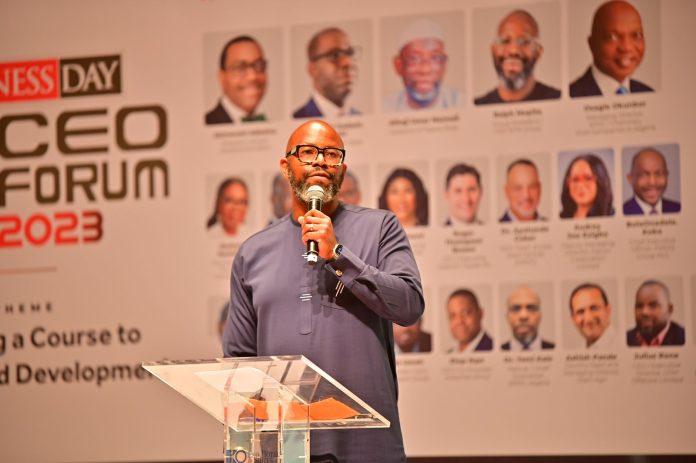
In the bustling heart of Lagos, at the 2023 Businessday CEO Forum, Ralph Mupita, the President and CEO of MTN Group, delivered a keynote address to Nigeria’s business leaders. His focus was not on his company’s achievements, but on Nigeria and its potential to become a significant player in the global digital economy. Other keynote speakers at the Forum included Dr. Akinwunmi Adesina, President of the African Development Bank, and Osagie Okunbor, CEO of Shell Nigeria.
Mupita’s presentation was a call to action, a blueprint for building a digital economy that could propel Nigeria to become the world’s 5th largest economy. He highlighted the vast untapped potential in the digital economy, with Nigeria’s Internet Gross Domestic Product (iGDP) currently at 6% and expected to double by 2050 to reach 145 billion USD. He noted that Africa currently accounts for only ~1% of the global digital economy, a stark contrast to 68% in the United States, 22% in China, and 27% in Asia. This gap, he suggested, represents a significant opportunity for growth.
Commending the new administration under President Bola Ahmed Tinubu, who has indicated his commitment to promote the growth of ICT and the digital economy for the shared prosperity of all Nigerians, Mupita called on the government and business leaders to promote policies that facilitate inclusive growth. He urged for a spectrum roadmap that ensures sufficient resources to meet the surging demand for mobile services. He advocated for speedy access to mid-band spectrum, crucial for the future of low latency 5G, and access to sub-1 GHz spectrum to provide widespread rural mobile broadband services.
He also highlighted the digital skills gap in Nigeria and across the African continent, especially in advanced skills such as AI & cloud computing. With an estimated 230 million “digital jobs” in Sub-Saharan Africa alone by 2030, Mupita emphasized the need for digital skills development to advance the digital economy.
“The potential is immense. The path is clear,” Mupita stated in concluding his presentation. “The future of Nigeria lies in its digital economy. And with strategic intent, collaborative effort, and a shared vision, that future is within reach.”
“In the face of global economic shifts and technological advancements, Nigeria stands at the precipice of a digital revolution. The country’s digital economy is poised to drive economic growth, create jobs, and foster innovation,” he added.
Mupita’s presentation was not just a corporate update; it was a rallying cry for Nigeria to seize the opportunities presented by the digital age. It was a call for collaboration between the government, the private sector, and the citizens to build a digital economy that is inclusive, sustainable, and powerful enough to propel Nigeria into the ranks of the world’s largest economies.
This vision for Nigeria’s digital future is not just a dream; it’s a feasible reality. With the right policies, strategic partnerships, and a commitment to digital inclusion, Nigeria can leverage its digital economy to drive sustainable growth and development. This is the future that Mupita sees for Nigeria, and it’s a future that is within our grasp.
The role of Nigeria’s business leaders in this transformation cannot be overstated. As key drivers of the economy, they have the power to shape the digital landscape of Nigeria. By investing in digital infrastructure, promoting digital literacy, and fostering a culture of innovation, they can help build a digital economy that is robust, inclusive, and sustainable.
In conclusion, Mupita’s presentation at the 2023 Businessday CEO forum was more than a corporate update; it was a vision of a brighter future for Nigeria. A future where digital technology drives economic growth, fosters innovation, and improves the lives of all Nigerians. It’s a future that we can all look forward to.
The International Labour Organisation (ILO) has said it is committed to supporting the president Tinubu-led administration to create over two million digital jobs to reduce unemployment.
ILO’s Country Director for Nigeria, Ghana, Liberia, and Sierra Leone, Vanessa Phala, spoke during the commemoration of the 2023 World Youth Skill Day in Abuja, themed: ‘Empowering Youth for a Sustainable Future: Building Skills for Tomorrow’.
Phala said the digital economy has become an integral part of Nigerians’ daily lives, thereby shaping the industrial sector and creating more opportunities.
She said Nigeria has a youthful population that requires the right skills to strive in the digital world.
“Today, we gather to celebrate the remarkable potential of our young people and to emphasise the critical role of skills development in preparing them for the challenges and opportunities of the 21st century.
“We realise that the future is now and the skills are needed now. We know that Nigeria has a youthful population with a vibrant energy that stands for the principle of a transformative journey.
“However, to unlock the potential of Nigerian youths, we must invest in them, equip them with the right skills and create an enabling environment that would enrich their talents.”
Phala also said the ILO has supported the ministry of youths and sports development to establish the Nigerian youth development action plan which would focus on entrepreneurship among others.
“To fulfil the potential of this digital era, we must ensure that our young people are not only technologically trained but must possess critical thinking, problem-solving and adaptability skills to strive in a changing world.”
“The ILO is supporting the government in this digital transformation agenda and will continue to support the new government to deliver the promises of creating over two million jobs in the digital economy.”
In his remarks, George Akume, secretary to the government of the federation, said the potential of young people should be harnessed to catalyse transformation.
Permanent Secretary, Political and Economic Affairs Office (OSGF), Nko Esuabana represented Akume,
“Together, we have embarked on a collective endeavour to reach the skill gap and empower our youths in the green, digital and creative economy,” he said.
“The dialogue lies not only in addressing the challenges facing our young ones today but also in harnessing their potentials as catalysts for transformational change.”
The Edo State Government has alloted 100 hectares of land in Orhionmwon Local Government Area for the development of a state-run correctional facility.
The state governor, Mr. Godwin Obaseki disclosed this plan during the inauguration of Justice Daniel Okungbowa as the Chief Judge of Edo State, at the weekend.
Obaseki urged Okungbowa to fast-track the setting up of mobile courts, embark on visits to correctional centres, and expedite trials, among other steps to decongest the correctional facilities and provide justice for those awaiting trials for years.
He said: “The constitutional amendment has paved the way to end the menace of congested correctional facilities and endless wait for trials.
“I urge the new Chief Judge to take advantage of the development and provide leadership in resolving this challenge of prison congestion which has become a national embarrassment and crisis. We would like you to provide direction for us in the development of correctional facilities in Edo State.
“I have allocated 100 hectares of land in Orhionmwon Local Government Area of the State for a new State Correctional facility as the design is ready but we can’t proceed to award the contract to build without seeking clarification, assistance and support from you.
“We believed that the correctional facility will set the template and example of what State Correctional facilities should look like when it’s completed under your tenure.
“I urge you to fast track the setting up of mobile courts to visit correctional centres and conduct institute trials to decongest the correctional facilities and provide justice for those awaiting trials for years.
“The Judicial system in Edo State has benefited from years of serious spirited and sincere efforts to improve the processes of justice administration, ensuring the prerequisites infrastructure and manpower are available to facilitate timely delivery of Justice to all.”
The federal government has warned against illegal activities in forest reserves across the country, insisting anyone caught involved in any form of illegalities in forest reserves would be severely punished.
Permanent Secretary, Ministry of Environment, Alhaji Ibrahim Idris issued the warning at the weekend Friday during a workshop on the operationalisation of the Forestry Inter-Ministerial Joint Task Force (FIM-JTF), on the exploitation of Forest Resources.
Idris, who was represented by the Director, Forestry Department, Mrs Hajara Sani, urged members of the JTF to work assiduously for a smooth take-off.
He tasked them on effective operations that would forestall all forms of illegalities in the country’s forests, in order to achieve Sustainable Forest Management.
Idris warned that anyone identified as a refractory logger, must be apprehended and documented, and handed over to the appropriate authority for sanctions, which include being blacklisted from export, depending on the gravity of the offence.
He said: “As you are aware, Nigeria is facing replete environmental challenges such as deforestation and land degradation, among others, due to unsustainable logging activities, especially as witnessed during the recent ban on wood and related product export from 2018 without corresponding forest replenishment.
“This, therefore, prompted the former Minister of Environment, Mr Mohammed Abdullahi, to conditionally lift the ban/suspension, and put in place effective measures to regulate the sector so as to achieve Sustainable Forest Management,” he said.
Idris however noted that the JTF’s mandate was to bring sanity to the sector, by ensuring investors and other players in the sector complied with Forest Laws, Standards and Regulations, to checkmate forest/wildlife crimes, illegal logging, environmental degradation and consequently, help to reverse the deplorable state of the forest.
He said: “It is very important we manage the forests sustainably for the continuous provision of an array of products and services for both the present and future generations.
“To advance progress already made on lifting the ban effective and productive, it is expedient that members of the reconstituted Inter-Ministerial Joint Task Force, meet to deliberate on strategies for surveillance and operations.
“This leap is aimed at curbing illegal forest exploitation, which has affected and destroyed the country’s rich biodiversity, thereby denying our nation the full realisation of its potential.”
He equally said that the states had very important roles to play in the forestry sector, being custodians of the forests.
He said: “With the vast experience the states have in the wood industry, coupled with diverse efforts of the ministry and the private sector, illegal activities in the states can be tackled effectively if we are all committed to the task.”
He promised stakeholders that guidelines and standards would be put in place to regulate the sector, and ensure sustainable forest management, while they generated increased revenue for the country.
He said: “Let me intimate you here that National Forestry Trust Fund is also planning, as part of these measures, to curb deforestation by establishing whistle-blowers.
“I believe the contribution of whistle-blowing will make the work of JTF easier and more effective. On this note, I urge all members of the JTF to discharge their duties without fear or favour. Compromise should not be ‘heard of’ or ‘seen’ in the execution of this national duty.”
On his part, the representative of the National Park Service, Mr Danjuma Magaji,, said the service played a very important role in forests conservation.
While also speaking at the event, the representative from the Nigeria Customs Service, Mr Oluwadamilola Olaofe,, said that as a revenue generating agency, the service knows the importance of forestry, and assured the ministry of its full support for the FIM/JTF.
The representative of the National Environmental Standards and Regulations Enforcement Agency (NESREA), Mr Afu Peter, said that Prof. Aliyu Jauro, the agency’s Director General, had promised to assist the JTF work effectively.
In a recent statement, the federal government said there are over 9,000 licensed fuelling stations across the country that are fit for the co-location of facilities that dispense autogas fuel.
It disclosed this in a press release published by the Nigerian Institute of Transport Technology at the end of the stakeholders’ engagement forum on the provision of technical manpower and facility for the development and promotion of autogas as transportation fuel in Nigeria.
The conference, with the theme, ‘Autogas as an alternative fuel for transportation in Nigeria’, showed that there was a need for alternative options for transportation fuels such as Liquefied Natural Gas, Liquefied Petroleum Gas, and Compressed Natural Gas known as autogas, which should become widely used and accepted as an alternative automotive fuel.
The press release mentioned that Nigeria gas reserves were about 209 trillion cubic feet, adding that gas production was between 8.15 – 8.35 billion standard cubic feet/day, which was more than enough for the nation.
Providing updates on the implementation status of the autogas programme, the NITT said, “There are over 9,000 licensed retail outlets classified fit-for-purpose for co-location of autogas fuel nationwide.
“There are 50 conversion centres currently upgrading for mass conversion and training of technicians in the country. Auto assemblers are already producing fit-for-purpose dual-fuel vehicles in the country.
“The Nigeria Gas Expansion Programme had held extensive multi-sectoral stakeholder engagement and secured impressive programme support and buy-in. The government is supporting the deployment of over one million conversion kits for trucks and smaller vehicles.”
It said the government was supporting the optimal availability of all autogas fuel streams, and that the adoption of autogas technology was good for Nigeria in the short and long term.
The press release stated that the forum recommended that the Federal Ministry of Transportation should collaborate with relevant stakeholders and the private sector for research, development, and deployment of autogas fuel in Nigeria.
It said the Federal Government should provide incentives to motorists, especially in the public transport and road freights sub-sectors for the conversion kits acquisition as a way of cushioning fuel subsidy removal.
The Director-General of the NITDA DG- Digitisation Of MSMEs Can Add $53bn To The Economy National Information Technology Development Agency (NITDA), Kashifu Inuwa, has said that Nigeria’s economy can profit $53bn from the digitisation of Micro, Small and Medium Enterprises.
According to a statement by the agency on Friday, he said this while delivering an opening remark at TechMyBiz Pitch-A-Thon event in Lagos, which was jointly funded by the European Union and the German Federal Ministry for Economic Cooperation and Development.
The statement read in part, “As SMEs make up a huge percentage of businesses and economic growth, the Director-General, National Information Technology Development Agency, Kashifu Inuwa, has said that digitisation of MSMEs will increase revenue by 26 per cent as well as reduce operating cost by 22 per cent, and contribute $53bn to the Nigerian economy.”
The NITDA DG acknowledged that there were challenges that needed to be addressed to realise the potential of digital transformation in SMEs.
He said, “Firstly, we need to create innovation-friendly conditions in our country in terms of enabling policies and laws, government services, ease of doing business, and so on.
“Secondly, we need to have support organisations — platform that will assist to digitise MSMEs for innovation hubs around the country to incubate ideas, because innovation is a process of taking an idea from inception to impact that means you can have an idea, and you can be innovative, but that is not enough, you need to commercialise your ideas.”
“Then we need the infrastructure, this is important to MSMEs, but Africa is lacking in digital public infrastructure. Digital public infrastructure is beyond having connectivity and access to computers.”
He said, the Second Industrial Revolution was about massive production which required enabling infrastructure for transportation, but today, in the current fourth Industrial Revolution, which was about digital services, there was a need for required infrastructure to aid digital services.
He added that, “Lastly, is the challenge of digital skills and literacy. The digital offerings require digitally literate consumers to benefit from the services, therefore there is the need to enlighten and educate the populace to acquire digital literacy skills.”
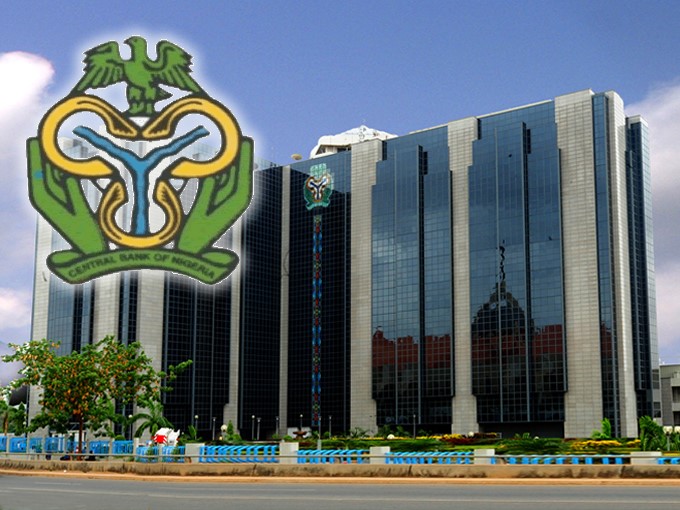
The Central Bank of Nigeria (CBN) has approved a reduction in the Cash Reserve Requirement (CRR) of merchant banks to 10 per cent from the current 32.5 per cent. The change takes effect from August 1, 2023.
The central bank announced this in a circular dated July 14, 2023, and signed by CBN Director, Banking Supervision Department, Mr. Haruna Mustafa, which was directed to all merchant banks.
CRR is a monetary policy tool used by central banks to manage and regulate the money supply in an economy.
Specifically, it refers to the portion of deposits that banks are required to hold with the central bank.
Notably, an increase or reduction in the CRR could have several effects on banks and the overall economy.
While an increase in CRR will reduce the banks’ capacity to lend to borrowers, a reduction in CRR will make more funds available to the banks to lend to customers.
The CBN explained that the reduction in the CRR was expected to boost the banks’ ability to avail of increased infrastructure, real estate, and other long-term financing needed to support the development of the Nigerian economy.
The CBN circular with reference number: BSD/DlR/PUB/LAB/016/018, captioned “Review of the Cash Reserve Requirement (CRR) Regime for Merchant Banks,” was addressed to all merchant banks in Nigeria.
The letter read: “The Central Bank of Nigeria (CBN) hereby informs all Merchant Banks that it has approved a reduction in their cash reserve requirement from 32.5 per cent to 10 per cent effective August 1, 2023.
“The above regulatory measure is in recognition of the nuanced business model of the Merchant Banks, in particular their wholesale funding structure, regulatory restrictions from the retail market and permissible activities vis-a-vis conventional commercial banks.
“The measure is expected to boost the banks’ ability to avail increased infrastructure, real sector and other long-term financing needed to support the development of the Nigerian economy.
“The CBN will continue to monitor market developments and implement measures to address unique challenges the merchant banking sector faces. Please be guided accordingly,” the letter concluded.
Reacting to the measure, a former Commissioner for Finance in Imo State, Prof. Uche Uwaleke said it was a welcome development.
In a brief response, he stated that the measure would place the wholesale banks in a stronger position to attend to the financing needs of the real sector, while calling for a similar slash in the CRR of Deposit Money Banks (DMBs).
“I consider this a welcome development which will place the wholesale banks in a stronger position to attend to the financing needs of the real sector.
“By the same token, the CBN should consider reducing the CRR for DMBs from 32.5 per cent to, say, 25 per cent in view of the high MPR. “The huge evidence of non-monetary influence on inflation supports this recommendation.
“Furthermore, it’s a no-brainer that increased liquidity in the banking sector following a reduction in the CRR has the potential of lowering interest rates with positive pass-through to the stock market,” he added.
The reduction in CRR for merchant banks will increase the amount of money they can lend, leading to enhanced liquidity.
However, a hike in CRR would require banks to keep a higher percentage of their deposits as reserves, which reduces the amount of money available for lending, resulting in a decrease in liquidity in the banking system.
A reduction in the CRR can also lower interest rates as more funds become available for lending.
Shareholders of the Nigerian quoted firms are not happy with the Securities and Exchange Commission (SEC) over the failure of the commission to publish its eight years results to the investing public through its website. ThisDay reports.
The last time the commission published its audited account on its website was in 2014 when it displayed its 2015 financials. That was during the tenure of Arunma Oteh as the Director-General, and Malam Sulleyman Ndanusa, the board chairman of the commission.
From the era of the then Acting Director-General of the comm ission, Mary Uduk who was appointed by former Minister of Finance, Kemi Adeosun on April 13, 2018, till the coming on board of Mr. Lamido Yuguda, whose appointment was confirmed by the Senate on 10th June 2020, the story has remained the same. This is because up till now, the commission has not submitted its results on its website.
Uduk’s explanation back then was that the Commission would publish its audited results once a board was appointed and signed during President Goodluck Jonathan’s administration.
Findings showed that Yuguda, since appointed the Director General of SEC three years ago, has not publicly disclosed the apex capital market’s annual reports and accounts.
In addition to the executive and non-executive members of the SEC Board, the Central Bank of Nigeria (CBN), and Federal Ministry of Finance (FMF) also have their representatives on the SEC Board.
However, a source at the commission explained that the audited results are submitted to the Minister and the National Assembly every year.
According to the source, “The commission’s audited results for every year are available and it is the right of shareholders to ask for it. Uploading it on the official website is at the discretion of the SEC. SEC can decide not to upload it online and the fact remains the commission has done the needful by providing it to the Minister and National Assembly.
“It can only be a big deal if the commission does not have audited accounts.
“The only one that is not ready is 2022 but it has been shared with the Minister and National Assembly. The law stipulated that first three months of each year, the results must be ready and so by March of each year, we usually make sure the report goes to the National assembly and the Minister.”
Part IV, section 26 of the Act stated that “The commission, shall not later than three months after the end of each year, submit to the Minister and the National Assembly, a report on the activities and administration of the commission during the immediately preceding year and, shall include in such reports, audited accounts of the commission and the report of the Auditor on the accounts.”
SEC, however, admitted in a statement that dissemination of factual information is critical to complement the efforts of the federal government for the growth and development of the capital market and Nigeria’s economy.
SEC in a follow-up response on its official website said, “Contrary to these false claims, the commission as a law-abiding agency has duly audited its financial accounts year after year before and onward from 2014, and has submitted these to the relevant agencies statutorily empowered by the Federal Government to receive same, including the Federal Ministry of Finance, Budget, and National Planning; Office of the Auditor General of the Federation; Fiscal Responsibility Commission; Office of the Accountant General of the Federation, as well as the appropriate committees of the National Assembly”.
“The commission, which said it is a strong promoter of world-class corporate governance standards, said its commitment to upholding such ideals and strongly advise “persons with requests for information to channel such to the commission via email to sec@sec.gov.ng, and to which the commission would respond accordingly.”
Shareholders’ Position on SEC’s Audited Results
Shareholders over the years have insisted on the publication of SEC’s audited results online or in print which differs from the ISA 2007 directive.
Speaking on the matter, the National Coordinator, Progressive Shareholders Association of Nigeria, Mr. Boniface Okezie insisted that SEC must publish its up-to-date results to investing public.
“If SEC has audited its results, it will be in the interest of the capital market to have it published in two national dailies or published it online. As a public institution that regulates the capital market, they must live by example. SEC does not need to be reminded to publish its financials.
“The past DG of SEC failed to publish these audited results and we are expecting the current DG to publish past audited results in a move to strengthen transparency and accountability. The current DG needed to ensure that these audited results and accounts are published.
“SEC should not follow the track record of Asset Management Corporation of Nigeria (AMCON), among others. You have failed as a regulator if you don’t live by example.”
Supporting Okezie was a former secretary of the Independent Shareholders Association of Nigeria (ISAN), Adebayo Adeleke, who insisted that the SEC is a public institution and does not need to be called upon before publishing its results.
According to him, “SEC is the one mandating every publicly listed company to submit their audited accounts. They should lead by example. How many investors will begin to write emails for SEC’s audited accounts and what is SEC’s obligation to reply to sent emails?
“SEC cannot be penalising publicly listed companies for not filing their results on time when your own account is shrouded in mystery. Mind you, SEC is spending tax payer’s money and why can’t they be accountable? Everybody is talking about transparency and accountability. So, why can’t SEC publish the audited accounts? They should not give the impression that something has gone a miss.”
Speaking from a different perspective, the former group’s National Coordinator, ISAN, Dr. Anthony Omojola said there is no big deal if the commission does not release its audited results.
He, however, called on shareholders to write to the commission and demand a copy.
“Due to the nature of the SEC as the capital market regulating body, people will always want to know what is happening there. However, it should not be a big deal if the audited results are not released online,” he said.
The Imo State Government has increased the minimum salary for workers in the state to ₦40,000 as part of measures put in place to mitigate the impact of the Federal Government’s (FG) elimination of fuel subsidies.
On Saturday, Governor Hope Uzodinma told a strategic stakeholders conference in Owerri, Imo State’s capital, that his administration will make ₦5 billion soft loan available to farmers to boost production.
The governor went on to list a number of other initiatives that will help Imo residents in a variety of ways.
Uzodinma said, “I have watched with keen interest how our people have been faring since the removal of the subsidy on fuel was announced.
“I can tell you that I am deeply worried by my observations. It is clear to me that our people are suffering particularly the low-income earners.
“I feel the pains and this is why I have come up with some initiatives that I am unfolding to cushion the effect.
“There shall be an immediate upward review of salaries and wages of workers in the state. The minimum wage is hereby raised to N40,000 with discretionary, consequential adjustment of other levels.”
The Niger State Government has announced that the Minna-Bida Road will be closed for six hours on Tuesday, July 18, 2023, to enable for the rehabilitation of a failed part of the road.
According to Abdullbergy Ebbo, Special Adviser to the Governor on Digital Communication, the road would be closed to allow engineers to perform maintenance.
The government via a statement said, “Please be informed that the Niger State Government will be closing the Minna-Bida Road on Tuesday, July 18, 2023 for six hours (from 12pm to 6pm) to allow engineers carry out proactive maintenance work.
“The good public may recall that the collapsing of multiple cell culvert on this road, at chainage 62km from Minna has become a yearly affair for about 10 years now, causing a lot of hardship to motorists using the road, which in most cases has led to the closing of the road for about 1 week or more for emergency repair to be carried out.
“It is in light of the above that the Niger State Government is taking a proactive measure this year to prevent a reoccurrence of the now annual collapse of this culvert during the rainy season.
“While the work is being carried out during the designated hours, motorists are invited to either wait for the repairs to be completed or use alternative routes.
“The Niger State Government regrets whatever inconvenience this may cause.”
Abbas Tajudeen, Speaker of the House of Representatives, stated on Saturday that the Green Chamber (National Assembly) would endeavor to ensure that traditional rulers have constitutional roles.
According to Abbas, this has become important due to the critical functions traditional rulers play in society.
During his first visit to Zaria in Kaduna State, the Speaker spoke at the palace of the Emir of Zazzau, Nuhu Bamalli.
During his visit to the emir’s palace, Abbas emphasized the importance of traditional institutions and asked for their inclusion in the 1999 Constitution.
“I want to make a promise to you today. I remember about three years ago when we held zonal hearings on constitutional amendment, you made submissions regarding the need for traditional rulers to have constitutional roles,” the Speaker said, according to a statement by his Special Adviser on Media and Publicity, Musa Krishi.
“I would like to assure you that we now have the opportunity. With me as your son being the Speaker, we will look at that proposal once again so that our traditional rulers will have recognised constitutional roles.
“We are also here to seek the cooperation of the entire traditional institutions in the North and the country. We also want you to give us advice on how to succeed in our leadership.
“Where we err, you should tell us the truth. I seek the support of the Zazzau Emir and the people of the Emirate.”
Emir Bamalli said that “The fear of politicians is that we want to have another tier of government. But that is not the case. We have made our case and presented at different levels.
“We met with the then Chief of Staff to the President; we met with the Senate President and the then Speaker; yet, nothing happened on the bill.”
As a result, the Emir urged lawmakers to “dust the bill and work on it again,” stressing that “all we want is for the bill to be passed unopposed. We hope the Legislature will take a swift look at this.”