









Home Blog Page 567

Interswitch Group’s Mitchell Elegbe Globally Recognized Among 2023 Top Fintech CEOs

Interswitch Group’s Mitchell Elegbe Globally Recognized Among 2023 Top Fintech CEOs

The Financial Technology Report, a global media authority in the fintech industry, has recognized the Interswitch Group Founder and CEO, Mitchell Elegbe, as one of the top Fintech CEOs for 2023, alongside other industry titans including Dan Schulman, CEO of PayPal, Ryan McInerney, CEO of Visa, and Michael Miebach, CEO of Mastercard.

This distinctive achievement underscores Elegbe’s exceptional leadership and Interswitch Group’s ever-evolving and groundbreaking contributions to the revolutionization of the financial technology landscape in Nigeria and Africa.

The report recognizes esteemed leaders whose roles in the financial technology space, both regionally and globally, continue to redefine and revolutionize traditional payment systems. Furthermore, it highlights the remarkable feats achieved owing to their relentless pursuit of innovation.

Mitchell Elegbe, the inspirational leader behind Interswitch Group, expressed his gratitude for the prestigious recognition, stating, “It is an honor to be recognized among the top Fintech CEOs for 2023.

“This recognition is a testament to the dedication and unwavering commitment of the entire Interswitch team in driving transformative solutions that empower individuals, communities and businesses across Africa and beyond.”

Recently, in Monaco, Mitchell Elegbe was inducted into the esteemed Ernst and Young (EY) World Entrepreneur of the Year (WEOY) 2023 Hall of Fame as the sole African delegate, solidifying his position as a leader extraordinaire.

This prestigious recognition highlights Elegbe’s outstanding and visionary leadership and buttresses his remarkable contribution to the business world through technology.

Prior to this remarkable achievement, Elegbe had earned notable acclaim as a recipient of the esteemed EY Entrepreneur of the Year (Emerging Entrepreneur category) 11 years ago, in 2012 and his emergence, in March 2023, as the West African Entrepreneur of the Year in the Master category, further cemented his significant strides in the industry.

Under Elegbe’s visionary leadership, Interswitch Group, in its two decades of existence, has been at the forefront of reshaping payments and driving financial inclusion across the African continent. With a focus on payments innovation, Interswitch Group has consistently delivered cutting-edge solutions, enabling seamless digital payments, and transforming the way people transact.

The Financial Technology Report’s recognition of Mitchell Elegbe highlights his pioneering role in Africa’s fintech industry. Elegbe’s recognition as one of only two Africans on the list and the only Nigerian Fintech CEO, along with Interswitch’s inclusion as the only Nigerian-founded company, highlights the remarkable progress it has made in the financial technology industry, both locally and internationally.

By providing advanced payment solutions and creating a robust digital ecosystem, Interswitch Group continues to play a pivotal role in accelerating Africa’s economic growth and pushing the frontiers in digital payments.

READ ALSO

Forex Inflows Rises By $2.55bn In Two Months – FMDQ

FMDQ Approves Quotation Of TrustBanc Holdings' N200m Series One Commercial Paper

According to information collected from the FMDQ, the overall inflows through the Investors and Exporters Window increased to $2.55 billion in the months of May and June.

According to the statistics, once the naira exchange rates were unified, overall inflows into the 1&E window grew for a second consecutive month in June, rising to $1.41 billion from $1.14 billion in May.

According to a breakdown of the statistics, foreign inflow was $298.8 million in June, which was less than expected compared to pre-pandemic levels when the average monthly inflow was $1.56 billion.

Market stability was maintained by local inflows, which reached $1.11 billion in June thanks to stronger inflows from non-bank corporates ($597.10 million) and exporters ($448.00 million).

Commenting on the development, Codros Securities said, “We expect the lingering reforms in the FX market to translate to improvements in FX liquidity conditions over the medium term as market participants’ confidence builds up.

“However, we think foreign investors will likely adopt a wait-and-see approach in the near term as they await the CBN’s actions in clearing its FX backlogs and the direction of short-term interest rates amid high inflation.”

Codros Securities further stated that with international oil companies getting permission from the CBN to resume selling dollars to dealing member banks, FX liquidity in the I&E market would likely improve over the medium term, supporting the local currency.

It added, “On the one hand, we expect the computation changes to improve transparency in the computation of the spot FX rates and provide a clearer picture of the FX rates reflective of the market realities at different times, albeit with increased intraday volatility.

“On the other hand, the IOCs being permitted to sell their USD to dealing members will likely increase FX liquidity in the IEW over the medium term, supporting the local currency.”

Meanwhile, the country’s forex reserve continued to weaken for the seventh consecutive week, falling by $60.27m week-on-week to close at $34.06bn as of July 6, 2023.

The improvement in FX inflows had been attributed to the recent exchange rate unification move of the CBN.

Marketers Request For Temporary Removal Of VAT On Diesel

Federal Government

Oil marketers have called on the Federal Government to temporarily remove the Value Added Tax (VAT) on diesel, as it would continue to increase the burden on Nigerians.

The Chairman of the Major Oil Marketers Association of Nigeria, and Chief Executive Officer of Ardova Energy, Olumide Adeosun, made the appeal during an interactive plenary with journalists in Lagos on Tuesday.

He suggested that temporarily removing VAT from diesel would help alleviate the financial burden for the general population, especially with the hike in fuel price in the country.

He highlighted the need for a sustainable welfare package for citizens of Nigeria.

Adeosun emphasised the importance of productivity in the country’s development and called on the government to address the issues of insecurity, productivity in the oil and gas sector, and the high cost of food and transportation.

He persuaded the government to introduce subsidies on transportation and power and tackle the challenge of crude oil theft.

According to him, MOMAN members have the capacity to import petrol into the country, as such they should be permitted to import petrol and take off the importation burden from the Nigerian National Petroleum Company Limited before local refineries commence production.

“The reality is that many of us have importation licenses that have never lapsed. We renew them on a quarterly basis via the NMDPRA portal. Some of us are also importing diesel, so we need these licenses.

“The licenses cover multiple products such as ATK, PMS, and AGO. The regulator will tell us that we need them even when we are receiving products from the Nigerian National Petroleum Company Limited, particularly on the high seas,” he said.

Adeosun also emphasised the need for efficiency in the importation and delivery operations process to offset the shortcomings in forex rates.

He said, “That has often been the case when aligning with the NNPCL operating regime. Efficiency has always been at the forefront, and subsidies will absorb all of that. As for us, we own the vessel, depot, trucks, and retail outlets. So, we can afford to optimise efficiency” .

He called on the government to enforce favourable regulatory frameworks, provide incentives for renewable energy projects, and encourage research and development in clean technologies. “This newfound commitment to alternative fuels is not only driven by environmental concerns but also by the economic and social benefits associated with a transition to a sustainable energy future. By embracing alternative fuels and renewables, governments are not only leading the way towards a greener and more resilient future but also fostering innovation, job creation, and energy security for our country,” he said.

Adeosun’s appeal comes on the heels of the pronouncement by the Presidential Committee on Fiscal Policy and Tax that it was holding discussions with the Federal Government to suspend the 7.5 VAT on diesel given the effect of the rise on transportation and other costs.

NGX Falls By N883bn As Investors Book Profit

Stock Exchange Closes Trading Week With N30bn Gain

The Nigerian Exchange (NGX) equity section lost more than N883 billion midweek, reversing the prior trend, as some investors started to take an early profit on a few high-quality tickers. According to certain stockbrokers, selling rallies on companies like FBNH, Dangote Cement, and Nestle Nigeria among others helped the reversal of the prior trend.

The Nigerian Exchange All-share index fell by 247 basis points to 64,046.93 points, according to market experts and stockbrokers for Broadstreet, in sharp contrast to its strong performance on Tuesday at 65,669.29 points. On significant equities that have lately seen a strong increase, the local stock exchange noted profit-taking actions. Futureview Financial Services Limited claims that 63 stocks were affected by the withdrawal of investors.

DANGCEM, which saw a 9.63% price decline despite its share repurchase program, was the last stock to be monitored. In the middle of a shareholder controversy, FBNH fell 10%. NESTLE, a fallen angel FMCG stock that has been attempting to re-join the N1 trillion club, decreased by 1.34%. DANGSUGAR fell 1.27%, and ACCESSCORP lost 4.16% of its open market valuation.

Given the large market loss, the year-to-date return has reduced to 24.97%, coinciding with a drop in market capitalization. Futureview’s stock traders informed investors that investors suffered a huge loss of a colossal N883.39 billion as a result of the financial environment.

According to information from the local bourse, market activity rose for the day. A total of 1.16 billion units worth N12.69 billion were traded, a 37.7% rise in total volume.

UBA was the most traded stock in terms of volume, accounting for 15.30% of the total volume of trades, followed by JAPAULGOLD (9.49%), TRANSCORP (7.50%), FCMB (7.44%), and ACCESSCORP (5.63%) to complete the top 5 on the volume chart.

Also, UBA was also the most traded stock in value terms, with 19.25% of the total value of trades on the exchange.

Nigeria’s stock market report indicates that performance across sectors was broadly bearish, following losses in the Insurance (-5.4%), Industrial Goods (-5.4%), Banking (-2.6%), Consumer Goods (-0.8%), and Oil & Gas (-0.5%) indices.

As measured by market breadth, market sentiment was negative (0.2x) as 63 tickers lost relative to 11 gainers. VERITASKAP declined by 10.0% and ACADEMY dropped by 10.0%, to lead the most significant losses of the day. Meanwhile, DEAPCAP popped up by 10.0% and COURTVILLE jumped 10.0%, leading the gainers’ while 47 stocks closed flat.

Overall, the stock market capitalisation lost ₦883.39 billion, representing a drop of -2.47%, to close at ₦34,874.19 trillion from ₦35,757.58 trillion the previous day.

CBN Cuts Rate On Nigerian Treasury Bills

CBN Lifts Ban On Aboki FX, 439 Other Accounts

The Central Bank of Nigeria (CBN), which conducted its main market auction midweek, further reduced spot rates on Nigerian Treasury Bills (NTB) by breaking significant subscription records, according to the data.

The central bank would renew maturing Treasury notes totaling N141.94 through primary market auction sales of 91-day, 182-day, and 364-day bills, totaling N3.15 billion, N1.49 billion, and N137.30 billion, respectively.

The stop rates for the 91-day Treasury notes dropped by one basis point to 2.86% as a consequence of the auction. Additionally, the 182-day spot rate was reduced by the apex bank by 87 basis points to 3.50%, and the 364-day tenor was reduced from 6.23% to 5.94% in the last auction.

The monetary authority distributed N141.76 billion out of the N691.85 billion subscribed by market participants on Wednesday due to a record-high demand.

According to a market update by fixed income analysts Cowry Asset Management Limited, subscription or demand increased as seen by a 4.88x bid-to-cover ratio, a modest increase over the 4.03x recorded in the prior offering despite strong liquidity.

As indications that market liquidity concerns would resurface so quickly and possibly with greater ferocity than in the past, funding rates rose. According to Futureview Financial Services, system liquidity climbed to $753.66 billion from $745.32 billion on Tuesday

Money market data showed that short-term benchmark rates such as the open repo rate and the overnight lending rate, increased to 0.93% (from 0.86%) and 1.33% (from 1.25%), respectively.

In the secondary market, trading activities on Nigerian Treasury bills closed flattish as market players shifted attention to the midweek auction of the CBN. As a result, the average yield was unchanged at 6.3%.

Senate Investigates Development Bank (DBN) Over N483bn Loan

Senate Concerned About CBN's New Withdrawal Policy

The Senate on Wednesday revisited an alleged uneven disbursement of intervention loan of N483bn by the Development Bank of Nigeria (DBN) shared among the six geopolitical zones in the country.

The Senate in an attempt to resolve the issue brought up by Senator Ali Ndume (APC, Borno South) last week, set up a seven-man Ad- hoc Committee to carry out a comprehensive investigation into the matter and report back to the Senate in four weeks for further legislative action.

Senator David Umahi was named chairman of the committee while other members are senators Babangida Oseni, Ali Ndume, Sani Musa, Tokunbo Abiru, Ipalibo Banigo and Chizoba Chukwu.

Again, at the meeting, Ndume (Borno South) moved the motion which was supported by 64 other senators on the need to comprehensively investigate the disbursement of loans by the Development Bank of Nigeria, NIRSAL, and related banks to Micro, Small and Medium Scale Enterprises in Nigeria from 2015 to date.

Ndume and three others were investigated by an ad-hoc committee in the 9th Senate and a report was submitted by the panel headed by Senator Sani Musa (Niger East).

Deliberating on the motion at the meeting on Wednesday, the Senate noted the huge disparity and ‘uneven’ distribution of half a billion naira to states in the six geopolitical zones of Nigeria and the states in the country in 2021 by the Development Bank of Nigeria.

Ndume said, “Aware that the bank’s annual integrated statutory report 2021obtained on 13th July 2022 from the organisation’s website showed that the bank disbursed a loan worth N483bn only out of which only 11 per cent went to the 19 states of Northern Nigeria, while 47per cent went to Lagos State alone”.

“Also aware that the 13 per cent of the loan that went to the North totals about N53.13bn, while the 47 per cent that went to Lagos State N227.01bn only.”

According to the breakdown of the loan presented by Ndume, “the South West got 57 per cent worth N274.740bn; South-South got 17 per cent worth N81.94bn; North Central got 11 per cent worth N53.02bn; South East got nine per cent worth N43.38bn; North West got five per cent worth N24.1bn; North West and North East got just one per cent worth N4.82bn.”

Recall that the Development Bank of Nigeria exists to alleviate financing constraints being faced by Micro, Small, and Medium Scale Enterprises (MSMEs) in Nigeria by providing finances, partial credit guarantees, and technical assistance to eligible financial intermediaries on a market-conforming and fully financially sustainable basis.

Ndume also noted that the top five sectors considered for the loan were oil and gas (42.0 per cent), manufacturing (16.0 per cent), agriculture, forestry, and fisheries (7 .2 per cent), trade and commerce (6.3 per cent), and transportation and storage (3.5 per cent).

Google’s Conversational AI Service, Bard, Expands to 40 New Languages

Google today announced the expansion of Bard, its conversational AI service, to 40 new languages including Swahili- the first African language to be included and 59 new countries and territories. The expansion includes new features that allow users to better customise their experience, boost their creativity, and get more done. 

With the expansion, Bard is now available in most of the world, including countries, and in the most widely spoken languages, including Swahili, Chinese, German, Spanish, Arabic, and Hindi, and Spanish. Users can now access Bard in their preferred language with text-to-speech also enabled in 8 languages. 

“We’re excited that this is Bard’s largest expansion to date – we see its global availability as a great democratizer of knowledge,” said Dorothy Ooko, Head of Communications and Public Affairs, SSA, Google. “That’s why we created Bard: to help you explore that curiosity, augment your imagination and ultimately get your ideas off the ground — not just by answering your questions, but by helping you build on them.” 

As part of the expansion, new updates have been introduced to make the Bard experience more interactive and user-friendly. The ‘Listen to Responses’ feature now provides an auditory dimension to Bard’s responses, making it particularly useful for gaining accurate pronunciation or understanding a script, with just a simple click on the sound icon. 

Users can also now adjust Bard’s responses by changing the tone and style of its responses to five different options: simple, long, short, professional or casual, offering a tailored interaction to match individual needs. While this feature has been initially launched in English, plans are underway to extend it to other languages, broadening its accessibility to users around the globe. 

Four additional features were also introduced to help users get more done. Users can now pin and rename their conversations with Bard, making it easier to revisit conversations that contain important information or ideas later. Through the export code to more places feature, users can now export Python code to Replit, in addition to Google Colab, making it easier for users to share their code with others or use it in other projects. Users will also be able to share responses with friends using shareable links, making it easier to collaborate on projects or get feedback on ideas. Also launched is the feature allowing users to upload images with prompts to Bard. 

Bard seeks to combine the breadth of the world’s knowledge with the power, intelligence and creativity of Google’s large language models. It draws on information from the web to provide responses. As an experimental technology, Bard may occasionally make inaccurate statements in response to user prompts. So if a response from Bard is inaccurate or unsafe, if one experiences an issue, or just wants to provide feedback, there’s an easy way to do that.

57.96 Million BVN Issued As CBN Threatens To Close Accounts

CBN Lifts Ban On Aboki FX, 439 Other Accounts

The total number of issued Bank Verification Numbers (BVN) increased to 57.96 million as of July 3, 2023, according to data obtained from the Nigeria Inter-Bank Settlement System Plc (NIBBS).

This happened as the Central Bank of Nigeria (CBN) planned to the close bank accounts without BVNs. According to the NIBSS, the increasing incidents of compromise on conventional security systems (password and PIN), had increased the demand for greater security for access to sensitive or personal information in the banking system.

It stated that in recent times, biometric technologies havd been used to analyse human characteristics as an enhanced form of authentication for real-time security processes.

It stated that BVN gave a unique identity that could be verified across the Nigerian banking industry (not peculiar to one bank), and ensured that customers bank accounts were safe from unauthorised access.

It said, “It will address issues of identity theft, thus reducing exposure to fraud. The BVN will enhance the banking industry’s chances of being able to fish out blacklisted customers.”

It noted that the BVN is an acceptable means of identification across all Nigerian Banks. Since launching in 2014, 57.96 million Nigerians have now got BVNs. Data from NIBSS indicated that there were 133.5 million as of December 2021.

According to CBN, BVN is part of its overall strategy of ensuring the effectiveness of the Know Your Customer (KYC) principles, and the promotion of a safe, reliable, and efficient payments system.

As of December 26, 2021, there were 51.7 million BVNs. Recently, the CBN, through its Director, Risk Management Department, and Chief Risk Officer, Blaise Ijebor, noted that the CBN was working to take out accounts not linked to BVNs from the financial system.

According to him, this was to clean up the sector and reduce the growing incidence of fraud.

A recent report by FITC revealed that bank customers in Nigeria lost N472m to fraud in the first quarter of 2023. It stated that there was a total of 12,553 cases of fraud recorded within the three months.

Recently, the CBN said that it had placed 6,047 BVNs of bank customers under a watch list for fraudulent transactions. It stated that the number of BVN-linked accounts was 130.57 million out of 148.46 million active accounts.

It disclosed this in the CBN Financial Stability June 2022 report published in December 2022. It said, “The number of accounts linked with BVNs was 130,569,656 out of 148,462,947 active customer accounts, while the number of watch-listed BVNs associated with fraud and deceased persons stood at 6,047 and 11,871, respectively.”

NGA: Power Sector Gas Debt Hits $1bn

A new blueprint for gas price for the power sector and gas-based industries has been developed and currently awaits the approval of President Bola Tinubu, the Nigerian Midstream, and Downstream Petroleum Regulatory Authority announced on Wednesday.

It was also made known that the legacy gas debts of the power sector to gas suppliers in Nigeria had risen to about $1bn, as efforts were ongoing to finalise the figures and find a suitable way in addressing the debts.

Speaking during the inauguration of the Decade of Gas Secretariat in Abuja, the secretariat’s Coordinator, and immediate past President, of Nigeria Gas Association, Ed Ubong, stated that it was important for the government to clear the gas debts in order to boost investors’ confidence in gas investments.

The Decade of Gas is an initiative of the Federal Government that seeks to deepen domestic gas usage across the country within a 10-year period, from 2021 to 2030, based on the enormous gas reserves in Nigeria that stood at over 206 trillion cubic feet.

The programme’s secretariat, which was inaugurated on Wednesday, was currently located in the Abuja headquarters (annex) of the Nigeria Midstream and Downstream Petroleum Regulatory Authority.

Speaking to journalists on why legacy power sector gas debts should be addressed, Ubong said, “It is clear to us that we need to provide comfort to investors by clearing the arrears that the gas companies are owed, particularly for gas supply to power.

“That is a key priority, at least you heard from the Special Adviser to the President on Energy speak about it, that it is also part of the work that is ongoing and should be completed.”

Asked to state the amount of outstanding arrears for gas supplied to the power sector, he replied, “From our estimate, we think that those numbers could be between $700m and $1bn in debts owed.

“But it is something we will sit with Nigeria Electricity Liability Management Company Limited and the Federal Government to finalise and find a comfortable way in sorting this.”

Ubong further stated that the NMDPRA had been working on gas pricing over the past year, adding that a lot of consultation had been done with various stakeholders on this.

Reacting to an earlier remark made by the Chief Executive, NMDPRA, Farouk Ahmed, on gas pricing, Ubong said, “I think he (Ahmed) was hinting that he’s towards the end of that (gas pricing) process when he will need to seek the approval of Mr President, before he announces what in the PIA (Petroleum Industry Act) is called the domestic based price.”

Earlier, the NMDPRA boss explained that discussions were ongoing on the new gas pricing template.

He said, “It is for further discussions. We will discuss this with the adviser of the President on Energy. So until such interaction is completed and the President approves it, we will not be able to disclose the price.

“But basically it is the price that gas is sold to the industry, whether gas-to-power, gas-to-industries, as well as gas-to-commercial. And it is to incentivise the producers so that they can produce more gas and supply to the country, rather than committing only to export.”

On the Decade of Gas, he said it was a government project aimed at making sure that from 2021 to 2030 Nigeria propagated the supply and distribution of gas as the nexus of energy to power, gas-based industries, and for commercial purposes.

CBN Gives Fresh Directive To Western Union, Other IMTOs

BREAKING: CBN Raises MPR To 18.75%

The Central Bank of Nigeria (CBN) has directed International Money Transfer Operators (IMTOs) to pay dollars received through Diaspora remittances to domestic beneficiaries in naira.

A circular to banks, IMTOs, and the public by CBN Director, Trade and Exchange Department, O.S Nnaji, listed 62 approved IMTOs to carry out the directive.

In the list are Western Union, World Remit Limited, CashPot Limited, eTransact International Limited, Leadremit Limited, Flutterwave Technology Solutions Limited, and Interswitch Limited.

Others are Belyfted Limited, Caperemit UK Limited, Chime In (Sendwave), Colony Capital Limited, Comet Trading Nigeria Limited, CSL Pay Limited, CP Express Limited, among others.

The circular titled: Payout Option in Naira Receipt of Proceeds of Diaspora Remittances, said: “Further to the circular referenced TED/FEM/FPC/GEN/01/011 dated November 30, 2020 in respect of the above subject, the Central Bank of Nigeria hereby announces Naira as a payout option for receipts of proceeds of International Money Transfers”.

“Accordingly, all recipients of diaspora remittances through the CBN approved IMTOS on the attached list shall henceforth have the option of receiving Naira payment in addition to USD and eNaira as payout options”.

“For the avoidance of doubt, International Money Transfer Operators are required to pay out the proceeds using the Investors & Exporters’ Window rate as the anchor rate on the day of the transaction. This regulation takes effect immediately. Please note and ensure compliance,” it said.

Reps Urge JAMB To Extend Validity To 3years

Mmesoma Pleads With JAMB For Manipulating Results

The Joint Admissions and Matriculation Board (JAMB) has been asked by the House of Representatives (reps) to extend the validity of the Unified Tertiary Matriculation Examination (UTME) results to three years.

The reps also requested that the UTME be held at least twice a year.

The existing system limits the validity of JAMB exam results to one year.

Candidates who do not receive admission that year are expected to retake the exam the following year in order to continue their pursuit of postsecondary education.

However, while introducing the resolution on Wednesday, Akin Rotimi, the lawmaker representing Ekiti North 1 federal constituency, requested that JAMB “rethink” the arrangement in order to match worldwide standards.

According to Rotimi, the decision “would bring immediate relief to students and their parents/sponsors, who bear the burden of paying for the exam every year, as well as give candidates multiple windows to sit for the exam in a year.”

He contended that nothing in the existing act creating JAMB prevents it from promptly carrying out the house’s resolutions on the topic.

The lawmaker further stated that the house passed a motion to form an ad hoc committee to discuss the house’s resolution with JAMB and other relevant agencies.

“In addition to passing my motion, the honourable house also passed a motion for an additional prayer moved by Hon. Olumide Osoba, establishing an ad-hoc committee of the house to liaise with the authorities of JAMB and the ministry of education to ensure the resolution is expeditiously carried out,” he said.

READ ALSO

Nigeria Has Redeemed $500m Eurobond Debt – DBO

Nigeria Has Redeemed $500m Eurobond Debt - DBO

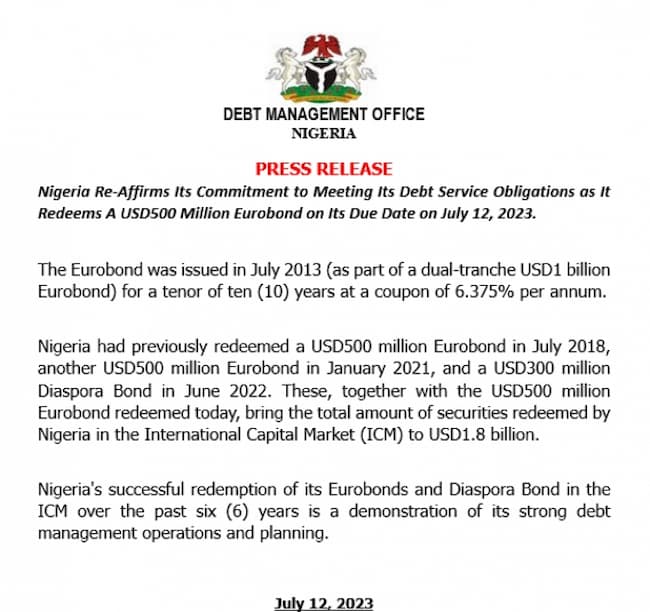
The Debt Management Office (DMO) revealed that Nigeria has redeemed $500 million Eurobond on its due date of July 12, 2023.

A eurobond is a debt instrument denominated in a currency other than the country or market in which it is issued.

The DMO stated in a statement on Wednesday that the successful redemption of the Eurobond demonstrates the country’s commitment to meeting its debt servicing responsibilities.

According to the debt management firm, the Eurobond was issued in July 2013 (as part of a dual-tranche USD1 billion Eurobond) for a ten-year term with a coupon of 6.375 percent per annum.

“Nigeria had previously redeemed a USD500 million Eurobond in July 2018, another USD500 million Eurobond in January 2021, and a USD300 million Diaspora Bond in June 2022,” the statement reads.

“These, together with the USD500 million Eurobond redeemed today, bring the total amount of securities redeemed by Nigeria in the International Capital Market (ICM) to USD1.8 billion.

“Nigeria’s successful redemption of its Eurobonds and Diaspora Bond in the ICM over the past six (6) years is a demonstration of its strong debt management operations and planning.”

READ ALSO

Money Saved From Subsidy Will Benefit Nigerians – Tinubu

Nigeria Ready To Welcome All Citizens - Tinubu
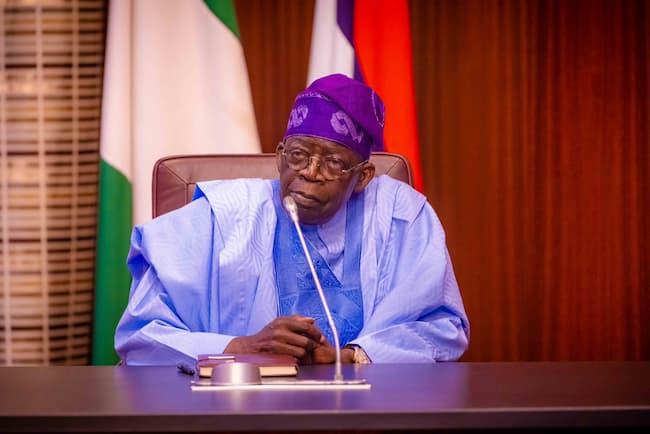
President Bola Ahmed Tinubu

President Bola Tinubu stated that the savings from the removal of the petrol subsidy will benefit many Nigerians.

BizWatch Nigeria recalls that Tinubu declared the abolition of the petrol subsidy in his inaugural speech on May 29, 2023.

Tinubu remarked during a meeting with former governors known as the “class of 1999” that he understands Nigerians are suffering as a result of the policies.

The president stated that the initiative will assist many Nigerians rather than just a few traffickers.

He urged Nigerians to be patient for the supply of palliatives, which will provide respite.

“On the subsidy removal, I thank you for the support and I understand people are suffering. Yet, there can be no childbirth without pain,” he said.

“The joy of childbirth is the big relief of the pain. Nigeria is reborn. It is a rebirth of our country.

“To face our problem, to bring the savings to benefit the largest number of people in the country and not a few smugglers and exploiters. Thank you for your support.”

While speaking after the meeting, Lucky Igbinedion, the chairwoman of the class of 1999 governors, advised Nigerians to trust the president on the palliatives that would be offered.

According to the former Edo governor, the president must be given the required assistance in order to build a better Nigeria.

“We came to congratulate Mr President and also to thank him for making one of us the secretary to the government,” he said.

“We came to assure him that he has our full support and prayers for the bold steps he has started to take, for his initiatives and also let him know that this is beyond party politics, we’re now talking about the project Nigeria.

“Therefore all hands must be on deck to give Mr President the needed support and encouragement to foster a better nation.

“On his part, Mr President assured us that it is his dream to see a better Nigeria and he also wants us to let you know that the decisions that he has taken so far might be painful.

“Therefore, Nigerians should wait patiently and believe in him, that he’s going to come up with palliatives that will put smiles on the faces of every one of us in Nigeria.”

READ ALSO

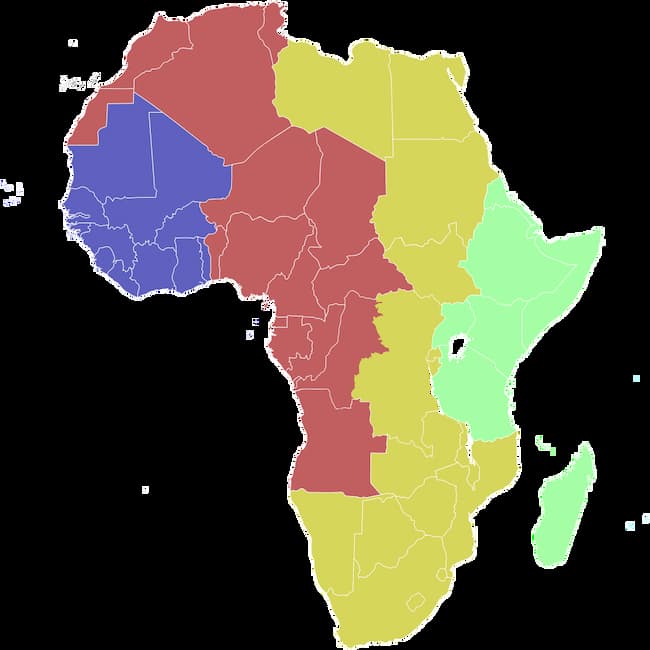
Top 5 Innovative Renewable Energy Projects In West Africa

Top 5 Innovative Renewable Energy Projects In West Africa

A pipeline of innovative renewable energy projects being built in West Africa is propelling the region toward sustainable solutions. Mauritania will highlight the region’s renewable energy opportunities to global investors at the upcoming MSGBC Oil, Gas & Power conference, which is coordinated by Energy Capital & Power.

Future energy solutions will necessitate innovation, as both the energy transition and fuel security are important objectives for West Africa.

Wave energy in Ghana, wave-powered desalination in Cabo Verde, thorium prospecting in Nigeria, biofuel building in Senegal and Mauritania, and a biogas program in Senegal are just a few of the unique renewable energy initiatives that are now taking center stage.

Renewable energy projects

Thorium Exploration in Nigeria

Wildsky Resources, a Canadian mining corporation, began an exploration campaign in Nigeria in 2022 that focuses on Niobium-Thorium exploration licenses – a greener alternative to uranium for nuclear power generation.

The business has undertaken mapping and surveys that have identified significant Niobium-Thorium anomalies. Drilling shallow holes for further study is being planned.

Thorium is more abundant than uranium, produces less waste, and has a lower potential for use in nuclear weapons. China is heavily investing in Thorium, while India has used it in third-generation reactors.

Ada Foah Wave Energy Project in Ghana

Ghana’s wave energy potential, estimated at 7,215 MW, has piqued the interest of renewable energy developers, with the Ada Foah Wave Energy Project recently being revived thanks to a collaboration between American energy infrastructure company TC Energy; engineering firm Power China Huadong Engineering Corporation; and wave energy developer Seabased.

The initiative aims to build a wave energy park in the Gulf of Guinea capable of producing 1,000 MW of power while using ecologically friendly technologies.

The initiative expects to generate up to $2 billion in investment, with over $10 million already secured. The Ghana Standards Authority will ensure the safety and quality of the product, with the cost of electricity generated expected to average between three and four cents, compared to hydropower and thermal which costs 10 cents. The innovative project will not only ensure the provision of sustainable energy supply in Ghana but will reduce the reliance on hydrocarbons.

Wave2O Project in Cabo Verde

The innovative Wave2O program aims to help Cabo Verde achieve its goal of transitioning to 50% renewable energy by 2030. The Wave2O Project will consist of the development of a reverse-osmosis desalination plant powered solely by wave energy.

Wave2O technology is a proprietary seawater desalination process that couples technology company Resolute Marine’s wave energy converters with onshore desalination and electricity generation plants. The pilot project in Cape Verde, supported by the African Development Bank, will assess the feasibility of the technology and pave the way for a commercial pilot.

Typha Fuel and Construction Project in Senegal and Mauritania

The Typha Combustible Construction Afrique de l’Ouest/West Africa project utilizes the invasive plant, typha, as a biofuel and construction material. This innovative approach aims to reduce greenhouse gas emissions and promote sustainable practices in the energy and construction sectors.

The project’s components include managing the typha resource, producing biofuel, developing typha-based building materials, and promoting awareness and training. By controlling typha invasion, creating market conditions for biofuel, and integrating typha into construction practices, the project seeks to mitigate climate change and enhance local capacities for a greener future.

Biogas Program in Senegal

Senegal’s National Biogas Program intends to fulfill the country’s high demand for energy services, notably cooking fuel, which is currently supplied primarily by firewood and charcoal. The government is looking for alternate alternatives, like as residential biogas production, to reduce the detrimental effects on health and the environment.

The program focuses on building biodigesters for rural homes as a sustainable source of fuel.

It also intends to develop a viable market for biodigesters and to manufacture organic fertilizer to boost agricultural production. The program’s goals include constructing thousands of biogas units, increasing financial availability, and building partnerships for long-term development.

READ ALSO

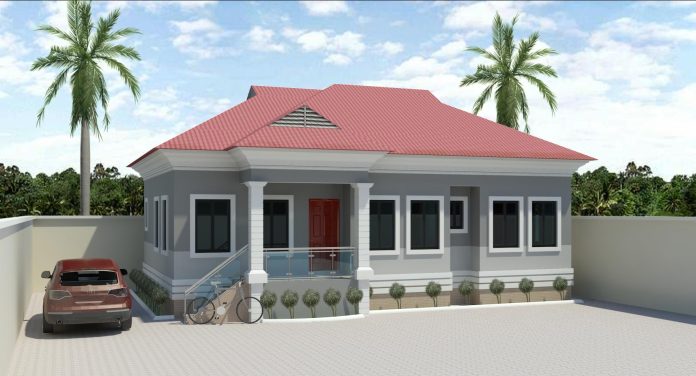
Is It Possible To Build A House With Just 5 Million Naira?

In a world where skyrocketing lodging costs and development costs have gotten to be the standard, the thought of building a house with an insignificant 5 million Naira appears like an false dream. In any case, as the saying goes, “Where there’s a will, there’s a way,” and with cautious arranging, genius, and a bit of inventiveness, it might just be doable.

Nigeria, like other nations, is hooking with a lodging emergency. The request for reasonable lodging distance exceeds the supply, taking off numerous individuals without satisfactory protection. For low-income workers and those with constrained monetary implies, the dream of owning their own property remains slippery. But, might the reply to this issue lie in building a house for a fair 5 million Naira?

Sometime recently we dug into the plausibility of this deed, it’s fundamental to get what the normal fetch of building a house involves. Building costs ordinarily incorporate arrive securing, structural and designing plans, materials, labour, grants, and other random costs. In major cities like Lagos, these costs can rapidly raise, making it troublesome for most individuals to bear their dream domestically.

To construct a house on a constrained budget, one must investigate elective approaches and utilize cost-saving strategies. Here are a few procedures that can offer assistance:

Select the Proper Area:
The fetch of arrival changes altogether depending on the area. Picking for zones exterior of major urban centres or fast-developing neighbourhoods can essentially lower arrival procurement costs.

Straightforward Plan:
Complex engineering designs and perplexing highlights tend to extend development costs. Selecting for a straightforward plan can offer assistance with spare cash without compromising on quality.

Effective Utilization of Space:
Maximizing the accessible space is vital when working with a restricted budget. Compact plans that utilize each square meter proficiently can offer assistance decrease the by and large development fetched.

Cost-Effective Materials:
Selecting cost-effective building materials that are locally accessible can essentially affect the budget. Conventional building materials such as bricks, cement squares, and locally sourced timber can be reasonable choices for imported alternatives.

Labour and Administration:
Contracting talented labourers and overseeing the development handle effectively is fundamental to anticipate superfluous delays and extra costs. Appropriate arranging and supervision can offer assistance to dodge exorbitant pricing.

Vital Productivity:
Joining energy-efficient highlights into the house plan, such as great separators and energy-saving machines, can diminish long-term costs and lower utility bills.

Whereas these methodologies can offer assistance in decreasing costs, building a house for 5 million Naira still presents a few challenges. The current inflationary environment, fluctuating costs of building materials, and other unanticipated costs can posture critical impediments. Additionally, building regulations, allow expenses, and related legitimate costs can change from area to area, influencing the in general budget.

Be that as it may, with arranging, broad inquiry, and the correct group of professionals, it is conceivable to attain a cost-effective development venture. A few victory stories over Nigeria demonstrate that reasonable lodging is inside reach, indeed with constrained stores. Activities such as agreeable lodging social orders, community-led development ventures, and government-backed plans have made a difference make reasonable lodging a reality for numerous.

While building a house with a fair 5 million Naira could seem like an overwhelming assignment, it isn’t entirely out of reach. It requires cautious budgeting, imaginative arrangements, and a readiness to think outside the box. With the proper approach and satisfactory bolster, reasonable lodging can end up being an unmistakable objective for those who have yearned to own a property. As the country proceeds to hook with its lodging emergency, it is fundamental to explore all roads to create not-too-bad and reasonable lodging available to all Nigerians, in any case of their money-related circumstance.

Aregbesola Urges INEC To Link NIN With Voters’ Registrations

Aregbesola Urges INEC To Link NIN With Voters’ Registrations

Former Interior Minister Rauf Aregbesola has urged the Independent National Electoral Commission (INEC) to connect voters’ registrations with the National Identification Number (NIN) database in order to protect the country’s election integrity and transparency.

He went on to say that by doing so, he would be putting an end to underage voting and multiple registrations.

“I am suggesting a more seamless registration system that will be continuous and terminate only a few weeks before the election, to allow for compilation and printing of cards.

“This registration should be synced with the National Identification Number (NIN).

“It will automatically eliminate underage voters and the possibility of multiple registrations. More importantly, people should be able to do the registration online, on their own, just like most application processes we have today.

“They should only go to the INEC office for biometric data capture and card collection only.

‘The second factor in the electoral process is the delineation of voting constituencies and polling units. This should be population-based.

“There is also always chaos on election day as voters will be running helter-skelter, trying to find their polling units. There should be a system of notification or personal checks to avoid this confusion,” he said.

Rauf Aregbesola also recommended INEC to instruct political parties on their specific duties in elections and to enable the smooth and seamless distribution of electoral materials.

READ ALSO

Dollar To Naira Exchange Rate Today (Thur. July. 13, 2023)

Dollar To Naira Exchange Rate Today (Thur. July. 13, 2023)

Dollar to naira, on Thursday, July 13, 2023, opened at N746.28 at the Investors & Exporters FX window ( I&E FX Window), where the currencies officially trade.

According to the data at the FMDQ Security Exchange where forex is traded officially, the dollar to naira exchange rate stood at N746.28.

This would mean that the Nigerian currency dropped in value against the United States dollar, as the foreign exchange (forex) trading closed at ₦782.49 per $1 on Wednesday, July 12.

How much is the dollar to naira at the black market today?

Going by sources at the Bureau De Change (BDC) in Lagos, the dollar to naira last exchanged between ₦790 and ₦795 with an average of ₦793.33 in the black market in the state.

It is, however, pertinent to note that the Central Bank of Nigeria (CBN) does not recognise the parallel market (black market), as it has directed individuals who want to engage in forex to approach their respective banks.

Stanbic IBTC Bank Storms Local Markets In Grand Style, Offers Financial Solutions To SME Owners

“The Rewards Are Back”: Stanbic IBTC Launches Reward4Saving 3.0

Stanbic IBTC Bank PLC, a subsidiary of Stanbic IBTC Holdings PLC, has further supported SMEs in Nigeria by storming markets across different states in Nigeria to introduce financial solutions that can transform their businesses.

In line with its commitment to driving the growth of small and medium-scale businesses across the country, Stanbic IBTC Bank is collaborating with various businesses to drive growth and scale by providing tailor-made financial solutions ranging from flexible loans to specialised products to fuel business growth, a dynamic community of like-minded entrepreneurs for collaboration and networking and business advisory from renowned experts within the Enterprise Academy platform.

With the Nigerian market undergoing rapid changes and facing various challenges, market traders have been confronted with the need to adapt and reposition for success. To achieve this, businesses are required to comply with regulatory documentation requirements and fulfil tax obligations.

Stanbic IBTC recognises the importance of compliance and understands that having a Tax Identification Number (TIN) is a key requirement for businesses to access loans, therefore, Stanbic IBTC Bank will be facilitating the generation of Joint Tax Board (JTB) Tax Identification Number (TIN) at these market storms.

Speaking on the market storm, Wole Adeniyi, Chief Executive, Stanbic IBTC Bank, said, “We are delighted to visit indigenous markets in Nigeria before our annual training programme.

“The training has been instrumental in improving the livelihoods of small business owners and building their skills. We are proud to contribute to the development of small enterprises across Nigeria to accelerate their business growth and especially, create a level playing field where women can thrive and make significant contributions through the Stanbic IBTC Blue Blossom Initiative.”

He added that the market storm is part of the Bank’s initiative to support the growth and success of SMEs who account for 86.30% of the national workforce, according to the Small and Medium Enterprises Development Agency of Nigeria (SMEDAN) and who also contribute an average of about 50% to Nigeria’s annual Gross Domestic Product (GDP).

The market storms will kick off in Ibadan, Oyo state and will continue to four major states across the nation including Rivers, Abuja and Anambra in the following markets – Agbeni market, Gbagi market, Oyigbo market, Mile Three market, Rumomasi market, Utako market, Kubwa market, Relief market and Head Bridge market.

Stanbic IBTC remains committed to adding value and ensuring the growth of entrepreneurs and their businesses by providing them with quality advisory services. Through the years, it has empowered over 10,000 SMEs with quality business advisory and capacity-building programmes aimed at equipping them with the required knowledge and skills to grow their businesses.

READ ALSO

BREAKING: NMDPRA Releases New Gas Prices

BREAKING: NMDPRA Releases New Gas Prices

After a review with the Adviser to President Bola Tinubu on Energy, Olu Verheijen, the Nigerian Midstream and Downstream Regulatory Authority (NMDPRA) will release the new gas pricing template today.

The Authority Chief Executive Officer Engr. Farouk Ahmed broke the news at the launch of the headquarters of “Decade of Gas,” in Abuja.

He noted that the authority has already engaged the relevant stakeholders like the Nigerian Electricity Regulatory Commission (NERC).

He added that NMDPRA has also consulted the commercial sector that have all aligned with the new pricing template.

According to him: “Recently we have been engaging with all the stakeholders in arriving at the domestic price for gas.

“Very soon after the review with the Adviser today (Wednesday), we want to release the new price for the sector.

“We have consulted with NERC. We have consulted with the commercial sector and we have all aligned on the pricing and today we want to release the new price.”

More to follow…

Headies Discloses 2023 Awards Nominees (See Full List)

Headies Discloses 2023 Awards Nominees (See Full List)

The Headies, Nigeria’s most prestigious music award show, released the much-anticipated nominations list for its 16th edition on Wednesday, July 12, 2023.

The list features an array of both local and international artists that have been recognised for their contribution to the music scene in the past year.

Notably, Damini Ogulu, a Grammy award-winner popularly known as Burna Boy, received the most nods on the list with a total of 11 nominations.

He also battles for the Album of the Year with Davido, Rema, Asake, Omah Lay and Victony.

This year’s award will also recognise international artistes who have made their mark in the Nigerian music industry. The nominees for the 2023 International Artiste of the Year Category include Drake, Future, Selena Gomez, Don Toliver and Ed Sheeran.

Below is the full nominations list of the 16th Headies awards

BEST RECORDING OF THE YEAR

“Alone” – Burna Boy
“Soweto” – Victony and Tempoe
“I’m a Mess” – Omah Lay
“Ku lo sa” –  Oxlade
“Stand Strong” – Davido
“No Woman, No Cry” – Tems

PRODUCER OF THE YEAR

Magicstickz – “Sungba Remix”
Pheelz – “Electricity”
Andrevibez & London – “Calm Down”
Tempoe – “Soweto”
Kel-P – “Kpe Paso”
Rexxie – “Abracadabra”

SONGWRITER OF THE YEAR

“Loyal” – Simi
“I’m a Mess” – Omah Lay
“Lift Me Up” – Tems
“Alone” – Burna Boy
“In My Mind” – BNXN
“Earth Song” – Wizard Chan

Best R&B Single

“For My Hand” – Burna Boy ft ED Sheeran
“Mmadu” – CKay
“Just 4 u” – Dami Oniru
“Red Wine” – Preye
“Hard to Find” – Chike ft Flavour
“Loyal” – Simi ft Fave

Best Rap Single

“Hustle” – Reminisce ft BNXN
“Big Energy” – Ladi Poe
“Back in Uni” – Blaq Bonez
“Bando Diaries” – Psycho YP ft Odumodublvck
“Declan Rice” – Odumodublvck
“My Bro” – Jeriq the Hussla ft Phyno

Best Vocal Performance (Female)

“Loyal” – Simi
“In Between” – Waje
“Memories” – Niniola
“Adua Remix” – Liya
“Red Wine” – Preye Itams
“Just 4 U” – Dami Oniru

Best Vocal Performance (Male)

“KU LO SA” Oxlade
“My Only Baby” Ric Hassani
“Love Don’t Cost a Dime” Magixx
“Spell Remix” Chike
“Reckless” Praiz
“Kpe Paso” Wande Coal

Best Alternative Song

“Earth Song” – Wizard Chan
“Final Champion” – Cruel Santino
“The Traveller” – Basketmouth and The Cavemen
“In a Loop” By BOJ – Mellissa
“Game Changer” – Flavour
“Tinko Tinko” – Obongjayar

Best Music Video

“Back in Uni” –Blaqbonez Perliks
“PBUY” By TG Omori
“Spell (Remix)” –  Director Pink
“Common Person” – Director K
“Bandana” by TG Omori
“Calm Down (Remix)” – Director K

Best Collaboration

Asaka FT. Burna Boy – “Sungba Remix”
Bnxn ft. Kizz Daniel & Seyi Vibes – “Gwagwalada”
Pheelz ft Bnxn – “Finesse”
Spyro ft. Tiwa Savage – “Who’s Your Guy Remix”
Pheelz ft Davido– “Electricity”
Wande Coal ft. Olamide– “Kpe Paso”

Best Street-Hop Artiste

Rexxie Ft. Naira Marley & Skiibii – “Abracadabra”
Seyi Vibez – “Chance (Na Ham)”
Asake – “Joha”
Zlatan Ft. Young Jonn – “Astalavista”
Poco Lee & Hotkid – “Otilo”
Mohbad – “Peace”

Afrobeats Single Of The Year

“Last Last” – Burna Boy
“Rush” – Ayra Starr
“Buga” – Kizz Daniel & Tekno
“Finesse” – Pheelz ft Bnxn
“Who’s Your Guy?” – Spyro
“Asiwaju” – Ruger

Headies’ Viewers’ Choice

Ruger – “Asiwaju”
Victony & Tempoe – “Soweto”
Fireboy Dml & Asake – “Bandana”
Ayra Star – “Rush”
Asake – “Terminator”
Mavins – “Overloading (Overdose)”
Crayon – “Ijo (Laba Laba)”
Oxlade – “Ku Lo Sa”
Kizz Daniel & Tekno – “Buga”
Pheelz & Davido – “Electricity”

Best West African Artiste Of The Year

Gyakie (Ghana)
Black Sherif (Ghana)
The Therapist (Liberia)
Camidoh (Ghana)
Best East African Artiste Of The Year
Zuchu
Diamond Platinumz
Rayvanny
Eddy Kenzo
Hewan Gebreworld

Best North African Artiste Of The Year

Marwa Loud – Morocco
Wegz – Egypt
El Grande Toto – Morocco
Soolking – Algeria

Best Southern African Artiste Of The Year

Aka (South Africa)
Nasty C – South Africa
Costa Titch – South Africa
Uncle Waffles – South Africa
Focalistic – South Africa
Dj Tarico – Mozambique

Best Central African Artiste Of The Year

Fally Ipupa – Democratic Republic Of Congo
Gaz Mawete – Democratic Republic Of Congo
Matias Damasio – Angola
Emma’a – Gabon
Libianca – Cameroon

Best R&B Album

Home – Johnny Drille
The Brother’s Keeper – Chike
Reckless – Praiz
Waje 2.0 – Waje
Matter Of Time – Dami Oniru
To Be Honest (Tbh) – Simi

Best Alternative Album

Horoscopes – Basketmouth
Gbagada Express – Boj
Some Nights I Dream Of Doors – Obongjayar
Subaru Boys: Final Heaven – Cruel Santino
Heart Of The Heavenly Undeniable – Somadina
Native World – Native Sound System
Best Rap Album
Fly Talk Only – Payper Corleone
Palmwine Music Vol 3 – Show Dem Camp
Young Preacher – Blaqbonez
Ypszn3 – Psychoyp
Teslim: The Energy Still Lives In Me – Vector
Billion Dollar Dream – Jeriq

Album Of The Year

Love, Damini – Burna Boy
Mr Money With The Vibe – Asake
Rave And Roses – Rema
Boy Alone – Omah Lay
Outlaw – Victony
Timeless – Davido

Song Of The Year

“Calm Down” – Rema
“Last Last” – Burna Boy
“Ku Lo Sa” – Oxlade
“Buga” – Kizz Daniel & Tekno
“Finesse” – Pheelz Ft. Bnxn
“Sungba Remix” – Asake Ft. Burna Boy

Best Female Artiste

Tems
Simi
Ayra Starr
Tiwa Savage

BizWatchNigeria.Ng
Privacy Overview

This website uses cookies so that we can provide you with the best user experience possible. Cookie information is stored in your browser and performs functions such as recognising you when you return to our website and helping our team to understand which sections of the website you find most interesting and useful.