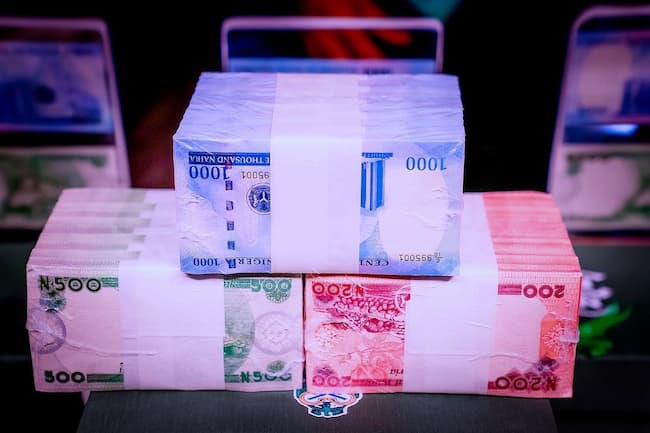
The Nigerian naira weakened further against the US dollar for the second consecutive day, closing at ₦1,463 per dollar at the official foreign exchange window on Tuesday, as dollar demand continued to mount across the market.
Increased foreign exchange (FX) demand — particularly from importers and investors — exerted downward pressure on the naira, even as the Central Bank of Nigeria (CBN) maintained strong intervention capacity.
At the global level, the US dollar appreciated against major currencies as investors sought safety amid renewed concerns over a potential U.S. government shutdown.
Official data from the CBN showed that the naira depreciated by 39 basis points to close at ₦1,463.23/$, trading within the range of ₦1,457 to ₦1,474 during the day’s session. Similarly, the parallel market rate moved in tandem, reflecting consistent demand pressures.
Despite the depreciation, Nigeria’s external reserves continued their upward trend, rising by $43 million to $42.63 billion as of October 13, 2025 — a sign of healthy FX buffers to stabilise market volatility.
Analysts predict that the naira is likely to remain around current levels, supported by the resilience of external reserves and cautious CBN intervention.
Meanwhile, global commodity markets remained volatile. Brent crude futures fell 1.39% to $62.44 per barrel, while U.S. West Texas Intermediate (WTI) slipped 0.56% to $58.74 per barrel after the International Energy Agency (IEA) warned of a potential oil glut in 2026.
Conversely, gold prices surged to a new all-time high above $4,100 per ounce, as investors shifted toward safe-haven assets amid heightened U.S.-China trade tensions and expectations of an upcoming rate cut by the U.S. Federal Reserve. Spot gold rose 0.52% to $4,149.82/oz, while gold futures gained 0.47% to $4,165.10/oz.
Experts from AIICO Capital Limited said sentiment in the financial markets is expected to remain cautious, with investors likely to maintain preference for safe-haven assets as global uncertainties persist.
The Federal Government of Nigeria has concluded plans to issue a ₦4 trillion sovereign bond aimed at clearing verified debts owed to power generation companies (GenCos) and gas suppliers, marking a major intervention in the electricity sector.
This was revealed by the Special Adviser to the President on Energy, Mrs. Olu Verheijen, in a statement signed by her media aide, Senan Murray, and released in Abuja.
According to Murray, the decision followed a strategic meeting between senior government officials and executives of power generation companies to finalise modalities for the settlement of outstanding arrears.
The meeting was attended by the Minister of Finance and Coordinating Minister of the Economy, Mr. Wale Edun; Minister of Power, Chief Bayo Adelabu; and Mrs. Verheijen.
Verheijen explained that the new debt settlement framework will involve bilateral negotiations to agree on final payment structures that balance fiscal constraints with the financial realities of the power sector.
“This intervention represents the most significant fiscal step in more than a decade to resolve a debt overhang that has hindered investment, weakened utilities, and disrupted reliable power delivery,” Murray stated.
He added that the initiative aligns with President Bola Tinubu’s reform agenda and the Federal Executive Council’s approval to address long-standing liquidity bottlenecks in the power industry while attracting large-scale private sector investments.
Verheijen emphasized that the Federal Government is focused on creating an enabling environment for power sector growth through grid modernization, improved distribution efficiency, and expansion of embedded generation capacity.
She added that the plan will also target reducing metering gaps, aligning tariffs with cost-reflective levels, improving subsidy targeting for vulnerable groups, and restoring investor and regulatory confidence.
Minister Wale Edun noted that the reforms go beyond debt clearance, saying they are designed to “rebuild the fundamentals of the power sector so it works for investors, citizens, and future generations.”
He highlighted that the reforms will also promote renewable energy adoption, harness domestic gas as a transition fuel, and develop local technical expertise to achieve long-term energy security.
Industry stakeholders, including Mr. Tony Elumelu, Chairman of Heirs Holdings and Transcorp Power, and Mr. Kola Adesina, Group Managing Director of Sahara Power Group, commended the initiative, describing it as a credible step toward stabilizing the electricity market and boosting investor confidence.
The Presidential Power Sector Debt Reduction Plan is being jointly implemented by the Federal Ministries of Finance and Power, alongside the Office of the Special Adviser to the President on Energy and the Nigerian Bulk Electricity Trading (NBET) Plc.
The exchange rate between the Naira and the US dollar, according to the data released on the FMDQ Security Exchange, the official forex trading portal, showed that the naira closed at 1485.00 per $1 on Wednesday, October 15th , 2025. The naira traded as high as 1457.00 to the dollar at the investors and exporters (I&E) window on Tuesday.
Dollar to naira exchange rate today black market (Aboki dollar rate):
The exchange rate for a dollar to naira at Lagos Parallel Market (Black Market) players sell a dollar for ₦1504 and buy at ₦1485 on Tuesday 14th October, 2025, according to sources at Bureau De Change (BDC).
Please note that the Central Bank of Nigeria (CBN) does not recognize the parallel market (black market), as it has directed individuals who want to engage in Forex to approach their respective banks.
Dollar to Naira Black Market Rate Today
Dollar to Naira (USD to NGN)
Black Market Exchange Rate Today
Selling Rate
₦1505
Buying Rate
₦1485
Dollar to Naira CBN Rate Today
Dollar to Naira (USD to NGN)
CBN Rate Today
Highest Rate
₦1474
Lowest Rate
₦1457
Please note that the rates you buy or sell forex may be different from what is captured in this article because prices vary.
Names Of Forex Policy Defaulters Will Be Published, Banks Tell Customers
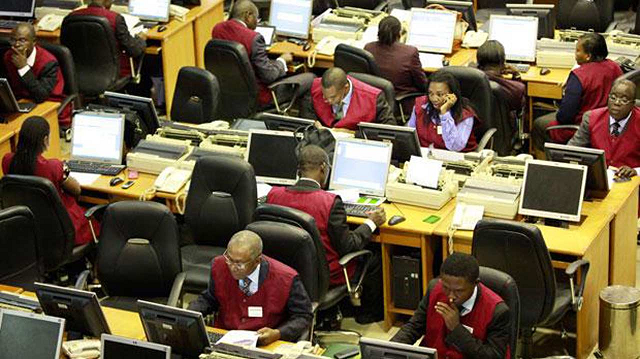
The Nigerian banking index slipped by 37 basis points on Tuesday as institutional investors executed significant block trades off the Nigerian Exchange (NGX) platform, dampening sentiment across financial stocks.
Despite a generally positive trend in the broader market, the banking sector underperformed due to sell-offs in major financial institutions such as FCMB, UBA, and ACCESSCORP, according to trading data from the NGX.
FIDELITYBANK led the volume chart with 50.90 million shares, followed by CHAMS (37.36 million), TANTALIZER (36.69 million), and ACCESSCORP (30.15 million).
In terms of value, MTN Nigeria (₦2.46 billion), Dangote Cement (₦2.34 billion), Lafarge Africa (₦2.26 billion), and Zenith Bank (₦1.21 billion) dominated trading activity.
Noteworthy block transactions included:
FIDELITYBANK: 45 million shares traded at ₦20.05–₦20.10 per share, worth ₦926 million.
Dangote Cement: Two block trades totaling 999 million shares at ₦585.60 per share, valued at ₦585 million.
ACCESSCORP: 5 million shares traded at ₦26.00 per share, worth ₦130 million.
Sectoral analysis showed mixed results. The Insurance Index (+1.01%) led the gainers, buoyed by WAPIC (+6.45%) and AIICO (+1.78%). The Industrial Goods (+0.30%) and Consumer Goods (+0.10%) sectors also recorded slight upticks, driven by BUACEMENT (+0.63%) and INTBREW (+3.57%).
However, the Banking Index (-0.37%) and Oil & Gas Index (-0.09%) ended the day in the red as sell-side activity weighed on investor sentiment.
Analysts say that while block transactions can temporarily distort market dynamics, the broader equity outlook remains positive given continued rotation of capital from fixed-income instruments into equities.
The naira extended its losing streak on Tuesday, depreciating by 0.39% to close at ₦1,463.23 per dollar at the official foreign exchange market, amid sustained demand for the U.S. dollar and renewed strength of the greenback globally.
According to updated figures from the Central Bank of Nigeria (CBN), the spot exchange rate weakened to ₦1,474 per dollar, marking an ₦11 depreciation from Monday’s ₦1,463 close.
In the parallel market, the naira further declined to ₦1,490 per dollar, signaling persistent demand pressures despite the CBN’s intervention. Intraday trading at the official window saw rates fluctuate between ₦1,467 and ₦1,474, underscoring market volatility.
Globally, the dollar index (DXY) continued its rebound, gaining nearly 3% since mid-September after recovering from its weakest level in over three years.
Last week, both official and parallel market rates for the naira had strengthened following improved foreign inflows and CBN’s continued intervention efforts. The local currency gained 1.02% week-on-week at the official market, closing at ₦1,455 per dollar, while parallel market rates improved to ₦1,465 per dollar, narrowing the spread between both markets to just ₦10.68.
A report by Coronation Merchant Bank Limited revealed that total FX inflows at the official window reached US$835.60 million in the reviewed week, slightly below the US$1.18 billion recorded previously.
Foreign portfolio investors accounted for the largest share of inflows at 31% (US$259.11 million), followed by exporters (20.3%), foreign direct investors (19.9%), and non-bank corporates (8.9%). The CBN supplied 14.89% of total inflows, while other sources contributed 12.2%.
The bank’s research arm noted, “We anticipate the naira will maintain a relatively stable outlook this week across FX segments, supported by steady CBN liquidity interventions and healthy foreign inflows, barring any unexpected macroeconomic disruptions.”
The Nigerian Exchange (NGX) extended its upward momentum on Tuesday as the All-Share Index (ASI) inched higher by 0.06%, reflecting a mild rally driven by renewed investor interest in select blue-chip and mid-cap stocks.
Despite the moderate pace, the market’s performance pushed the year-to-date return to 43.6%, reinforcing bullish sentiment among market participants. The positive outing was supported mainly by bargain hunting across insurance, industrial, and consumer goods stocks.
At the close of trading, the NGX All-Share Index gained 89.41 basis points to settle at a fresh record high of 147,806.82 points, while market capitalization advanced by ₦56.74 billion, closing at ₦93.82 trillion.
The top gainers of the day included REGALINS (+8.82%), PRESTIGE (+6.71%), WAPIC (+6.45%), LEGENDINT (+5.45%), and CWG (+4.74%), showing increased investor appetite for insurance and tech-related equities. On the flip side, AUSTINLAZ (-7.90%), FIDSON (-6.67%), and DEAPCAP (-6.67%) were among the worst performers.
Although the market stayed positive, trading activity slowed as total volume and value dipped by 57.39% and 37.73%, respectively. According to data from Atlass Portfolio Limited, investors exchanged 262.45 million shares worth ₦8.27 billion across 16,693 deals.
FIDELITYBANK maintained its lead on the activity chart, accounting for 10.35% of total trades, followed by CHAMS (7.59%), TANTALIZER (7.46%), ACCESSCORP (6.13%), and SOVRENINS (4.42%).
In value terms, MTNN topped the trading chart with 14.23% of total market value. Other heavyweights that influenced the day’s rally included INTBREW (+3.57%), alongside 17 additional gainers.
Out of all listed equities, 36 recorded losses, resulting in a negative market breadth with 23 gainers and 36 losers. Sectoral performance, however, painted a mixed picture — the Insurance (+1.01%), Industrial (+0.30%), and Consumer Goods (+0.10%) sectors closed higher, while Banking (-0.37%) and Oil & Gas (-0.09%) sectors declined due to sell pressures.
Analysts believe the continued migration of funds from the fixed-income space into equities underscores growing investor confidence in the Nigerian stock market despite short-term volatility.
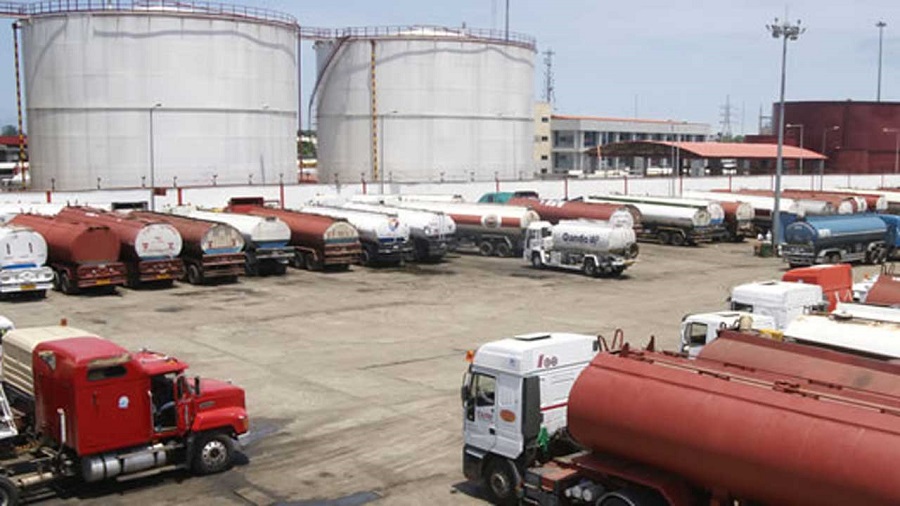
Nigeria’s lingering fuel supply crisis deepened this week as petrol prices inched closer to ₦1,000 per litre across major cities, sparking outrage among motorists and raising fears of another inflationary surge.
Petroleum marketers have blamed the steep rise on supply bottlenecks and disruptions at the Dangote Petroleum Refinery, which has slowed production amid reports of internal restructuring and technical hiccups.
The National Publicity Secretary of the Independent Petroleum Marketers Association of Nigeria (IPMAN), Chinedu Ukadike, stated that the Depot and Petroleum Products Marketers Association of Nigeria (DAPPMAN) members were already making arrangements to commence independent petrol importation.
According to Ukadike, this move could reintroduce competition into the market and potentially drive down prices if alternative imports arrive at lower costs than Dangote’s supply.
“Some DAPPMAN members have applied for import permits. Once their landing cost is cheaper, prices will come down naturally because the market will favour the lowest offer,” Ukadike said.
Currently, petrol retails between ₦920 and ₦955 per litre across most urban centres, while some filling stations in Abuja, Lagos, and Sokoto are charging as high as ₦1,000 per litre depending on the location and brand.
This price spike comes despite expectations that the Dangote refinery’s logistics-free distribution model would lower pump prices to ₦841 per litre in the South-West and ₦851 in the North-Central and South-South regions.
However, the anticipated reduction has not materialised. Instead, retail prices have climbed, with many filling stations citing limited supply and increased ex-depot costs.
In the Federal Capital Territory, NNPC retail outlets in Gwarinpa and Lugbe sold petrol at ₦955 per litre, while similar outlets in Lagos recorded prices between ₦920 and ₦940. Motorists in Edo, Rivers, and Oyo states paid between ₦900 and ₦1,000 per litre amid long queues and panic buying.
The Independent Petroleum Marketers Association of Nigeria has accused depot owners of exploiting the supply gap to inflate ex-depot prices. IPMAN President, Abubakar Shettima, alleged that depots hiked prices from an average of ₦830 to ₦890 after Dangote temporarily halted loading operations.
According to data from Petroleumprice.com, major depots like Matrix, Fynefield, and Liquid Bulk sold petrol at ₦900 per litre as of Tuesday, while RainOil, Pinnacle, and Aiteo charged between ₦878 and ₦895.
Consequently, retail outlets adjusted their pump prices to reflect the higher landing cost, with NNPC stations in Lagos and Ogun now selling at ₦928 — a ₦50 increase from August’s ₦870.
Speaking on the development, NNPC spokesperson Andy Odeh explained that the retail arm had no choice but to adjust its prices to match new ex-depot rates.
“When depot prices rise, retail outlets adjust accordingly. It’s a reflection of market dynamics,” he said.
Meanwhile, reports indicate that Dangote Refinery recently paused sales to independent marketers, further tightening supply. Industry sources attribute the slowdown to maintenance activities and the fallout from the mass dismissal of over 800 engineers.
IPMAN’s Ukadike confirmed that ongoing internal reorganisation at the refinery and labour-related disruptions had caused “temporary supply delays,” allowing private depot operators to take advantage of the situation.
“This is a reflective market — once suppliers raise prices, retailers follow suit. The issue is not the exchange rate anymore but production and distribution challenges,” Ukadike explained.
The Major Energies Marketers Association of Nigeria (MEMAN) also confirmed in its daily bulletin that the refinery had restricted gantry loading since last Thursday, serving only its own and MRS trucks.
Similarly, the CEO of PetroleumPrice.ng, Jeremiah Olatide, revealed that Dangote’s limited loading has affected private depots, forcing them to suspend sales or hike prices.
“The refinery is only loading its own trucks and those of MRS. Private marketers have not been able to lift products for days,” Olatide said.
He added that the refinery’s crude supply shortages and workforce reduction had exacerbated the crisis, warning that the situation mirrors the earlier nationwide gas shortage.
“There’s clearly a supply problem — depots are scrambling for limited stock and have begun raising prices again,” he cautioned.
In Sokoto State, residents reported fresh hikes, with pump prices rising from ₦930 to between ₦1,000 and ₦1,050 per litre. Many NNPC stations in the metropolis have remained shut for days, worsening the scarcity. A motorist in Sokoto, who joined a long queue at an AA Rano station, said he had to borrow money just to refuel.
“I heard it’s ₦992 per litre in Lagos. Nobody knows how much we’ll pay next week. I had to borrow money from my wife to fill my tank,” he lamented.
With petrol prices edging towards ₦1,000, economists warn of another inflationary wave that could destabilise transportation, food, and manufacturing sectors. Nigerians, meanwhile, await assurances of stable supply from the country’s 650,000-barrels-per-day refinery — once heralded as the solution to decades of fuel dependency.
Repeated attempts to contact Dangote Group spokesperson, Anthony Chiejina, were unsuccessful as calls and messages remained unanswered.
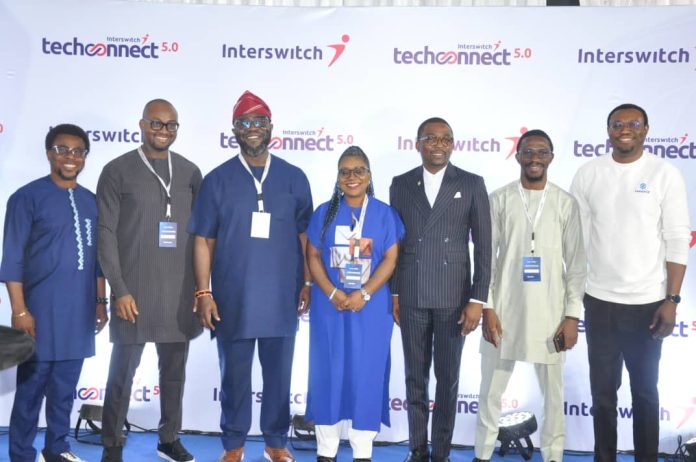
Interswitch TechConnect 5.0 train successfully made its latest stop in Abuja, following an impactful kickoff in Enugu, as the series continues to advance conversations around innovation, collaboration, and compliance across Nigeria’s digital payments landscape.
Organised by Interswitch, one of Africa’s leading integrated payments and digital commerce companies, the event convened financial institutions, regulators, fintech innovators, and ecosystem players to explore emerging opportunities within the evolving digital payments ecosystem.
Held at The Wells Carlton, Asokoro, and themed “United Frontiers: Growth Powered by Innovation, Collaboration and Compliance,” the Abuja edition featured thought-provoking discussions on how technology and regulation are jointly shaping the future of financial services in Nigeria.
Speaking at the event, Akeem Lawal, Managing Director, Payment Processing & Switching (Interswitch Purepay), reaffirmed Interswitch’s commitment to enabling an ecosystem that empowers businesses and drives economic inclusion through technology.
“At Interswitch, we believe that collaboration and compliance are not opposing forces but essential catalysts for growth,” Lawal said. “Through platforms like TechConnect, we continue to engage stakeholders across regions to exchange ideas, strengthen partnerships, and collectively unlock new possibilities for Nigeria’s digital economy. The energy and turnout in Abuja reaffirm that the future of financial innovation in Africa is not just promising, it’s already taking shape.”
Delivering the keynote address, Dr. Eddy Bassey Orok, Executive Secretary, National Association of Microfinance Banks (NAMB), emphasised the need to harmonise innovation with compliance to build a resilient and inclusive financial ecosystem capable of driving sustainable growth.
“Innovation and regulation are not opposing forces; they are twin engines driving Nigeria’s financial evolution. No single player can transform Africa’s digital future alone. True progress comes when innovation, regulation, and partnership move in harmony, creating a financial ecosystem that is resilient, inclusive, and built on trust,” he said.
The day’s conversations also featured a dynamic panel session themed “Policy, Innovation, and Partnerships: Aligning for Scalable Growth,” moderated by Obiora Ezika, Business Development Manager at Interswitch. The session brought together industry leaders including Tunji Ashiru, Vice President, Government Relations and Regulatory Affairs, Interswitch; Adedeji Owonibi, Founder, Convexity Technologies; Tayo Odukoya, Managing Director/CEO, Paysure Technologies; Sula Bello, Founder, ThriveAgric; and Tina Olaore, Head, Digital Banking, Interswitch. Together, they explored how public-private partnerships, forward-thinking regulation, and innovative solutions can drive scalable growth within Nigeria’s payments ecosystem, while deepening financial inclusion and fostering trust across stakeholders.
A compelling fireside chat on “The Role of Innovation and Regulation in Shaping the Future Payment Ecosystem” further underscored the importance of synergy between policymakers and innovators in scaling Nigeria’s digital economy and extending financial access to underserved segments.
Attendees were also treated to product demo showcases where Interswitch unveiled some of its latest payment and digital solutions designed to enhance efficiency, security, and user experience across multiple sectors. The event concluded with an awards presentation recognising outstanding partners and key contributors within the ecosystem.
The Abuja engagement marks the second leg of the TechConnect 5.0 tour, with a highly anticipated grand finale set for November 11, 2025, in Lagos, at the Federal Palace Hotel and Casino, Victoria Island. As Interswitch continues its nationwide engagement, the series remains a testament to the company’s mission to drive sustainable growth through technology-driven innovation and collaboration.
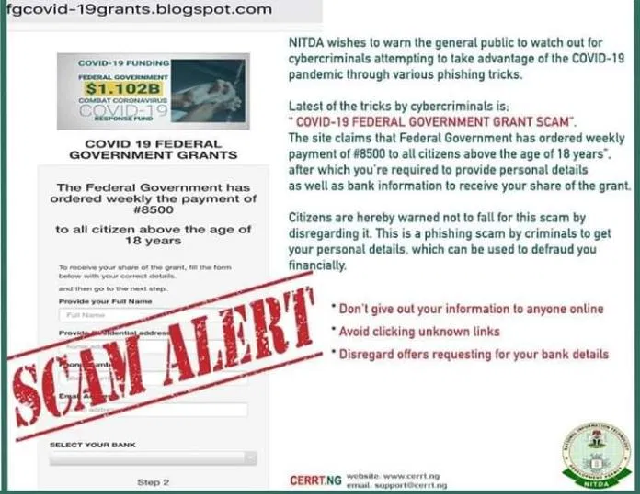
COVID-19: NITDA Cautions Nigerians on Fraudulent Websites
Nigerian companies anticipate the highest rates of fraud in Sub-Saharan Africa next year. Half (50%) expect to face external fraud and 41% anticipate insider fraud to impact their businesses.*
The threat of violence toward company executives has jumped in the last two years according to 33% of security chiefs. Global institutional investors share this concern. Seven in 10 (68%) say the contributions of senior executives to strategic decision-making, leadership and innovation represents 30% or more of the value of the companies they invest in.
In response to rising threats, more security chiefs in Nigeria (90%) than anywhere else in the world say their physical security budget will increase in the next year (81% regional average, 66% global average).
These are key findings from the World Security Report, commissioned by Allied Universal®, the world’s leading security and facility services provider and its international business, G4S.
2,352 chief security officers (CSOs) in 31 countries at medium and large, global companies with total revenue exceeding $25 trillion took part in the research. 58 security chiefs from Nigeria and 174 in total from Sub-Saharan Africa were surveyed. The report also incorporates the crucial perspectives of 200 global institutional investors managing over $1 trillion in assets.
Reinforcing the prevalence of financial motivated threats, economic instability is expected to surge in Nigeria next year with nearly half of security chiefs (47%) predicting it to be a security-impacting hazard. This is up from 40% last year.
The top driver of intentional insider threats is financial dissatisfaction (low pay, lack of bonuses or incentives) more than half of security chiefs say (55%). This is higher than anywhere else in the world alongside Kenya (36% global average).
“Financial pressures mean fraud is pervasive in everyday life and some individuals can be easily exploited. But Nigeria also has plenty of opportunities and many businesses want to operate here, giving careful consideration to how they can best protect their people and operations. Real-time information and intelligence gathering is essential, particularly as the risks differ depending on which part of the country you are in,” said Jonas Ahl, managing director of G4S Nigeria.
Nearly a third of businesses view civil unrest as a top hazard for the coming year. Typically this translates into protests and demonstrations which are predicted to impact 17% of companies, well above the global average of 10%.
Nigeria will also face a growing threat from activist groups, with 86% of security chiefs saying they increasingly pose a physical security risk to corporate facilities and executives – higher than anywhere else in the region (78% regional average, 77% global average).
“Consistent with the 2023 findings, fraud is the dominating internal and external threat across the region which can be tied back to economic instability. Despite these challenges, there are plenty of opportunities across the region and it is encouraging to see the planned investment in smart security infrastructure and AI-powered video surveillance,” said Christo Terblanche, regional president of G4S in Africa.
*The anticipated global and regional average for external fraud next year is 30% and 40%. Last year, 45% of companies in Nigeria experienced this threat.
World Security Report 2025 – further key findings for Nigeria:
Top 3 measures to mitigate the threat of violence to company executives
62% say enhanced security procedures (i.e. Enhanced background checks, on site firearms or explosives screening) (62% regional average and global average 49%)
53% say risk assessment for leaders (i.e. Pre-event assessments, travel risk management) (59% regional average and global average 45%)
52% say monitoring online threats (i.e. social media, dark web, etc.) ( 60% regional average and global average 44%)
Threats and hazards
36% say theft of company physical property is the second top external threat expected next year (31% regional average and 28% global average)
38% say policy violations is the second top internal threat expected next year(36% regional average and 27% global average).
76% say geopolitical tension will compromise the security of our supply chain over the next 12 months (77% regional average and 78% global average).
More than half of investors say fraud is both the internal (59%) and external (53%) security incident they think it’s most important for companies they invest in to prepare for.
Priorities
69% say enhancing physical security is a budget priority for the next 12 months e.g., barriers, surveillance, access control (60% regional average and 43% global average)
53% say improving threat detection to prevent security incidents is their priority for improvement (49% regional average and 33% global average)
90% agree physical security should have a higher strategic priority within their business – highest in the region (85% regional average and 82% global average)
Cutting-edge technologies classified as crucial for operations over the next two years:
59% say smart security infrastructure for buildings and public spaces (58% regional average and 38% global average)
48% say AI-powered intrusion detection and perimeter security (43% regional average and 44 % global average)
48% say AI-assisted threat intelligence and automated incident response (45% regional average and 40% global average)
The Nigeria Customs Service (NCS) has partnered with the Economic and Financial Crimes Commission (EFCC) and the Nigerian Financial Intelligence Unit (NFIU) to strengthen the country’s anti-money laundering framework and improve coordination among security and financial intelligence agencies.
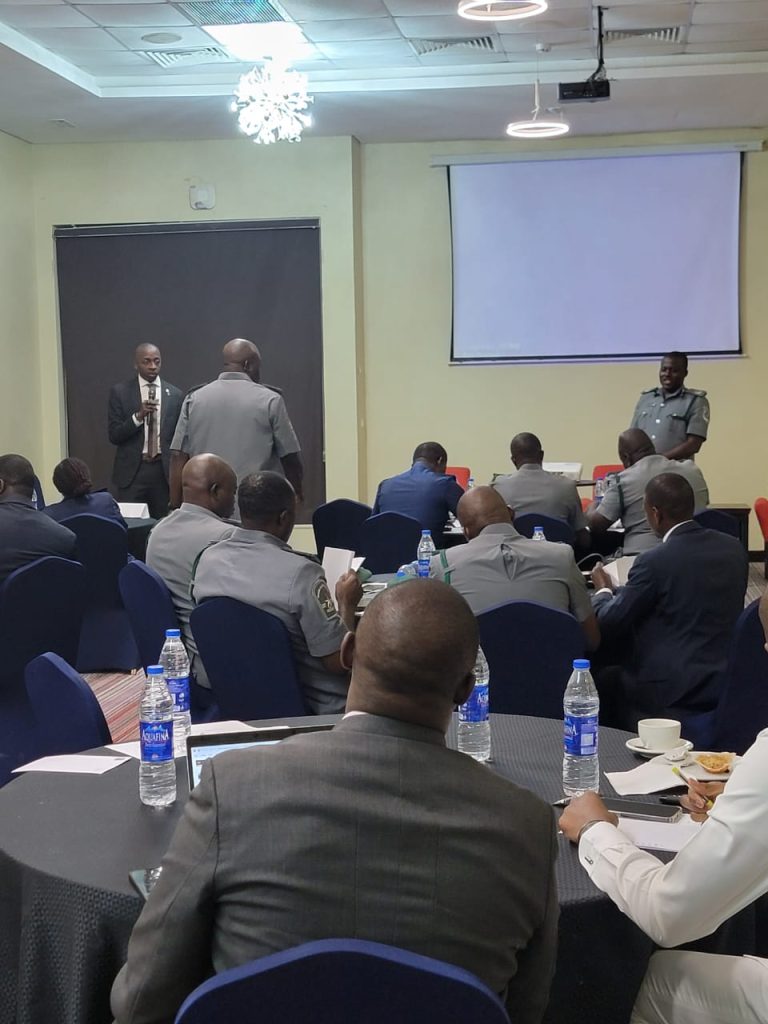
Declaring open a two-day capacity-building workshop in Lagos on Tuesday, the Assistant Comptroller-General of Customs, Zone A, Mohammed Babandede, who represented the Comptroller-General of Customs, Bashir Adewale Adeniyi, said the training was designed to enhance collaboration in tackling money laundering and terrorism financing.
Babandede noted that inter-agency collaboration remains a key policy focus of the Comptroller-General’s administration, adding that such partnerships have contributed significantly to national security efforts.
He explained that participants were drawn from the NCS, EFCC, Department of State Services (DSS), Nigerian Immigration Service (NIS), and NFIU, reflecting a joint commitment to combating financial crimes.
“The selection of participants was deliberate, focusing on officers from airports and land borders where the movement of cash and human traffic is high. The training will enable participants to exchange ideas and develop actionable outcomes,” Babandede said.
He reiterated the Customs Service’s role in securing Nigeria’s borders against illicit financial flows and called on participants to apply the knowledge gained in their respective commands.
Also speaking, the Deputy General Manager, Currency Operations Department, Murtala Muhammed International Airport, Eworitse Maryesther who represented the NFIU, commended the Customs Service for its proactive collaboration. He disclosed that recent joint efforts led to the detection of suspicious cash movements, including a case involving over $6 million at the Lagos airport.
Eworitse added that the NFIU had deployed currency declaration kiosks at international terminals and intensified public awareness campaigns to remind travellers of the requirement to declare cash above $10,000.
In his remarks, the EFCC Head of Investigations, Lagos Zonal Command, Shehu Muhammad, said effective collaboration between agencies was critical to dismantling complex financial crime networks.
“The Customs Service plays a lead role in the currency declaration regime, while the EFCC handles investigations and prosecutions. Strengthening inter-agency synergy will improve our effectiveness,” Muhammad said.
Similarly, the Assistant Comptroller of Customs in charge of the Anti-Money Laundering/Counter-Financing of Terrorism (AML/CFT) Unit, Salih Masoud, highlighted the importance of continuous training to deepen understanding of financial regulations and intelligence sharing.
Masoud noted that 20 officers were selected from airports, seaports, land borders, and patrol units to ensure comprehensive coverage and representation.
The two-day workshop, jointly organised by the NCS and NFIU, aims to strengthen inter-agency cooperation, improve compliance with financial laws, and enhance Nigeria’s resilience against money laundering and terrorism financing.
Every successful business in Nigeria starts with an idea — sometimes born in traffic, during a power outage, or over a cup of steaming suya peppered to perfection. But ideas alone don’t build empires. Names do. Logos do. Reputation does. And when those things start to gain value, you suddenly realize something — they need protection. Real, legal, enforceable protection.
Let’s keep it simple. A trademark is basically your business’s identity card. It can be your brand name, logo, slogan, symbol, or even a sound — anything that makes your product or service stand out in the crowd.
When you trademark something, you’re telling the world, “This right here? It’s mine. You can’t copy it, imitate it, or confuse customers with something similar.” And in a country like Nigeria, where small and medium enterprises (SMEs) are mushrooming across every sector — from fintech to fashion — that’s a big deal.
Just think about how many “Jumia-sounding” or “Paystack-like” startups pop up every year. Without a trademark, there’s nothing stopping another business from riding on your brand’s credibility.
Here’s the thing: competition in Nigeria is brutal. If you’ve ever walked through Balogun Market or scrolled through Instagram business pages, you’ll see dozens of brands selling similar products — same fonts, same names, same packaging. Sometimes it’s innocent imitation; sometimes it’s flat-out brand theft.
A trademark gives you the legal right to challenge that. You can stop anyone from using your brand identity without your permission. You can sue for damages. You can even prevent imported goods that infringe your mark from entering the country through the Nigerian Customs Service.
But it’s not just about litigation or intimidation — it’s also about value. Trademarks build trust with customers and investors. If your business ever scales, expands internationally, or gets acquired, a registered trademark can significantly increase your valuation. Imagine pitching your startup to an investor and saying, “We own our brand name — legally.” That statement alone can turn heads.
The Registration Process — Not as Scary as It Sounds
Now, let’s break this down without the usual legal jargon.
Conduct a search. You start by checking whether your proposed name or logo is already taken. A lawyer or accredited trademark agent can help with this.
File an application. If the coast is clear, you file your trademark application with the Registry.
Examination. The Registry reviews your application to ensure it meets legal requirements.
Publication. If approved, your trademark is published in the Trademarks Journal, inviting the public to object (if they have valid reasons).
Certification. If no one objects within two months, you receive your registration certificate. Congratulations — your brand is officially protected.
And yes, the process takes time — often 6 to 12 months — but it’s worth every bit of patience.
What Happens If You Don’t Register?
Honestly, this is where many Nigerian entrepreneurs make their first big mistake. They assume that using a brand name automatically gives them ownership. It doesn’t.
In fact, without registration, someone else could trademark your brand name first — and legally stop you from using it. Imagine spending years building “GlamGoddess Hair” only to wake up one morning and discover another company has trademarked it. The emotional and financial cost of rebranding can be devastating. It’s like losing your identity mid-conversation.
Protecting Beyond Nigeria — Because the World Is Watching
Let’s say your fashion brand starts trending across Africa or your app gains traction in the diaspora. You’ll want protection beyond Nigeria’s borders. Good news: Nigeria is a member of the World Intellectual Property Organization (WIPO), meaning you can register your trademark internationally through the Madrid System. That gives you coverage in over 120 countries with a single application. It’s not just about being ambitious — it’s about being ready. Global competition doesn’t wait for you to catch up.
A Word on Enforcement: Paper Protection Isn’t Enough
Registering a trademark is only the first step. Enforcing it is where things get real. You have to monitor the market — both online and offline — for potential infringers. Social media, especially, is a minefield. A quick scroll through Instagram or TikTok can reveal dozens of copycats using similar names or logos.
In those cases, a “cease and desist” letter from your lawyer often does the trick. But if it doesn’t, you can take legal action. Nigerian courts have become increasingly responsive to intellectual property cases, especially in Lagos, Abuja, and Port Harcourt. Still, prevention is better than litigation. Keep an eye out, educate your customers, and remind them of your official brand identity.
The Cost of Playing It Safe
You might be wondering, “How much does all this cost?” The fees vary depending on your lawyer or agent, but on average, registering a trademark in Nigeria costs between ₦100,000 and ₦250,000. That’s less than what many businesses spend on monthly social media ads — yet it offers far greater long-term value. Think of it as paying for peace of mind. You’re not just buying a certificate; you’re buying control over your brand’s future.
The Bottom Line
Your business name is more than just a label — it’s a promise, a reputation, and sometimes, your life’s work. Don’t leave it hanging unprotected in a marketplace as competitive as Nigeria’s.
Whether you’re running a tech startup in Yaba, a logistics company in Port Harcourt, or a food brand in Abuja, registering a trademark is one of the smartest decisions you can make. Because in business, names carry weight — and ownership carries power.
President Bola Ahmed Tinubu has formally requested the Senate’s approval for the appointment of Professor Joash Amupitan as the new Chairman of the Independent National Electoral Commission (INEC).
The request was conveyed in an official letter addressed to the Senate and read aloud by the Senate President, Godswill Akpabio, during Tuesday’s plenary session. The letter also contained several other presidential communications seeking legislative confirmation for various appointments.
President Tinubu’s nomination of Professor Amupitan follows constitutional provisions outlined in the 1999 Constitution of the Federal Republic of Nigeria, which mandates Senate confirmation for appointments to key federal institutions.
According to reports from the Nigerian Television Authority (NTA), the Senate has subsequently referred the President’s request to the Committee of the Whole for legislative consideration and screening.
Further updates regarding the Senate’s deliberations and the confirmation process are expected in the coming days.
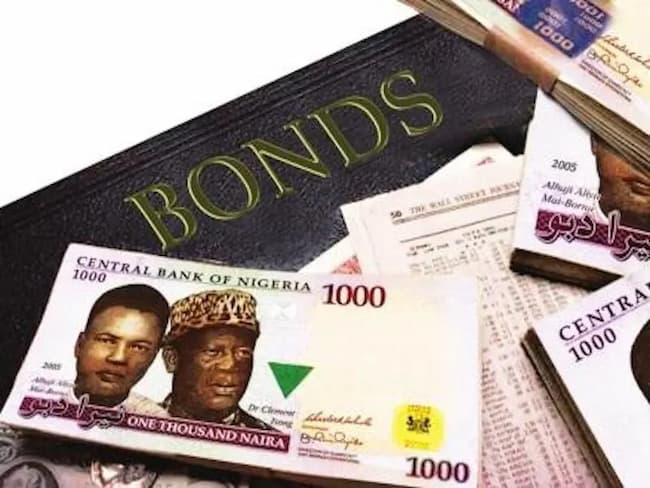
Yields on Federal Government of Nigeria (FGN) bonds remained below the 16% threshold in the secondary market, reflecting investors’ restrained appetite amid mixed signals in the fixed-income landscape.
The bond market has been treading cautiously following the recent interest rate cut by monetary authorities, which has encouraged some investors to shift towards riskier assets. Despite sufficient liquidity across the financial system, bargain hunting has stayed muted, underscoring a conservative stance among traders dealing in sovereign debt instruments.
Analysts say the flexibility granted to pension fund administrators in portfolio management could potentially redirect focus away from low-yield bonds, affecting trading dynamics in the medium term.
With inflation data expected later this week, activity within the federal government bond space remained subdued. The short end of the curve dipped slightly by one basis point (-1bp), while the overall average yield across the curve held steady at 15.98%.
Conversely, the Treasury bills market displayed mild bullish sentiment, particularly across the short (-2bps) and mid (-2bps) segments, pulling the average yield down marginally by one basis point to 17.39%.
Across benchmark bonds, yields expanded slightly at the mid segment (+1bp) due to profit-taking on the JUL-2034 instrument but remained flat at both the short and long ends of the curve.
Fixed-income investors continue to show measured optimism toward naira-denominated assets, concentrating on short- and mid-tenor maturities. The Debt Management Office (DMO) has published its Q4 2025 bond issuance calendar, featuring reopenings of the AUG 2030 and JAN 2032 papers.
For now, the average benchmark yield remains stable at 15.98%. Market analysts anticipate that investor sentiment will likely stay cautious in the near term as inflation and interest rate expectations continue to shape trading strategies.
Global oil prices fell on Tuesday as easing tensions in the Middle East and renewed concerns over trade frictions between the United States and China weighed on market sentiment.
Brent crude futures declined by 0.7%, trading at $62.68 per barrel compared to Monday’s close of $63.18, while West Texas Intermediate (WTI) crude dropped 0.8% to $58.70 from $59.21.
The downturn came after U.S. President Donald Trump threatened to impose steeper tariffs on Chinese imports in retaliation for Beijing’s export restrictions on rare earth materials. The proposed 100% tariff, set to take effect on November 1, would double existing duties.
Although Trump later downplayed trade concerns—stating that there was “nothing to worry about” and expressing confidence in a resolution—investor caution persisted. U.S. Vice President JD Vance added that Washington remains open to dialogue if China “acts reasonably,” though he cautioned that the U.S. still holds “many more cards to play.”
Despite the more diplomatic tone, uncertainty surrounding trade talks between the two largest economies continues to cloud global demand forecasts.
Adding further pressure, geopolitical risks in the Middle East have eased. Monday’s Sharm el-Sheikh Peace Summit in Egypt, attended by key regional and global leaders, focused on reinforcing the Gaza ceasefire and fostering stability across the region.
Meanwhile, the Organization of the Petroleum Exporting Countries (OPEC) held steady its projections for global oil demand growth in both 2025 and 2026, citing consistent consumption patterns in its latest oil market report.
Traders now await the International Energy Agency’s (IEA) upcoming market report, expected later Tuesday, which could provide fresh insight into global supply-demand balances amid persistent volatility.
Yields on Nigerian Treasury Bills (NTBs) recorded a marginal decline this week as cautious trading dominated the fixed-income market ahead of the country’s latest inflation report. Market data showed that the average yield slipped by 1 basis point to settle at 17.39% in the secondary market.
Although liquidity conditions remained relatively tight, the market displayed a slightly bullish tone, supported by bargain-hunting activities across selected maturities. Traders said investors were reacting to recent spot rate adjustments observed in the mid and long segments of the yield curve, while mixed investor sentiment limited the intensity of demand.
Analysts noted that expectations of continued disinflation, driven by relative stability in food prices and the exchange rate, have supported mild optimism in the fixed-income space. However, they warned that recent strike actions, which disrupted oil production and reduced government revenue, could slow economic recovery and affect market direction.
Market liquidity fell further to ₦2 trillion following a series of open market operations (OMO) that withdrew about ₦5.32 billion from the system last week. This tightening in liquidity exerted mild bearish pressure on select fixed-income instruments, though overall sentiment remained steady.
In the NT-Bills market, trading patterns were mixed. Yields declined on the 18-Jun-26 and 08-Oct-26 maturities, while slight upticks were recorded on the 23-Jul-26 and 20-Aug-26 papers.
Across the yield curve, the short and mid segments contracted by 2 bps and 3 bps, respectively—largely driven by demand for the 87-day and 178-day maturities, both of which fell 3 bps. Conversely, the long end of the curve inched up by 1 bp, reflecting sell pressure on the 283-day-to-maturity bill, which climbed 13 bps.
A similar pattern was observed in the OMO segment, where the average yield fell by 7 bps to 20.5%, suggesting renewed investor interest in short-term debt instruments despite limited liquidity.
With inflation data expected later in the week, traders anticipate that the market will remain cautious as investors reassess real yield positions amid evolving macroeconomic indicators.
Nigeria’s interbank money market witnessed mixed movements this week as a decline in liquidity surplus reshaped short-term funding dynamics across the financial system. According to investment analysts, market liquidity opened the week at a relatively solid ₦2.03 trillion, though notably lower than previous levels.
The available liquidity was buoyed by inflows totaling ₦29.18 billion from the Federal Government’s 2033 Sukuk bond coupon payments. Additionally, commercial banks continued to place excess cash at the Central Bank of Nigeria’s (CBN) Standing Deposit Facility (SDF), which currently offers a rate of 24.5%.
This activity comes amid the backdrop of reduced yields on Nigerian Treasury Bills (NTBs) following the CBN’s recent interest rate adjustment, which has moderated returns across different tenors.
In the interbank space, overnight lending rates remained stable at 24.86% after last week’s auctions and maturities. Meanwhile, medium-term rates experienced mild corrections, with the 1-month, 3-month, and 6-month maturities falling by 10 basis points (bps), 18 bps, and 25 bps, respectively.
Funding costs presented a mixed picture, as the overnight rate dropped slightly by 7 bps to 24.90%, while the Open Purchase Rate (OPR) held steady at 24.85%.
On the Treasury Bills secondary market, yields advanced across most maturities on Monday, with the 1-month, 3-month, 6-month, and 12-month papers climbing by 12 bps, 28 bps, 0.5 bps, and 5 bps, respectively, according to data from Cowry Asset Management Limited.
Despite these yield increases, the average NT-Bills yield edged down by a marginal 1 bp to 17.39%, reflecting ongoing investor optimism and sustained buying pressure in the secondary market.
Looking ahead, analysts project that liquidity conditions may improve due to an anticipated inflow of ₦481.33 billion from an upcoming OMO maturity. However, they cautioned that any potential liquidity mop-up operation by the apex bank could dampen the expected moderation in funding costs.
Week 16 pool results 2025: Football pools results, live football pool result today, pool result today saturday matches, pool results for this week, british and aussie pool result, football pools results and fixtures, pools panel results today, pool panel results and live score pool result today. We publish half-time results first of its kind.
Week 16 Pool Results: Football pools results for this week 16 2025 are published on this website immediately after full-time confirmation of live score results. We also publish the outcome of postponed matches by the football pools panel at half-time as decided by the football pools. This week’s Week 16 Pool Results are made available in partnership with Bizwatch Nigeria.
WEEK: 16; SEASON: UK 2025/2026; DATE: 18-October-2025
In September 2025, Nigeria experienced a contraction in its crude oil output, reaching just 1.39 million barrels per day, continuing a downward trend for the second month in a row.
The Nigerian Upstream Petroleum Regulatory Commission previously indicated that this dip stemmed from operational interruptions triggered by a labor dispute involving the Petroleum and Natural Gas Senior Staff Association of Nigeria and the Dangote refinery.
As detailed in the most recent Monthly Oil Market Report issued by the Organization of the Petroleum Exporting Countries on Monday, this level reflects a drop from the 1.434 million barrels per day seen in August, hitting the lowest point in the past seven months and slipping under Nigeria’s assigned OPEC quota of 1.5 million barrels per day.
OPEC noted that these production statistics were gathered via direct consultations with Nigerian officials. The data originated from submissions by the NUPRC.
The NUPRC disclosed that the combined crude oil and condensate production for Nigeria averaged 1.581 million barrels per day during September 2025. Per the commission’s breakdown, this total included 1.39 million barrels per day of crude oil alongside 191,373 barrels per day of condensates.
The NUPRC pinpointed the reduction mainly to a three-day work stoppage initiated by PENGASSAN within that month.
This industrial action resulted in the temporary closure of multiple production sites and export terminals, causing delays in both output and shipping timelines. During June and July, Nigeria slightly exceeded its OPEC allocation, a milestone it also reached back in January.
Sahara Group To Invest $1bn in LPG in Nigeria, Others
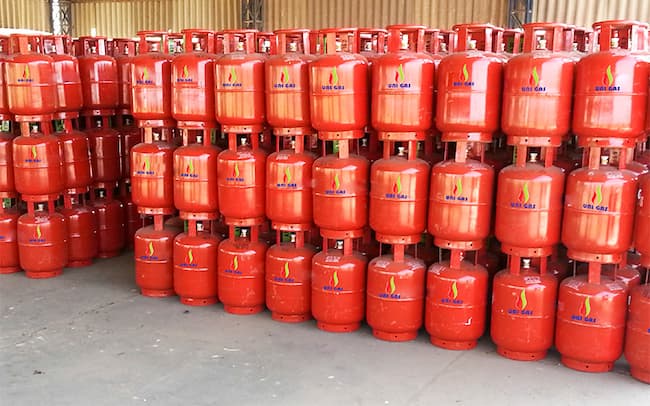
Ekperikpe Ekpo, the Minister of State for Petroleum Resources (Gas), has stepped in to address the ongoing shortage of liquefied petroleum gas, commonly referred to as cooking gas, vowing to take strong action against marketers involved in stockpiling or overcharging customers.
This comes amid grievances from retailers about the disparity between the rates provided by the Dangote refinery and the elevated amounts charged by intermediaries when selling to the broader market.
It’s worth noting that Aliko Dangote, the refinery’s head, had previously warned of potentially handling distribution directly if partners failed to help lower costs.
During a discussion with our reporter on Monday, Ayobami Olarinoye, who leads the Liquefied Petroleum Gas Retailers division of the Nigeria Union of Petroleum and Natural Gas Workers, revealed that the Dangote refinery offers LPG at N15.8 million for 20,000 metric tonnes to primary buyers and large distributors, who then pass it on to retailers at prices ranging from N18.4 million to N18.5 million for the same quantity.
Insiders at the Dangote refinery informed our reporter that “distributors collect the product from us at N715,000 per metric tonne, up to N790,000 per metric tonne.” They clarified that one metric tonne contains 1,000 kilograms.
“In terms of a metric tonne, that’s 1,000 kg. Distributors acquire LPG at N715 per kg directly from the plant.
We have no influence over end-user pricing. Based on the Petroleum Industry Act and guidelines from the Nigerian Midstream and Downstream Petroleum Regulatory Authority, price setting is a government function. Our control ends at the refinery gate. If they mark it up to N2,000 per kg after purchasing at N715 per kg, we’re powerless to intervene,” the insiders explained.
Recently, cooking gas costs have surged from around N1,000 per kilogram to as much as N2,000 per kg in certain areas. This spike coincided with the recent work stoppage by the Petroleum and Natural Gas Senior Staff Association of Nigeria amid tensions with the Dangote refinery.
Nearly two weeks following the end of the strike, cooking gas prices have remained elevated, with shortages persisting. In a statement released by his media aide, Louis Ibah, the minister voiced worries about the situation, calling for patience from the public and guaranteeing that conditions would stabilize by the following week.
He attributed the abrupt price jump to two key issues: the PENGASSAN labor action at the Dangote refinery and routine upkeep at the Nigeria LNG Train 4 plant.The minister elaborated that the PENGASSAN protest briefly stopped LPG shipments from Dangote, while the NLNG maintenance cut back on available gas supplies for local use.
These interruptions created a supply deficit, driving up prices due to mismatched demand and availability. Nevertheless, Ekpo highlighted progress, noting that activities at the Dangote refinery have restarted, with domestic LPG deliveries now in progress. He mentioned that the Bonny River Terminal, managed by Seplat Energy, has also begun shipments, and NLNG is ramping up to full capacity as repairs wrap up.
“These advancements should balance out domestic supplies by next week, paving the way for steady price drops,” the minister stated.
Ekpo emphasized that the LPG sector operates without price controls and encouraged all participants in the gas industry—marketers, distributors, and others—to act responsibly. He urged them to avoid stockpiling and to steer clear of profiteering at consumers’ expense.
“To enforce adherence, the minister has directed the Nigerian Midstream and Downstream Petroleum Regulatory Authority to ramp up oversight of LPG storage facilities nationwide, aiming to curb hoarding and other unethical behaviors that could aggravate the crisis,” the statement continued.
In his remarks, Olarinoye argued that hoarding wouldn’t occur if supplies were sufficient. “I maintain that the core issue is insufficient availability relative to consumer needs,” he asserted.
Although he supported any initiatives to boost LPG accessibility and affordability, he pointed out that retailers lack the means to hoard large volumes.
“What’s our storage limit to begin with? Regulations restrict the amount we can hold in one spot for safety reasons, which is why retailers often suffer first during supply disruptions in the chain. I’m speaking only for LPG retailers. Maybe authorities have intelligence indicating otherwise. From my perspective, the real problem is product scarcity,” he elaborated.
Additionally, the retailer recommended that the government investigate why key players have reduced purchases from NLNG since the Dangote refinery entered the scene.
“Authorities should explore why primary buyers and large firms aren’t sourcing from NLNG as before to support Dangote’s output. NLNG could offer competitive pricing, close to Dangote’s or with a minor gap that buyers can overlook. This might encourage more uptake,” he proposed.
Olarinoye called on the Federal Government to actively resolve the ongoing disputes between Dangote and labor groups to ensure reliable LPG production and supply.
“Over time, the government ought to push other approved private refineries to accelerate development, reducing dependence on one provider. Granting more licenses and overseeing construction starts is essential.
“The administration under Bola Tinubu must address the challenges plaguing the four idle state-owned refineries,” he recommended.
Previously, the Nigerian Association of Liquefied Petroleum Gas Marketers claimed that retailers were responsible for the recent cooking gas price escalation throughout the nation.
Oladapo Olatunbosun, NALPGAM’s National President, pointed fingers at gas retailers for the increases. On Channels Television, Olatunbosun linked the rises to brief supply interruptions and opportunistic practices by certain players. He maintained that no formal price adjustment had occurred for LPG, attributing the problem to profiteers capitalizing on gaps from the PENGASSAN action.
“As NALPGAM’s leader, I feel for Nigerians because this wasn’t our plan. Let me be clear: cooking gas prices haven’t officially risen. Some marketers are exploiting shortages and economic dynamics for fast gains, which we condemn as an organization,” Olatunbosun commented.
Yet, LPG retailers pushed back, labeling Olatunbosun’s statements as “unjust and ill-informed.” Our reporter remembers that LPG was available for as little as N950 per kg in some spots prior to the sharp increase after the PENGASSAN disruption.
As of Monday, reports from Nigerians indicate prices still hover at N2,000 in regions like Lagos and Ogun, with slight reductions in a few areas, though many retailers remain out of stock.
Worries persist that some households are reverting to traditional fuels like wood and coal for meal preparation. However, the gas minister assured that stability would return by next week.
The Lagos State Government has announced that construction of the $3 billion Green Line Rail Project will commence in December 2025, marking a major milestone in the state’s ongoing efforts to modernise public transportation and reduce traffic congestion.
The announcement was made by the Commissioner for Transportation, Oluwaseun Osiyemi, through a statement shared on the official X (Twitter) handle of the Lagos State Government on Monday.
Osiyemi described the Green Line as one of the most ambitious transport projects in Lagos’ history, designed to link Marina on Lagos Island to the Lekki-Epe corridor through a modern 70-kilometer rail system.
Phased construction to begin from Lekki to Epe
According to Osiyemi, construction will be executed in two major phases over two to three years.
The first phase will run from Lekki First Tollgate to Epe, while
The second phase will extend from Marina, running partly on water to accommodate Lagos’ coastal terrain.
“The government has conducted extensive stakeholder engagements and feasibility studies along the Lekki-Epe corridor. The Green Line project will commence in December and will be completed in phases over two to three years,” Osiyemi stated.
Preparatory works underway along the Lekki-Epe corridor
Ahead of construction, the government has intensified enforcement operations along the Lekki-Epe Expressway to clear encroachments and restore wetlands within the project’s right-of-way.
This includes relocation of roadside traders, removal of illegal structures, and improvement of drainage systems to create a safer and more sustainable environment for the rail line.
Modern features and faster commuting
The Green Line will feature 17 stations across Victoria Island, Lekki, Ajah, Sangotedo, and Epe, connecting major residential and commercial districts.
Each station will be equipped with:
Pedestrian bridges, elevators, and escalators
Digital ticketing systems
Park-and-ride facilities
A major train depot will be located in Sangotedo, while a 15-hectare parking area is planned near the Lekki Free Trade Zone.
Trains will operate in eight-car B-type sets, reaching speeds of up to 100 km/h with a minimum waiting time of three minutes. The system is projected to carry up to 35,000 passengers per hour per direction, cutting Marina–Epe travel time to under one hour.
Funding and partnership with China Harbour Engineering Company
The project, valued at approximately ₦4.5 trillion, will be developed under a public-private partnership (PPP) model.
The Federal Government has allocated ₦146.14 billion in the 2025 national budget as counterpart funding.
A tripartite agreement has been signed with the China Harbour Engineering Company (CHEC) to design, finance, construct, and operate the rail line, while the Lagos Metropolitan Area Transport Authority (LAMATA) will supervise and manage operations after completion.
LAMATA had earlier released a detailed video presentation in April 2025, outlining the project’s route, design, and financing structure.
Urban planners have applauded the initiative, describing it as a transformational step for Lagos. However, some raised concerns about station spacing, particularly between Victoria Island and Lekki Phase 1, warning that longer distances between stops could limit access for daily commuters.
Experts also recommended adding more stations in high-density areas and integrating the Green Line with other existing rail lines for seamless movement across the city.
For many residents along the Lekki-Epe axis, the Green Line represents a long-awaited solution to chronic traffic gridlock, where daily commutes between Lekki and Lagos Island often take up to four hours.
While some fear disruptions during construction, the government has pledged to compensate affected residents, minimise diversions, and maintain open communication throughout the process.
“Beyond transportation — it’s about improving lives”
Commissioner Osiyemi emphasised that the Green Line project extends beyond mobility.
“The Green Line is not just about transportation,” he said. “It’s about improving quality of life, creating jobs, and opening up new economic opportunities across the Lekki-Epe corridor.”
Part of the broader Lagos Rail Master Plan are:
The Green Line is part of the Lagos Rail Mass Transit (LRMT) network, which also includes:
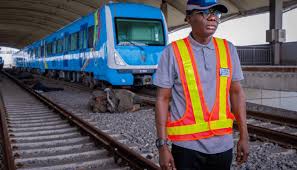
The Blue Line (already operational), and
The Red Line (under construction).
In the long term, Lagos plans to establish six integrated rail lines, forming the backbone of a multimodal transport system combining trains, BRT buses, and ferries — a vision that could redefine urban mobility in Nigeria’s commercial hub.