









Home Blog Page 545

Oil Prices Fall As US Dollar Drags Oil Demand

Oil Prices Drop, Here's Why

The domestic market for crude oil saw a negative reaction to a decrease in demand that was ascribed to stronger US currency and ongoing market worries about China’s sluggish economy. Prior to a pessimistic attitude setting in last week, the market was met by a rise in demand. Qua Iboe and Nigeria’s river basin nevertheless finished higher at $91.24, per market statistics.

Benchmark Brent crude for international markets traded at $85.75 per barrel, down 1.22% from Friday’s closing price of $86.81 per barrel. West Texas Intermediate (WTI), the American benchmark, was trading at the same time at $82.17 per barrel, down 1.22% from Friday’s session finish of $83.19 per barrel.

Despite hefty losses at the beginning of the week, both benchmarks were still at multi-month highs. The world’s largest crude oil importer, China, as well as emerging pessimistic statistics from that nation were significant factors pushing the price drops.

The US dollar index rose 0.10% to 102.79, the highest level in the previous 30 days, measuring the value of the US dollar against a basket of currencies that includes the British pound, Canadian dollar, Swedish krona, and Swiss franc.

The fragile nature of China’s economic recovery is reflected in the country’s lackluster industrial data, which investors are currently placing bets on. During the first seven months of 2018, the leading worldwide importer of crude oil, iron, steel, copper, and coal showed decreases in these imports.

The biggest user of oil in the world, the US, has higher-than-expected annual consumer inflation, which pushes up interest rate expectations and fuels fears about inflation. This keeps oil prices in check.

Experts assert that the July producer inflation data, which showed that the US Federal Reserve (Fed) has not yet achieved victory in its battle against inflation, also prepared the Fed to decide to raise interest rates again.

The formal remarks and minutes from the Federal Open Market Committee meeting held on June 13–14 are currently being eagerly awaited by investors and will be made available on Wednesday.
CBN Rolls Out N156 Billion On Rebates Schemes

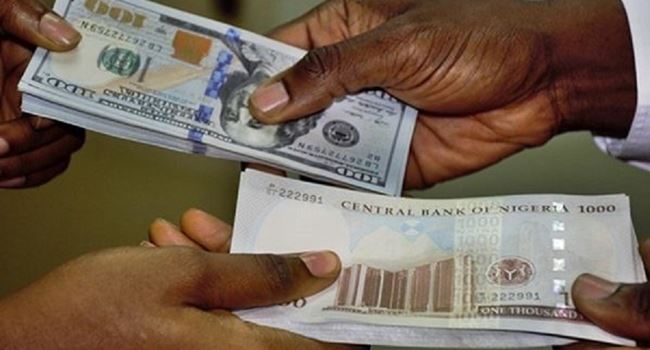
According to an audited financial statement for 2022, the Central Bank of Nigeria (CBN) spent over N156 billion on its FX rebates programmes, especially, the RT200 aimed to promote foreign currency inflows into the economy devoured N317 billion.

Under the leadership of suspended CBN governor Godwin Emefiele, the top bank rolled out numerous efforts to draw foreign inflows despite a considerable foreign currency deficit.

In an effort to stabilize the local currency, the CBN introduced Naira4dollar and later a rebate program for exporters who sell US dollars via the Investors and Exporters FX window.

The RT200 project cost the Bank N137 billion in 2022. 4 billion naira worth of Naira 4 Dollar charges from 2021 were recorded as intervention costs.

The costs associated with the RT200 and Naira 4 Dollar programs that the CBN incurred as part of the Bank’s efforts to increase foreign currency inflow.

The initiative aims to diversify the sources of foreign exchange inflows, boost non-oil export levels, guarantee the stability and sustainability of foreign exchange inflows, and assist export-oriented businesses in growing their export operations and capacities.

“In 2021 Naira 4 Dollar expense to the tune of N4 billion was captured under intervention expenses”, the apex bank said in its recently published audited statement amidst investigation. Despite the CBN efforts, the Nigerian naira has suffered a large devaluation after Emefiele was suspended. Yet, analysts maintained a bleak outlook on the local currency.

FX: CBN Announces New Measures To Stabilize Naira

Dollar To Naira Exchange Rate For 5th Dec 2023

The Central Bank of Nigeria (CBN) has announced fresh measures to stabilize the naira against the dollar.

On Monday, Folasodun Sonubi, acting governor of the Central Bank of Nigeria (CBN), met with journalists following a meeting with President Bola Tinubu in Abuja.

Sonubi stated that Tinubu was concerned about the naira’s steady slide against the dollar and that steps will be taken to alleviate the issue.

According to the acting CBN governor, swings in the parallel market are driven not only by economic causes, but also by speculative demand.

While he did not reveal the specific steps, Sonubi warned speculators that the CBN’s next initiatives could result in huge losses.

He further stated that once adopted, the steps will produce positive results within a few days.

Sonubi said “Mr. president is very concerned about some of the goings on in the foreign exchange market.

“One of the things we discussed is what could be done to stabilise and what could be done to improve the liquidity in the market and also the goings on in the various other markets, including the parallel market.

“He’s concerned about its impact on the average person, since, unfortunately, a lot of activities that we do, which are purely local, are still referenced to exchange rates in the parallel market.

“We have discussed and I have shared with him what we’re doing to improve supply. If you look at the official market, you will find that that market has been fairly stable and the spreads of the difference have not fluctuated as much.

“We do not believe that the changes going on in the parallel market are driven by pure economic demand and supply, but are touched by speculative demand from people.

“Some of the plans and strategies, which I am not at liberty to share with you, means sooner rather than later, the speculators should be careful because we believe the things we’re doing, when they come to fruition, may result in significant losses to them.

“But my presence here is more about the concerns the president has and his needs to know that we are doing something about it, assurances of which I have given him totally.

“We are doing things which will significantly impact the market in a few days time and we will all see it.

“The intention is to ensure the environment operates at a level that’s more efficient, but also that is also very reasonable and does not have a negative impact to the best that we can on the lives of the average person.”

BizWatch Nigeria recalls that CBN had in June 2023 announced the unification of all segments of the foreign exchange (FX) market, signalling the end of its control of the forex market.

READ ALSO

Rice Millers To Cease Operations Over Scarcity Of Paddy – NACCIMA

Rice Millers To Cease Operations Over Scarcity Of Paddy - NACCIMA

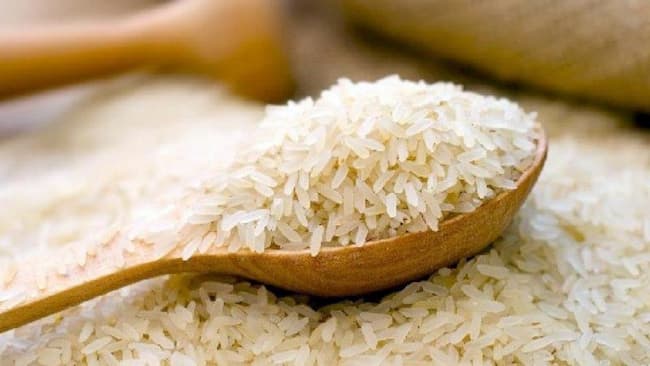
The Northern Chamber of Commerce, Industry, Mines, and Agriculture (NACCIMA) revealed that rice millers are closing their operations in Kano’s commercial metropolis due to paddy scarcity.

The chamber’s head, Dalhatu Abubakar, told journalists on Monday that paddy scarcity will lead the price of completed rice to rise.

He stated that unless sufficient action is taken to prevent food insecurity in the following weeks, the scarcity would endure as the major raw material for production is ended.

Abubakar, who is also the chair of Al-Hamsad Integrated Rice Mill, stated that numerous millers have reduced production from 24 to 12 hours per day while laying off factory personnel.

He urged the federal and state governments to intervene in the field of mechanisation to provide farmers with the necessary input to enable year-round output.

“Today hundreds of millers, both the integrated and small scale, are in a serious dilemma and finding it extremely difficult to break even. It is difficult to sustain production now because of the scarcity of paddy,” Abubakar said.

“As I speak, I know many millers that have completely closed their factories.

“Those that are yet to close, because they still have limited paddy in their reserve, cannot operate 24 hours. Like me, I have reduced my production to 12 hours because I don’t have paddy. By implication, several workers will be rendered jobless.

“Where ever you see paddy now, you buy it at an exorbitant price and you will still be compelled to face the high cost of fuel, pay tax, and electricity bill. How many factories would survive this hard economy?

“The only hard way now is, the cost of finished rice, which Nigerians will soon face.”

According to Abubakar, a major proportion of integrated rice millers in Kano are currently sourcing paddy at excessive prices of up to ₦400,000 per tonne.

READ ALSO

NNPC Denies Plans To Increase Fuel Price

NNPC Denies Plans To Increase Fuel Price

The Nigerian National Petroleum Company (NNPC) Limited has stated that it does not intend to raise the pump price of petrol, as has been widely believed.

The national oil company (NNPC) made the announcement on its official X account.

NNPC said “Dear esteemed customers, we at NNPC Retail value your patronage, and we do not have the intention to increase our PMS pump prices as widely speculated.

“Please buy the best quality products at the most affordable prices at our NNPC Retail Stations nationwide.”

NNPC’s post

Last week, media reports predicted a price hike on the product’s pump due to the naira’s ongoing depreciation, which, as of Thursday, was trading at an all-time low of ₦950 to the dollar in the parallel market.

Also on Monday, oil marketers reportedly stated that if the dollar continues to trade between ₦910 and ₦950 on the black market, the price of petrol will rise to between ₦680 and ₦720 per litre in the coming weeks.

BizWatch Nigeria reports that long queues were noticed at different filling stations on Monday night in Lagos State, this could be caused by panic buying or an increase in demand for fuel.

Indefinite Strike: NLC Warns FG Against Increasing Fuel Price

NLC Considers Negotiation Of Minimum Wage

The Nigeria Labour Congress (NLC) leadership has threatened a national indefinite strike if the Federal Government (FG) allows another increase in the price of petrol during ongoing negotiations with the government.

Since President Bola Tinubu declared on May 29 that “fuel subsidy is gone,” the Nigerian National Petroleum Company Limited (NNPCL) has raised pump prices of Premium Motor Spirit (PMS), or petrol. Prices rose from roughly ₦185 to around ₦500, and then again in July, reaching ₦617.

The NLC issued the warning during its President, Joe Ajaero’s, address to the African Alliance of Trade Unions Executive Meeting in Abuja on Monday.

“As we’re here now, they’re contemplating increasing the pump price of petroleum products. And the Ministry of Labour, for some time now, will only go to the Ministry of Justice to come up with a so-called injunction to hold the hands of labour not to respond,” Ajaero said.

“But let me say this, Nigerian workers will not give any notice if we have not addressed the “consequences of the last two increases and we wake up from our sleep to hear that they have tampered with it again — the prices.”

The meeting, which included Labour executives from Ghana, Kenya, Senegal, and South Africa, also cautioned the ECOWAS leadership  against deploying the military to Niger Republic to restore democratic order.

Digital Cooperation Organization Announces The Launch Of The Digital Prosperity Awards

Prestigious global flagship award recognizes the most outstanding digital contributions in enabling prosperity for all; Calling for entries from international public, private, and civil society sectors

The Digital Cooperation Organization (DCO) today announces the launch of the highly anticipated Digital Prosperity Awards to honor and celebrate the remarkable digital contributions that enable prosperity for all, particularly in advancing the digital economy, which has a critical role in boosting nations’ development and growth.

The Digital Prosperity Awards are structured around three core pillars and each pillar is bestowed in individual award categories, each representing a crucial aspect of digital advancement:

Digital Innovation:

An award for recognizing outstanding initiatives that leveraged disruptive technology solutions to drive significant positive change and advancement.

Digital Transformation:

An award for acknowledging exemplary efforts in utilizing digital technologies to enhance decision-making processes, fostering progress and prosperity. An award for celebrating exceptional cooperation endeavors leveraging digital solutions to drive progress and prosperity.

Empowering Society:

An award for honoring exemplary initiatives that demonstrate ethical practices and principles in utilizing digital technologies for societal advancement and prosperity. An award recognizing outstanding contributions in leveraging digital innovations to address environmental challenges and promote sustainability for a prosperous future.

“The launch of the Digital Prosperity Awards is a significant milestone in recognizing outstanding digital contributions of the organizations that enable prosperity for all”, said Ms. Deemah AlYahya, the Secretary-General of the Digital Cooperation Organization (DCO). “We are looking forward to identifying the best digital innovators from the DCO’s Member States and worldwide that benefit humankind.”

Ms. AlYahya added, “The awards aim to acknowledge exceptional initiatives in adopting best practices, policies, and strategies to accelerate digital transformation in their respective countries. The objective is to accelerate digital economic advancement and lay the groundwork for constructive cooperation, cultivating shared vision and aspirations among all stakeholders. The awards reinforce the role of the DCO as an information provide, advocator, facilitator, and advisor, speeding up the sustainable growth of the digital economy and digital transformation of Member States, further strengthening the welfare, social stability, and cooperation to achieve digital prosperity for all.”

A large and varied technical committee and judging panel of impartial global leaders, innovators, and technical specialists will thoroughly assess the strongest entrants and nominees based on their initiatives tackling local, regional, or global challenges in all economic sectors, fostering a more inclusive and digitally advanced world through cooperation and innovation.

In each category, there will be a winner from the public sector and another from the private sector or civil society, both exclusively representing DCO Member States. Those victorious from the private sector or civil society will be eligible for the DCO Member Prize for Digital Prosperity for All. Additionally, there will be one finalist from global civil society for each category which is open to nominations from the public, and the ultimate recipient will be handed the DCO International Prize for Digital Prosperity for All.

To learn more about the award categories and the nomination process and submit or nominate a project, please visit the official Digital Prosperity Awards website at https://apo-opa.info/45qpETF

Empowering Startups, Techpreneurs Through AWS Build Accelerator

Empowering Startups, Techpreneurs Through AWS Build Accelerator

Founders of startups, techprenuers now have a big opportunity to build, refine, and launch their innovative applications by applying for AWS Build Accelerator.

AWS Build Accelerator a new global program designed to support entrepreneurs early in their cloud journey to build, refine, and launch their innovative applications.

A cohort of up to 500 startup founders from across the world will receive business and technical assistance over the course of 10 weeks on how to effectively exploit the flexibility and scalability of AWS’s tech stack to launch their Minimum Viable Products (MVP).

AWS Build Accelerator

Startups will learn technical principles for incorporating cutting-edge cloud technologies into their applications, such as analytics and serverless computing, as well as artificial intelligence and machine learning.

The training will also assist founders in making strategic decisions on product development, monetization of their idea, where to discover and when to use beta users, and other topics vital to the successful launch of their goods.

Founders chosen for the program will get up to $2,000 in AWS credits to help them build cloud-based goods and services. Startups from all across the world can apply, and founders who previously applied to one of the AWS accelerator programs but were too early-stage to join will be automatically invited to participate in AWS Build.

Following the completion of the program, founders will be asked to join the AWS Build community, a worldwide virtual network of peers and technical experts that they can use for ongoing collaboration and assistance as they scale.

Timeline

Application opened on August 9, 2023 and will close on September 22, 2023.

AWS Build’s curriculum will be offered fully online and largely self-paced, with live virtual engagements each week, including technical office hours with AWS solutions architecture experts, business-led Ask Me Anything sessions with venture investors and industry leaders, and peer-to-peer networking events.

The program will run from October 9 to December 15, 2023 and will be delivered in English. In order to benefit the most from AWS Build, startups need to have a working prototype and a technical leader on their team.

Enrolling for AWS Build Accelerator

To apply to the AWS Build program, all applicants must first join AWS Activate, AWS’s startup hub, where they may obtain self-service business and technical information covering a wide range of important topics.

Applicants may also be eligible to apply to other credit packages up to $100,000 as they continue their cloud journey, as well as benefit from partner offerings through AWS Activate.

Bauchi State Owes Retirees N22.7b By End-2020, Audit Report Reveals

COVID-19 Palliatives
Bauchi Government Confident COVID-19 Palliatives Was Shared to Beneficiaries

The state’s audit report has revealed that the Bauchi State government owed its retirees gratuities of N20.7b by end-2020.

Details of the outstanding of ₦22,746,369,126.87 appear on Page 27 (section 3.26) of the 2020 auditor general’s report released in 2021.

The debt is one of the critical challenges of the Bauchi State government against the backdrop of the inflationary spiral caused by the twin federal government policies of removal of subsidies and relaxation of grips on foreign exchange.

Experts who analysed the Bauchi State Auditor’s Report 2020 observed, “This portends a total betrayal of trust for civil and public servants if they are owed this much post-retirement. The deep poverty they would be living in would discourage honesty and patriotism by those still in service”.

Finance and audit expert and a partner at HLB Z.O. Ososanya and Co, Mr Babatunde Kolawole, FCA, counselled, “The State Government should marshal a repayment plan in phases and clear this within the short and medium term.’

Other challenges identified in the 2020 Bauchi State audit include a low level of internally generated revenue at 13 per cent. It earned an IGR of 13,039,294,812.42 out of the total recurrent revenue of ₦76,483,947,820.98 achieved in 2020.

An expert noted, ‘The level of IGR being only 13% is abnormally low and pre-supposes the state is not strong enough to muster capital development. Conscious efforts should be made to raise the Internally Generated Revenue to at least 50% of the total revenue profile of the State. Such taxes include personal income taxes, PAYE, withholding taxes, stamp duty, development levies, and consumption tax.”

Bauchi State took loans from financial institutions indiscriminately. It accumulated external borrowings of N51. 2b (₦51,266,010,987.09 while Internal Loans (Domestic borrowing) amounted to N68.5 billion (₦68,515,971,502.09).

A chartered accountant reacted: “Indiscriminate taking of loans to pay government services other than for capital projects pushes a State Government towards bankruptcy”.

Examination of the books of Ministries, Departments and Agencies of Bauchi State showed non-execution of works, zero response to audit queries, missing items such as bags of fertilisers and non-presentation of contract payment vouchers.

Auditors at the Audit Reporting Workshop by FrontFoot Media Academy and the Wole Soyinka Centre for Investigative Journalism commended Bauchi State for having a reasonably up-to-date audit report. The Federal Government last had an audit report in 2019.

Experts at the workshop included a past president of the Institute of Chartered Accountants of Nigeria, Mallam Zakari Muhammed, FCA, Babatunde Kolawole of Zo. O. Ososanya & Co and Mr Yusuf Doma, FCA, the Internal Auditor of Premium Pensions Abuja and Mrs Umeshie Anikwe, educationist and accountant.

Young People Find Help For Mental Health On One Of The Most Visited Religious Websites In The World

October 10: Celebrating World Mental Health Day

Amidst a worldwide mental health crisis affecting young people across the globe, thousands have found practical help on one of the most visited religious websites in the world.

 JW.ORG, the official website of Jehovah’s Witnesses, has content in more than 1,080 languages and is where youths all around the world are easily accessing Bible-based information to find answers to questions such as:

  • How Can I Deal With Depression?
  • Why Do I Cut Myself?
  • What if I Don’t Want to Live Anymore?

When anxious, 18 -year-old Samuel Adunbarin, of Abuja, finds useful articles, videos, and audio recordings on the global nonprofit’s website. “I have been able to find useful content on how to fight loneliness, deal with peer pressure and bullying. The well-researched Bible-based answers are most helpful,” said Samuel. “The Bible has a soothing effect on me.”

While one study calculated that one in eight people struggles with a mental health disorder, the World Health Organization reports that depression and anxiety are among the leading causes of illness and disability among adolescents. Violence, poverty, stigma, and exclusion among other factors can impact their mental health.

Realizing the issues that young people face, the United Nations promotes the yearly

commemoration of International Youth Day on August 12. The observance asks communities to not only recognize and address the challenges of adolescents but also to celebrate their potential.

As part of their ongoing global initiative to show community members how the Bible improves

lives, Jehovah’s Witnesses aim to help youths realize their potential, strength, and value through a study of the Scriptures. Suzy finds that her faith supports her mental health.

Alex Otti Bans Commercial Bikes In Umuahai, Abia

Alex Otti Bans Commercial Bikes In Umuahai, Abia

Abia State Governor Alex Otti has ordered a ban on the operation of commercial motorcycles, often known as okada, in Umuahia and Aba.

This instruction is effective immediately, according to Governor Otti’s Chief Press Secretary Kazie Uko.

“The Governor of Abia State, Dr. Alex Otti, OFR, has directed the immediate ban on the operation of commercial motorcyclists, otherwise known as Okada, within Umuahia, the State capital, and Aba Metropolis,” the statement read.

“Effective Monday, August 14, 2023, any motorcycle seen on the streets of Umuahia and Aba townships being used for such purpose will be impounded by the security agencies.

“Also, security agencies have been directed to arrest any individual caught violating this order, for possible prosecution. This directive takes immediate effect.”

BizWatch Nigeria reports that Abia State is not the first to place restrictions on okadas, other states like Lagos and Zamfara.

Osun state police command on July issued a warning to motorcyclists who wear hoods or facemasks to hide their heads, faces, and noses.

READ ALSO

CBN Begins OMO Bills Sale At Higher Rates To Foreign Investors

The Central Bank of Nigeria (CBN) has ended its open market operation (OMO) bills holiday after more than seven straight months of abstinence from conducting primary market auctions.  Separate market analysts said the move may not be unconnected with the apex bank’s efforts to attract foreign portfolio investors into the foreign currency-starved economy.

“The issuance comes against the backdrop of persistent pressures on the naira, evidenced by widening official and parallel market rates despite CBN reforms”, Afrinvest said in a market update. On 10 August, the CBN auctioned its first OMO bills since 29 December 2022 with higher spot rates across tenors amidst analysts’ expectation of a further surge in headline inflation.

The CBN resumes OMO bill auction sales with a total offer of N150 billion split across 96-day, 187=day, and 362-day, according to market results. Despite the high subscription level relative to the offer, analysts at Cordros Capital Limited told investors that the stop rates averaged 12.49%, trailing Nigeria’s average inflation rate.

Investors showed interest in 362-day OMO bills was higher as fund/asset managers and other market participants sought to lock in N191.5 billion against an offer worth N80 billion, which was exactly what the CBN sold. At the belly and end of the curve, demand was also strong after CBN’s long holiday from holding auctions.

Though the apex bank offered 187-day OMO bills worth N40 billion, investors’ subscriptions came at N67.9 billion. The auction result showed that N40 billion offered was accepted. For 92-day OMO bills, investors’ demand was higher at N48.50 billion compared to N30 billion that was offered for subscriptions.

The 96-day OMO bills spot rate was 10.00%, 187-day was offered at 12.98% and 362-day attracted 14.49% – exceptionally higher than 8.50% mean level at the December 2022 auction, according to analysts.

“In our view, after previously unwinding its OMO portfolio, this auction represents one of the short-term fixes for the CBN to attract foreign portfolio investors (FPIs) into the market amid concerns that the Treasury bills yields are too low to attract foreign investors”, Cordros Capital analysts said.

Fixed income market analysts said they are cautiously optimistic that active OMO operations with competitive interest rates will complement recent FX reforms and may be a short-term fix needed to bring FPIs back to the FX market,

They added that the preceding suggests a bifurcation of interest rates where rates are high for foreign investors (OMO bills) but low for domestic investors (Treasury bills). This is coming at the time the Debt Management Office continues to keep borrowing costs low.

“… Bringing back OMO as a tool for attracting foreign investors takes us back to the unorthodox monetary policy era and will come at a considerable cost to the CBN’s balance sheet”, Cordros Capital said.

Airtel Africa Pledges Support For Africa’s Digitalization Agenda

Airtel Launches TV Commercial, Showcases Ease Of Its Home Broadband Connectivity

Airtel Africa, a leading provider of telecommunications and mobile money services with presence in 14 countries across Africa, has reaffirmed its commitment to continue driving the digitalization of the continent to unlock new opportunities and promote inclusive, sustainable growth.

Speaking when he met the President of the Republic of Malawi, His Excellency Dr. Lazarus McCarthy Chakwera, the Group CEO of Airtel Africa, Dr Segun Ogunsanya indicated the firm’s plans to boost investments that are geared towards supporting the country’s target of achieving at least 20% internet access by 2030 in the quest of the Government of Malawi to become a self-reliant, industrialised middle-income economy.

Dr Ogunsanya said, “Our purpose is to transform lives across the continent. We look forward to working with governments and other actors to bridge the digital and financial gap. Digitalisation has huge potential to create economic opportunities in the continent”.

On his part, President Chakawera said, “We have agreed to continue growing our government-to-business partnership with Airtel Africa so that we create meaningful socioeconomic value for all Malawians through pro-growth modern digital services. In the quest to become a self-reliant and industrialized middle income economy, Malawi will count on digital technologies that create new value of our economic system thereby facilitating the creation of sustainable wealth and jobs.” 

Dr Ogunsanya was accompanied on the visit by Airtel Malawi’s Managing Director Charles Kamoto. Airtel Malawi, a subsidiary of Airtel Africa is listed on Malawi Stock Exchange.

Kizazi Moto Moto: Generation Fire To Be Broadcast Across Africa This August

After its global premiere on Disney+ last month, The Walt Disney Company Africa today announced that the Disney+ Original anthology series “Kizazi Moto: Generation Fire” will be broadcast across Africa when it lands on Disney Channel (DStv, Channel 303) this August.

Featuring stories from the continent, a double bill of films will be broadcast at 17:00 CAT each weekday from 28 August – 1 September with 5-film marathons airing at 15:15 CAT on Saturday 2 and Sunday 3 September respectively.

“Kizazi Moto: Generation Fire” is an action-packed animated sci-fi anthology that presents ten futuristic visions from Africa, inspired by the continent’s diverse histories and cultures. Creators hailing from South Africa, Nigeria, Egypt, Uganda, Kenya and Zimbabwe present uniquely African perspectives to imagine brave new worlds of advanced technology, aliens, spirits, and monsters.

Says Christine Service, Senior Vice President and General Manager of The Walt Disney Company Africa: “We are excited to be bringing this innovative and celebrated series to viewers across the continent, giving those without access to Disney+ the chance to be part of an unforgettable ride into Africa’s future, presenting visions of the continent as never before seen.”

The ten creators include Ahmed Teilab (Egypt), Simangaliso ‘Panda’ Sibaya and Malcolm Wope (South Africa), Terence Maluleke and Isaac Mogajane (South Africa), Ng’endo Mukii (Kenya), Shofela Coker (Nigeria), Nthato Mokgata and Catherine Green (South Africa), Pious Nyenyewa and Tafadzwa Hove (Zimbabwe), Tshepo Moche (South Africa), Raymond Malinga (Uganda) and Lesego Vorster (South Africa).

The sci-fi series features an exciting cast from across the globe and includes the voices of Florence Kasumba (“Black Panther: Wakanda Forever”), Kehinde Bankole (“Blood Sisters”), Pearl Thusi (“Queen Sono”), Hakeem Kae-Kazim (“Hotel Rwanda”, “Godzilla vs. Kong”), Sheila Munyiva (“Rafiki”), Stycie Waweru (“Supa Modo”, “Supa Sema”), Candice Modiselle (“Generations: The Legacy”), Lillian Dube (“Soul City”), Clementine Mosimane (“Poppie Nongena”), and Mandisa Nduna (“Blood Psalms”), as well as comedians Tumi Morake (“Serious Single”), Sne Dladla (“Black Tax”) and Tyson Ngubeni (“A Royal Surprise”) and rappers Nasty C (“Blood & Water”) and Gigi Lamayne (“Temptation Island: South Africa”).

Oscar®-winning director Peter Ramsey (“Spider-Man: Into The Spider-Verse”), Tendayi Nyeke and Anthony Silverston all serve as executive producers. Triggerfish is the lead studio for the anthology, working in collaboration with animation studios across the continent and globally.

“Kizazi Moto: Generation Fire” will premiere on Disney Channel (DStv, Channel 303) with double bills each weekday from 28 August – 1 September at 17:00 (CAT), with special 5-film marathons on 2 and 3 September at 15:15 (CAT).

Bauchi-Gombe: FRSC Announces Alternate Roads For Motorists

Bauchi-Gombe: FRSC Announces Alternate Roads For Motorists

Dauda Ali Biu, Corps Marshal of the Federal Road Safety Corps (FRSC), has announced alternative routes for motorists traveling on the Abuja-Yola Road and those traveling from the north-eastern to the north-central parts of the country.

The alternate routes were announced on Sunday in a statement issued by Corps Public Education Officer (CPEO), Bisi Kazeem, who highlighted that the advise was required due to heavy rains in the early hours of the day.

According to the statement, the impacted area was KM 118 Bauchi-Gombe Road, where a culvert was washed away, rendering the road impassable.

See the full statement below:

FLOOD:AVOID BAUCHI-GOMBE ROUTE ROAD FOR ALTERNATIVE ROUTES

In order to ensure safe trips during the raining seaosn, the Corps Marshal, Federal Road Safety Corps (FRSC) Dauda Ali Biu has advised motoring public traveling through Abuja-Yola road and those traveling from Northeasten part of the country to the North Central to ply alternative route listed below.

This advisory had become necessary because there has been a heavy rainfall in the early hours of today, which lasted for some hours.

According to report gathered from our operatives from the field, there was a failed culvert at Kalajaga village.

This is km118 Bauchi-Gombe road whereby the heavy rainfall washed away the culvert between Bauchi to Gombe, making the road not motorable.

The culvert is completely washed away and road cut off and alternative route is advised.

Therefore, Motorists from Abuja heading to Yola should go through Abuja-Jos-Bauchi-Darazo-Duku-Gombe-Yola. While Motorist from Yola to Abuja: should ply Yola-Gombe-Duku-Darazo-Bauchi-Jos-Abuja respectively.

The Corps however, solicits maximum cooperation of the motoring public on this development while the Corps will also continue to update the public periodically on further developments.

FRSC operatives are fully on ground controlling traffic and diverting vehicles at the affected section of the road and ensuring safety for all.

Bisi Kazeem fsi
Assistant Corps Marshal (ACM)
Corps Public Education Officer (CPEO)
Federal Road Safety Corps
Headquarters, Abuja.

13 August 2023

READ ALSO

Foreign Investors Sell FGN Eurobond As Sentiment Drops

DMO Set To Auction N150bn Bond On FG's Behalf

In the midst of uncertainty, selloffs affected the Federal Government of Nigeria (FGN) Eurobonds on the global capital market. It was noticed that some international investors sought refuge in the Eurobond market last week as a result of market responses brought on by the publication of the Central Bank’s audited financial statement.

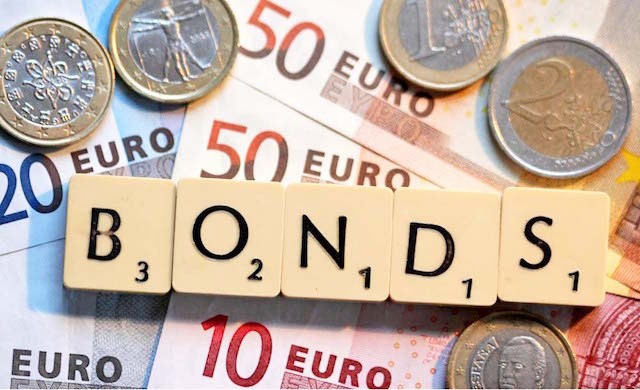
The 10-year, 6.50% NOV 28, 2027, the 20-year, 7.69% FEB 23 2038, and the 30-year, 7.62% NOV 28, 2047 bonds all sustained losses, according to an update from Cowry Asset Management Limited to investors.

According to the breakdown, selloffs cost the 10-year FGN Eurobond $10.51. Its yield increased as a result, climbing 135 basis points to 10.56%. Additionally, the price of the 20-year FGN Eurobond dropped by US$1.37, causing a 23 basis point increase in the yield that was printed at 11.07% on Friday.

Due to selloffs, the price of 30-year FGN Eurobond paper was reduced by US$1.39 at the end of the curve, while last week’s foreign market yield increased by 22 basis points to 11.09%.

Despite a reduction in U.S. inflation circumstances, foreign investors continue to expect better returns on investment money in the Eurobond market. The U.S. consumer price inflation data from last week revealed that, as predicted, prices increased by 0.2% on a monthly basis at both the headline and core (ex-food and energy) levels.

It was even better to two decimal places, at 0.17% and 0.16%, respectively, which meant that the headline inflation rate was 3.2% rather than 3.3% from 3% in June, according to a note from an ING analyst. Core inflation dropped from 4.8% to 4.7%.

Amidst uncertainties, FGN Eurobonds encountered declines across all tracked maturities, reflecting prevailing bearish sentiment, though the Debt Management Office (DMO) remains resolute about foreign capital amidst declining external reserves.

Data from the Central Bank showed that Nigeria’s gross external reserves remained under pressure due to lower accretion from the crude oil sales, most of which was swapped by the state oil corporation -NNPCL.

The import-dependent Africa’s largest economy saw its gross external reserves losing weight, dropping by US$44.41 million to US$33.88 billion, translating to six months of import cover, according to analysts.

“We expect currency pressures to remain intact in the near term, given current demand pressures and still frail FX supply despite the CBN’s abolishment of its multiple FX windows.

“On FX supply, we expect foreign investors to remain on the sideline in the near term as they continue to look for signals on market interest rates and solutions to the existing FX backlog and supply issues”, Cordros Capital Limited said in an update.

Non-OPEC Oil Supply To Increase By 1.5mb/d In 2023

OPEC Meets With Counterparts To Resolve Output Cuts

According to the Organization of the Petroleum Exporting Countries (OPEC), in 2023 there will be an increase in non-OPEC oil supply of 1.5 million barrels per day (mb/d). This is a small improvement above the prior estimate of 1.4 mb/d.

This information was taken from the August OPEC Monthly Oil Market Report. Nations outside of OPEC that produce crude oil as well as shale oil producers are considered non-OPEC oil producers.

The main oil producers outside of OPEC include the United States, which is the largest producer, as well as Canada and China. According to the analysis, the United States, Brazil, Norway, Kazakhstan, Guyana, and China are anticipated to be the top oil supply growth drivers in 2023, while Russia is predicted to have the highest fall.

It said there remained uncertainties associated with U.S shale oil output potential and unplanned maintenance in 2023. According to the report, for 2024, non-OPEC oil production is projected to grow by 1.4 mb/d, unchanged from the previous assessment.

“For 2024, the main drivers for liquids supply growth are expected to be the U.S, Canada, Guyana, Brazil, Norway and Kazakhstan, mainly due to existing project ramp-ups.

“The largest declines are expected from Mexico and Azerbaijan.

“OPEC NGLs and non-conventional liquids are forecast to grow by 46 thousand barrels per day (tb/d) in 2023 to an average of 5.4 mb/d and by another 65 tb/d to an average of 5.5 mb/d in 2024,” it said.

According to accessible secondary sources, the output of crude oil by the OPEC-13 in July declined by 836 tb/d month over month (m-o-m) to an average of 27.31 mb/d. The study also stated that it projected the world’s oil demand to increase by 2.4 million barrels per day (mb/d) in 2023, the same as it had predicted in July.

According to the report, lower adjustments to 2Q23, primarily in Europe and Other Asia, totally offset positive revisions to the first quarter of 2023, based on actual data received for OECD America and OECD Europe.

“In the OECD region, oil demand in 2023 is anticipated to rise by 74 thousand barrels per day (tb/d), to an average of 46.0 mb/d.

“While in the non-OECD region, total oil demand is anticipated to rise by nearly 2.4 mb/d, to average 56.0 mb/d,” the report said.

It stated that for 2024, world oil demand was forecast to grow by a healthy 2.2 mb/d, unchanged from the previous assessment. According to the report, the OECD is anticipated to expand by about 0.3 mb/d, with OECD Americas contributing the largest increase.

It added that the non-OECD was set to drive growth, increasing by around 2.0 mb/d, with China, the Middle East and Other Asia contributing the largest share, with further support from India, Latin America, and Africa.

Oil Marketers To Sell N720/litre After Fuel Import Halt

Taskforce To Enforce Sanctions On Filling Stations For Petrol Overpricing

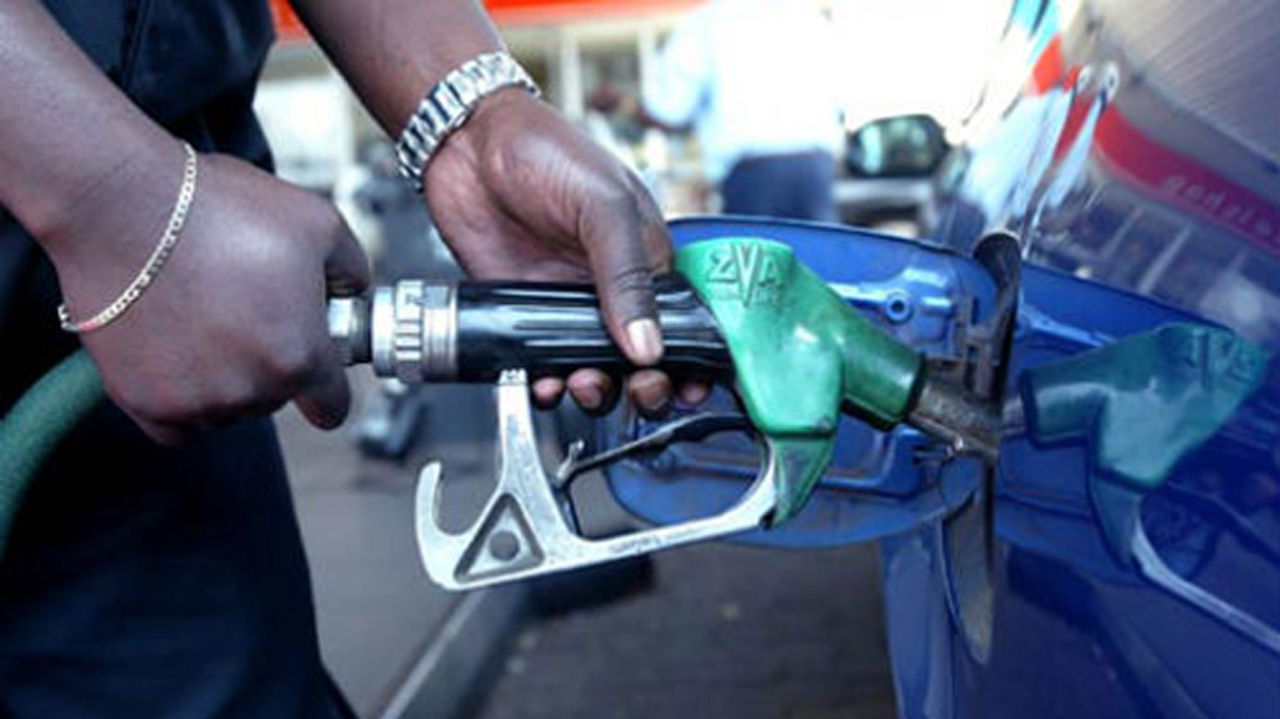
On Sunday, oil marketers warned that if the dollar kept fluctuating between N910 and N950 on the black market, the price of Premium Motor Spirit, often known as gasoline, would jump to between N680 and N720 per liter in the coming weeks.

Additionally, they made hints that the lack of foreign currency needed to purchase PMS was forcing dealers who wanted to do so to postpone their plans. The naira was trading at over 945 to the dollar on Friday on the parallel market, less than a week after the local currency broke over the N900/dollar ceiling.

Oil traders said that the CBN Importers and Exporters official window for foreign exchange, which boasts of a cheaper exchange rate of around $740/litre, had remained illiquid and had not been able to provide the $25m to $30m required for the importation of PMS by dealers.

This, they said, had led to the suspension petrol importation by dealers who were initially eager to import the commodity.

Leaders of the Major Oil Marketers Association of Nigeria of Nigeria, Independent Petroleum Marketers Association of Nigeria, and Petroleum Products Retail Outlets Owners Association of Nigeria said there was a need for the Federal Government to intervene to address the crisis.

The National Public Relations Officer, Independent Petroleum Marketers Association of Nigeria, Chief Chinedu Ukadike, explained that the price of petrol was now driven by the fluctuations in forex, hence Nigerians should expect a hike soon.

Asked whether oil marketers were considering an increase in petrol price, he replied, “Once there is a slack in the naira against the dollar, there is going to be an effect. The demand and supply of forex is a key factor. We should also understand that it is not only petroleum products that use forex.

“Other manufacturers who import one thing or the other are also searching for dollars. So, the surge for dollars has continued to increase. So now that the dollar is hitting N910 to N940, and approaching N1,000, you should expect to buy PMS at the rate of N750/litre.

“It is simple mathematics, once the dollar is going up, have it in mind that the prices of petroleum products would definitely increase because the products are dollar-driven.”

Ukadike stated that oil marketers were still sourcing dollars from the parallel market, as the CBN’s Importers and Exporters official window was illiquid.

“Nigerians should brace for a price regime of between N680 to N720 if the exchange rate stays around N910 to N950/$, but the price is going to hit N750 once the dollar rises to N1,000.

“This is because marketers still source dollars from the parallel market, and not only marketers but virtually all importers in Nigeria. There is no subsidy any more on petroleum products, so you expect the cost to fluctuate with the dollars,” he stated.

The IPMAN PRO also stated that the Nigerian National Petroleum Company Limited was still the major importer of petrol into Nigeria, though another importer, Emadeb, imported the commodity recently.

“NNPC is still the major importer for now. One other company, Emadeb, imported products recently, but because this product is being sold in naira, getting back their funds is another issue since the naira keeps depreciating, while PMS imports is in dollars.

“This is why it is often difficult to go back and buy again as an independent importer. That is the problem we are facing,” Ukadike stated.

On when Nigerians would start seeing the price increase, he said, “NNPC is like the sole distributor of petroleum products now, so once you see a change in the price of petrol at their outlets, then other marketers will implement it.”

NGX Equities Market Cap Increases By N93bn to N35.57trn

Stock Exchange Closes Trading Week With N30bn Gain

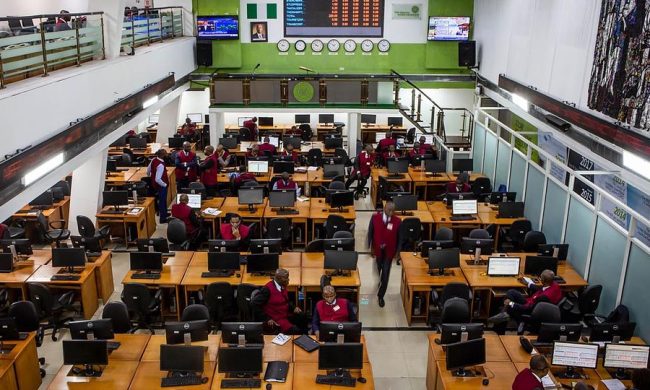
Due to some reasonable stock-buying activity on listed businesses, the market capitalization of the Nigerian Exchange (NGX) increased by roughly N93 billion. Strong competition between the bulls and bears throughout the five trading sessions led to an 18 basis point weekly increase in the market index.

The stock market’s year-to-date return then increased to 27.46%, still above Nigeria’s June 2023 inflation figure of 22.79%. According to market statistics, the Nigerian Exchange All-Share Index (NGXASI) increased slightly on Friday to 65,325.37. Due to the uncertain state of the economy, equity investors made early withdrawals from the local stock exchange.

However, Futureview Financial Services Limited reported to investors that the market recovered its footing in the latter half of the week, helped by increased buying activity. It was the comeback that drove the market index to 65,325.37 points.

Futureview stock dealers reported that despite market swings, performance last week showed a tiny 0.20% improvement when compared to the closing point of 65,198.08 points the week before.

Investors traded a total of 1.741 billion shares worth N25.087 billion in 30,652 transactions last week, compared to 2.575 billion shares worth N29.615 billion that changed hands in 37,713 transactions previous week.

With 1.244 billion shares worth N12.616 billion moved in 13,398 deals, the Financial Services Industry dominated the activity chart in terms of volume, contributing 71.43% and 50.29%, respectively, to the overall stock turnover volume and value.

Following with 133.034 million shares worth N575.673 million, the Conglomerates Industry followed in with 1,572 deals. The third place was the ICT Industry, with a turnover of 87.649 million shares worth N2.292 billion in 2,404 deals.

Trading in the top three equities namely Sterling Financial Holdings Company Plc, FBN Holdings Plc, and Universal Insurance Plc (measured by volume) accounted for 518.847 million shares worth N3.917 billion in 1,901 deals, contributing 29.80% and 15.61% to the total equity turnover volume and value respectively.

Specifically, the equities market benefitted from the 1.05% price increase in Telco large-cap MTNN as well as price improvements in mid-cap —TRANSCORP (+8.36%), DANGSUGAR (+1.85%), and ETI (+1.94%). CardinalStone Securities Limited told investors in an update that these gains proved more than enough to offset losses in banking pair — UBA (-1.37%) and ACCESSCORP (-0.86%) on Friday’s close.

Market data showed that GUINEAINS gained 50.00% last week, CHELLARAM rose by +29.79% and SUNUASSUR spiked by 23.66% week on week. Market analysts said these gains were sufficient to offset losses in JOHNHOLT (-18.37%), DANGSUGAR (-12.00%, and RTBRISCOE.

Consequently, the year-to-date (YTD) settled at 27.46%, while the market capitalization gained N92.7 million week on week to close at N35.57 trillion. For sectoral buckets, Insurance (+0.37%) and Banking (+0.01%) sectors closed positively on the back of gains in CORNEST (+9.26%) and ETI (+1.94%), respectively.

On the flip side, losses in WAPCO (-0.89%) led to the 5bps decline in the Industrial Goods sector. The Consumer Goods and Oil & Gas sectors closed flat.

Naira Value Falls As Dollar Scarcity Hits Banks

How Much Money Is Spent On Groceries In Nigeria, Other Countries?

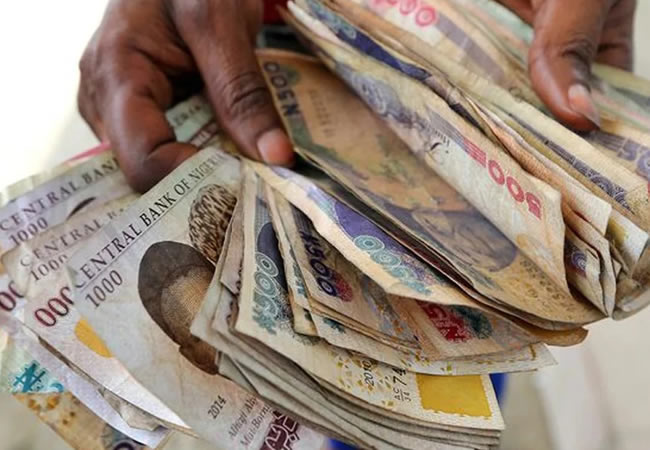
The naira’s value has gotten worse as a result of the expanding imbalance between supply and demand for dollars in banks and on the black market. The naira fell from 860/$ to 960/$ at the parallel market as of Friday, losing N100 in less than three weeks.

The naira had previously traded at 471/$ in the Investor & Exporter window until the Central Bank of Nigeria allowed the naira to freely float against other world currencies in June. The naira, however, increased to 664/$ on June 14, a day after the regulator launched the local currency.

Although the naira traded in a narrow range in both the official I&E window and the parallel market, there was soon significant volatility in the black market. In Lagos, the local currency dropped to 925/dollar after surpassing the N900/dollar threshold last week.

The naira peaked on Friday at 799/$ before falling to a low of 740.60/$ in the I&E forex window. On the parallel market, however, the naira closed at 930 to the dollar in Lagos and 960 to the dollar in Abuja.

The occurrence occurred when banks were being hammered by a dollar shortage, with some institutions claiming that they lacked enough dollars to fulfill client demand. Currency merchants at the parallel market also lamented the lack of dollars.

According to bank authorities, money was being repatriated through banks after the CBN removed cash deposit restrictions on domiciliary accounts in June. He claimed that as a result, the demand for the dollar had outweighed the supply significantly.

“Some of the dollars are being repatriated through the banks but the demand is still higher than supply because everyone is still sourcing for dollar for imports, PTA, BTA, others,” an official of a lender, who chose to speak on condition of anonymity because he was not authorised to speak on the matter, said,

The President, Association of Bureau De Change Operators of Nigeria, Aminu Gwadabe, said liquidity squeeze in the FX market had continued to put the naira under heavy attack from speculators.

He said, “The dwindling supplies in the I&E window shifted the demand to the parallel market where volatility and spikes is most pervasive. The entire forex market is plagued by liquidity shortages.

“The banks, as a result of the supply shortages, are limiting their available position for the financing of visible letters of credit and abandoning the invisible request like PTA, school fees, medicals of their clients and inadvertently adding more pressure in the parallel market.”

He added, “As it is, most licensed BDCs due to their demand for KYC requirement have lost their clients to the parallel and undocumented space with no regulation and standardisation. It is indeed a difficult time for most of our members as we are excluded from the harmonised market.”

Proffering solutions, Gwadabe said Nigerians should aspire to have a stable exchange rate devoid of illegal economic behaviour like arbitrages, hoarding and panic buying.

“ABCON is desirous to partner the apex bank and the Federal Government for an elaborate dialogue and engagement to champion paths to naira recovery,” he said.

He added that the financial architecture should be reviewed to include BDCs in the harmonised markets. The monetary and fiscal authorities should create enabling environment and friendly policies, he said.

BizWatchNigeria.Ng
Privacy Overview

This website uses cookies so that we can provide you with the best user experience possible. Cookie information is stored in your browser and performs functions such as recognising you when you return to our website and helping our team to understand which sections of the website you find most interesting and useful.