England captain’s Harry Kane stated that he moved to Bayern Munich to “feel the new pressure of having to win titles every year.”
Kane, 30, departed Tottenham on Saturday in a move worth an initial 100 million euros ($110 million) after spending his whole career with his childhood club.
Kane explained that the transfer was motivated by his ambition to play consistently at the highest level.
“A lot of people talk about the trophies and why I came here but ultimately it was to improve and to feel a new pressure of having to win titles every year, having to go far in the Champions League and pushing myself to that limit.”
Kane left Tottenham as the club’s all-time leading goalscorer, with 280 in all competitions, but he did not win any trophies during his stay in north London.
Bayern, a six-time European champion, has won the last 11 Bundesliga titles and is the favorite to retain the crown this season.
Kane stated that his focus in Munich was on team accomplishments rather than individual goals.
“If you’re winning games, titles, and Champions Leagues, it’s likely that I’ll be scoring goals, which allows you to win other individual awards, but it all comes down to what you achieve as a team.”
Kane came off the bench late in Bayern Munich’s 3-0 Super Cup loss to RB Leipzig on Saturday, just hours after completing his transfer to the club.
He might make his Bundesliga debut against Werder Bremen on Friday.
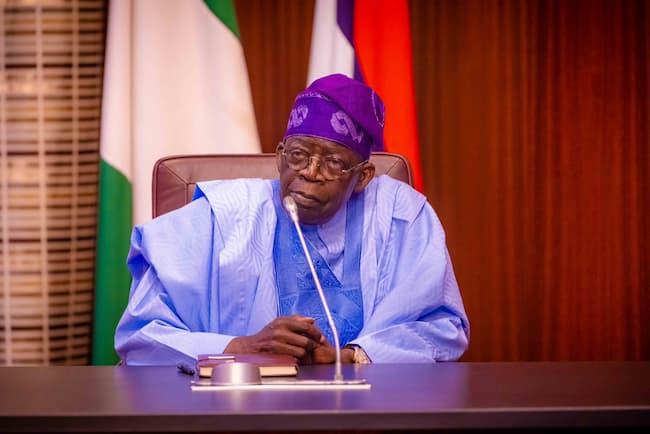
The Northern Elders Forum (NEF) has urged President Bola Tinubu to ease economic sanctions against Niger Republic.
On July 26, democratically elected President Mohamed Bazoum was ousted, prompting the Economic Community of West African States (ECOWAS), chaired by Tinubu, to impose sanctions including power outages and border closures.
On Thursday, the ECOWAS extraordinary conference decided to deploy standby military soldiers to restore constitutional order in Niger Republic.
Ango Abdullahi, the convener of the NEF, expressed caution about the use of force to restore constitutional order in Niger Republic, implying that it was unlikely to produce favorable consequences.
He emphasized that lifting sanctions would make negotiations easier, and he urged diplomacy to triumph.
Abdullahi stated, “Nigeria should remove all sanctions and other measures intended to force the government and people of Niger into acquiescence.
“This will make negotiations led by Nigeria, using all assets that both countries value, easier to conduct. The use of force against Niger should be ruled out.”
The NEF convener also urged Tinubu and Nigerian and Niger Republic citizens to maintain their long-standing ties.
Abdullahi remarked, “We urge President Tinubu to recognise this unique moment in history and conduct himself in a manner that records his role as defining statesmanship.
“We appeal to the people of Nigeria and Niger, as well as our leaders, to resist any attempt to poison our centuries of relationship.”
Interswitch Group in collaboration with Silicon Valley Product Group (SVPG), Innovate Africa Foundation and WorkNigeria, is proud to announce the 2023 Inspire Africa Conference – the largest gathering of local and international product professionals in Africa.
Scheduled to hold at the Eko Convention Centre in Lagos – Nigeria, from the 18th to 21st of September 2023, the event is billed to be Africa’s first-ever product conference of this magnitude, featuring a host of local and international product and training leaders including Marty Cagan, Christian Idiodi and other partners from the Silicon Valley Product Group – a renowned team of industry veterans who have held executive level positions at major Silicon Valley companies.
“By 2030, Africa is projected to have the largest working population in the world. That’s a lot of people with the potential to work together towards a common goal driven by technological innovation,” remarked Christian Idiodi, Partner at Silicon Valley Product Group. “The key for us, is providing them with the skills and capital they need to thrive in the global market and that is what the Inspire Africa Conference seeks to do. “
Rebecca King, representative of the Innovate Africa Foundation expressed the need for cross-border collaboration in growing the African product community into a stronger force. “The primary objective of the Inspire Africa Conference is scaling the African product community in line with global market viability. We’re happy to facilitate knowledge exchange between the local and global product communities with Interswitch, a legacy brand that has pioneered technological advancements in Africa.”
Africa has produced several technology-driven businesses which products have gained recognition around the world. The continent is also home to seven of the world’s unicorns which are individually valued at over $1 billion.
“Initiatives such as the Inspire Africa Conference are crucial in developing the technology value chain and upskilling our workforce. As an African-oriented organization, Interswitch is committed to driving Africa’s development and we understand the power of nurturing African-led innovation by providing African talent with opportunities of this nature that shape this narrative”, said Princess Edo-Osagie, Head of Product Leadership & Agile Governance at Interswitch Group, while commenting on the company’s headline sponsorship of the conference.
Interswitch’s support extends beyond the conference, being a recognized accelerator of impact and exponential growth in Africa’s technology and payments sectors over the past 20 years. “As a champion of Africa and African talent, Interswitch prioritises partnerships and platforms that enable individuals and communities prosper across Africa”, concluded Edo-Osagie.
Participants at the conference will benefit from four (4) days of hands-on training and the opportunity to interact with 30+ global product leaders and over 2,000 leaders, founders and professionals in the product ecosystem all working together to upskill African product experts.
Following importers’ difficulty to obtain US dollars and the effects this was having on companies, oil marketers recommended President Bola Tinubu on Tuesday to progressively soften the removal of subsidies on Premium Motor Spirit, also known as gasoline. This occurred when Tinubu ruled against raising the price of petrol and reversing the fuel subsidy.
However, proponents of petroleum products urged the President to take a lesson from Kenya, emphasizing that the African nation was forced to reinstate gasoline subsidies in order to mitigate the catastrophic effects that their withdrawal had on Kenyans.
“Let them not do the needful, they will see the consequences. We learned this morning that Kenya, which equally removed subsidy and noticed that its effect was so hard on the citizens, has again resumed the subsidy regime for the period of two months,” the Secretary, Independent Petroleum Marketers Association of Nigeria, Abuja-Suleja, Mohammed Shuaibu, told our correspondent.
He added, “Government is about the people and it must have a listening ear. For Nigeria, how can we be an oil producing nation with four refineries and all of them are down. We now depend on imports.
“When he (Tinubu) announced that thing (subsidy removal), we said it was going to bring problems. Are we not feeling the consequences of that announcement now? It is forex that largely determines the cost of petroleum products here.
“Marketers are not willing to import products again, So if the government is going to relax the removal of subsidy for a while, it should better do that as a matter of urgency.”
Shuaibu argued that despite the fact that the Nigerian National Petroleum Company Limited announced earlier on Tuesday that it had no intention of increasing petrol price, the cost of the commodity would rise above its current N617/litre in weeks, if the exchange rate continues to increase.
“Relaxing subsidy removal is going to be a very wise decision right now, because going by the price of the dollar, the cost of petrol is bound to rise. In fact, some oil marketers are ready to join the labour union to protest,” he added.
Some dealers had said subsidy on petrol would gradually creep in, should the NNPCL continue to sell at N617/litre, particularly if the rise in forex rate persists.
The National Public Relations Officer, Independent Petroleum Marketers Association of Nigeria, Chief Chinedu Ukadike, said the outright removal of subsidy would cause severe hardship.
“I’ve been saying this even before subsidy on petrol was removed. How can you stop subsidy without anything on ground as palliatives?
“Trips that used to be N5,000 in the past and now over N15,000. Businesses are shutting down. The suffering is rising. The government has to intervene now,” he stated.
The IPMAN PRO had earlier explained that the price of imported commodities, including petrol, would continue to rise as far as the rate of exchange of the dollar increases.
“Once there is a slack in the naira against the dollar, there is going to be an effect. The demand and supply of forex is a key factor. We should also understand that it is not only petroleum products that use forex.
The Lagos State Government, through the Domestic and Sexual Violence Agency (DSVA), has held group therapy sessions for over 50 male perpetrators of domestic abuse.
Titilola Vivour Adeniyi, Executive Secretary, Lagos State DSVA, stated at the Novel House Office in Alausa Ikeja that the intervention program’s goal was to improve the mental well-being of the state’s citizens.
According to the agency’s statistical data research results, there has been an alarming upsurge in occurrences of sexual and gender-based violence.
She stated that the purpose of the support and healing group session was to psychoeducate the perpetrators on better methods to handle their emotions when triggered.
Further research, according to Vivour-Adeniyi, found that most offenders were victims of comparable traumas as children, and there was a need to help perpetrators heal from childhood traumas that may have contributed to their abusive behavior in adulthood.
She went on to say that the sessions would hold abusers accountable and force them to accept responsibility for their actions rather than blaming their victims.
She went on to say that the session would help perpetrators relearn harmful negative coping strategies that had previously led to violence and equip them with healthy coping skills to regulate their anger, communicate effectively, and establish peaceful and harmonious relationships.
It should be noted that the program began on June 10 and ended on August 9. The meetings were held weekly for eight weeks, and at the end, the culprits expressed gratitude to the Lagos State Government for the sessions.
Mrs. Vivour-Adeniyi assured survivors that the sessions would continue, especially those who wanted to stay in the relationship but wanted the abuse to cease.
Bank of America announces the completion of the first ever debt-for-nature transaction in Continental Africa to refinance $500 million of sovereign debt of the Gabonese Republic (“Gabon”). The transaction will enable the country to contribute $125 million in new funding for ocean conservation, supporting their commitment to protect 30 percent of its lands, freshwater systems, and ocean by 2030.
Ocean health is critical to the world economy and the global communities who rely on it to survive. According to the UN Conference on Trade and Development, the sustainable ocean economy is nearly $3 trillion, roughly 3 to 5 percent of the global GDP. The challenges faced by our marine ecosystem are recognized by the United Nations (UN) Sustainable Development Goals (SDG) as Goal 14, which aims to conserve and sustainably use the ocean, seas and marine resources for sustainable development.
Bank of America acted as Sole Initial Purchaser, Structuring Agent and Bookrunner on the $500 million issuance, marking the start of what will be a 15-year-long conservation and refinancing project for Gabon. As part of the transaction, Bank of America also acted as Sole Dealer Manager for a tender offer using the proceeds raised from the new Blue Bond issuance used to repurchase a portion of Gabon’s existing sovereign U.S. dollar-denominated Eurobonds.
The payments by Gabon will be partially used to fund contributions to an independent Conservation Fund (with TNC as the project manager and technical advisor) and pay into an endowment that will continue to fund conservation after the bonds are repaid. The U.S. International Development Finance Corporation (DFC) is providing political risk insurance for the Blue Loan to Gabon, which enhances the credit rating of the bond issuance and provides debt relief for Gabon over the next 15 years. This deal also represents the highest amount of new debt raised for a TNC-sponsored project.
H.E President Ali Bongo Ondimba of Gabon said: “The launch of Gabon’s Blue Bond is an important moment, giving us hope that green or blue financial mechanisms will grow significantly in coming years and help countries like Gabon, who effectively protect critical ecosystems whilst also growing our economies. All too often talk of these new mechanisms to reward countries like my own remain just that. In this case, thanks to the work of our partner, Bank of America, The Nature Conservancy, and the US International Development Finance Corporation, we have made it a reality. I call on Developed Nations and our Multilateral Banks to multiply these sorts of initiatives, which could make a significant contribution to addressing the critical challenges of Climate Change and Biodiversity Loss.”
“As a global financial services organization, we are committed to helping lead our clients towards a more sustainable future by developing innovative investments that put global capital to work,” said Bernard Mensah, President of International at Bank of America. “We are proud to be partnering with TNC, DFC and the Gabonese Republic, to contribute to the growing blue bond market and ultimately increase the speed and scalability of future blended conservation deals.”
“The Nature Conservancy’s Blue Bonds for Ocean Conservation program is an ambitious plan that aligns with national and international commitments to scale up ocean conservation around the world and address urgent biodiversity loss through improved ocean management”, said Jennifer Morris, CEO of The Nature Conservancy. “Gabon is the fourth Blue Bonds project for us and combines finance with science and marine planning expertise to help governments reach their conservation and climate goals while also supporting the well-being of their people and economies. Working with Bank of America, we are helping Gabon to ensure protection and management for 30 percent of its ocean – which brings us one step closer to TNC’s bold goal to conserve nearly 10 billion acres of ocean by 2030.”
“DFC’s political risk insurance provided critical support for this historic transaction, helping to mobilize capital from institutional investors and catalyze additional investment in Gabon’s marine conservation efforts,” said DFC CEO Scott Nathan. “We are proud to contribute to this kind of innovative financing in Continental Africa, having supported similar efforts in Central and South America. The Gabon Blue Bond will generate nearly $125 million in financing for new marine conservation efforts over the next 15 years, advancing critical conservation goals, protecting endangered species, and supporting the country’s sustainable ‘blue economy.’ Like previous transactions DFC has supported in Belize and Ecuador, the Gabon Blue Bond illustrates how DFC can effectively lift the credit-profile of a bond issuance to deepen capital markets. We are proud to have partnered on this transformative transaction.”
In 2020 Bank of America set a goal to mobilize and deploy $1.5 trillion by 2030 to advance the sustainable development goals (SDGs) 193 countries agreed to in 2015, with $1 trillion of that focused on helping clients transition to a low-carbon future. From 2021 through 2022, we mobilized and deployed a cumulative total of $410 billion in sustainable finance, with more than $235 billion of that focused on helping drive affordable clean energy and related priorities. This transaction showcases a model of how to raise conservation funding that promotes sustainable development while simultaneously helping to achieve national development priorities, including the sustainable development and growth of Gabon’s marine economy.
Following a Tuesday purchasing spike in the secondary market, the average yield on Nigerian Treasury notes decreased in response to the country’s increasing inflation increase. From 22.79% in June 2023, the headline inflation rate increased by 129 basis points to 24.08%.
Inflation and interest rates are getting worse, which exposes naira assets to negative returns and discourages foreign investors from making significant investments in the fixed income market. The Central Bank of Nigeria (CBN) offered N153.98 billion worth of securities for sale at the auction last week, out of which N836.30 billion was purchased by investors.
Investors were informed by Futureview Financial Limited that the extreme demand resulted in a considerable decrease in stop rates, which ended up at 5.00%, 5.90%, and 9.80% for the 91-day, 182-day, and and 364-day tenors, respectively.
In comparison, the previous auction had seen higher stop rates of 6%, 8%, and 12.15% for the same tenors, according to CBN’s primary market auction result. The surge in demand was supported by liquidity levels in the system. However, debit for the Treasury auction has affected the market funding profile.
Due to significant outflow from the system, liquidity in the money market remained tightened. Specifically, the system liquidity contracted by 35.23% to N193.21 billion on Tuesday.
Short-term benchmark rates slumped, according to data from FMDQ Exchange. The open repo rate (OPR) surged to 8.40%, 260 basis points above the previous level. Also, the overnight lending rate surged by 230 basis points 7.30% over tight liquidity conditions in the market.
Then, The Nigerian Interbank Treasury Bill’s True Yield saw an upward movement for most tracked tenors, despite the average secondary market yield on T-bills closing lower at 7.25%.
Across the curve, most of the day’s activity was witnessed at the long (-9bps) end as market participants demanded the 296-day to maturity (-105bps) bill; the average yield was flat at the short and mid segments.
Elsewhere, the average yield contracted by 41 basis points to 11.8% in the OMO segment. In the forex market, the Naira depreciated against the US dollar at the Investors and Exporters FX windows, trading at N774.77, about a 4% decline from its opening spot rate of N744.10.
Nigeria’s currency, the naira, continues to lose value as pressure on the foreign exchange (Forex) market results from a persistent shortage of US dollars in an economy that is heavily dependent on imports for both production and consumption.
Despite all the efforts made to encourage the influx of foreign currency into the economy, the supply of FX through the official window has continued to fall short of average demand. The central bank devalued the naira significantly as a result. Speculative operations are still thriving despite a June move to devalue the local currency to align with the open market rate.
The difference in foreign exchange rates (FX spread) between the official and black market rates increased beyond N200 per US dollar as the continent’s largest in terms of GDP’s foreign inflows from crude and non-crude oil remain underwhelming.
Again, an assessment from an investment business suggests that Nigeria’s foreign reserve position is overstated. Nigeria has a negative balance in its external reserves, according to estimates by Cordros Capital.
At the Investors and Exporters FX windows, the Naira lost value versus the US dollar and was trading at N774.77, down approximately 4% from its opening spot rate of N744.10.
However, the Naira gained to N942 in the parallel market, where there was a little increase of 0.32% versus the US dollar as negative activity in the world oil market resumed.
WTI crude shed 2.59% to $80.37 per barrel on Tuesday, while Brent crude dropped 1.92% to $84.56 per barrel. The poor economic statistics from China caused increased demand fears, which exceeded supply restrictions, and oil futures fell.
On Tuesday, the Nigerian Exchange (NGX) saw a sharp decline as equity investors reacted unfavorably to the nation’s rising inflation rates. According to the National Bureau of Statistics, the consequences of subsidy elimination caused the consumer price index to increase to 24.08% in July from the 22.79% reported in June.
As a result, the market performance indicators decreased by -0.43%, and stockbrokers attributed the decline to medium- and large-scale sell-offs. Profit-taking actions were specifically seen around ETERNA, FBNH, and 29 other companies.
The market index, also known as the All-Share Index, dropped today by 281.51 basis points, or -0.43%, to settle at 64,928.98. Then, the total return for the year slowed to 26.69%.
However, market activities closed higher, though bears dominated activities. Total volume and total value traded increased by +8.27% and +10.48% respectively. Stock market traders at Atlass Portfolios Limited said in its market update that approximately 280.47 million units valued at ₦4,645.35 million were transacted in 6,296 deals.
TRANSCORP was the most traded stock in terms of volume, accounting for 13.01% of the total volume of trades. The conglomerates was followed by UBA (8.29%), ACCESSCORP (6.30%), STERLINGNG (5.70%), and JAPAULGOLD (4.07%) to complete the top 5 on the volume chart.
Meanwhile, MTNN was also the most traded stock in value terms, with 20.94% of the total value of trades on the exchange. TANTALIZER topped the advancers’ chart with a price appreciation of 10.00 percent. The quick restaurant service counter was followed by IKEJAHOTEL (9.82%), CORNERST (+9.30%), TIP (+8.82%), LINKASSURE (+8.33%), and fourteen others.
Thirty-one stocks depreciated as inflation pressure stoked portfolio rebalancing. ETERNA was the top loser, with a price depreciation of -9.86%, to close at ₦16.00. UNILEVER (-7.05%), AIICO (-5.63%), UACN (-4.63%), DANGSUGAR (-4.35%), and FTNCOCOA (-2.43%) also dipped in price.
Due to the local bourse’s behavior, the market breadth concluded negatively, with 19 gainers and 31 losers. Furthermore, market sector performance ended in the red.
Four out of the five major market sectors were down, according to stock brokers. The Consumer goods sector (-0.68%), the Oil & Gas sector (-0.40%), the Banking sector (-0.08%), the Industrial sector (-1.16%), and the Insurance sector (+1.32%) were all in decline.
Overall, the market value of shares fell by 153.29 billion, or -0.43%, to end at 35,356.6 trillion from 35,509.89 trillion yesterday.
Scammers are now targeting various websites lacking reliable protection as they seek an easier and more effective way to distribute phishing pages.
Due to the lack of support and maintenance on these old sites, they have become vulnerable to hacking through well-known exploits, paving the way for phishing attacks.
Kaspersky experts are shedding light on how fraudsters take advantage of such websites by placing fake pages that gather private and banking data, ultimately leading to money theft under the guise of popular services, including streaming platforms.
According to Kaspersky’s latest research, attackers are focusing their malicious activity on WordPress sites due to known vulnerabilities. In some cases, cybercriminals may not rely solely on software exploits to compromise sites.
Instead, they target site administrators with weak passwords or leaked credentials, enabling them to gain unauthorised access to the control panel and publish phishing pages. Frequently, these compromised sites have non-functional buttons on their homepages, so attackers replace original directories with deceptive ones containing phishing content.
The surge in popularity of streaming services has made them a prime target for cybercriminals, who actively exploit this trend. Kaspersky experts are consistently discovering cunningly crafted phishing pages that mimic well-known streaming platforms like Netflix, HBO Max, Hulu, Disney+, and others.
Among the analysed pages, some were deceptively created by using old, hacked websites.
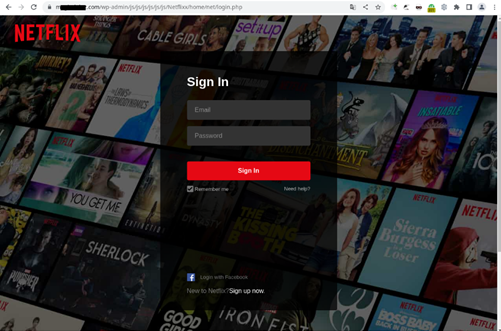
These phishing pages feature login forms resembling those of Netflix, with the URL containing the correct (or modified) name of the targeted streaming service.
However, the actual name of the website has no relation to the service it is attempting to imitate. This deliberate manipulation aims to deceive unsuspecting users and trick them into divulging sensitive information.
Phishing page placed inside the “Netflix” directory and imitating the Netflix login form
When unsuspecting users hoping to sign up to a streaming account unknowingly submit their personal information, including account login credentials, banking details (including CVV), users not only suffer financial losses but also risk compromising their valuable data.
Additionally, this data gets stored in the site’s control panel. The existence of web shells facilitates unauthorised access to this information, leaving victims vulnerable to a broader audience.
“While streaming services have revolutionised our entertainment habits, it’s crucial to remain cautious in the digital realm. We strongly recommend obtaining subscriptions exclusively from authorised sources to minimise the risk of falling victim to scams.
“Additionally, explore the availability of subscription manager apps that offer a secure and convenient approach to managing your subscriptions. By leveraging these apps, you can renew your subscriptions safely, maintaining control over your accounts and protecting your sensitive information from potential threats,” comments Olga Svistunova, security expert at Kaspersky.
Subscription management software, like for instance SubsCrub – a startup grown within Kaspersky, offers a seamless solution for tracking subscriptions, simplifying payment reminders, and identifying money-saving opportunities. With its user-friendly interface and robust features, SubsCrab ensures effortless subscription tracking, helping users stay organised and financially savvy.
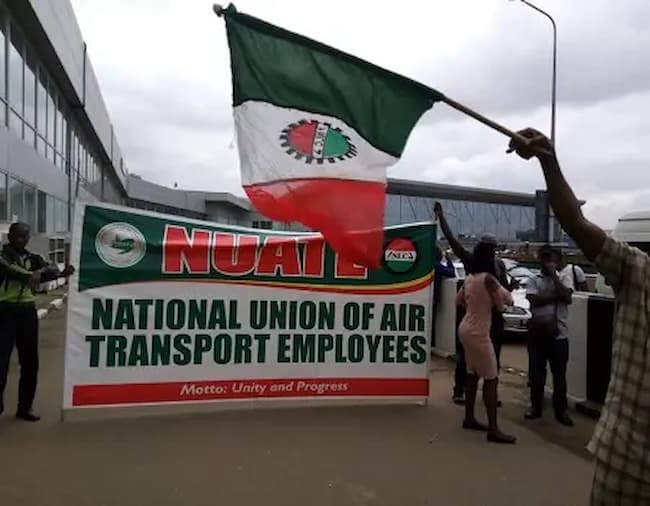
The National Union of Air Transport Employees (NUATE) has decided that the Aviation Security (AVSEC) and logistics sub-sectors go on strike today, August 16th, 2023, over their ₦30,000 monthly wage.
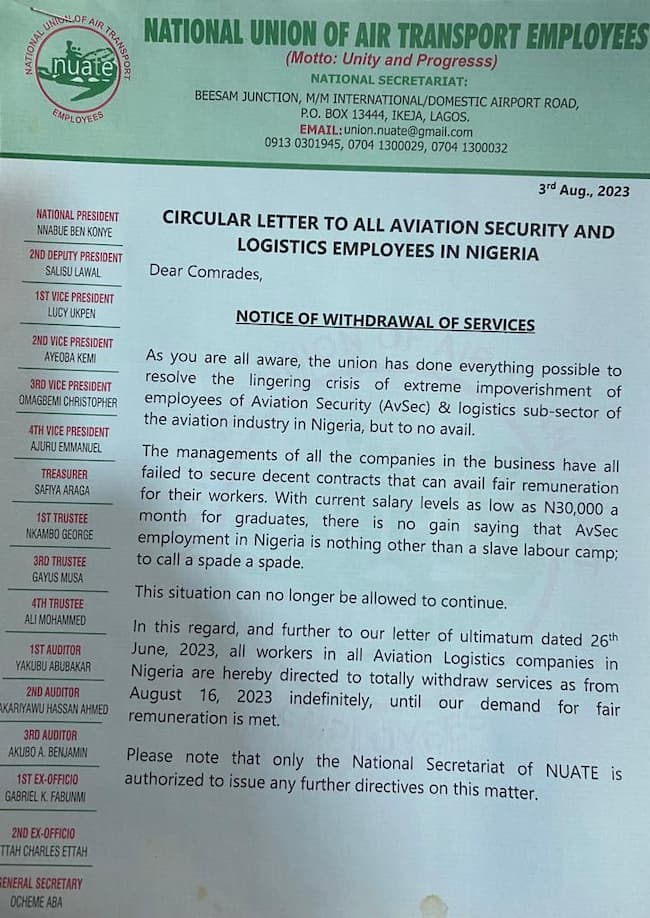
This was made known by the union in a circular obtained by BizWatch Nigeria and addressed to the Director-General Civil Aviation (DGCA), Managing Director, Federal Airports Authority of Nigeria (FAAN), Commissioner of Police, Airports Command, the Airport Commandant, Director, Department of State Security (DSS), Murtala Muhammed International Airport (MMIA), Lagos Command.
It went on to say that service discontinuation was unavoidable.
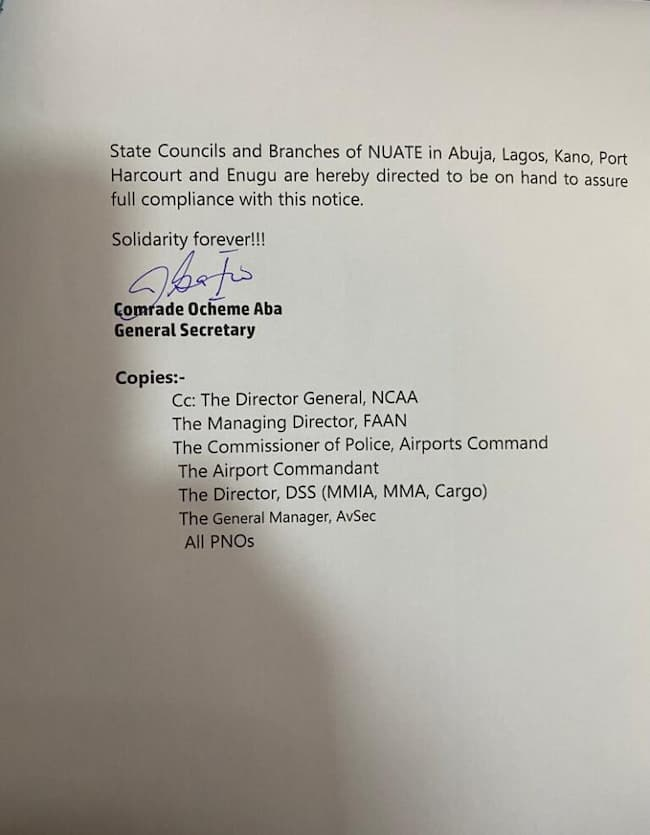
The circular, issued by NUATE’s General Secretary, Comrade Ocheme Aba, bemoaned the fact that AvSec members, who are primarily graduates, are paid a pittance of ₦30,000 per month.
He added that previous attempts to negotiate higher wages for their members had failed, and he pondered why N30,000 could be sufficient for staff in today’s Nigeria.
The circular reads, “As you are all aware, the union has done everything possible to resolve the lingering crisis of extreme impoverishment of employees of Aviation Security (AvSec) & logistics sub-sector of the aviation industry in Nigeria, but to no avail.
“The managements of all the companies in the business have all failed to secure decent contracts that can avail fair remuneration for their workers.
“With current salary levels as low as ₦30,000 a month for graduates, there is no gain saying that AvSec employment in Nigeria is nothing other than a slave labour camp; to call a spade a spade.
“This situation can no longer be allowed to continue. In this regard, and further to our letter of ultimatum dated 26th June, 2023, all workers in all Aviation Logistics companies in Nigeria are hereby directed to totally withdraw services as from August 16, 2023 indefinitely, until our demand for fair remuneration is met.
“Please note that only the National Secretariat of NUATE is authorized to issue any further directives on this matter.
“State Councils and Branches of NUATE in Abuja, Lagos, Kano, Port Harcourt and Enugu are hereby directed to be on hand to assure full compliance with this notice.”
President Bola Tinubu told Nigerians on Tuesday that there will be no increase in the price of Premium Motor Spirit (PMS) or petrol at the pump wherever in the country.
Ajuri Ngelale, Special Adviser to the President on Media and Publicity, stated that the market is deregulated and will remain so.
He emphasized that the government will address inefficiencies in the midstream and downstream petroleum subsectors in order to keep prices stable without having to reverse the administration’s petroleum policy.
The President’s guarantee comes less than 24 hours after the Nigerian National Petroleum Company (NNPC) Limited announced it had no plans to hike the price of gasoline at the pump.
The National Youth Service Corps (NYSC) orientation course is set to begin in Borno State 13 years after it was discontinued due to repeated attacks by Boko Haram extremists.
On Tuesday, NYSC via its official X account urged prospective corps members assigned to the state’s second stream of the Batch ‘B’ orientation course of a venue change.
NYSC said, “Change of Venue of the 2023 Batch ‘B’ Stream II Orientation Course for Borno State. The venue of the Borno State NYSC Orientation Camp has been changed.
“All Prospective Corps Members (PCMs) deployed to Borno are to reprint their Call-up letters from the NYSC portal.
“The date of the commencement of the Orientation Course has also been changed to 18th August 2023. All affected PCMs are to report on the dates printed on their Call-up letters.”
Change of Venue of the 2023 Batch 'B' Stream II Orientation Course for Borno State
The venue of the Borno State NYSC Orientation Camp has been changed.
All Prospective Corps Members (PCMs) deployed to Borno are to reprint their Call-up letters from the NYSC portal.
In a significant move towards promoting tech inclusivity, the Kaduna State Government, in collaboration with Google, has announced a pioneering initiative to train 5,000 women and girls in data science, artificial intelligence, and entrepreneurial application of digital technologies.
This initiative, part of a broader skills development program supported by Google.org, aims to empower 20,000 more women and young people across Nigeria with 21st-century skills, positioning them for opportunities in the digital and creative industries.
Governor Uba Sani of Kaduna State remarked, “Inclusion in technology is not just about social equity; it’s about economic progress. By empowering our women with digital skills, we’re not only breaking gender barriers but also setting the stage for significant economic growth. This partnership with Google underscores our commitment to harnessing the vast potential of our women for the socio-economic transformation of Kaduna State and Nigeria at large.”
The Kaduna State Government has consistently emphasised the importance of leveraging technology to drive economic growth. Central to this vision is the inclusion of women in the tech space. By providing focused tech training and ensuring accessibility, the state aims to empower this demographic, recognizing their potential to be significant contributors to the digital economy and the broader socio-economic landscape.
The program will be executed by Data Science Nigeria, which will set up Arewa Tech4Ladies. This initiative is crafted to serve four key semi-urban and rural communities in Kaduna State, offering specialised women-focused learning, mentoring, and job placement support facilities.
Olumide Balogun, Google Director for West Africa, shared, “The future of tech in Nigeria hinges on tapping into the potential of every individual, irrespective of gender. Our collaboration with the Kaduna State Government is a testament to our unwavering belief in the transformative power of women in tech. Through the support of Google.org, we’re dedicated to fostering a more inclusive digital landscape, ensuring every trained woman becomes a beacon of change in the tech world.”
This collaboration is a clear indication of both parties’ commitment to driving inclusion in the tech industry, ultimately supporting improved economic livelihoods through the digital economy in Nigeria.
Applications are now open for the sixth phase of the MTN Foundation’s ICT and Business Skills training program. The capacity-building program is a youth development initiative targeted at young entrepreneurs and business owners between the ages of 18-35 years.
In this sixth phase, 3000 young entrepreneurs will be trained, and the training will be delivered through a five-week online program in partnership with Microsoft and Meta. The training also comes with an equipment grant of N90,000,000 for the top 300 participants at the end of the program. The goal of the ICT training is to equip Nigerian youths with technological skills that can be applied to build sustainable businesses in Nigeria.
Speaking on the ICT and Business skills training, Executive Secretary, MTN Foundation, Odunayo Sanya said “SMEs are the backbone of every sustainable economy, and as a technology company, we are committed to empowering young entrepreneurs in Nigeria through capacity building and funding. We are constantly seeking ways to bridge the gap between our youths and the skills they require to thrive in a digital world. We will continue to partner with other competent organisations to bridge this gap.” .”
Since the launch of the ICT and Business Skills initiative, MTN Foundation has successfully run five phases in partnership with Oracle, KPMG, IBM, Digital Bridge Institute, CISCO, Google, Meta, and Microsoft, and the training has been implemented in 16 states across Nigeria.
The sixth phase of the ICT and Business skills training will be focused on young entrepreneurs in Ebonyi, Edo, Ekiti, Kebbi, Niger and Yobe state. Eligible and qualified candidates are encouraged to visit http://www.mtn.ng/mtnf-ict/ and register before the entries close on the 18th of August 2023.
Rivers State Governor Similanayi Fubara has offered a monetary reward of fifty million naira (₦50,000,000) to Rivers Queens, the state female handball team, for winning the 2023 National Division One Handball League.
Governor Fubara made the announcement on Tuesday, when the Commissioner for Sports, Christopher Green, led the team’s management and players to hand over the coveted trophy to the Governor in the Executive Council Chambers of the Government House in Port Harcourt.
“You know things are very hard now but I also have to also encourage you people. For this particular victory, this government is going to support the team in a way of donation, the sum of ₦50m,” Governor Similanayi said, adding that it belongs to the team and not the sports ministry.
The Governor, clearly pleased with the girls’ accomplishment, stated that their record demonstrates that Rivers State excels not only in infrastructure development but also in sports.
“The success is not just for the team but also for the sports image of our dear state,” the governor said. “It shows that outside the numerous work, we are doing in terms of project delivery, we are also delivering projects in sports. So, let me congratulate you again.”
He said that one of his policies for growing sports in the state will be to restart sporting activities in public basic and secondary schools in order to attract young athletes.
“We will see what we can do on our own to encourage sports at all levels” to revitalize sports in the state.
Mr Green, for one, said the triumph is cause for joy because the squad is “winning laurels of this nature for the first time.”
The Commissioner complimented Governor Fubara for allocating monies as needed, but called for the recruitment of coaches to the State Sports Council, noting that the majority of them had retired.
Rivers Queens won the women’s division of the National Division One Handball League, which was held this year in Benin, Edo State.
Digital Satellite Television (DSTV) a broadcast satellite service owned by MultiChoice has halted its services and operations in Malawai as at August 8, 2023.
BizWatch Nigeria reports that DSTV is discontinuing its service in Malawi following a price increase dispute with the country’s communications regulator.
On August 8, 2023, DStv Malawi informed subscribers to stop paying payments and that all existing subscribers in the country would be disconnected within 30 days or less. This follows an ongoing dispute in the country over subscription costs, with Malawi’s regulator effectively stopping price rises for August.
In a document obtained by BizWatch Nigeria, Multichoice said, the discontinuation of its services, “follows the injunction issued by the High Court in Lilongwe in a matter between MultiChoice Malawi (MCM) and the Malawi Communications Regulatory Authority (MACRA) prohibiting an adjustment to the DStv tariffs.
“MCM does not offer the DStv service to the public and therefore cannot set or adjust tariffs for this service, a point repeatedly made to MACRA.
“As a result, the order handed down to MCM is incapable of being implemented by them but carries with it grave consequences for the directors and management of MultiChoice Malawi, including imprisonment. MAH given the impact on its supplier (MCM) and an increasingly adverse regulatory environment is therefore left with no option but to terminate the DStv service indefinitely.
“Customers are hereby, and with immediate effect, requested to halt payment for the DStv service. Customers who have already paid their new subscription for the DStv service will have those services honored until the current 30 day viewing cycle ends on or before 10 September 2023. From Wednesday, 9 August 2023, no new subscriptions or reconnections will be accepted.
“MAH would like to thank customers for their support over many years. MAH would also like to thank MCM for their professional conduct in supplying services to MAH over as many years.”
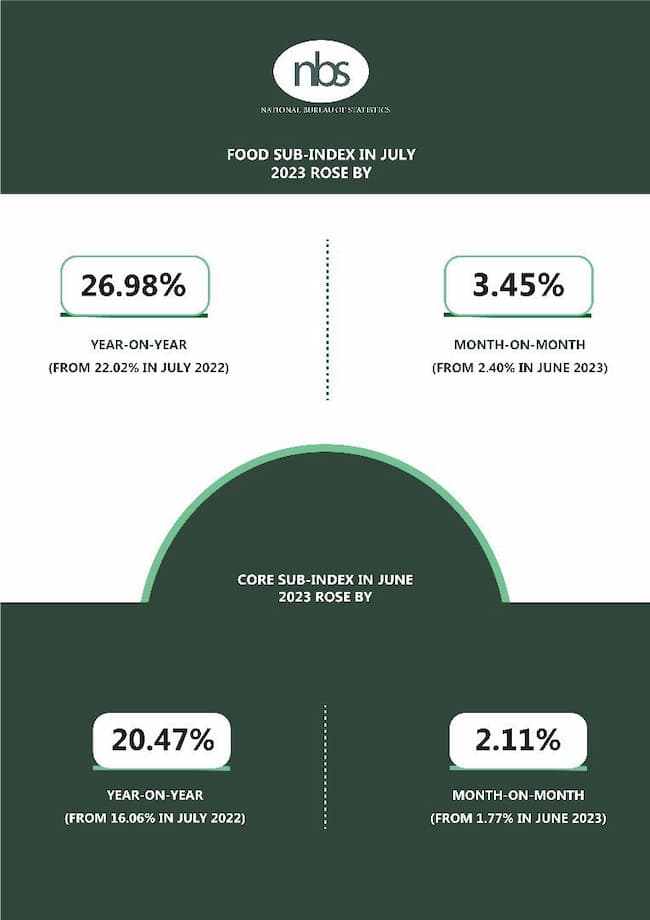
Nigeria’s inflation rate increased to 24.08% in July 2023, the highest in years, due to a shortage of foreign exchange.
The July 2023 rate increased by 1.29% points from the previous month’s rate of 22.79%, according to the National Bureau of Statistics (NBS) in its Consumer Price Index (CPI) report released on Tuesday.
The CPI monitors the rate of change in the prices of goods and services.
“Headline Inflation for July 2023 was 24.08% from 22.79% in June 2023. Food Inflation was 26.98% in July 2023 from 25.25% in June 2023. Urban Inflation was 25.83%, rural Inflation was 22.49%,” NBS said.
The NBS said, “In July 2023, the headline inflation rate rose to 24.08 per cent relative to June 2023 headline inflation rate which was 22.79 per cent.
“Looking at the movement, the July 2023 headline inflation rate showed an increase of 1.29 per cent points when compared to June 2023 headline inflation rate.
“On a year-on-year basis, the headline inflation rate was 4.44 per cent points higher compared to the rate recorded in July 2022, which was 19.64 per cent.
“This shows that the headline inflation rate (year-on-year basis) increased in July 2023 when compared to the same month in the preceding year (i.e., July 2022).”
BizWatch Nigeria recalls that on July 25, 2023, the Central Bank of Nigeria (CBN) raised the Monetary Policy Rate (MPR), which measures interest rates, from 18.5 percent to 18.75%.
The interest rate hike came amid rising food prices and growing transportation costs caused by the loss of a subsidy on Premium Motor Spirit (PMS), also known as petrol, with the price per litre rising from N184 to almost N600, a more than 200% increase.
According to the central bank, “raising interest rates has made a significant difference in moderating the rate of inflation.”
To address the country’s forex shortfall, with the dollar trading at more than N900 to the naira, Acting CBN Governor, Folashodun Shonubi, stated on Monday that the apex bank would take various steps in the coming days to enhance market liquidity.
Musty Mustafa, the Chief Technology Officer and Co-founder of Kuda Technologies Limited has reaffirmed the pivotal role of fintechs in Nigeria’s pursuit of fully harnessing the digital economy’s potential as a strategic non-oil contributor to national socio-economic growth.
In an exclusive interview, Mustafa commended the Federal Government’s digital economy policy as a step in the right direction and emphasized that cashless payment systems, bolstered by fintechs and digital solutions providers like Kuda, are poised to significantly impact Nigeria’s Gross Domestic Product (GDP).
Mustafa enthused, “Fintech has a crucial role to play in enhancing the cashless policy’s impact on the overall economy. By improving accessibility and affordability, innovative solutions like Kuda enable businesses to collect payments effectively and consumers to make payments conveniently. These positive ripple effects will benefit the Nigerian economy as a whole.”
He further highlighted the transformative power of digital platforms and e-payment systems, which are revolutionizing Nigeria’s financial ecosystem. These advancements facilitate efficient access to funds for businesses, reduce operational costs, and enhance transactional convenience for customers, all contributing to job creation and economic growth.
Acknowledging the significant growth of Nigeria’s fintech industry, with startups providing cutting-edge financial solutions, Mustafa emphasized that technology has even more to offer in enhancing the nation’s traditional banking and financial ecosystem. He urged the government to support the industry’s growth through the formulation and implementation of supportive laws and programs. Additionally, Mustafa advocated for continuous collaboration between traditional banks and fintechs, a robust credit system, strengthened cybersecurity measures, and increased financial literacy.
Regarding Kuda’s contribution to Nigeria’s digital economy ecosystem, Mustafa reiterated the company’s unwavering commitment to making financial services affordable and accessible to all Africans. He stated, “At Kuda, our vision is to ensure that financial services are within reach of every African, regardless of their status or location. We strive daily to fulfill this mission and provide convenient and affordable digital solutions for retailers, consumers, and businesses.”
Highlighting one such solution, Mustafa unveiled Kuda’s bespoke business offering, ‘Kuda for Business,’ which supports micro-businesses, retailers, and consumers with a range of digital solutions that foster growth and help achieve personal aspirations. He also announced the recent launch of a softPOS feature on the Kuda Business platform, enabling micro-businesses to convert their smartphones into payment terminals, facilitating seamless payments directly into their Kuda Business accounts.
Identifying people as the most critical asset for organizational success, Mustafa emphasized Kuda’s ongoing investment in talent development. He highlighted Kuda Connect, a talent hunt initiative designed to attract and nurture exceptional talent through mentorship opportunities and potential job offers.
“Investment in people and retaining the best talent remain key areas of focus for Kuda. We are committed to investing in our existing talent pool while attracting the finest talent available,” Mustafa concluded.
Thanks to the wide variety of digital tools and payment options readily available today, paying rent has never been simpler. You no longer need to worry about running out of cash or writing checks since we have provided you with a detailed instruction on how to pay your rent quickly and easily.
By following these instructions, you may simplify your monthly routine while making sure your landlord is promptly paid.
Step 1: Create Effective Communication
Establishing open channels of communication with your landlord or property management business is essential before exploring payment options. Recognize the due dates, preferred payment methods, and any unique policies they may have. Clear communication will provide the groundwork for a hassle-free rent payment procedure.
Step 2: Choose The Right Means Of Payment
The days of sending cheques or going to the bank in person are long gone. Embrace the speed, security, and accessibility of digital payment options for your convenience. Here are a few well-liked choices:
Online bank transfers: You may set up automatic rent transfers using the online bill-pay facilities that are provided by most banks. In this manner, you may prevent manual involvement and guarantee that your rent is paid on time.
Mobile Banking: Install the mobile banking app from your bank and use it to start transfers with only a few touches. To prevent forgetting deadlines, you can set up regular payments.
Credit/ Debit Cards: Some property management firms or landlords accept payments made using credit or debit cards. However, bear in mind that this option can be subject to processing charges.
Step 3: Set up automated payments
Automated payments are one of the most reliable solutions to guarantee that you never miss a rent payment. You may plan recurrent transfers to occur on particular dates with the majority of banks and financial institutions. By doing this, the chance of forgetting and late fines is removed.
Step 4: Consistently adhere to your payments
Keep track of every rent payment, noting the date, sum, and mode of payment. In the event of any disagreements or conflicts, this record-keeping might be helpful as a resource.
Step 5: Secure Your Transactions
When dealing with financial transactions, security is of utmost importance. Ensure that two-factor authentication and strong passwords are used to secure your online banking accounts. When making payments, stay away from public Wi-Fi networks to prevent potential hacking risks.
Step 6: Maintain Timing Awareness
Despite the effectiveness of digital payments, processing delays must be taken into account. Make your payments a few days prior to the due date to allow for potential weekend or holiday delays.
Step 7: Start an emergency fund
Because life is erratic, financial setbacks might occur. Keep an emergency fund on hand to make sure you have a safety net in case of unplanned costs, allowing you to keep up with your rent payments uninterrupted.
In conclusion, owing to contemporary technology, paying your rent has become a simple affair. You can easily make sure your rent is paid on time by adopting digital payment options, setting up automated transfers, and being cautious about security.
Keep in mind that keeping careful records and being transparent with your landlord will improve your experience with rent payments. Bid adieu to the stress caused by paying rent and welcome to a hassle-free monthly schedule!