






Home Blog Page 543

How Kaspersky Has Helped INTERPOL Combat Cybercrimes In Africa

How Kaspersky Has Helped INTERPOL Combat Cybercrimes In Africa

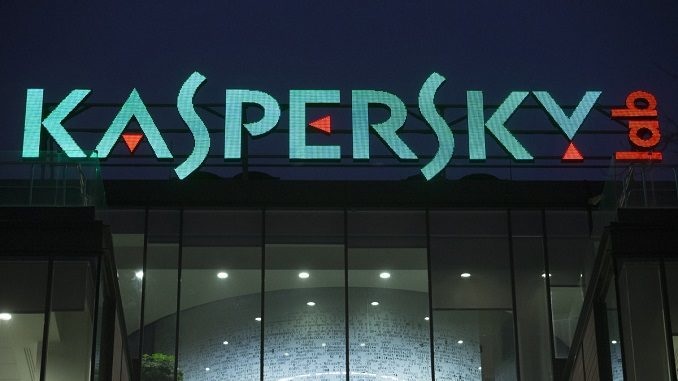
Kaspersky has supported INTERPOL with threat intelligence data in its Africa Cyber Surge II operation, which enabled investigators to identify compromised infrastructure and apprehend threat actors suspected of cybercrimes across the African region.

The operation resulted in the arrest of 14 perpetrators and the identification of network infrastructure, linked to financial losses of more than $40 million.

The Africa Cyber Surge operation is a continuous multi-stakeholder effort aimed at fighting cybercrime and protecting communities in the region. The first part of the Africa Cyber Surge operation, in which Kaspersky has also taken part, was carried out from July to November 2022, and resulted in a series of operational and investigative activities against the threat actors behind the cybercrimes in the African region.

The Africa Cyber Surge II operation was launched in April 2023 and lasted for four months, spanning across 25 African countries. The action was undertaken by INTERPOL’s Cybercrime Directorate, under the auspices of the INTERPOL Africa Cybercrime Operations desk, and INTERPOL’s Support Programme for the African Union (ISPA) in relation to AFRIPOL.

The effort was also supported by the UK Foreign Commonwealth and Development Office, the German Federal Foreign Office, and the Council of Europe.

Together with INTERPOL’s other private sector partners, Kaspersky has shared with the international agency indicators of compromise (IoCs), including malicious command and control servers, phishing links and domains, and scam IPs. As a result, INTERPOL streamlined cooperation between African law enforcement agencies to investigate and disrupt cybercriminals suspected of cyber extortion, phishing, business email compromise and online scams.

“The Africa Cyber Surge II operation has led to the strengthening of cybercrime departments in member countries as well as the solidification of partnerships with crucial stakeholders, such as computer emergency response teams and Internet Service Providers. This will further contribute to reducing the global impact of cybercrime and protecting communities in the region,” said Jürgen Stock, INTERPOL Secretary General.

“In its mission to build a safer digital world, Kaspersky has been giving due credit to the importance of multilateral cooperation, involving the private sector, international law enforcement and national authorities,” commented Yuliya Shlychkova, Public Affairs Director at Kaspersky.

“Only by harnessing the power of effective private-public partnership, can we give an impetus to the further strengthening of the cybersecurity industry in the African region to ensure that African countries can realise their outstanding potential without hindrance and regard for cybercrimes.”

“As digital systems, Information Communication Technologies and Artificial Intelligence grow in prominence, it is urgent that public and private actors work hand in hand to prevent these technologies from being exploited by cybercriminals. Coordinated operations such as Cyber Surge are necessary to disrupt criminal networks and build individual, organisational and society-wide levels of protection,” said AFRIPOL’s Acting Executive Director, Ambassador Jalel Chelba.

The data sharing exchange between Kaspersky and INTERPOL is part of a five-year cooperation agreement, signed by both parties in 2019, which also provides for delivering human resources support and training to the law enforcement agency.

Since the document was signed, Kaspersky and INTERPOL have maintained a positive momentum of joint operations aimed at combating cybercrime and awareness-raising projects to help people become more aware of modern-day cyber risks.
READ ALSO

Former Nigerian Minister Of State Professor Ibe Kachikwu To Participate At African Energy Week (AEW) 2023 As Keynote Speaker

Catalyzing Investment In Nigerian Energy: Platform Petroleum Limited Joins AEW 2023 As A Silver Sponsor

African Energy Week (AEW) 2023 – Africa’s premier event for the energy sector – taking place from 16 – 20 October in Cape Town will feature Prof. Ibe Kachikwu, Former Minister of State, Petroleum Resources of Nigeria, as a keynote speaker. During the event, Kachikwu will shape crucial conversations around best practices to accelerate the African energy renaissance for energy security, economic growth and sustainable development.

A seasoned industry executive with extensive expertise and a well-established presence in the global energy sector, Kachikwu is well positioned to drive serious AEW 2023 dialogue on investment and partnership opportunities available within the Nigerian and African energy landscapes. During his career in energy which spans over 31 years, Kachikwu served as General Managing Director of now diversified global energy firm, Nigerian National Petroleum Corporation (NNPC), and as President of the Organization of the Petroleum Exporting Countries (OPEC), the Gas Exporting Countries Forum (GECF) and the African Petroleum Producers Organization (APPO).

Kachikwu’s dedication to revolutionizing the global energy sector has been nothing short of monumental. As Minister of State, Petroleum Resources, Kachikwu orchestrated the transformation of Nigeria’s oil and gas sector through a series of policy reforms, partnerships with global players and the implementation of several significant projects. These endeavors were designed to enhance energy production, infrastructure, and overall industry development.

Among these projects are TotalEnergies’ initiation of the development of the Egina and Ikike oil fields, Chevron’s milestone accomplishment of producing clean diesel from natural gas feedstock at the Escravos Gas-to-Liquids plant, the expansion of the Uquo Gas Processing plant, the proactive launch of Eni’s Zabazaba-Etan field development, and the commencement of a series of exploration activities.

In his roles within GECF, APPO, and GECF, Kachikwu’s impact on elevating energy production and monetization across African nations for bolstering local, regional, and global energy market resilience, as well as fostering robust gross domestic product growth, has been profound.

At NNPC, he played a leadership role in strategically cultivating new investments, forging new partnerships, and maximizing infrastructure development to ensure optimal exploration, utilization, and monetization of Nigeria’s vast reserves for energy security and a sustainable economic growth. Owing to the accomplishments realized and the enduring groundwork established during Kachikwu’s tenure at NNPC, the company persists in attaining even more remarkable milestones. Today, it stands among Africa’s foremost energy enterprises and ranks as one of the continent’s most successful national oil corporations.

“Prof. Ibe Kachikwu has played a crucial role in maximizing the development and exploitation of Nigeria and Africa’s energy resources for economic, social and environmental benefits in a sustainable manner. His leadership role has unlocked a series of investments and partnerships aimed at boosting energy access and the growth of African economies. Now that Africa is seeking to maximize the sustainable growth of the energy sector for a just and inclusive energy transition, guidance from leaders and experienced industry executives like Kachikwu is vital,” states NJ Ayuk, the Executive Chairman of the African Energy Chamber.

AEW is the AEC’s interactive exhibition and networking event that seeks to unite African energy stakeholders, drive industry growth and development, and promote Africa as the destination for African-focused events.

InDrive Launches Ride-Hailing Service In Lesotho With Unique Fare Negotiation Model

Global Ride-Hailing Platform inDrive Partners SHIELD to Boost Trust, Fairness

Global innovator in mobility and urban services, inDrive (https://inDrive.com), has announced the introduction of its ride-hailing service in Lesotho, in line with the company’s ongoing expansion in Southern Africa.

Unlike conventional ride-hailing apps, inDrive permits drivers and passengers to determine their own fares, rather than complying with prices set by algorithms. Passengers can describe their trip and suggest a fare, while drivers may accept, decline, or make a counteroffer without any penalties. The decision can be made by considering factors like the fare amount, car type, estimated arrival time, and driver ratings. Drivers are able to select profitable and convenient requests.

How the App Operates:

  1. A registered user accesses the inDrive app to specify pickup and drop-off locations. Nearby drivers with verified documents get notified with the passenger’s pickup spot and suggested fare. They can either accept this fare or suggest another.
  2. The driver can check the drop-off location (Point B) before agreeing to the offer.
  3. Once the fare is agreed upon by both parties, the driver picks up the passenger, and the journey proceeds as normal.
  4. After completion, both the passenger and driver can rate each other and leave feedback on the InDriver platform, contributing to enhanced service quality.
    Adding to its distinctiveness, inDrive’s service fee is notably lower than other similar platforms. In Lesotho, this fee has been entirely removed, allowing drivers to retain all of their earnings. This zero-commission offer is available for 6 months before returning to the standard fee.

Safety is a top priority for inDrive. Rigorous background checks are conducted on drivers, including verification of necessary documents and licenses. Passengers are encouraged to rate their rides, thereby offering insights into driver behavior and service quality.

Incorporated safety features in the app include real-time GPS tracking during trips, allowing passengers to share travel information with family or friends. An emergency button within the app enables immediate contact with authorities, backed by 24/7 dedicated support.

Vincent Lilane, Business Development Representative for Southern Africa, expressed that the timing for the Lesotho launch couldn’t be better. He stated, “There’s a clear need for a new approach to ride-hailing. inDrive’s unique fare negotiation model empowers drivers and passengers to agree on a price without algorithmic restrictions. We believe that this method offers a sound solution to many current challenges in the Southern African ride-hailing market.”

Nigeria to Host Catholic Communications Assembly for Africa

Lagos, the commercial centre of Nigeria is set to host Catholic Bishops and communication experts across Africa, as they gather to celebrate the 50th anniversary of the Pan African Episcopal Committee for Social Communications (CEPACS).

According to the President of CEPACS, Most Rev. Emmanuel Badejo, Bishop of Oyo Diocese, the event, which is billed to hold between November 18 and 21, 2023, will be attended by the Bishop Chairmen from each region of Africa; the Standing Committee of the Symposium of Episcopal Conferences of Africa and Madagascar (SECAM); invited heads and officers of various communications outfits and schools in Africa, including other expatriate dignitaries from outside the assembly.

Founded in 1973 by the Symposium of Episcopal Conferences of Africa and Madagascar (SECAM) for the Church in Africa, CEPACS was given the mandate of promoting the use of modern means of mass communications as tools of evangelisation in the African Church.

To ensure a hitch-free 50th celebration, Bishop Emmanuel Badejo, who chairs the Continental Organising Committee recently constituted a Local Organising Committee in Lagos, comprising astute Communications experts, both priests and lay faithful and other Church functionaries. He saddled them with the responsibility of ensuring the participants to be drawn from the eight regions of Africa enjoy an unforgettable experience during the historic celebration.

The Committee is headed by the Founder/Chairman of Lumen Christi Television Network, Sir Robert Soji Olagunju, KSG, while a renowned Chartered Accountant, Mr. John I. Nejoh is to serve as Secretary.

The National Director of Social Communications, Very Rev. Fr. Michael Umoh, the Director of Social Communications, Lagos Archdiocese, Very Rev Fr. Anthony Godonu, Rev Fr. Andrew Kante from Kenya and Rev. Fr. Dieu-Donne Kofi Davor, Director of Communication, GCBC are part of the Committee to ensure that it delivers on its mandate.

Other members of the LOC include Sir Tony Chiejina, Mr. Seyi Martins, Barr. Mrs. Philomena Omorodion, Mr. Tony Agbugba, Lady Neta Nwosu, Mr. Philip Nwosu, Mrs. Anthonia Okonkwo, Dr. Mrs. Bisi Olagunju, Mrs. Henrietta Okonkwo, Mrs. M.O.D. Ewumi, Engr. O.M Otabor, Mr. Kola Akindele, Barr. Hannibal Uwaifo, Sir Ben Nkwo, Mrs. Adesuwa John-Nejoh. Also on the LOC are: Mrs. Veronica Afolabi, Mrs. Catherine Alabi, Mrs. Adewunmi Kissiedu, Mr. Peter Dada and Mr. Linus Okeke, Engr. Eliza Peters, John Achu and Peter Dada.

Already, the Catholic Bishops Conference of Nigeria (CBCN), are excited at the prospect of hosting to the delegates which will also include high ranking Church officials from the Vatican City, Rome.

Similarly, the Archbishop of Lagos, Most Rev. Dr. Alfred Adewale Martins has lauded the choice of Lagos as venue of the 50th celebration. He has also given his full support and enjoined the LOC to be at their utmost best. He promised to be on ground to welcome the delegates from across Africa to Lagos, Nigeria.

“We are happy that CEPACS has chosen Lagos as the venue for their 50th-anniversary celebration. By the grace of God, with the quality of personalities serving on the LOC, and with the support of the entire people of God in the Archdiocese, I believe that the event shall be a resounding success,” the renowned clergyman added.

The Thanksgiving/opening Mass will take place at The Holy Cross Cathedral, Lagos and will be broadcast live!

Africa Remains Phishing Prone, But Ongoing Training Slashes Risk

AVCA RELEASES 2022 African Private Capital Activity Report

More than one in three of corporate employees in Africa are vulnerable to phishing attacks and social engineering scams. However, regular training can significantly reduce their chances of falling victim to such cyber threats.

This is among the key findings of KnowBe4’s 2023 Phishing by Industry Benchmarking Report for Africa , which measures organisations’ Phish-prone Percentage (PPP) – an indication of how many of their employees are likely to fall for phishing or a social engineering scam.

The report is based on data from over 12.5 million users across 35,681 organisations in 19 different industries. The results of over 32.1 million simulated phishing security tests are also included. This year’s report details international phishing benchmarks from North America, The United Kingdom and Ireland, Europe, Africa, South America, Asia, Australia and New Zealand.

In Africa, 412 organisations from South Africa, Kenya, Nigeria and Botswana participated in the phishing simulation tests, with a total of 337,937 emails sent. The majority of these organisations (58%) were small (1-249 employees), followed by medium (26%, 250-999 employees) and large (16%, 1000+ employees) ones.

The resulting baseline PPP measured the percentage of employees in organisations that had not conducted any KnowBe4 security training and clicked a simulated phishing email link or opened an infected attachment during testing.

African business users had a lower baseline PPP than many other regions, meaning they were less likely to fall for phishing attacks before any training. However, their improvement after 90 days of training was also lower than other regions. After a year of ongoing training, African users achieved a 79.8% improvement in their PPP, showing the effectiveness of consistent security awareness education.

Africa’s human firewall

“The report underscores the fact that while technology plays an important role in preventing and recovering from an attack, organisations cannot afford to ignore the human factor,” says Anna Collard, Senior Vice President of Content Strategy & Evangelist for KnowBe4 Africa. “The root cause of most data breaches can be traced to the human factor.”

The report shows that without security training, 33.2% of employees across all regions and industries are likely to fall for phishing attacks or fraudulent requests. Africa’s average was 32.8%, slightly better than the global average and much better than South America, where the average was 41.1%. Asia had the lowest rate of phishing – 30%.

Collard notes: “Africa’s baseline phishing security test results shows that one out of three employees are likely to click on a suspicious link or email or comply with a fraudulent request before receiving training. This is very concerning considering that Africa has seen the fastest growth in cyber crimes in recent years, especially among small and medium-sized organisations.”

Training slashes risk

90 days after training, Africa’s PPP average was 20.5% compared to the global average of 18.5%. After a year of consistent training, Africa’s PPP was 6.6%, compared to a global average of 5.4%, indicating that new habits become normal, fostering an improved security culture.

At baseline, Africa’s medium-sized enterprises had the lowest PPP – at 29.4%, followed by small enterprises at 30% and large enterprises with a surprisingly high 33.3%. After training, large enterprises performed best, with a PPP average of 19% 90 days after training and 5.7% after a year. Medium sized enterprises improved to 22.7% 90 days after training, and 10.5% after a year. Small enterprises’ PPP improved to 25.2% after 90 days and 9% after a year.

The report also revealed which industries are most vulnerable to cyber threats and have the highest PPP, indicating more vulnerability and a greater need for security awareness training. Across small and medium organisations globally, the healthcare and pharmaceuticals industries had the highest PPP of 32.3% and 35.8%, respectively. In large organisations, the insurance industry remained the most at risk for a second consecutive year with a PPP of 53.2% globally. With consistent training for a year or more, the global average PPP improvement across sectors was 82%.

“These findings highlight the importance of ongoing, consistent cybersecurity awareness training and testing to achieve significant risk reduction,” says Collard. “Simply warning users or having a once-off training session is not enough. Cybersecurity needs to be ingrained into company culture.”

First Baptist Church, Isia, Okeho Reels Out Activities To Celebrate Its 120th Anniversary

First Baptist Church, Isia, Okeho Reels Out Activities To Celebrate Its 120th Anniversary

Plans are in top gear for the week-long activities that will culminate in the grand finale of the 120th anniversary of First Baptist Church, Isia, Okeho. The anniversary will commence on August 20, 2023, and the grand finale take place on August 26, 2023.

In a statement made available and co-signed by the under-shepherd of the Church, Rev. Dr. T.G Olawuwo, Chairman Planning Committee, Mr. J.A Makinde and Secretary, Planning Committee, Mr. J.T Ogunjimi.

The week-long Opal anniversary celebration will go thus- Sunday, August 20, 2023 – Ordination of new sets of Deacon; Monday, August 21, 2023- Anniversary  Prayer; Tuesday, August 22, 2023- Rally/ Moving round the city; Wednesday, August 23, 2023- Anniversary Lecture to be delivered by Rev Dr Richard Adetola; Thursday, August 24, 2023- Health Talk to be delivered by Dr. T.O Oyewusi; Friday, August 25, 2023- Praise Night; Saturday, August 26, 2023 – Anniversary Celebration by Rev Dr. Israel Adelani Akani, President Nigerian Baptist Convention and Sunday, August 27, 2023- Anniversary Thanksgiving Service.

Established in 1903, through Baptist Missionaries, Rev and Mrs. L.M Duval who has settled and approved Saki as the second Mission station after Oyo in Oyo Division.

Rev. Duval visited Okeho town on August 23, 1902, and discovered that no Christian witnessing had reached the area. In the year 1903, Rev. Duval sent one of his workers who was already a Christian, John Idowu Aro, to start the spread of the gospel in Okeho as the first Pastor.

In 1907 during the period of Pastor James Odetayo, there were 3 converts in Okeho, and these 3 people, namely; Mr. and Mrs. Albert Idowu and John Ayinde Idowu who later became the church pastor in 1964,they were the foundation members and the first converts in Okeho and district.

Expected at the 120 years anniversary of the church are people from all walks of life, which includes, notable religious leaders, political office holders, business tycoons, academia, traditional rulers, eminent sons and daughters of Okehol and amongst others.

READ ALSO

Tobi Amusan Cleared To Compete In World Athletics Championships, Vows To Uphold Integrity Of The Sport

Tobi Amusan Cleared To Compete In World Athletics Championships, Vows To Uphold Integrity Of The Sport

Reigning 100-meter hurdle champion and world record holder, Tobi Amusan has been cleared to compete in the highly anticipated World Athletics Championships set to begin on Saturday, 19 August 2023 in Budapest, Hungary.

An Independent Tribunal, by a majority decision, found the Nigerian athlete innocent of the allegations leveled against her by the Athletics Integrity Unit.

In a statement made via her verified Instagram handle, Amusan expressed a mixture of relief and gratitude, acknowledging the support received from fans, friends, and family throughout the challenging period.

The Nigerian sprinter affirmed her unwavering commitment to clean and fair competition, reiterating that she has always competed within the confines of the rules and regulations set forth by international sports bodies.

“This morning I found out that the Independent Tribunal that heard my case has ruled that I did not violate the whereabouts rules and as a result, I will not be sanctioned and none of my results will be precluded,” Amusan said.

“I am thrilled to put this behind me, and I look forward to defending my title at next week’s World Championships,” she continued.

Weeks ago, Amusan had insisted in an Instagram post, that she was not a drug cheat and had been sure all would be resolved before the World Championships.

The track star who recently retained her title as the national champion in Benin city for the fourth consecutive time, set a new meet record of 12.34 seconds at the Silesia Diamond League and stormed to victory at the Wanda Diamond League in July.

Athletics Integrity Unit’s statement

“A panel of the Disciplinary Tribunal, by majority decision, has today found that Tobi Amusan has not committed an Anti-Doping Rule Violation (ADRV) of three Whereabouts Failures within a 12-month period,” the Athletics Integrity Unit (AIU) said in a Thursday evening statement.

“AIU Head Brett Clothier has indicated the Athletics Integrity Unit (AIU) is disappointed by this decision and will review the reasoning in detail before deciding whether to exercise its right of appeal to the Court of Arbitration for Sport (CAS) within the applicable deadline.

“The decision is currently confidential but will be published in due course. Amusan’s provisional suspension has now been lifted with immediate effect,” AIU said.

READ ALSO

How Much Money Is Spent On Groceries In Nigeria, Other Countries?

How Much Money Is Spent On Groceries In Nigeria, Other Countries?

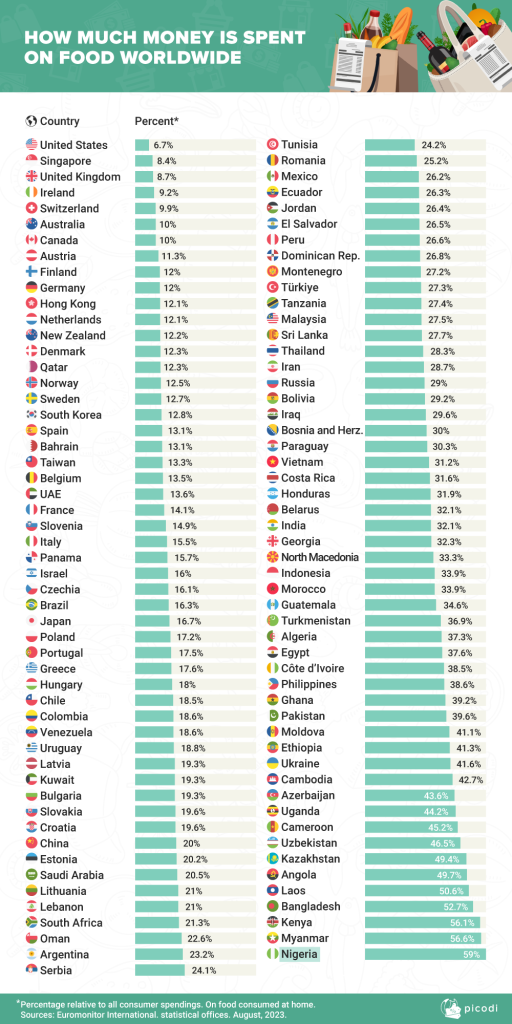
Picodi.com analyst team checked the statistical data from 105 countries and calculated how much money people spend on their groceries worldwide.

The collected data shows that, depending on a country, grocery spendings can vary from a few percent up to over half of consumer spending. For example, less than a tenth of spending on food and non-alcoholic beverages consumed at home can be found in countries such as the USA – 6.7%, Singapore – 8.4%, the UK – 8.7%, Ireland – 9.2% and Switzerland – 9.9%.

In this ranking, Nigeria ranked 105th out of 105 countries – food and non-alcoholic beverages make up 59.0% of spending on goods and services. This result is similar to the one in Bangladesh (52.7%), Kenya (56.1%) and Myanmar (56.6%).

Among the countries included in the ranking, the highest percentage of spending on groceries can be found in Nigeria, Myanmar and Kenya – 59%, 56.6% and 56.1% respectively.

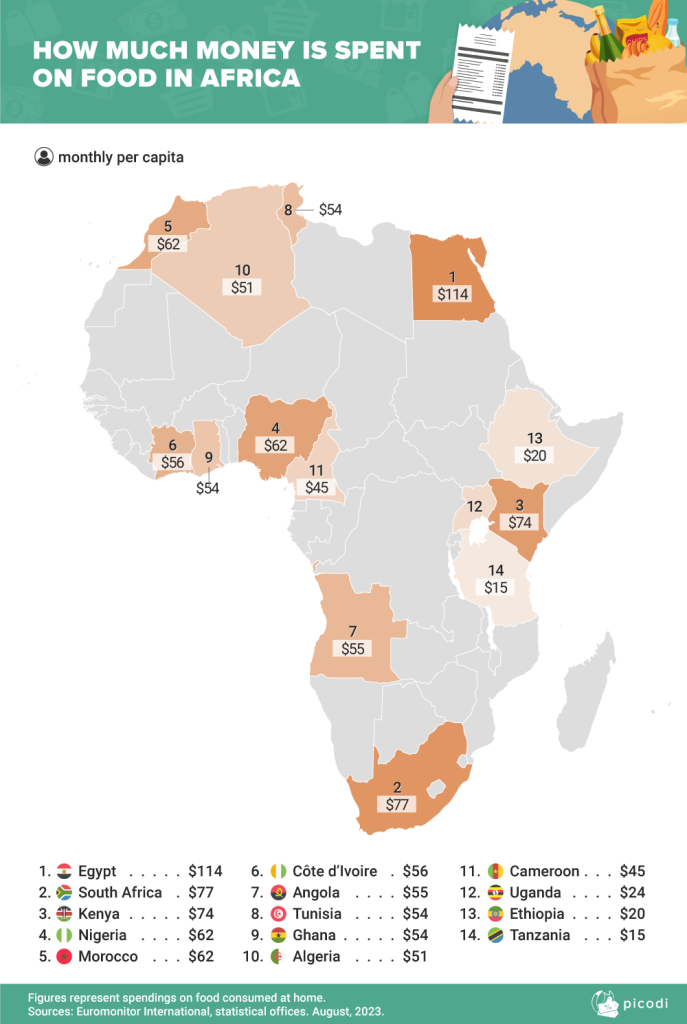
How much money is spent on groceries in Africa?

The highest grocery spending in Africa can be found in Egypt ($114/month), followed by South Africa ($77/month) and Kenya ($74/month).

An average Nigerian spends $62 (₦48,186) monthly on groceries.

The lowest grocery spending can be found in Uganda ($24/month), Ethiopia ($20/month) and Tanzania ($15/month).

Here are some interesting facts from the report:

• Less than a tenth of spending on food and non-alcoholic beverages consumed at home can be found in countries such as the USA – 6.7%, Singapore – 8.4%, the UK – 8.7%, Ireland – 9.2% and Switzerland – 9.9%;
• Nigeria ranked in 105th place (last!), with food and non-alcoholic beverages making up 59.0%% of spending on goods and services;
• The highest percentage of spending on groceries can be found in Nigeria, Myanmar and Kenya – 59%, 56.6% and 56.1% respectively;
• The highest grocery spending in Africa can be found in Egypt ($114/month), followed by South Africa ($77/month) and Kenya ($74/month);
• The lowest grocery spending can be found in Uganda ($24/month), Ethiopia ($20/month) and Tanzania ($15/month);
• An average Nigerian spends $62 (₦48,186) monthly on groceries

READ ALSO

Subsidy Removal: Tinubu Urges Nigerians To Be Patient

Nigeria Ready To Welcome All Citizens - Tinubu
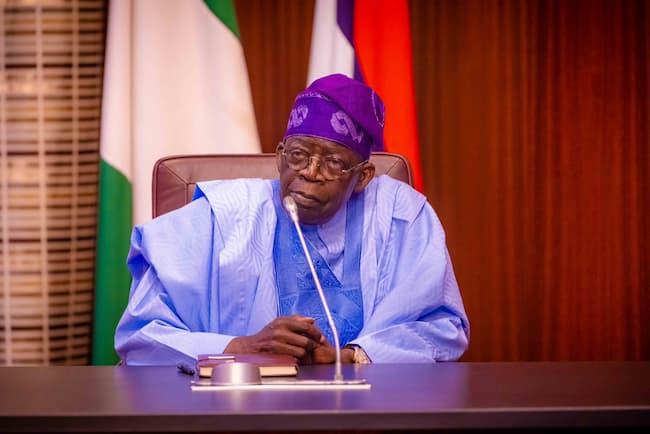
President Bola Ahmed Tinubu

President Bola Tinubu has urged Nigerians to be patient with his administration in the aftermath of the elimination of petrol subsidies, claiming that the action is in the best interests of the country.

Tinubu addressed in Abuja on Thursday during the public presentation of an elder statesman’s memoirs, Edwin Clark.

The Nigerian president, who was represented at the occasion by Secretary to the Government of the Federation (SGF) George Akume, stated that measures are being taken to mitigate the effects of the subsidy reduction.

“Solutions to problems can never be as instant as coffee. But we must certainly be there. I know the removal of fuel subsidy has created some things. And that is why palliatives are being put in place of 100 trucks,” President Tinubu said.

“Fertilizers have been sent to the states, 100 trucks of grains have been sent and more are coming. Buses are also coming. We can endure this for a moment.

“What we are going through today is for a better tomorrow. Nations are great because citizens have hope. They have hope that tomorrow will be better than today.”

His remark follows the Federal Government’s acceptance of palliatives for state governments.

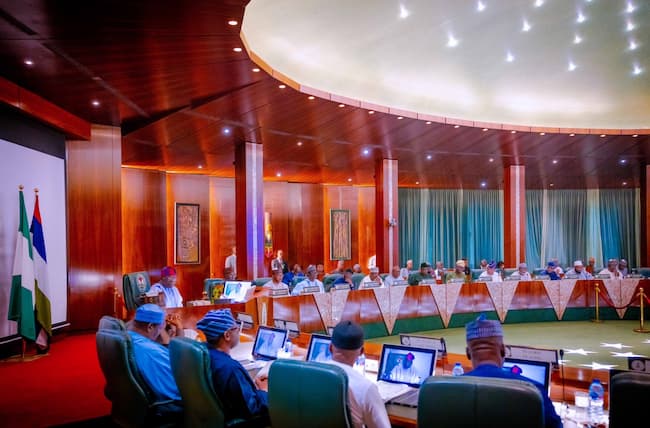
The National Economic Council (NEC) authorized N5 billion for each state and the Federal Capital Territory (FCT), as well as cereals for state governors, following its meeting at the Presidential Villa.

Governor Babagana Zulum of Borno State, who made the announcement during a press conference, added that the government also sent five trucks of rice to each of the 36 state governors.

He also stated that governors are supposed to purchase 100,000 bags of rice, 40,000 bags of corn, and fertilizers as part of preparations to mitigate the impact of the cessation of fuel subsidies.

Zulum noted that 52% of the monies were distributed as grants to the states. The remaining 48% is classified as a loan.

READ ALSO

FG Issues ₦5bn As Palliatives For States, FCT

FG Issues ₦5bn Loan As Palliatives For States, FCT

The Federal Government (FG) has granted ₦5 billion for each state and the Federal Capital Territory (FCT) to purchase food products for distribution to the indigent in their states.

Borno State Governor Babagana Zulum made the announcement shortly after the National Economic Council (NEC) meeting at the Presidential Villa in Abuja.

Thursday’s development follows a rise in the price of food and petroleum due to the withdrawal of a commodity subsidy.

In addition to the fund, Zulum stated that the federal government provided each of the 36 state governors with five trucks of rice.

Governor Zulum went on to say that the state governors must obtain 100,000 bags of rice, 40,000 bags of maize, and fertilizers.

BizWatch Nigeria understands that the money issued to the 36 states and FCT is a loan.

In a memo to governors entitled “Re: Distribution of Palliatives – Terms of FG Facility”, Asishana Okauru, director-general of Nigeria Governors Forum (NGF), said states might opt out of the offer and return a sum of N2 billion already given to them.

“I have been directed by the Chairman, H.E. AbdulRahman AbdulRazaq to forward the terms of the facility as follows,” Okauru said in the memo.

“Facility size: ₦4,000,000,000.00
Loan (48%): ₦1,920,000,000.00
FGN Grant: (52%) ₦2,080,000,000.00 Beneficiary each state government
Tenure: 20 months
Interest Rate: Nil
Moratorium: Three months
Repayment Mode: Monthly
Repayment Amount: ₦120,000,000.00
Security Irrevocable Standing Payment Order (ISPO)

“Your excellency is invited to note that this offer is optional and states that do not wish to participate may opt-out and refund the ₦2 billion already disbursed to them.”

He stated that 52% of the cash were transferred to state governments as grants and 48% as loans.

FX: CBN Launches Price Verification System For Importers

FX: CBN Launches Price Verification System For Importers

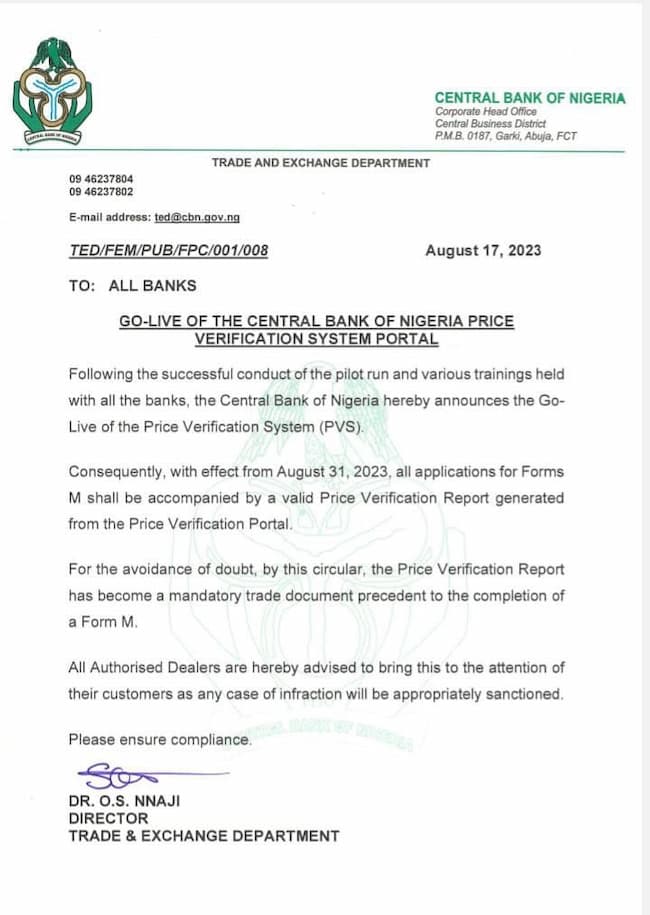
The Central Bank of Nigeria (CBN) has launched a foreign exchange (FX) pricing verification system (PVS) online to allow importers to gain access to foreign currency.

According to a CBN statement issued late Thursday night, a price verification report from the platform is now required for all Form M requests beginning August 31, 2023.

Form ‘M’ is a declaration of intent to import tangible items into Nigeria.

“Following the successful conduct of the pilot run and various trainings held with all the banks, the Central Bank of Nigeria hereby announces the Go- Live of the Price Verification System (PVS),” the statement reads.

“All applications for Forms M shall be accompanied by a valid price verification report generated from the price verification portal.

“For the avoidance of doubt, by this circular, the price verification report has become a mandatory trade document precedent to the completion of a Form M.”

“All authorised dealers are, hereby, advised to bring this to the attention of their customers”.

CBN further stated that any violation would be suitably sanctioned.

“Please, ensure compliance,” the bank told exporters.

BizWatch Nigeria recalls that the CBN announced the unification of all segments of the foreign exchange (FX) market in June 2023, indicating the end of its jurisdiction over the forex market.

READ ALSO

How To Track A Flight In Real Time

How To Track A Flight In Real Time

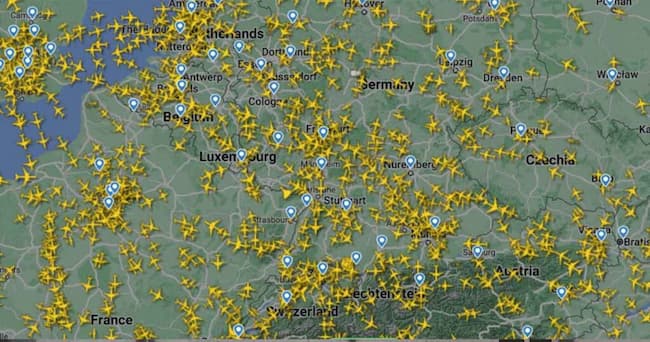
Tracking an aircraft in real time may be fun, instructive, and convenient, especially if you’re waiting for someone or just curious about the airplane’s progress.

Here are five free apps and websites for tracking aircraft in real-time:

1. Flightradar24

Flightradar24 is one of the most popular and most used sites for tracking flights.

With the free mode you can see all of the planes in the sky, including the name of the aircraft, the code, where the country of origin and the destination.

With flightradar24 you can also know the time the plane departed, its exact location, gate and when the baggage will be offloaded.

You can easily track any flight in real-time with Flightradar24 and never lose sight of it. You can also replay the path of the flight.

The website is user friendly and so is the mobile version which is available on iOS and Google store for download.

2. Plane Finder

Plane Finder is yet another real-time flight tracking platform that displays live aircraft movements using credible data.

It displays a map of aircraft positions, flight trajectories, and flight information.

Plane Finder is also available for mobile downloads.

3. FlightStats

You may also track flights from anywhere in the world with FlightStats by entering a flight number, route, or airport. When you search for a flight, the information is saved on the My Flights page for easy access later.

The mobile version is available for download.

4. FlightAware

FlightAware Flight Tracker can track general aviation flights in the United States and Canada, such as private and charter planes.

A flight can be found by aircraft registration, route, airline, flight number, city pair, or airport code. The program displays a full-screen map with a radar overlay, as well as detailed flight information.

5. Plane Lives App

Planes Live is a flight monitoring app that allows you to track both commercial aircraft and biplanes across the world.

Planes Live can notify you of changes to your flight schedule if you have notifications enabled. The program allows you to narrow down your flight search by airplane model, airline firm, arrival airport, departure airport, and so on.

READ ALSO

LEAP Africa And DOW Partner To Activate Youth Action Or Sustainable Development Across Africa

China Invests N9.6m In LEAP Africa Programme

LEAP Africa, one of Africa’s leading non-profit organization focused on youth leadership development and Dow, a global leader in materials science, are pleased to announce the fourth edition of its Pan-African ‘Youth Day of Service (YDoS)’ campaign, a youth-led social impact campaign with the theme – Youthful and Useful.

Scheduled to be held till August 31, 2023, Youth Day of Service is a month-long campaign that seeks to foster the spirit of service to community and volunteerism among the youth population in Africa with focus on the United Nations’ Sustainable Development Goals (SDGs). This campaign which is in commemoration of the International Youth Day seeks to rally young people, corporate organisations, Governments, the Private and Social sectors across Africa to advocate and renew the spirit of active youth citizenship and collective responsibility.

Speaking at the Pan-African Press Conference and Stakeholders Engagement, Kehinde Ayeni, Executive Director LEAP Africa said: “One of our strategic pillars at LEAP Africa is to raise talents for the actualization of the SDGs. This campaign is a demonstration that LEAP Africa remains committed to youth-led actions for Sustainable Development across Africa. We believe in the power, voices, numbers and agency of young people and that an urgent commitment to creatively engaging with youth, creating platforms such as this and retooling youth with the skills and support to shape SDGs implementation across the continent, is the greatest need. We cannot do this alone, therefore we are fostering partnerships to bring the achievement of the goals closer.”

In her remarks, Mumbi Keega, Public Affairs Lead-Africa, Dow, said, “Dow is committed to fostering positive change and building resilient and sustainable communities in Africa. We believe that this can only be achieved by working together with the African youth, who are vital to promoting social welfare. Through our partnership with LEAP Africa, we are supporting the Youth Day of Service (YDoS) initiative, which empowers young people to use their skills and talents to make a difference in their communities. We are proud to be a part of YDoS and to support the next generation of African leaders who are working to create a more sustainable and equitable future for all.”

Chege Ngugi, Africa Regional Director of ChildFund International in his remarks called for increased investment by governments and other stakeholders in youth development programs. “While many laudable initiatives, such as national youth funds exist, there is still a dire need to do more to ensure all youth, given the huge number, are adequately resourced to achieve their best potential, no matter where they are from. We must move beyond giving the youth a seat at the table to investing in them to use that seat for good. The youth must be enabled to act as equal partners of positive social change.”

Emerging Leaders Foundation-Africa one of the implementing partners for the Youth Day of Service, represented by Caren Wakoli the Founder and Executive Director lauded LEAP Africa for investing in this initiative for the second year in Kenya. Caren noted that ELF-Africa had lined up week-long community activities across nine counties, addressing five different SDGs. She further re-affirmed ELF-Africa’s commitment to championing transformational youth action in Kenya and Africa for a sustainable future. Caren concluded by calling on young people and grassroot organisations across Kenya to join the different Youth Day of Service activities in counties near them, especially the nine counties where ELF-Africa will be working, these are Migori, Bungoma, Narok, Kericho, Uasin Gishu, Murang’a, Makueni, and Kilifi.

This year, LEAP Africa will be leveraging the support of strategic partners like ChildFund International, Emerging Leaders Foundation, BellaNaija, Forgotten Bottom Millions, Legit, Zikoko Citizen, W4 Immerse, Dotts Media, African Climate Reality Project, Strategic Youth Network for Development Ghana, Youth Development Organisation Zambia and Global Shapers Community, among others,  in delivering the Youth Day of Service. 

Nursing, Midwifery Council Working To Curb Brain Drain

Nursing, Midwifery Council Working To Curb Brain Drain

Dr Faruk Abubakar, Registrar/Chief Executive Officer of the Nursing and Midwifery Council of Nigeria, stated that work is being done on migration policy to reduce brain drain in the health industry.

The registrar made the guarantee during the 2023 Annual General Meeting/Scientific Conference of the National Association of Nigeria Nurses and Midwives (NANNM), Federal Capital Territory (FCT) Chapter on Wednesday in Abuja.

“Our Nurses, Our Future” is the conference’s theme. Abubakar, the event’s honorary guest, stated that Nigeria was suffering from brain drain in the nursing profession, but assured that the country was working on its migration strategy to address the issue.

He spoke on: ‘Brain Drain in Nursing: Strategies to Ensure Resilient, Inclusive and Sustainable Nursing Workforce’.

According to Abubakar, Nigeria is rated seventh out of 57 countries with a significant shortage of health staff.

“If the government can provide the necessary facilities, welfare, adequate insurance for the nurses, better working environment, brain drain will be a thing of the past.

“Government should invest more in training of nurses; the government should take appropriate measures in tackling all the challenges.”

Mr. Ayuba Wanna, the immediate past President of the Nigeria Labour Congress, stated that governments must consider workers’ wages, especially with the loss of fuel subsidies.

He stated that nurses play an important role in the healthcare industry and that their rights must not be jeopardized.

According to Dr. Olusade Adesola, Permanent Secretary of the Federal Capital Territory Administration (FCTA), the administration strongly supports nurses.

He claims that the government is concerned about the welfare of FCTA employees, of whom nurses are an important part.

Mrs Khadijat-Toyin Musah, the event’s keynote speaker and Acting Dean, Faculty of Nursing and Allied Health Science, University of Abuja, stated that there was a need to look into nursing education, citing the large gap between knowledge and practice.

“We must go beyond theories. There is a disconnect between what we learn in school and what we are practising in the field.

” We must make sure there is no disconnect between theories and practicals. Nurses must be knowledgeable enough to command respect,” she said.

He claims that the government is concerned about the welfare of FCTA employees, of whom nurses are an important part.

Mrs Khadijat-Toyin Musah, the event’s keynote speaker and Acting Dean, Faculty of Nursing and Allied Health Science, University of Abuja, stated that there was a need to look into nursing education, citing the large gap between knowledge and practice.

READ ALSO

DSS Raises Alarm Over Alleged Attack On Abuja-Kaduna Train

DSS Raises Alarm Over Alleged Attack On Abuja-Kaduna Train

The Department of State Services (DSS) issued a security notice on Wednesday, alleging that there is a great plot by bandits to target the Abuja-Kaduna train route at any time.

In a recent development, the DSS issued a security notice warning train passengers to be extra cautious in a memo written to the NRC’s MD. Security Alert: ‘Impending Threat By A Coalition Of Banditry Syndicate To Attack Abuja-Kaduna Train Service (AKTS) Along AKTS Corridor,’ according to a leaked letter signed by DSS Director FCT Command, R.N. Adepemu.

“Intelligence report indicates an impending threat to seamless train transportation along the Abuja Kaduna Train Service (AKTS),” the secret police stated in a statement.

“The development is sequel to the plot by a coalition of banditry syndicate to attack Abuja ~ Kaduna Train Service aimed at kidnapping passengers on board for ransom any moment from now.

”In view of the threat inherent and the need to forestall likely breach of security along the AKTS, it is advised that, existing security arrangements be scaled up within and along the route. In addition, the need for the under listed counter security measures be emplaced ta nip in the bud the impending threats.

i. Air surveillance patrol; Surveillance on the rail track; Military checkpoint/ patrol; Police checkpoint/ patrol; Security raid operation be carry out around Byazhin, Jibi, as well as ja forest Enhance the Nigeria Police Mobile Force (NPMF) operatives with walkie talkie to sustain escort services on train;

vii, Deploy more Nigerian Security and Civil Defence Corps (NSCDC) with walkie talkie to provide escort duty; ie contents of this correspondence are classified: Unauthorized disclostre could lead to prosecution.

viii. Crisis response team be established in the advent of attack for quick response time; Intelligence sharing amongst all relevant stakeholders.

“Although, the aforementioned threat is yet to be in the public domain, the development is capable of heightening fears over safety of lives and property amongst stakeholders and commuters of trail transportation along the AKTS corridor.

“Therefore, the need to discreetly manage this intelligence provided cannot be, over emphasized.

“This is particularly against the backdrop of fatal attacks along the routes which left casualties and victims hence, some passengers were killed as well as others abducted for several months before their eventual release.”

READ ALSO

Ethiopia And African Development Bank Group Ink $84.3 Million Grant Agreement To Enhance Wheat Production

AfDB Approves $115m Loan To Abia State For Road Rehabilitation, Erosion Control

The African Development Bank Group has awarded grant funding totalling $84.3 million to Ethiopia to advance wheat production and increase farmers’ incomes.

Ethiopia’s Finance Minister Ahmed Shide and African Development Bank Group Deputy Director General for East Africa, Abdul Kamara, signed the grant agreement on 2 August 2023 for the implementation of the country’s Climate Resilient Wheat Value Chain Development Project (CREW).

The grant comprises $54 million from the African Development Fund, the Bank Group’s concessional lending window for low-income countries, $20 million from the Government of the Netherlands, $10 million from agribusiness firm OCP Africa, and $300,000 from the Global Center on Adaptation.

The Ethiopian government will contribute $10 million in counterpart funding for the project. The project has three components: Climate Smart Wheat Productivity and Production; Market Infrastructure, Linkages, and Agri-Finance; and Project Coordination and Management.

Under its flagship Technologies for African Agricultural Transformation (TAAT) initiative, the African Development Bank Group has supported Ethiopia and several other countries across the continent to boost productivity in agriculture.

CREW was designed to scale up and sustain TAAT’s successful results. The plan, which supports Ethiopia’s wheat self-sufficiency initiatives, will be implemented over five years. The project will benefit 500,000 small-scale farmer households.

In his remarks during the signing, held in Addis Ababa, Kamara said: “The CREW Project will ensure that farmers in Ethiopia can access agricultural inputs to raise local production of wheat such that supply disruptions resulting from the Russia—Ukraine crisis do not worsen the food security situation already made precarious by Covid-19, climate change and rising cost of living. It also seeks to sustain Ethiopia’s exemplary strides in attaining wheat self-sufficiency and export orientation, a model that other African countries should emulate.”

He added: “The signing of this grant demonstrates the Bank’s unwavering commitment to supporting Ethiopia and its people, and further reaffirms the partnership between the Bank and the government towards achieving Ethiopia’s vision of becoming a lower middle-income country by 2025.”

On his part, the Minister of Finance, H.E. Ahmed Shide, lauded the Bank’s support, underscoring that the project will accelerate and sustain the government’s wheat self-sufficiency initiatives.

Ethiopia is the second largest wheat producer in sub-Saharan Africa, after South Africa. The country plans to become wheat self-sufficient and net exporter by 2025/26, aiming to produce an additional 4.2 million tonnes of irrigated wheat by deploying proven technologies and innovations such as TAAT.

The grant brings the Bank’s current commitment to Ethiopia to $1.23 billion, covering the key sectors of basic services, energy, transport, water supply and sanitation, agriculture and the private sector.

Breaking News : Court Adjourns Emefiele Case To Aug 23

BREAKING: Emefiele Granted N20m Bail

A Federal Capital Territory High Court has postponed until August 23 the alleged N6.9 billion procurement lawsuit against suspended Central Bank Governor Godwin Emefiele.

Due to the absence of the other two defendants in the case on Thursday, Justice Hamza Muazu, the presiding judge, decided to delay the case.

Sa’adatu Yaro, a female CBN employee, and her business, April 1616 Investment Limited, were to be charged with 20 counts each of procurement fraud, conspiracy, and giving his friends unfair benefits. Emefiele was also to be arraigned alongside them.

Details to come…

Fuel Price Surge Causes Panic Buying In Lagos

Petrol Scarcity Hits Abuja Again As Queues Return

Automobile drivers in Lagos have resorted to frantic purchases of the product because of fear that gasoline prices may soon be revised upward. There have been rumors that oil marketers intended to increase the price of gasoline from the current N617 per litre to N720.

The price revision was reportedly brought on by the naira’s ongoing devaluation and the growing price of crude oil on the global market.

Oil marketers reportedly said on Sunday that should the naira weaken to 950/dollar from 910/dollar in the parallel market, the price of Premium Motor Spirit, often known as gasoline, will jump to between N680/litre and N720/litre in the next weeks. They also suggested that PMS importation plans by dealers were being delayed as a result of the scarcity of dollars to import the commodity.

The warning was issued just one week after the local currency broke through the 900/dollar barrier and reached above 945/dollar on Friday in the black market. However, there were lengthy lines at gas stations in Lagos on Monday night and Tuesday as drivers hurried to get gasoline ahead of the anticipated price increase.

Following the claims on Monday, the Nigerian National Petroleum Company Limited said, at around 11:48 p.m. on its official X (previously Twitter) profile, that it has no plans to raise the price of gasoline at the pump.

In contrast to NNPCL’s adjusted price of N617, gasoline reportedly sold for N650 per litre on Monday in the states of Borno, Oyo, and Delta. In July 2023, the landing price of gasoline had increased by 37.4% month over month, from N460 per litre. In Maiduguri, Borno State capital, petrol was sold between N625 and N655 at some private stations; and N635 at the NNPC Mega station on Tuesday. In Ibadan, Oyo State, many filling stations adjusted the petrol price from N580 to N690.

In Lagos, while many filling stations shut their gates against motorists, some were seen to have also adjusted prices from around N580/N600 litre, to around N610/litre. Some marketers were alleged to be hoarding products.

NGX Market Cap Falls, Stock Sell In Big And Mid-Cap Businesses

Decline In Nigeria's Equity Market Creating Entry Opportunity For Investors - Analysts

Due to ongoing stock selloffs in big and mid-cap listed businesses, the Nigerian Exchange (NGX) equity market capitalization continued to decline on Wednesday. With the projected increase in the currency rate and fuel prices, the bears continued to rule the market.

The most recent performance shown that the local stock exchange is losing ground despite the fixed income market’s lackluster performance; at the very least, a negative real return has remained and rates on government securities are still subject to changes in inflation.

The year-to-date performance, however, indicates that equity investors are completely safeguarded from Nigeria’s ongoing inflation; in fact, the current market performance is higher than the yearly inflation rate.

Following profit-taking activity on AIRTELAFRI, the telecom business valued approximately N5 trillion lost 5.3% as investors sold their shares, the local exchange yesterday registered its third straight loss this week.

Stockbrokers claimed that pressure from investors selling well-known stocks including AIRTELAFRI (5.30%), FIDELITYBK (-3.95%), FCMB (-2.81%), GTCO (-0.53%), ACCESSCORP (-0.59%), and 18 other stocks contributed to the loss.

The All-Share index therefore dropped 0.5% to 64,625.28 points. As a result, the profits for the month and year as a whole decreased to +0.5% and +26.1%, respectively.

The total volume traded increased by 4.0% to 291.71 million units, valued at N7.43 billion, and exchanged in 6,213 deals. GTCO was the most traded stock by volume at 41.75 million units, while AIRTELAFRI was the most traded stock by value at N1.82 billion.

Stockbrokers reported that performance across the sectors was mixed, as the Insurance (-2.8%) and Banking (-0.4%) indices declined, while the Consumer Goods (+2.4%) and Oil & Gas (+0.4%) indices advanced.

Meanwhile, the Industrial Goods index closed flat. As measured by market breadth, market sentiment was negative (0.7x), as 16 tickers lost relative to 22 gainers. NEM (-10.0%) and SUNUASSUR (-8.5%) topped the losers’ list. ETERNA (+10.0%) and CWG (+8.6%) recorded the highest gains of the day. Overall, equities market cap declined by N164 billion to N35.2 trillion on Wednesday.

Federal Government Battles Forex Crisis With $3bn Loan

The African Export-Import Bank granted an emergency $3 billion loan to the Nigerian National Petroleum Company Limited, the company said on Wednesday. It stated that the oil corporation will utilize the loan to help the Federal Government stabilize the value of the naira. Additionally, it was learned that the plant will contribute to a decrease in the cost of Premium Motor Spirit, or gasoline, at the pump.

The loan would increase the importation of gasoline into Nigeria, according to reliable sources within the oil company. Oil marketers also stated that the facility would address the apparent resurgence of gasoline subsidies.

Nigeria’s exchange rate has been an issue of concern lately, with the dollar rising to over N910 at the parallel market, while oil dealers have been complaining of non-liquid nature of the Importers’ and Exporters official window of the Central Bank of Nigeria.

The NNPCL announced the acquisition of the $3bn loan in a brief statement issued by the company in Abuja, which was titled, ‘Relief for the naira: NNPC Ltd secures $3bn emergency crude repayment loan from AFREXIM Bank.’

The statement read, “The NNPC Ltd and @afreximbank have jointly signed a commitment letter and term-sheet for an emergency $3bn crude oil repayment loan.

“The signing, which took place today at the bank’s headquarters in Cairo, Egypt, will provide some immediate disbursement that will enable the NNPC Ltd to support the Federal Government in its ongoing fiscal and monetary policy reforms aimed at stabilising the exchange rate market.”

Providing further explanation about the loan, the Senior Special Assistant to President on Digital/New Media, O’tega Ogra, in several posts on X (formerly Twitter), explained that the $3bn was not a crude-for-refined products swap loan, but an upfront cash loan against proceeds from a limited amount of future crude oil production.

He said, “Is this loan risky for NNPCL or the Nigerian Treasury? No. The exposure for NNPCL is very limited, covering just a fraction of their entitlements. Additionally, there are no sovereign guarantees tied to this loan.

“What’s the benefit of this loan to Nigeria? The loan will assist NNPCL in settling taxes and royalties in advance. It will also equip the Federal Government with the necessary dollar liquidity to stabilise the naira, with limited risk.

“How will the loan be disbursed? The funds will be released in stages or tranches based on the specific needs and requirements of the Federal Government.”

On whether the initiative would affect fuel prices, Ogra said, “A strengthened naira as a result of this initiative will lead to a reduction in fuel costs. This means that if the naira appreciates in value, the cost of fuel will drop and further increases will be halted.”

He continued, “What about subsidies? Are they coming back? No. A stronger naira will result in lower prices from the current level, making subsidies unnecessary. The deregulation policy remains unchanged.

“How will the loan be repaid? The loan will be repaid against a fraction of proceeds from future crude oil production. It’s a strategic move that ensures a balance between our current economic needs and future production capabilities.

“What is the difference between this and previous swap deals? This is not a crude for refined products agreement where the government does not earn any proceeds from the swap.”

BizWatchNigeria.Ng
Privacy Overview

This website uses cookies so that we can provide you with the best user experience possible. Cookie information is stored in your browser and performs functions such as recognising you when you return to our website and helping our team to understand which sections of the website you find most interesting and useful.