The Nigeria Security and Civil Defence Corps (NSCDC) has deployed 10,250 personnel to Anambra State ahead of the November 8, 2025, governorship election, with a firm warning against electoral violence and misconduct.
Commandant-General of the Corps, Prof. Ahmed Audi, who gave the directive in Abuja, said the deployment was designed to guarantee a peaceful, credible, and transparent election process.
According to him, the personnel were drawn from tactical units at the NSCDC national headquarters, zonal formations, and state commands across the federation.
Addressing state commandants and heads of tactical units at the Corps headquarters, Audi stated that the operation was in line with the NSCDC’s mandate to support the Nigeria Police Force — the lead agency in election security — in ensuring law and order during the polls.
“With effective coordination, cooperation, and collaboration among security agencies, we can guarantee a violence-free election,” he assured.
He cautioned politicians and their supporters against making inflammatory statements or engaging in actions that could incite unrest before, during, or after the election.
“The Anambra election is scheduled for Saturday, November 8. All intelligence and undercover personnel are to immediately man identified flashpoints,” he directed. “Tactical units must commence round-the-clock patrols, while operatives deployed to polling units and collation centres must adhere strictly to their assigned duties.”
Prof. Audi reaffirmed the Corps’ commitment to professionalism, neutrality, and the protection of citizens’ rights in accordance with the resolution of the Inter-Agency Consultative Committee on Election Security (ICCES).
“The NSCDC, alongside other security agencies, will closely monitor the election process to ensure the safety of election materials, officials, and voters,” he said.
He further disclosed that the deployed personnel were drawn from the National Headquarters Tactical Squad, Zone 13 Command in Awka, as well as the state commands of Edo, Kogi, Imo, Abia, Delta, Rivers, Enugu, Ebonyi, and Bayelsa, among others.
The Independent National Electoral Commission (INEC) has announced that eight of the 14 political associations seeking registration as political parties have completed their documentation.
INEC National Commissioner and Chairman of the Information and Voter Education Committee, Sam Olumekun, made this known in a statement issued on Thursday in Abuja following the Commission’s regular meeting.
Olumekun disclosed that the associations which met the submission deadline of October 18, 2025, are: All Democratic Alliance (ADA), Citizens Democratic Alliance (CDA), Abundance Social Party (ASP), African Alliance Party (AAP), Democratic Leadership Alliance (DLA), Green Future Party (GFP), National Democratic Party (NDP), and Peoples Freedom Party (PFP).
He explained that the documentation process followed a briefing session held on September 17, 2025, for all 14 pre-qualified associations, after which a dedicated online portal was opened for uploading the required documents from September 18 to October 18, 2025.
“Further to the Commission’s earlier update on September 11, 2025, regarding the ongoing process for registering new political parties, INEC reviewed the level of compliance at its regular meeting held on Thursday, October 30, 2025,” the statement read.
“As of Saturday, October 19, 2025, eight of the 14 pre-qualified associations had completed the upload of all required information and documentation on the Commission’s online platform.”
Olumekun added that INEC would continue to assess the submissions to ensure that all statutory requirements are met before considering the next phase of the registration process.
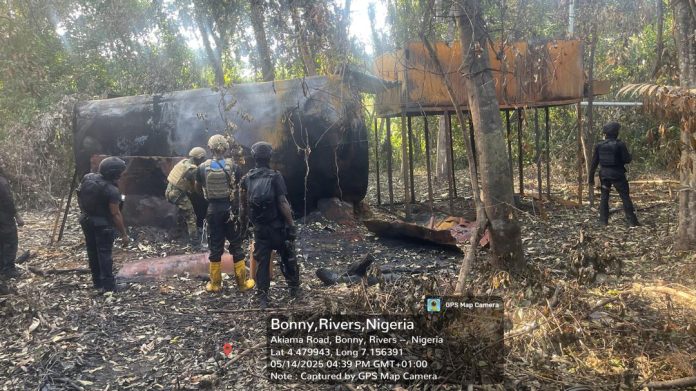
The Nigerian Navy has uncovered and dismantled an illegal refinery operating within Obe-Jedo and Obe-Adun communities in Ilaje Local Government Area of Ondo State.
Confirming the operation, the Commander of the Forward Operating Base (FOB) Igbokoda, Navy Captain Aliyu Usman, said seven suspects were apprehended at the scene, while locally fabricated guns and machetes—reportedly used to resist arrest—were recovered.
Usman explained that the operation was carried out following credible intelligence on ongoing economic sabotage and maritime crimes in the area. During the raid, operatives discovered about 3,000 litres of refined diesel stored in jerrycans, alongside several locally constructed ovens used to process stolen crude oil.
Preliminary investigations, he noted, revealed that the suspects arrested were secondary participants in the illicit operation and had since been released, while the principal operators remain at large and have been declared wanted.
According to the commander, the Navy team initially encountered stiff resistance from a group of hired youths and women who attempted to shield the illegal activity. To avoid civilian casualties and escalation, the operatives tactically withdrew and later returned at dawn for a renewed offensive.
“Upon our return, we discovered that the stolen crude oil and refined products had been moved to a nearby bakery and makeshift storage facilities. The illegal refinery was subsequently dismantled in accordance with Defence Headquarters’ directive,” Usman stated.
He described the obstruction of naval personnel by locals as a “dangerous innovation” by criminal syndicates determined to sabotage national economic assets and frustrate legitimate security operations.
Captain Usman reaffirmed the Navy’s commitment to the directive of the Chief of Naval Staff, Vice Admiral Emmanuel Ogalla, to intensify the fight against crude oil theft and protect the nation’s maritime resources.
“The Nigerian Navy warns residents of riverine communities in Ondo State to desist from supporting or shielding oil thieves,” he said. “These criminal ventures enrich only a few individuals while devastating the environment and livelihoods of the entire community.”
He further cautioned that anyone found obstructing naval operations against crude oil theft would be treated as an accomplice and prosecuted accordingly.
UAC of Nigeria Plc has reported a ₦703 million pre-tax loss for the third quarter of 2025, marking its first quarterly loss in recent years and a sharp reversal from the ₦5.9 billion profit posted in the same period last year.
The conglomerate blamed the poor performance on one-off acquisition expenses linked to its purchase of CHI Limited, rising finance costs, and the underperformance of its Animal Feeds and Edibles segment, which offset gains recorded in Paints and Packaged Foods.
For the nine months ended September 30, 2025, UAC’s profit before tax stood at ₦10.4 billion, representing a 50.1% decline from ₦20.8 billion in the same period of 2024. However, on an adjusted basis—excluding acquisition and foreign exchange impacts—underlying pre-tax profit rose to ₦12.2 billion, compared to ₦10.6 billion a year earlier.
Financial Highlights
Revenue: ₦159.6bn (↑19.8% YoY from ₦133.2bn)
Gross Profit: ₦39.4bn (↑28.1% YoY from ₦30.7bn)
Operating Profit: ₦13.4bn (↑9.1% YoY from ₦12.3bn)
Profit Before Tax: ₦10.4bn (↓50.1% YoY from ₦20.8bn)
Profit for the Period: ₦5.4bn (↓60.6% YoY from ₦13.7bn)
Earnings per Share: 179 kobo (↓ from 426 kobo in 2024)
Total Assets: ₦161.5bn (↑ from ₦157.7bn as at Dec. 2024)
External Debt: ₦43.3bn (↑ from ₦41.5bn as at Dec. 2024)
Cash Balance: ₦46.8bn (↑ from ₦40.6bn as at Dec. 2024)
Group Managing Director Fola Aiyesimoju said the loss reflected the impact of one-off transaction charges, higher borrowing costs, and the weak performance of the Animal Feeds business.
“While Paints and Packaged Foods delivered solid growth, the acquisition-related expenses and elevated finance costs weighed on our third-quarter results,” Aiyesimoju noted.
The company completed the 100% acquisition of CHI Limited (Chivita | Hollandia) on October 3, 2025, following regulatory approval by the Federal Competition and Consumer Protection Commission (FCCPC). The move gives UAC full ownership of one of Nigeria’s leading juice and dairy producers, strengthening its presence in the fast-moving consumer goods (FMCG) sector.
While UAC did not disclose the full financial terms of the deal, it recorded a ₦19.1 billion deposit for investment in its financial statements—widely believed to relate to the CHI acquisition. The company stated that initial accounting for the transaction had not been completed, with comprehensive disclosures expected in subsequent filings.
Performance Drivers
Revenue growth was largely supported by the Paints segment, which rose 27% year-on-year to ₦10.2 billion, and the Packaged Food and Beverages segment, up 25% to ₦17 billion, driven by higher sales volumes and pricing adjustments.
However, the Animal Feeds and Edibles segment dragged overall performance, as revenue plunged 25% to ₦21.4 billion, reflecting a steep fall in commodity prices—particularly maize and soya—which led to high-cost inventories and lower market selling prices.
Operating expenses surged 56% in Q3, largely due to ₦2.3 billion in transaction-related costs, rising personnel expenses, and higher logistics costs. Additionally, finance expenses increased sharply amid high borrowing rates and the absence of last year’s foreign exchange gains.
Despite these pressures, cash flow from operations remained strong, generating ₦18.5 billion in free cash flow, while cash reserves increased to ₦46.8 billion. UAC’s gearing ratio improved slightly to 60% (from 62%), and the quick ratio rose to 1.0x (from 0.7x).
Market Reaction
The market responded negatively to the results, with UAC’s share price falling 6.47% to close at ₦66.50 on the day the financials were released.
Despite the decline, the stock remains among the top performers on the Nigerian Exchange (NGX) in 2025—up 207% year-to-date, though below its ₦81 peak in May. No interim dividend was declared for the quarter.
Analysts say UAC’s long-term outlook remains positive, driven by its growing footprint in FMCG and the anticipated integration benefits from CHI Limited. However, they warn that elevated finance costs, acquisition expenses, and inflationary pressures could continue to weigh on short-term profitability.
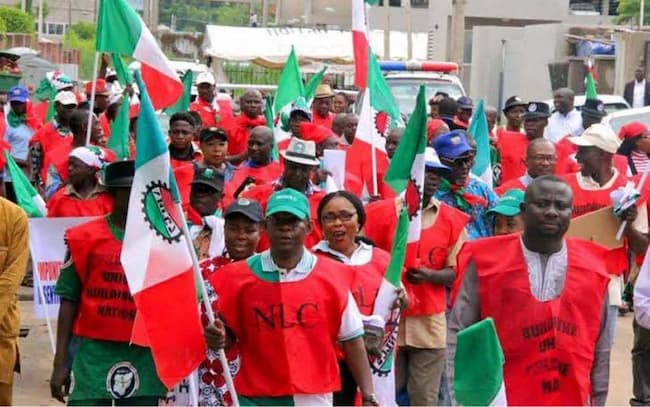
The President of the Nigeria Labour Congress (NLC), Comrade Joe Ajaero, has called on the National Pension Commission (PenCom) to enforce stricter penalties on employers defaulting on pension remittances, warning that persistent non-compliance threatens the integrity of Nigeria’s pension system.
Ajaero made the call on Thursday during a Roundtable Discussion between the NLC leadership and PenCom management held in Abuja, which was attended by Nairametrics.
He noted that the NLC continues to receive widespread complaints from workers about the inefficiency of some Pension Fund Administrators (PFAs) and the continued failure of several employers, both in the public and private sectors—to remit pension deductions as required by law.
“PenCom must consider publishing the names of non-compliant employers and imposing stiffer sanctions to serve as a deterrent,” Ajaero said.
NLC’s Recommendations to PenCom
The NLC President commended PenCom’s Director-General, Mrs Omolola Oloworaran, and her team for initiating the engagement, describing it as a step towards strengthening collaboration for the welfare of Nigerian workers.
Ajaero emphasised the need to address existing challenges within the Contributory Pension Scheme (CPS) and enhance its efficiency, transparency, and accountability.
He expressed concern over the non-inauguration of PenCom’s full board, noting that while a chairman is in place, the absence of a fully constituted board hampers governance and slows down critical decision-making processes.
“We urge the Commission to engage the relevant authorities to ensure the immediate inauguration of PenCom’s full board. This is crucial to promoting transparency, accountability, and effective oversight,” Ajaero said.
He further proposed the establishment of a joint standing committee comprising representatives from both the NLC and PenCom to proactively address emerging pension issues and provide a rapid-response mechanism for workers’ grievances.
“Such a committee will deepen collaboration and enhance mutual understanding between labour and the Commission,” he added.
In her response, PenCom Director-General, Mrs Omolola Oloworaran, reaffirmed the Commission’s commitment to protecting workers’ retirement savings, describing the CPS as one of Nigeria’s most transformative social security reforms.
“Despite its challenges, the Contributory Pension Scheme has restored confidence in the dignity of labour by ensuring that every worker’s effort translates into retirement security,” Oloworaran stated.
She commended the NLC for its sustained advocacy and urged the labour movement to continue engaging constructively on key policy reforms, including the Revised Regulation on the Investment of Pension Fund Assets and the proposed amendments to the Pension Reform Act 2014, currently under legislative review.
According to her, PenCom will intensify efforts to ensure full compliance with the Pension Reform Act among private-sector employers and state governments, while improving benefits administration and ensuring timely payment of entitlements.
The NLC’s renewed demand comes weeks after PenCom disclosed the recovery of ₦4.57 billion from defaulting employers between the first quarter of 2024 and the first quarter of 2025.
According to Mr Oguche Agudah, Chief Executive Officer of the Pension Fund Operators Association of Nigeria (PenOp), the recovered funds comprised ₦2.12 billion in outstanding pension contributions and ₦2.45 billion in penalties imposed on 138 employers who failed to remit workers’ pension funds.
The recovery exercise, PenCom said, underscores its ongoing commitment to protecting workers’ retirement benefits and strengthening compliance within Nigeria’s pension ecosystem.
TotalEnergies Marketing Nigeria Plc has reported a pre-tax loss of ₦11.92 billion for the nine months ended September 2025, marking a sharp reversal from the ₦41.85 billion profit recorded in the same period of 2024 — a year-on-year decline of 128%.
According to the company’s unaudited financial statement released to the Nigerian Exchange (NGX), the third quarter alone (July–September 2025) saw a ₦10.23 billion loss before tax, compared with a profit of ₦11.28 billion in Q3 2024 and ₦3.31 billion in Q2 2025, indicating a sustained deterioration in quarterly performance.
The results also fell short of management’s projection of a ₦1.43 billion pre-tax profit for Q3, underlining the extent of the company’s operational and market headwinds.
Financial Snapshot
Revenue: ₦587.59bn (↓ 26% YoY from ₦793.90bn)
Gross Profit: ₦65.76bn (↓ 30% YoY from ₦93.70bn)
Operating Profit: ₦5.65bn (↓ 89% YoY from ₦52.89bn)
Pre-tax Profit: ₦(11.92)bn (↓ 128% YoY from ₦41.85bn)
Earnings per Share: ₦(41.54) (↓ 151% YoY from ₦80.77)
Total External Debt: ₦90.97bn (↓ from ₦115.70bn FY 2024)
Total Assets: ₦400.84bn (↓ from ₦471.12bn FY 2024)
Cash Balance: ₦63.84bn (↓ from ₦91.31bn FY 2024)
Revenue and Margin Pressures
The company’s weak performance was primarily driven by a 26% drop in revenue, reflecting lower product demand, price weakness, and potential supply chain disruptions.
Revenue for Q3 stood at ₦163.69 billion, significantly below the ₦263.96 billion recorded in the corresponding quarter of 2024 and beneath the company’s forecast of ₦177.10 billion.
Although the cost of sales declined in absolute terms, gross profit contracted sharply, suggesting that margins remained under heavy pressure.
Operating profit tumbled 89% year-on-year due to elevated administrative expenses (₦60.2 billion YTD) and selling and distribution costs (₦6.7 billion YTD), both only marginally lower than 2024 levels.
In addition, net finance costs surged 59% to ₦17.57 billion, despite a reduction in external debt, as interest expenses from bank overdrafts and short-term borrowings remained substantial.
TotalEnergies pared down its total assets by 15%, while liabilities fell by only 11%, resulting in a 37% erosion in shareholders’ equity. Inventory levels dropped from ₦152.02 billion in December 2024 to ₦107.96 billion, reflecting tighter inventory control or slower restocking amid weaker demand.
While operating cash flow remained positive at ₦23.61 billion, it was offset by substantial financing outflows, particularly interest payments (₦20.4 billion) and dividends (₦14.18 billion), culminating in a net cash reduction of ₦15.99 billion during the period.
Despite the disappointing financial results, investor sentiment remained largely subdued. The company’s share price closed flat at ₦640 per share, a level it has maintained for most of 2025.
Analysts interpret the muted market reaction as a sign of investor caution or a “wait-and-see” approach amid persistent macroeconomic and sectoral challenges.
The stock’s year-to-date performance remains flat, with no interim dividend declared alongside the Q3 results, following a ₦13.58 billion final dividend paid earlier in the year.
Market observers say TotalEnergies’ performance reflects the broader strain in Nigeria’s downstream oil sector, where high operating costs, foreign exchange volatility, and regulatory uncertainties continue to squeeze profit margins.
Industry analysts warn that unless pricing dynamics and operational efficiencies improve, the company may face further profitability headwinds heading into the final quarter of the year.
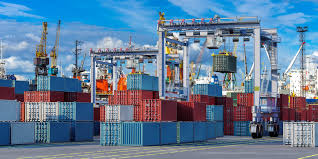
The Federal Government has reaffirmed its commitment to overhaul port operations and reduce Nigeria’s average cargo clearance time to less than seven days by the end of 2026.
The initiative, part of a broader effort to enhance trade facilitation and competitiveness, aims to position the nation’s ports among the top three most efficient maritime gateways in Africa.
Vice President Kashim Shettima disclosed this on Thursday during the second meeting of the Ports and Customs Efficiency Committee at the Presidential Villa, Abuja.
He noted that the introduction of the National Single Window (NSW)—slated for implementation in the first quarter of 2026, would revolutionise cargo clearance through harmonised documentation, minimal human interference, and greater transparency.
“By the end of 2026, we aim to reduce average cargo clearance time in Nigeria to under seven days and to position our ports among the top three most efficient trade gateways on the continent,” Shettima said.
“The forthcoming National Single Window will be a game changer—a single platform that harmonises documentation, minimises human contact, and brings full transparency to the cargo clearance process.”
Port Reform Agenda
Shettima directed key regulatory and operational agencies—including the Nigerian Ports Authority (NPA), Nigeria Customs Service (NCS), Standards Organisation of Nigeria (SON), and the National Agency for Food and Drug Administration and Control (NAFDAC)—to develop a coordinated roadmap for reforming Nigeria’s weights and measures framework.
He emphasised that accurate weighing and measurement systems were critical to trade transparency, consumer protection, and improved efficiency.
The Vice President expressed concern that cargo dwell time at Nigerian ports currently ranges between 18 and 21 days, compared to five to seven days in Ghana and four days in Cotonou, Benin Republic.
“The cost of clearing goods in Nigeria is estimated to be 30 per cent higher than in many of our regional peers,” he said.
“Our ports record cargo dwell times 475 per cent above the global average benchmark. These inefficiencies are not just statistics—they are symptoms of an economic ailment that costs us investments, drives up consumer prices, and weakens our export competitiveness.”
Shettima further revealed that an Executive Order on Joint Physical Inspection, currently awaiting President Bola Tinubu’s approval, would mark a significant step toward addressing operational bottlenecks at the ports.
“It marks the dawn of a new era—an era where agencies work together, where systems speak a common language, and where traders and investors can depend on predictability, transparency, and speed,” he said.
He stressed that the success of ongoing reforms would depend on cooperation among port stakeholders.
“The era of siloed operations must end. Inter-agency rivalry must give way to synergy. We are only as efficient as our collaboration allows, and our success will depend not only on what we do individually but on what we achieve together.”
Stakeholders Advocate Collaboration
Director-General of the Presidential Enabling Business Environment Council (PEBEC), Princess Zahrah Audu, underscored the economic toll of inefficiencies in port operations and urged all agencies to align efforts to enhance Nigeria’s Ease of Doing Business ranking.
Similarly, the Managing Director of the Nigerian Ports Authority (NPA), Dr. Abubakar Dantsoho, emphasised that efficiency in port operations could only be achieved through sustained collaboration and partnership.
“Until there is collaboration and partnership, you cannot achieve efficiency at the ports,” Dantsoho stated.
He highlighted ongoing reforms, including the deployment of technology, infrastructure upgrades, and human capacity development, as key drivers of competitiveness within Africa and beyond.
In a related development, former Anambra State Governor and Labour Party presidential candidate, Peter Obi, recently urged the Federal Government to diversify port development beyond Lagos. His call followed the approval of $1 billion (approximately ₦1.5 trillion) for the modernisation of the Apapa and Tin Can Island Ports.
While acknowledging the significance of Lagos port upgrades, Obi warned that overconcentration of maritime activities in Lagos exacerbates congestion, increases demurrage costs, and heightens environmental strain, thereby undermining trade efficiency.
Fuel prices in Nigeria are projected to rise following President Bola Tinubu’s approval of a 15 per cent import tariff on Premium Motor Spirit (PMS) and Automotive Gas Oil (diesel), a policy expected to take immediate effect.
The directive, contained in an official document seen by THISDAY, was approved to strengthen Nigeria’s energy security, protect local refining capacity, and ensure price stability in the downstream petroleum sector.
According to the document, the new tariff could push fuel prices up by as much as ₦100 to ₦150 per litre, though the government insists the increase will remain within manageable limits.
The memo, addressed to key government officials including the Attorney General of the Federation, Lateef Fagbemi; the Executive Chairman of the Federal Inland Revenue Service (FIRS), Zacch Adedeji; and the Chief Executive of the Nigerian Midstream and Downstream Petroleum Regulatory Authority (NMDPRA), Farouk Ahmed, confirmed the President’s approval.
The proposal, tagged a “measured import tariff,” seeks to stabilise the market by discouraging duty-free imports that undermine local producers, while fostering competition and investment in refining and logistics infrastructure.
“The introduction of a 15 per cent ad-valorem import duty on PMS and diesel will align import costs with domestic realities, stabilise prices, and strengthen Nigeria’s refining ecosystem,” the document stated.
It added that, at current Cost, Insurance, and Freight (CIF) levels, the tariff represents an increment of approximately ₦99.72 per litre—raising the estimated Lagos pump price to around ₦964.72 per litre, still below regional averages such as Senegal ($1.76), Côte d’Ivoire ($1.52), and Ghana ($1.37).
The government maintained that the policy is not revenue-driven but corrective, intended to safeguard Nigeria’s “nascent refining sector” from price distortions and unfair competition.
Payments from the new tariff will be made into a designated Federal Government revenue account managed by the FIRS (now Nigeria Revenue Service), with verification by NMDPRA before discharge clearance.
Although the memo initially recommended a 30-day transition period to allow importers to adjust, President Tinubu ordered immediate implementation, minuting: “Approved as prayed for implementation immediately.”
The document cited Sections 71 and 72 of the Petroleum Industry Act (PIA) as the legal framework for the policy, granting NMDPRA the authority to impose levies that support national energy objectives.
To ensure transparency, tariff payments will undergo end-to-end digital verification linked to NMDPRA discharge clearance, preventing cargo releases without proof of payment. Customs and NMDPRA are expected to update import templates and issue a public compliance notice to curb speculation.
Government sources describe the policy as a critical step in achieving fuel self-sufficiency and ensuring a stable pricing regime that supports both consumers and investors.
“This reform will accelerate Nigeria’s path toward fuel self-sufficiency, protect domestic investors, and stabilise the downstream market,” the document added.
However, industry stakeholders have expressed concern over the policy, warning that Nigeria’s limited refining capacity—currently less than 40 per cent, mostly from the Dangote Refinery—could make the tariff burdensome for consumers.
With the country still importing over 60 per cent of its refined petroleum products, marketers fear the tariff could further strain the economy, deepen inflation, and worsen the cost-of-living crisis.
Chairman of the House of Representatives Committee on Media and Public Affairs, Hon. Akin Rotimi, has said the proposed Special Seats Bill before the National Assembly will not increase the cost of governance but will instead strengthen representation and inclusion in Nigeria’s democratic system.
Rotimi stated this during a Stakeholders Consultation and Communication Strategy Meeting organised by the Policy and Legal Advocacy Centre (PLAC) with support from the European Union (EU) in Abuja. The forum brought together lawmakers, civil society leaders, and media professionals to deepen advocacy and public understanding of the Bill.
Addressing widespread concerns, Rotimi explained that Nigeria remains one of the most underrepresented democracies globally, with an average of one legislator per 488,000 citizens — a ratio he described as “among the highest in the world.”
“Adding more legislators will not inflate governance costs; rather, it will improve representation and accountability,” he said.
The lawmaker clarified that the Special Seats Bill seeks to create additional legislative seats for women, rather than displace existing lawmakers.
“The Bill is a corrective, not compensatory measure. It does not take away anyone’s seat; it simply creates new opportunities to address historical gender imbalance in political representation,” Rotimi explained.
He urged the media to counter misinformation and avoid framing the debate as a gender battle, stressing that legislators are allies in advancing inclusion.
“This is not a war between men and women. Lawmakers are partners in progress. We must engage strategically and empathetically, not antagonistically,” he said.
Rotimi also highlighted the role of mentorship and advocacy precision in driving legislative reform, recalling his own journey in public service as an example of how guidance and opportunity can shape leadership.
“I would not be here today without mentorship. We must extend that same support to women and young Nigerians aspiring to lead,” he added.
The lawmaker encouraged stakeholders to hold political parties accountable for promoting female participation beyond the Special Seats framework, noting that countries such as Rwanda, Tanzania, and Uganda have successfully implemented similar initiatives.
“This is not a foreign idea; it is a Nigerian pursuit of fairness, inclusion, and democracy,” he said.
In his remarks, Executive Director of PLAC, Clement Nwankwo, reaffirmed the organisation’s commitment to ensuring the passage of the Bill, describing it as a “national imperative for democratic renewal.”
“Both chambers of the National Assembly have made significant progress on the Bill,” he said. “We must continue to explain that these special seats are not favours, they are corrective measures aimed at strengthening democracy.”
Nwankwo called for sustained public engagement to bridge communication gaps between lawmakers and citizens.
“We have to remain persuasive, consistent, and informed. This is about fairness, not favour,” he emphasised.
Also speaking, National President of the Nigerian Association of Women Journalists (NAWOJ), Hajia Aishatu Ibrahim, urged for a unified communication strategy that promotes collaboration between institutions, communities, and advocates.
“The Special Seats initiative is not only about women; it is about reimagining governance and expanding Nigeria’s democratic space. If we fail to get it right this time, it will be a setback for both women and democracy itself.”
Representing the Nigeria Union of Journalists (NUJ), John Angese applauded PLAC and the EU for their leadership in convening the forum, pledging the union’s continued support for inclusive governance.
“The NUJ will keep working with civil society to push for gender-balanced legislation. No country can make progress while excluding half of its population,” he said.
Participants at the meeting agreed that inclusive representation remains vital to Nigeria’s democratic consolidation, stressing that empowering women politically is not only a matter of justice but also a critical step toward sustainable national development.
They called for coordinated advocacy and accurate public messaging to secure the Bill’s passage in the National Assembly.
As artificial intelligence becomes increasingly integrated into daily life, users of ChatGPT are discovering lesser-known features that can significantly improve how the chatbot communicates, responds, and assists with complex tasks.
While most people rely on ChatGPT for writing, studying, and generating social media captions, only a few are aware of the “secret command codes” that can transform the tool into a more efficient and human-like digital assistant.
These commands, simple yet powerful, allow users to guide ChatGPT’s tone, structure, and level of complexity — making it a more adaptable partner for writers, students, content creators, and professionals.
Below are five of the most effective hidden ChatGPT commands that can help users get faster, smarter, and more natural responses.
1. /human — For Realistic, Conversational Responses
Typing “/human” before a prompt tells ChatGPT to respond in a more natural, relatable tone that mimics human speech. This feature is ideal for anyone writing essays, blog posts, or social media content who wants authentic, emotionally resonant responses.
For instance, typing: /human Write a caption for my food picture might produce something like: “Still thinking about this jollof — 10/10 would eat again.”
This command helps users craft text that passes AI detection tools and reads as if it were written by a real person — a growing advantage for content creators seeking authenticity.
2. TL;DR — The Shortcut for Instant Summaries
“TL;DR,” short for Too Long; Didn’t Read, is the go-to command for users who need concise summaries of lengthy documents, reports, or articles.
Typing: TL;DR Summarise this report on Nigerian fintech trends prompts ChatGPT to produce a clear, structured summary that retains essential details.
This tool is particularly useful for students, researchers, and journalists managing large amounts of information who need instant, high-quality synopses.
3. ELI10 — Simplify Complex Topics
The ELI10 command, meaning Explain Like I’m 10, makes ChatGPT break down complicated subjects into simple, easy-to-understand language.
For example, entering: ELI10 Explain how cryptocurrency works results in a response such as: “Cryptocurrency is digital money people use online, just like regular money but stored on computers.”
This function benefits educators, beginners, or professionals who want straightforward explanations without technical jargon. Adjusting the number (e.g., ELI5) makes the explanation even simpler.
4. Jargonise — For Professional and Technical Writing
When users need to sound formal or demonstrate subject-matter expertise, the Jargonise command transforms ChatGPT’s tone into a professional, academic, or industry-specific style.
For instance, typing: Jargonise Explain blockchain technology will yield a detailed, technical response suitable for reports, research papers, or corporate documents.
It’s a powerful command for professionals in law, finance, technology, or academia who want authoritative, polished content.
5. LISTIFY — For Clean, Organised Results
The LISTIFY command structures ChatGPT’s output into a clear, easy-to-read list. It’s especially helpful for creating bullet points, blog outlines, and social media-friendly posts.
Typing: LISTIFY Ways to save money in Lagos produces a neat, numbered response such as:
Cook at home instead of eating out
Use ride-sharing or public transport
Buy groceries in bulk
Track monthly expenses carefully
This command ensures ChatGPT delivers organized results, saving users time in editing and formatting.
Bonus Tip: Combine Commands for Maximum Efficiency
Users can also combine these commands to achieve even smarter, tailored responses.
For example: /human LISTIFY Best side hustles in Nigeria 2025 tells ChatGPT to respond conversationally while formatting the answer as a clean list — perfect for quick, engaging blog content.
Likewise, combining ELI10 and LISTIFY helps produce simplified explanations in structured points — ideal for educational content or explainer guides.
Smarter Prompts, Better Productivity
These hidden commands highlight ChatGPT’s versatility and how users can fine-tune AI behavior with just a few keystrokes. By mastering prompt commands, anyone can make ChatGPT sound more human, think more logically, and respond more effectively — whether for business, learning, or personal productivity.
Zimbabwe Re-introduces Use of US Dollar, Battles Against Coronavirus
The United States Federal Reserve on Wednesday announced a 25-basis-point interest rate cut — the second in 2025 — as the country faces its longest federal government shutdown on record.
With this latest reduction, the benchmark federal funds rate now stands between 3.75% and 4.00%, marking another key step in the Fed’s efforts to stabilize the economy amid rising uncertainty and mounting political pressure.
Despite persistent inflationary pressures, the central bank has faced growing calls from former President Donald Trump and other critics to lower borrowing costs to support growth.
In a policy statement following the decision, the Fed acknowledged that while the unemployment rate has inched up, it remains historically low. “Job gains have slowed,” the statement noted, adding that “inflation has moved up and remains somewhat elevated.”
The central bank also pointed out that the ongoing government shutdown — now the longest in U.S. history — has disrupted critical economic data collection, complicating its ability to assess the economy’s health.
According to available indicators, economic activity continues to expand moderately, with recent data showing slower job creation and a modest uptick in unemployment through August. Inflation, meanwhile, remains above the Fed’s long-term target of 2%.
The Federal Open Market Committee (FOMC) reiterated its dual mandate to pursue maximum employment and price stability, emphasizing that uncertainty surrounding the economic outlook remains “elevated.” The committee said it remains “attentive to risks on both sides of its mandate.”
Citing a shifting balance of risks, the Fed said it decided to lower the target range for the federal funds rate by one-quarter percentage point, to a new range of 3.75%–4.00%.
The FOMC also announced plans to end the reduction of its securities holdings by December 1, signaling a pause in its quantitative tightening efforts. The committee reaffirmed its commitment to supporting maximum employment and guiding inflation back to its 2% objective.
Moving forward, policymakers will closely monitor economic data, financial conditions, and global developments to determine whether further adjustments are necessary. The Fed said it remains prepared to alter its policy stance if risks arise that could hinder its objectives.
The decision saw some internal disagreement. Stephen I. Miran voted for a deeper 50-basis-point cut, while Jeffrey R. Schmid preferred to maintain the current rate range. Those voting in favor included Chair Jerome Powell, Vice Chair John C. Williams, and other members of the board.
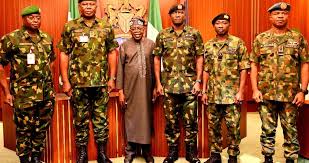
President Bola Ahmed Tinubu on Thursday decorated Nigeria’s newly appointed service chiefs with their respective ranks during a ceremony held at the Council Chamber of the Presidential Villa, Abuja.
The event, which commenced shortly after 2:00 p.m., featured the President performing the decoration alongside Vice President Kashim Shettima and the spouses of the newly promoted officers. The ceremony was marked by a display of military decorum, as each officer appeared in full-service uniform.
The newly decorated chiefs are General Olufemi Oluyede, Chief of Defence Staff (CDS); Lieutenant-General Wahidi Shaibu, Chief of Army Staff (COAS); Vice Admiral Idi Abbas, Chief of Naval Staff (CNS); and Air Marshal Kennedy Aneke, Chief of Air Staff (CAS).
Their decoration follows the Senate’s confirmation of the four nominees on Wednesday, after a two-hour closed-door screening during which they outlined strategic plans to strengthen national security and enhance inter-service collaboration.
President Tinubu had earlier written to the Senate requesting an expedited confirmation process “to ensure continuity and effectiveness in the nation’s security leadership.”
Present at the ceremony were senior government officials, lawmakers, military top brass, and family members of the newly decorated officers. The President, Vice President, and the officers’ spouses took turns pinning the new insignias on each of the service chiefs in a brief but symbolic ritual.
The ceremony comes barely a week after the Presidency announced a major reshuffle within the military hierarchy, a move described by the administration as part of efforts to inject new energy and direction into Nigeria’s defence architecture.
According to a statement signed by the President’s Special Adviser on Media and Public Communication, Sunday Dare, the shake-up reflects the administration’s commitment to repositioning the armed forces for greater efficiency.
The Chief of Defence Intelligence, Major General E. A. P. Undiendeye, however, retained his position.
Speaking to journalists after the ceremony, Tinubu’s Special Adviser on Information and Strategy, Bayo Onanuga, dismissed speculations linking the recent changes to rumours of a coup plot.
“The President acted within his constitutional authority as Commander-in-Chief. Service chiefs can be appointed or replaced at any time in the interest of national security,” Onanuga said.
Earlier in the week, President Tinubu had held a private meeting with the new service chiefs at the Presidential Villa, where he reportedly charged them to take decisive and coordinated action against insurgents, terrorists, and bandits, particularly in northern Nigeria.
Last week’s military reshuffle came amid reports alleging a planned coup attempt, claims which the Defence Headquarters promptly dismissed as “false and mischievous.”
The Director of Defence Information, Brigadier General Tukur Gusau, clarified that the alleged arrests mentioned in the report were internal disciplinary issues, not a coup plot, warning that the publication was intended “to sow distrust and unnecessary tension among citizens.”
With their formal decoration, the new service chiefs are now expected to steer the nation’s security apparatus towards greater stability, synergy, and operational effectiveness in tackling emerging threats across the country.
President Bola Tinubu has approved the introduction of a 15 per cent ad-valorem import duty on petrol and diesel imports into Nigeria, a move aimed at protecting local refineries and stabilising the downstream petroleum market.
The directive, contained in a letter dated October 21, 2025, and addressed to the Federal Inland Revenue Service (FIRS) and the Nigerian Midstream and Downstream Petroleum Regulatory Authority (NMDPRA), was made public on Wednesday, October 30.
Signed by the President’s Private Secretary, Damilotun Aderemi, the letter conveyed Tinubu’s approval following a proposal by the Executive Chairman of the FIRS, Dr. Zacch Adedeji, seeking to impose the tariff on the Cost, Insurance, and Freight (CIF) value of imported petrol and diesel.
According to Adedeji, the measure forms part of the administration’s ongoing fiscal and energy sector reforms designed to promote local refining, stabilise prices, and strengthen Nigeria’s oil-based economy in line with the Renewed Hope Agenda.
“The core objective of this initiative is to operationalise crude transactions in local currency, strengthen refining capacity, and ensure a stable and affordable petroleum supply nationwide,” Adedeji explained.
He noted that the absence of parity between locally refined products and imported fuel prices has created instability in the downstream sector.
“While domestic refining of petrol has begun to expand and diesel sufficiency has been achieved, price instability persists, partly due to the misalignment between local refiners and importers,” he added.
Adedeji warned that import parity pricing — which determines retail pump prices — often falls below cost recovery levels for domestic producers, especially during foreign exchange fluctuations and rising freight costs, thereby discouraging investment in local refining.
The FIRS boss further stated that the government’s role was now twofold: to protect consumers and local producers from unfair pricing while creating a level playing field for investors.
“This tariff framework will discourage duty-free imports from undercutting domestic refiners and help establish a fair and competitive downstream environment,” he said.
Projections accompanying the memo show that the 15 per cent import duty could raise the landing cost of petrol by approximately ₦99.72 per litre, pushing the Lagos pump price to around ₦964.72 per litre ($0.62) — still below regional averages such as Senegal ($1.76), Côte d’Ivoire ($1.52), and Ghana ($1.37) per litre.
The new policy aligns with the government’s drive to reduce Nigeria’s dependence on imported petroleum products. Although the 650,000-barrels-per-day Dangote Refinery and several modular refineries in Edo, Rivers, and Imo States have commenced limited production, imported petrol still accounts for about 67 per cent of national demand.
With the new import tariff, the Tinubu administration hopes to strengthen domestic refining, encourage investment in local capacity, and ensure long-term energy security and fiscal stability.
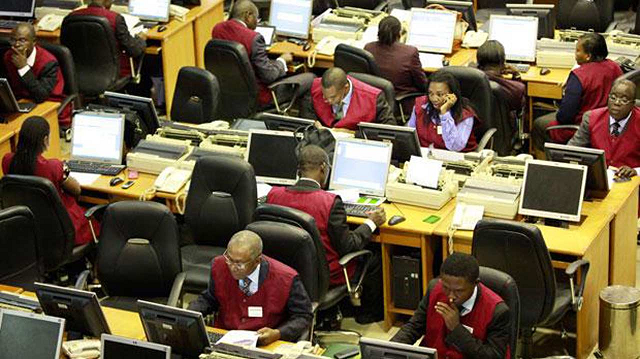
The Nigerian Exchange Group (NGX Group) has reported a significant 37.7% increase in its total market capitalisation, which rose to ₦141.75 trillion as of September 2025, compared to ₦102.94 trillion recorded during the same period in 2024.
The performance highlights renewed investor confidence and the Group’s continued progress under the leadership of its Group Managing Director and Chief Executive Officer, Temi Popoola.
According to Popoola, the growth underscores the connection between the capital market’s strength and the prosperity of the communities it serves.
“For us at NGX Group, strong markets are built on strong communities. Inclusive growth and social well-being are the bedrock of a resilient economy,” he said.
In line with this philosophy, the NGX Group has advanced its social responsibility initiatives, most notably through Project BLOOM (Bringing Life to Our Overlooked Minors). The initiative, executed in collaboration with the Lagos State Government and the Health Emergency Initiative, has benefited more than 200 children and 180 caregivers in underserved communities such as Ajegunle and Yaba, providing medical care, nutrition education, and therapeutic food.
The Group is also driving market accessibility through digital innovation. Its NGX Invest e-offering platform has facilitated over ₦2 trillion in capital raising for corporations, democratizing access to public offers and rights issues for retail investors across Nigeria.
Beyond social impact and digital expansion, NGX Group continues to lead in sustainability efforts with the Nzero Initiative, which supports listed companies in tracking, reporting, and reducing their carbon emissions in alignment with global ESG standards.
Popoola emphasized that the Group’s focus on environmental, social, and governance principles has reinforced transparency and deepened long-term investor trust.
“Our vision is to build markets that thrive alongside society and the environment,” he noted. “We measure our success not just by the wealth we create, but by how broadly it is shared and how sustainably it is generated.”
Through initiatives like Project BLOOM and NGX Invest, NGX Group aims to close the gap between financial growth and social development, positioning itself as both a driver of capital formation and a catalyst for community transformation.
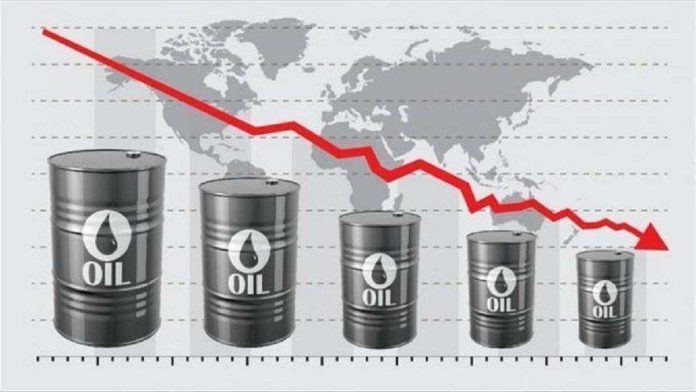
Oil prices retreated on Thursday as global markets reacted to higher US crude output and expectations of additional supply from OPEC+ producers, even as the US Federal Reserve signaled a pause in its monetary easing cycle.
Data from the US Energy Information Administration (EIA) showed that American crude production climbed, while the OPEC+ coalition is preparing to announce further output increases. These developments dampened investor sentiment and pushed prices lower.
Brent crude traded at $63.81 per barrel, down 0.57% from the previous session’s $64.18, while West Texas Intermediate (WTI) fell 0.43% to $59.93 per barrel from $60.19.
In line with market forecasts, the Federal Reserve reduced its benchmark policy rate by 25 basis points to a range of 3.75%–4%. However, it cautioned that this could be the final rate cut of the year, warning that potential government shutdown risks might affect future data availability.
The Fed reported that while the US economy continued to expand moderately, job growth had slowed and inflation pressures had persisted.
During the policy briefing, Fed Chair Jerome Powell stated that a further rate reduction in December “is not a foregone conclusion,” stressing that future decisions would depend on incoming economic data. His remarks reinforced expectations that the Fed might pause additional rate cuts, a move that typically weighs on oil demand.
Analysts observed that lower interest rates generally stimulate economic growth and fuel demand, while tighter monetary policy tends to suppress consumption and push prices lower.
According to the EIA, US commercial crude inventories dropped by about 6.9 million barrels to 416 million barrels last week, a sharper decline than market expectations of 900,000 barrels. Gasoline inventories also decreased by 5.9 million barrels to 210.7 million barrels.
Despite the inventory drawdown, US crude production rose by 15,000 barrels per day to 13.644 million barrels, easing earlier concerns about tight supply.
Attention is now shifting to the upcoming OPEC+ meeting scheduled for November 2, where member countries are expected to confirm an additional output increase of 137,000 barrels per day for December.
This anticipated boost has further eased market fears about supply shortages, keeping prices under downward pressure.
Meanwhile, renewed optimism from US-China diplomatic engagements helped limit losses. US President Donald Trump met with Chinese President Xi Jinping in Busan, South Korea, marking their first in-person dialogue since Trump’s return to office.
Xi emphasized that China and the US “should be friends and partners,” stating that cooperation aligns with both nations’ interests. Trump confirmed progress in trade discussions and announced plans to cut tariffs on Chinese goods tied to fentanyl imports to 10%, alongside a planned visit to China in April.
Analysts believe these developments could support global energy demand in the medium term by improving market sentiment and trade relations.
Nigerian deposit money banks (DMBs) have ramped up their placements with the Central Bank of Nigeria (CBN) through its Standing Deposit Facility (SDF), a move analysts say reflects efforts to enhance earnings amid improved market liquidity.
In October, liquidity in the money market remained robust, helping to stabilise short-term benchmark interest rates after the September monetary policy adjustments.
Commercial banks have increasingly channelled excess funds into the CBN’s deposit window, taking advantage of the 24.50% standing deposit facility rate, which offers higher returns compared to yields on treasury bills.
Analysts noted that with minimal funding pressures in the system, interbank rates have been confined within a tight range — a situation expected to influence returns on money market funds in the short term.
On Wednesday, interbank lending rates fell again, underscoring a healthy funding position across the banking sector in the absence of CBN liquidity mop-ups.
Fresh data revealed that total system liquidity expanded by 18.25%, pushing the surplus balance to ₦4.49 trillion from ₦3.80 trillion the previous day. The rise was largely supported by an additional ₦693.6 billion inflow, primarily driven by the SDF window.
In the absence of open market operations, DMBs’ total placement with the CBN climbed to ₦4.1 trillion, indicating strong liquidity levels despite the settlement of ₦313.8 billion related to the October 2025 bond auction.
Consequently, the average funding cost declined marginally by one basis point, with the Open Repo Rate (OPR) holding at 24.50%, while the Overnight Lending (O/N) rate dipped slightly by two basis points to 24.84%.
Market analysts predict that funding costs will likely remain steady in the near term, barring any liquidity intervention or major funding activities by the CBN.
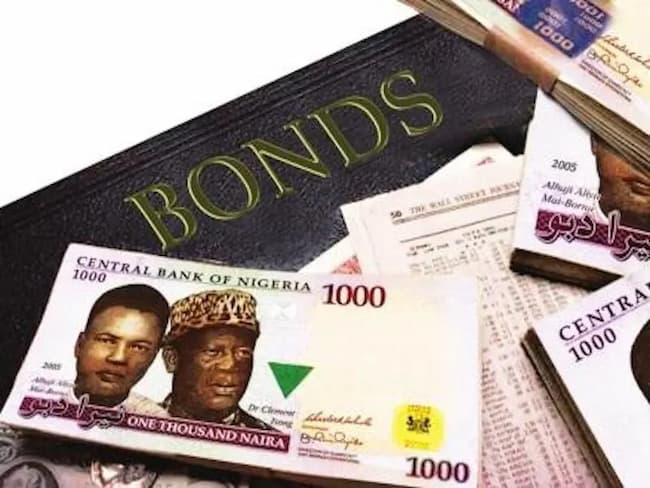
Nigerian bond yields climbed higher this week as investors moved to take profits following the recent rate cuts that triggered a wave of sell-offs across mid- and long-term government securities in the secondary market.
Investor appetite for Federal Government bonds weakened as the Debt Management Office (DMO) trimmed spot rates on reopened instruments at its latest auction. This downward revision in borrowing rates has stirred cautious sentiment among traders who anticipate a further decline in returns.
At the recent primary market auction, the DMO reduced the stop rate on the 5-year reopened bond to 15.832%, down from 16% recorded in September. Similarly, the 7-year bond’s rate was slashed to 15.85%, compared to 16.20% in the previous auction.
Market observers noted that the rate adjustments signaled government confidence in easing inflationary pressures and aligning borrowing costs with the broader interest rate environment. However, the move also dampened market enthusiasm, as investors reassessed their yield expectations in a softening interest rate climate.
In the secondary market, the cautious mood was evident as traders adopted a bearish stance. Benchmark bond yields rose by 3 basis points, climbing to 15.92% from 15.88% recorded the previous day.
Several maturities faced pronounced sell-offs, particularly the April 2029 (+39 bps), May 2029 (+38 bps), November 2029 (+27 bps), and August 2030 (+10 bps) papers. These movements reflected increased investor repositioning amid concerns that lower auction rates could suppress yields further.
Interestingly, not all segments of the curve moved in the same direction. The 20-Mar-2027 and 17-Apr-2029 instruments saw slight yield declines to 16.01% (-1 bp) and 16.04% (-8 bps), respectively, suggesting selective buying at attractive price points. In contrast, the 28-Apr-2029 and 22-May-2029 papers experienced significant upward yield adjustments of 39 bps and 38 bps, respectively.
Analysts in the fixed-income market told MarketForces Africa that the current sell-off is largely a short-term reaction to the repricing of yields. They expect the bearish momentum to persist as investors adopt a risk-off strategy amid uncertainty surrounding inflation trends and future monetary policy directions.
The analysts added that while the lower rates could help the government reduce its borrowing costs, the development might discourage investors seeking higher returns, especially in an environment where real yields remain compressed due to persistent inflation.
Another Thursday is here. The week is crawling, the sun is boiling, your boss is asking for reports you’ve not started, and your account balance is blinking like a faulty traffic light. You’re wondering how you got here, a full-grown adult with responsibilities, bills, and back pain from simply sleeping on the wrong pillow. You think about your childhood and ask yourself, “Why was I ever in a hurry to grow up?”
As kids, we wanted nothing more than to be adults. Adults seemed so powerful. They didn’t get shouted at for watching TV late, they could eat meat at will, and they had money, or so we thought. Nobody warned us that adulthood is just childhood but with invoices, heartbreak, and a permanent state of tiredness.
Now, every morning, you wake up to alarms you snoozed six times already. You lie in bed, staring at the ceiling, not because you’re planning your day, but because you’re mentally negotiating with life. “Should I go to work today or sell puff-puff for a living?” You check your phone, hoping for a credit alert. Instead, you see debit alerts you don’t remember approving. Even your bank seems to be more active than your village WhatsApp group.
You drag yourself out of bed, manage to brush your teeth, and remember you forgot to buy foodstuffs. Again. You consider fasting, not for spiritual reasons, but because there’s literally nothing to eat. You open your fridge and it greets you with air. You sigh and move on. There’s no time for emotions; you’re already late.
Transportation is another daily trauma. Whether you’re in Lagos, Ibadan, Abuja, or even small towns, something always goes wrong. The bus conductor never has change, the bike man wants to charge you like you’re headed to Canada, and Uber prices rise like bread on public holidays. If you drive, you’re battling traffic and praying your fuel doesn’t finish in front of LASTMA. You finally get to work, sit at your desk, and stare at your screen like it holds the meaning of life. But it doesn’t. It just holds Excel sheets, emails from HR, and a Google Doc you opened one hour ago and haven’t typed a single word into.
Adulthood is not a linear journey. Some days you feel like you’re thriving, you clean your room, cook real food, drink water, reply to emails, and even stretch before bed. Other days, you’re a hot mess, eating biscuit and Coke for dinner, dodging calls from people you owe, and wondering if this is how your life will be forever.
And then, there’s social media, the headquarters of pressure. You open Instagram, and someone your age is buying their third car, opening their fifth business, and flying to Dubai “for mental clarity.” Meanwhile, your own mental clarity is in the hands of PHCN and your data balance. You try to stay positive, but comparison creeps in. It feels like everyone else has the cheat code except you.
But here’s the truth nobody says loudly enough: everyone is winging it. Even those with pretty feeds and perfect captions are just trying not to crash. Life is hard. Being a Nigerian adult is even harder. From bad governance to bad roads, unstable electricity to unstable relationships, the obstacles are plenty, but somehow, you’re still standing.
Adulting teaches you strange skills. You learn to act like you’re fine when you’re not. You learn to smile through stress. You master the art of stretching ₦5,000 for one week. You can cook without gas, survive without light, and still show up at work looking like a respectable citizen. That is talent. That is resilience.
It also teaches you gratitude. You begin to understand the joy of peace and the satisfaction that comes with small wins. Finishing a task on time becomes a celebration. Finding cheap yams becomes a breakthrough. Sleeping without waking up with neck pain? That’s a miracle. Every little good thing starts to matter more because the big wins don’t come often, and when they do, they rarely stay long.
You realize that nobody really knows what they’re doing. Everyone is just trying. Your parents, your boss, and your friends are all navigating life one mistake at a time. There’s no manual. No roadmap. Just faith, food, and the occasional motivational quote that actually makes sense.
So, maybe growing up isn’t what we thought it would be. It’s not about constant wins or having all the answers. It’s about showing up when you’re tired, laughing when you feel like crying. Saving money you don’t even have. And hoping that somehow, all the madness will lead to meaning.
You are not failing. You are just a human in Nigeria. You are tired because life is heavy. You are confused because the path is messy. But you are doing better than you think. You are learning, growing, stretching. You are becoming strong, smart, and full of stories. Stories you’ll one day tell and laugh at, even the ones that don’t feel funny right now.
So, breathe. Drink water. Call your friend. Eat that rice with no meat. Rest. Reply that email tomorrow. Life will wait. It’s been waiting. It’s not going anywhere.
And if no one told you today, you’re doing a great job. Even if all you did was survive. That’s still something.
Thanks for sticking around for another episode of Thursday Chronicles. Adulthood may be a scam, but at least you’re in good company. We’ll meet here again next week, same space, same laughter, same relatable madness. Until then, keep going, one small win, one awkward laugh, and one late-night Google search at a time.
The Federal Government has announced the release of the shortlist for candidates eligible to participate in the Computer-Based Test (CBT) stage of the ongoing recruitment into key paramilitary agencies in Nigeria.
The announcement was made by the Secretary of the Civil Defence, Correctional, Fire, and Immigration Services Board (CDCFIB), retired Major General Abdulmalik Jubril, in an official statement issued on Wednesday in Abuja.
Here’s everything you need to know about the shortlist and the next stage of the recruitment process:
1. Which Agencies Are Involved?
The shortlist covers applicants who applied for positions in four major paramilitary institutions under the CDCFIB. These include:
The Nigeria Security and Civil Defence Corps (NSCDC)
The Nigeria Immigration Service (NIS)
The Federal Fire Service (FFS)
The Nigerian Correctional Service (NCoS)
These agencies are key components of Nigeria’s internal security framework and operate under the supervision of the Ministry of Interior.
2. When and Where to Check the Shortlist
All applicants who submitted applications for any of the above agencies can now check their shortlist status starting from Thursday, October 30, 2025.
Candidates are required to visit the official CDCFIB recruitment portal at https://recruitment.cdcfib.gov.ng to verify whether they have been shortlisted for the next phase.
3. Details of the Computer-Based Test (CBT)
According to Maj.-Gen. Jubril, shortlisted candidates must pay attention to the venue, date, and time assigned to them for the CBT. These details will be available on the recruitment portal once candidates log in.
The CBT represents a crucial stage in the recruitment exercise and will assess applicants’ basic knowledge, aptitude, and suitability for various roles within the paramilitary services.
4. Beware of Fake Portals and Scams
The CDCFIB has issued a strong warning to applicants to avoid fraudulent websites and individuals posing as recruitment agents. Only information published on the official portal should be trusted.
Maj.-Gen. Jubril emphasized that the federal government does not charge applicants for shortlisting, screening, or testing, and any such claims from unofficial sources should be treated as scams.
5. Over 1.9 Million Nigerians Applied
In an earlier report by BizWatch Nigeria, it was revealed that more than 1,911,141 Nigerians applied for recruitment into the paramilitary agencies before the application portal closed on Monday, August 11, 2025.
This massive figure highlights the strong interest among Nigerians in pursuing careers in federal security agencies, which are widely regarded for their job stability and public service opportunities.
6. What Happens Next
After the CBT, successful candidates will move on to further screening stages, which may include physical fitness assessments, document verification, and background checks before final selection.
Applicants are encouraged to regularly check the official recruitment website for updates and to ensure that their contact details remain accurate.
Key Takeaway
If you applied for the NSCDC, NIS, FFS, or NCoS recruitment, now is the time to confirm your status on the CDCFIB portal. Follow all instructions carefully, prepare for your CBT, and stay alert to avoid recruitment scams.
President Bola Ahmed Tinubu has revoked the presidential pardon previously granted to 175 inmates, including several convicted of drug trafficking, kidnapping, and fraud, after widespread public criticism of the clemency list announced on October 11.
According to a statement issued by Bayo Onanuga, the President’s Special Adviser on Information and Strategy, Tinubu ordered a comprehensive review of the list approved at the National Council of State meeting on October 9, 2025.
Following consultations with the Council and security agencies, the number of beneficiaries was reduced from 175 to 120, with several high-profile individuals—such as Maryam Sanda, convicted in 2020 for murdering her husband—removed from the list.
Onanuga said the decision was made “in view of the seriousness and national security implications of certain offences, and the need to uphold justice, fairness, and public confidence in the judicial system.”
The Presidency cited Section 175(1) and (2) of the 1999 Constitution as the legal foundation for the review, emphasizing that the concept of justice must balance the interests of the accused, the victim, and the state.
The new gazette, issued by the Attorney-General of the Federation, Lateef Fagbemi (SAN), detailed the revised pardon list and outlined new criteria for exercising presidential clemency. The Secretariat of the Presidential Advisory Committee on Prerogative of Mercy has also been relocated to the Ministry of Justice for closer oversight.
Fagbemi explained that some names were struck out after a due-process audit revealed that several convicts failed to meet the requirements for clemency. Others had their sentences reduced rather than fully pardoned to reflect a balance of mercy and justice.
Under the updated list, 15 inmates were granted early release based on good conduct, rehabilitation, and vocational training. Additionally, four prisoners on death row had their sentences commuted to life imprisonment for demonstrating remorse and consistent participation in reformation programmes.
Notably, the revised pardon list retains a few symbolic cases of historic injustice, including Herbert Macaulay, Maj.-Gen. Mamman Vatsa, and the Ogoni Nine activists, who were executed in 1995. It also includes four living former public officials—Anastasia Nwaobia, Hussaini Umar, Ayinla Alanamu, and Farouk Lawan—who were convicted of corruption but have since served their terms.
The Presidency reaffirmed that future pardon lists will undergo stricter scrutiny, with mandatory consultations with law enforcement and prosecuting agencies to prevent a recurrence of controversies.
President Tinubu expressed appreciation for the constructive public feedback and reiterated his administration’s commitment to justice reforms, fairness, and the promotion of restorative justice principles.