Diva House of Accessories – One of Nigeria’s first accessory retail chains aimed at satisfying the needs of fashion-forward individuals,that visit key shopping locations in the Nigerian market. Since opening our first branch in 2006 at The Palms Shopping Mall Lagos, the company has become a house-hold brand proving to be a favourite among our loyal customers.
We are recruiting to fill the following vacant positions below:
At Sterling Bank, our customers are our number one priority and we value their feedback and ideas. We’ve made sure there are plenty of ways to stay in touch. Sterling Bank Plc “the one-customer bank” is a full service national commercial bank in Nigeria.
In over 50 years of operations, Sterling Bank (formerly NAL Bank) has evolved from the nation’s pre-eminent investment banking institution to a fully-fledged commercial bank; and completed a merger with 4 other banks – Indo-Nigeria Merchant Bank, Magnum Trust Bank, NBM Bank and Trust Bank of Africa – as part of the 2006 consolidation of the Nigerian banking industry.
We are recruiting to fill the position below:
Job Title: Entry-Level Recruitment 2016
Location: Nigeria
Job Description
Are you a dynamic and innovative young graduate? Are you focused and result oriented? Learn about why you should work for Sterling Bank Plc. and what programmes we have in place for you.
Requirements
We are looking for graduates who:
Are resident in Nigeria
Are graduates of a university and have completed the NYSC program
Are not more than 26 years old
Have a minimum of 2nd class upper degree in their course of study
Are fluent in English Language
Are passionate, innovative and possess great communication and interpersonal skills
Application Closing Date
Not Specified.
How to Apply
Interested and qualified candidates should APPLY
The International Institute of Tropical Agriculture SARD-SC project, the wheat component has mobilized a fast –track seed multiplication program and distributed 58 tons of improved seeds that have been grown over 500 hectares of wheat areas in six sites across two states in Nigeria within two years of operation.
The IITA/SARD-SC Project coordinator, Dr Chrys Ake added that both Kano and Borno State were participating in the project with over 1600 Nigerian farmers.
According to him, the IITA\SARD-SC wheat initiative is pursuing similar activities in another 11 countries throughout sub-Saharan Africa.
He said the project is funded by the Africa Development Bank (AfDB) and its focus is on raising the productivity and profitability of four commodities: cassava, maize, rice, and wheat to enhance the fortunes of Africa.
The Floating, Storage Production, and Offloading (FPSO) vessel is soon to arrive in Nigeria. This follows the anticipation of first oil production from Aje field by Yinka Folawiyo Petroleum and Panoro Energy.
The floating vessel is expected to arrive at Nigeria’s shore by the mid of next month, said Offshore Report.
Final works, according to Offshore, has been completed on the FPSO, which has departed Singapore. Following a brief stop in Cape Town, the vessel is expected to arrive in Nigeria in mid-March, it added.
“All main equipment for the development is in Nigeria. Anchor handling operations started offshore in January and will continue until mid-February. Later this month the construction vessel will install subsea equipment, including the manifold and flowlines. Once the FPSO has arrived it will be hooked-up to the mooring system and risers, to be followed by a short test of the production systems.
The Aje field was discovered in 1996 and is 24 kilometres offshore Nigeria located on oil mining lease (OML) 113 in water depths of about 1,476 ft. Pending ongoing exploration and appraisal work at oil prospecting lease (OPL) 310, the field is estimated to be one of the largest oil fields in Nigeria outside the Niger Delta basin.
The rerun elections range from Senatorial, Federal constituency and State Assembly.
Eight Appeal Courts sitting in different parts of the country had ordered the rerun elections following the 2015 general polls and directed INEC to conduct them from January to March 2016.
A statement from the Commission on February 17, indicated that preparations were at top gear to ensure hitch-free elections in Benue, Kaduna, Plateau, Niger, Nasarawa, Kogi, Taraba and Imo states.
The elections will conduct four Senatorial elections, three federal constituency elections and fifteen state constituency elections.
The Senatorial elections will be conducted in Benue South Senatorial district; Imo North Senatorial district; Kogi Central Senatorial district and Kogi East Senatorial district.
Similarly, the Federal Constituency elections will hold in Okene/Ogori-Magongo of Kogi State, Lafia/Obi of Nasarawa State and Kurmi/Sardauna of Taraba State.
Fifteen State Constituency elections that will be conducted across Imo, Kaduna, Kogi, Plateau, Niger and Taraba states. They include: Imo: Isiala Mbano, Oru East, and Owerri West, Kaduna: Lere West, Kogi: Ofu Sc, Ankpa 1, Idah, Dekina 1 and Dekina II (Okura), Niger: Suleja;
Plateau: Langtang South, Pankshin South and Pankshin North, Taraba: Ardo Kola and Mbamga.
Meanwhile, INEC office in the Federal Capital Territory (FCT) is to present the Register of Voters to contestants and political parties fielding candidates for the Chairmanship and Councillorship elections today.
The Resident Electoral Commission (REC) for the FCT, Professor Jacob Jatau, who disclosed this yesterday, said the presentation was in accordance with the Electoral Act 2010 (as amended).
Kano State government has launched plans to inject N2billion into about 37 microfinance banks it inherited, as part of efforts to establish an enabling business environment for Small and Medium Enterprises (SMEs) to operate.
This was disclosed on Tuesday, February 16 by the state’s commissioner for finance Professor Kabir Isa Dandago during a workshop on financing SMEs using Islamic banking system.
The workshop was organised by Islamic Research and Training Institute (IRTI) Jidda Saudi Arabia in collaboration with International Institute of Islamic Banking and Finance (IIBF) Bayero University Kano, held at centre for Nigerian Languages and folklore BUK new campus.
The commissioner stated that it was sad that financial, business as well as government institutions have neglected the SMEs sector of the economy.
He said the state government has convinced the Central Bank of Nigeria (CBN) to lend the state N2billion to finance 44 microfinance banks in the state, adding that developed nations have effectively used SMEs as one of their economic strength bases adding that with the global economic crisis, Nigeria needs to also strengthen its SMEs as a step towards finding a lasting solution to the crisis.
The Minister of Communications, Barr. Adebayo Shittu, said that the federal government have no plans to privatise the Nigerian Communications Satellite Limited (NIGCOMSAT). He said during a facility tour/visit of the NIGCOMSAT that the facility is the only full-fledged technological facility in Africa is a national pride that should not be ceded to the private sector.
“The private sector itself has the freedom to pull resources together and host satellites if they feel they need it, this is one national treasure which I don’t believe should be ceded to the private sector. We as Nigerians must have something we can call our collective own, something that’ll remain our national pride.
So, for anybody to want to sell this national pride is a mere attempt to short-change Nigeria and all Nigerians. So, as long as I am minister I will never be party to any such unholy sale because it does not portray Nigeria’s national best interest.”
Shittu bemoaned the presence of only one satellite hosted by the Nigerian government in the orbit, describing it as very dangerous and risky, also that the federal government is already making efforts to secure funds from international financiers to host more satellites.
“We all know that all we find here is just to support one satellite in orbit. Nigeria currently has only one satellite in orbit which is certainly not enough; it is very risky and dangerous. We need to have more than one satellite in the orbit so that all other countries and companies who are patronising us and paying money for satellite services will be rest assured that their investments will be secured and safe,” he said.
The House of Representatives yesterday promised to engage the Civil Society Organisations (CSOs) in the monitoring and execution of constituency projects.
They also assured that it would through its oversight functions ensure that projects and funding were done in compliance to budget plans to avoid double appropriation for the same projects.
According to the Chairman of the House Committee on Civil Society Organisations and Development Partners, Comrade Peter Akpatason, the National Assembly hoped to work with the Budget and National Planning Ministry and its agencies to oversight the appropriation and implementation strategies and outcome of all aids and grants.
The lawmaker who told the CSOs that he was on loan to politics promised to live forever as a Comrade.
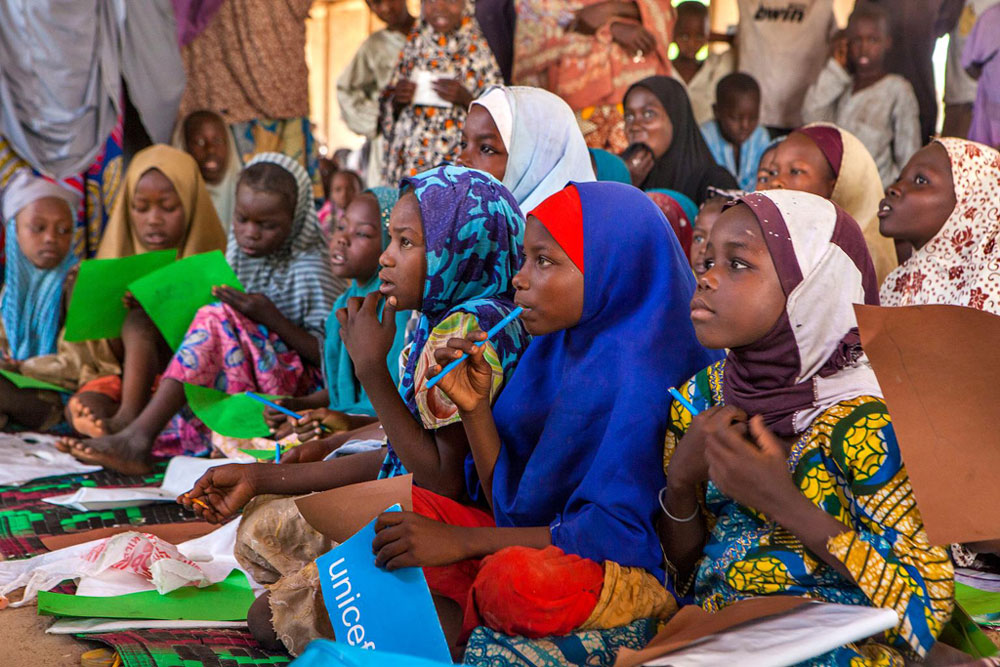
Katsina State government and the United Nation’s Children Fund (UNICEF) has signed a N1.3bn Memorandum of Understanding for partnership on development of the state. The multi million naira MoU is for the state and UNICEF to partner in the critical sectors of education, health and water supply.
Governor Aminu Bello Masari signed on behalf of the state government, while Ms Padamavathi Yelda, the UNICEF chief field officer, signed for UNICEF.
The governor pledged to redeem the state’s counterp art funding so as to ensure effective implementation of the laudable initiatives.
He lauded the UNICEF and other development partners for their support, adding that the critical sectors of education, health and water supply which covered the central areas of the MoU are part of the state government’s priority agenda.
UNICEF representative urged the state government to fulfil its part of the agreement by ensuring prompt payment of the counterpart fund so as to ensure success.
First Bank of Nigeria Limited is leading 14 other commercial banks in the utilization of foreign exchange from the Central Bank of Nigeria, CBN.
With a total of $25,701,921.17 FirstBank reported the highest amount of forex purchased from the CBN on behalf of its customers.
The allocations ranged from fuel, machinery and pharmaceuticals imports, all the way down to invisibles dominated divestments by foreign investors exiting the Nigerian equities and bond markets, and forex allocations to school fees.
For the second time, school fees accounted for the highest number of allocations across several of the banks, but not in value, reflecting the lack of confidence Nigerian parents in high and upper middle-income brackets have in the country’s education sector.
FirstBank was followed by Zenith Bank Plc and Stanbic IBTC Limited with $23,811,329.77 and $20,618,105.09 respectively.
Standard Chartered Bank with total returns of $17,795,338.87 came in fourth, while Diamond Bank Plc reported returns of $17,691,840.54.
Guaranty Trust Bank Plc (GTBank) reported returns of $15,828,891.14 to occupy the sixth place, while Ecobank Nigeria Limited reported returns of $14,684,365.28.
Also, while Union Bank of Nigeria Plc reported returns of $12,550,289.46; Access Bank Plc published returns of $11,994,742.86; Citibank Nigeria Limited — $9,238,688.09; Fidelity Bank Plc — $7,447,530.26; and United Bank for Africa Plc (UBA) Plc — $6,711,545.29. Others included Sterling Bank Plc with total returns of $4,792,887.67 and Keystone Bank Limited which also reported returns of $3,732,629.81.
For the first time, three merchant banks also published their returns on utilisation of funds. They were Coronation Merchant Bank Limited — $4,838,429.62; FSDH Merchant Bank Limited — $3,701,840.84; and Rand Merchant Bank Limited which reported total returns of $2,225,002.42.
But in terms of volume, the purchase of foreign exchange for other invisibles such as school fees, business travel allowance (BTA) and personal travel allowance (PTA), was the highest.
Trading activities on the floor of the Nigerian Stock Exchange, NSE, travelled farther south on Wednesday, February 17, as the All Share Index decreased by 1.87% to close at 24,056.12 points.
Year-to-date (YTD), the NSE ASI plunged by 16.01%. Similarly, the Market Capitalization depreciated by 1.87% to close at N8.27trn, compared with the depreciation of 1.26% recorded yesterday to close at N8.43trn.
The depreciation recorded in the share prices of Dangote Cement, Guinness, Nestle, Unilever and GT Bank, were mainly responsible for the loss recorded in the Index.
The total value of stocks traded on the floors of The NSE today was N1.95bn, down by 32.22% from N2.88bn traded yesterday. The total volume of stocks traded was 335.61mn in 2,847 deals.
The three most actively traded stocks were: Resort, Savings and loans (108mn), UBA (82.76mn) and FCMB (24.92mn). The most actively traded sectors were: Financial Services (297.87mn), Industrial Goods (15.12mn) and Consumer Goods (9.48mn).
Contributors under the Contributory Pension Scheme (CPS) jumped from 6,581,031 at the end of the first quarter of 2015 to 6,696,793 in the second quarter, indicating a 1.76 per cent growth in the pension scheme membership.
In a report, the National Pension Commission, PenCom, said the expansion in the industry membership was driven by the Retirement Savings Account (RSA) Scheme.
It said the membership of the Closed Pension Fund Administration Scheme (CPFA) experienced a negative growth while membership of the Approved Existing Scheme (AES) remained unchanged.
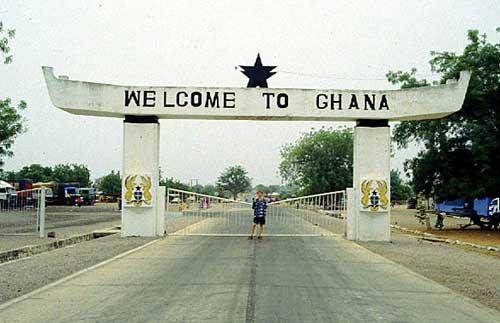
Ghana has banned some items from entry into its domain, following Nigeria’s bold move of restricting 41 items from access to foreign exchange.
Ghana placed a ban on some goods from being imported into the country. Ghanaian Minister of Trade and Industry, Ekwow Spio-Garbrah stated yesterday that Ghana and Nigeria are said to account for some 68 per cent of the ECOWAS region’s Gross Domestic Product.
Nigeria accounts for almost 10 per cent of Ghana’s foreign trade volume, whereas Ghana is listed as the 9th largest trade partner to Nigeria.
Ghana remains Nigeria’s largest trade partner and favourite investment hub in the West Africa sub-region, as Ghana imports the largest share of all Nigerian oil exports in the West African sub-region.
The Independent Petroleum Marketers Association of Nigeria, IPMAN, has said the 78 percent import allocation granted the Nigerian National Petroleum Corporation (NNPC) has caused a disruption in the distribution of petroleum products, leading to scarcity within the Lagos metropolis
As such, IPMAN has called on the Corporation to step up import of Premium Motor Spirit (PMS) also known as petrol to avert another round of scarcity.
National Operations Controller of IPMAN, Mike Osatuyi, said that the fuel situation has been fragile since the NNPC assumed the role of the sole importer of petrol.
“There is supply gap over a period of time now, the NNPC imports 78 percent of the petrol needs of the country. I can only say you should tell them to improve on imports.
They have access to forex because they do the SWAP deal and therefore, are not constrained by the challenge. But for marketers, it is difficult to source the Dollar and therefore not profitable to import under present condition”, he said.
But, NNPC has said the hitch in the petroleum distribution chain in Lagos was as a result of the leadership tussle between the Petroleum Tanker Drivers (PTD) union and the national leadership of PTD.
The Corporation in a statement by its Group General Manager, Group Public Affairs, Ohi Alegbe,said that, the management of its midstream subsidiary, the Pipeline and Products Marketing Company (PPMC) has intervened in the dispute and that normalcy will soon be restored.
An indigenous company, Integrated Oil and Gas Ltd., has been given initial license to begin preliminary work for a 20,000 capacity modular refinery in one of the islands on the coast of Lagos.
The refinery is expected to quaff between $75 – $250 million, Chief Executive Officer, CEO, of the company, Capt. Emmaneul Ihenacho, said.
Ihenacho, who stated this in Lagos on February 17, said that his company has gotten preliminary approval from the Department of Petroleum Resourses, DPR, and has commenced work on the Environmental Impact Assessment, EIA.
He explained that the company is working on other necessary requirements needed before the final approval for the refinery can be granted.
Ihenacho described the process leading to the final licensing for the project as a “continuous” one which is given in stages, saying that he intends to get funding for the project from both foreign and local banks.
According to him, “If you go to the DPR website you will see all the terms and conditions for granting of refinery licenses. The DPR gives you license in stages, it gives you license to establish, license to construct and after that it gives you license to operate.
“DPR would not sit down and say let us go and do an EIA and after that they will give you license. They give you license based on the technology that is used for refining and your ability to give then very good presentation on that subject before they say alright go and start it.”
The stock market on Wednesday, February 17, was hit by mix performances as the volume of trading leaped, while the value of trading plunged.
Investors traded 335.61 million shares valued at N1.95 billion in 2,847 deals, compared 290.944 million shares worth N2.88 billion exchanged in 2,934 deals the previous day.
The bearish trained sustained momentum as the market saw 27 price losers and only 13 gainers.
At the close trading, the NSE Industrial Index and NSE Consumer Goods Index shed 2.3 per cent and 1.8 per cent respectively. The NSE Banking Index also closed 0.9 per cent lower. However, the NSE Oil & Gas Index and the NSE Insurance Index appreciated by 0.7 per cent and 0.1 per cent respectively.
The equities segment of the Nigerian Stock Exchange, NSE, saw a decline for the second straight trading as mid-week business lost N158 billion on Wednesday, February 17.
Equities had, in the last two trading, dropped by N266 billion from N8.539 trillion on Monday to close at N8.273 trillion when the closing gong rang yesterday.
In spite of weak market sentiments, analysts at the United Capital Plc still expect to see a good level of demand in equities over the course of the week as the upcoming earnings season comes into focus and investors continue to play for attractive dividend yields.
Market turnover closes positively as volume moved up by 15.35 per cent against 2.62 per cent uptick recorded in the previous session. Resort Savings Plc, UBA Plc and FCMB Plc were the most active to boost market turnover, while the Guaranty Trust Bank Plc topped market value list.
The naira on Wednesday, February 17 recorded its worst exchange value against some foreign currencies in the parallel market.
Transactions at the Wuse Zone 4, an Abuja Bureau de Change colony monitored by our reporter, indicated that the value of the naira kept dropping hour after hour as customers thronged for business.
The local currency was exchanged at N380 a dollar, N505 a pound sterling and N395 a euro in Zone 4, while in Lagos, it was traded at N375 a dollar, N504 a pound sterling and N396 a euro.
The free fall of the naira started early in February after the Central Bank of Nigeria (CBN) allowed the BDCs to source for the foreign exchange independently from the market and suspended its weekly auctions to them.
However, the foreign currencies remained firm at the official market. A dollar was N199, pound sterling – N285 and euro – N222.
Integrated gas company, Seven Energy International Limited, on Wednesday, February 17, announced that it had secured US$100 million of new equity capital.
The new equity comprised of US$50 million from existing shareholders of the group, including Temasek, Petrofac, Capital International Private Equity, Standard Chartered, International Finance Corporation and IFC African, Latin American and Caribbean Fund, by way of an open offer and US$50 million invested by the IDB Infrastructure Fund II, sponsored by the Islamic Development Bank and other institutional investors.
Seven Energy’s chief executive officer, Phillip Iheanacho, said:“I am pleased by the continued support shown by our leading shareholders and the vote of confidence in our business plan demonstrated by the investment from the IDB Infrastructure Fund II. Seven Energy is now established as a significant participant in the rapidly developing Nigerian gas market,’’
Key Points
NFF President Ibrahim Gusau has resigned after three years and 11 months in office.
General Secretary Mohammed Sanusi and members of the federation's Executive...