




Home Blog Page 3228

“N5.32trillion Pension Asset Invested” – PenCom

The National Pension Commission,PenCom, over the weekend said the N5.32 trillion pension asset has been invested.

The Commission has therefore challenged investors with good investment ideas, who are interested in the pension fund to study the guidelines on pension fund investment contained in its website and ensure their investment ideas meet the criteria stipulated by law before approaching the commission .

PenCom Director General Chinelo Anohu- Amazu who stated this at a media parley in Lagos at the weekend explained that contrary to the clamour that the huge accumulated pension fund is lying idle while the need for its investment abound, the accrued pension asset put at N5.32 trillion has been legally invested and the investments regularly and closely monitored.

She explained that every step taken in investment of the money is guided by the law and no body not even government can arbitrarily take decision on the investment of the pension assets without following the due process of the law.

She clarified: “The contributory pension system is governed by law that is sacrosanct, the law states clearly where the pension fund can go ….neither the PenCom nor the PFAs, PFCs nor government nor anybody can step outside of these parameters it is not a case of taking an arbitrary decision by PenCom or government to wake up one morning or the PFCs or PFAs this is governed by the law and it is deliberate.”

She also explained that no part of the pension fund is in custody of PenCom or Pension Fund Administrators but that it is strictly with the pension Fund Custodians(PFCs) who in turn have invested the funds and is returning profits.

“It is not with PenCom, PenCom only issues guidelines for the operational working of those laws nothing in the guideline can deviate from the law otherwise it becomes illegal. This is the procedure in the law dealing with investment is very clear on where the pension fund can go and cannot go into. The key thing is primarily to pay retirement benefit as and when due. Investing has the first objective to ensure that there is fair return on investment in that money you are saving when you retire,” she said.

She urged Nigerians insinuating that the funds are starched in one bank to disabuse their minds insisting that all aspect of the fund has been invested.

NCAA Orders Immediate Safety Inspections On Sikorsky S76C Helicopters

The Nigerian Civil Aviation Authority, NCAA, on Sunday, February 21, ordered all airlines operating the Sikorsky S76C series to carry out safety inspections on the helicopter type with immediate effect.
The directive came two weeks after the aviation regulatory agency suspended operation of the Sikorsky S76C++ in the country, following two crashes within an interval of only six months and involving same type of helicopter operated by Bristow Helicopter Services in Nigeria.The NCAA yesterday said as an interim safety measure, the under-listed safety inspections affects all Sikorsky S76C series helicopters operating in Nigeria.

They include Visual Inspection in accordance with relevant S76C AMM 20-32-00; detailed inspection in accordance with relevant S76C AMM 66-00-00 and detailed inspection in accordance with relevant S76C AMM 66-10-00, 66-20-00, 66-30-00, 66-40-00.

The directive was contained in a letter earlier dispatched to all operators of the affected helicopters types. The identities of other operators were however not disclosed by the NCAA.

The agency gave 72 hours (three days) within which the safety directive must be observed by helicopter services companies that are using the Sikorsky S76c type of aircraft and indicated that the safety audit must be repeated by the helicopter companies after every 300 flight hours until further notice.

Stock Market Index Scoops 0.99% on Healthy Bull Run

Trading activities on the Nigerian Stock Exchange, NSE ended in the week in the green zone as the All-Share Index (ASI) leaped by 0.99 per cent to close Friday, February 19at 23,523.16, as against 0.86 per cent it closed at 23,292.80 last week.

Similarly, Market Capitalization opened at N7.41trillion appreciating 0.99per cent to close at N7.49 trillion, as against N7,417 trillion recorded last week.

Three of the four sectoral indices appreciated – The Bloomberg NSE 30 index rose by 1.38 per cent to close at 1,098.24, Bloomberg NSE Consumer Goods Index rose by 2.65per cent to close at 1,979.86 and NSE Banking Index rose by 1.68per cent to close at 354.51.

However, NSE Insurance Index depreciated by -3.05per cent to close at 124.20 and the Bloomberg NSE Oil/Gas Index also closed at 173.16 depreciating by -2.32per cent.

The Exchange during the week launched a new index; NSE-Lotus II to track the performance of Sharia compliant equities on the floor of the Nigerian Stock Exchange.

Also turnover of 1.471 billion shares worth N12.350 billion in 19,228 deals were recorded this week, in contrast to a total of 1.639 billion shares valued at N11.869 billion exchanged hands last week in 20,989 deals.

There were no transactions in the Federal Government Development Stocks, State Government Bonds and Industrial Loans/Preference Stocks sectors.

Also traded during the week were 3,050 units of NewGold Exchange Traded Funds (ETFs) valued at N7.636 million exchanged in 9 deals in contrast to a total of 8,000 units valued at N20.084 million exchanged hands last week in 13 deals.

The Financial Services sector was the most active during the week (measured by turnover volume), with 1.066 billion shares worth N8.640 billion exchanged hands by investors in 11,332 deals.

Volume in the sector was largely driven by the Banking subsector led by shares of Zenith Bank Plc, Fidelity Bank Plc, and Guaranty Trust Bank Plc.

Trading in the shares of the three banks accounted for 512.175 million shares, representing 51.06 per cent, 48.06per cent and 34.81per cent of the turnover recorded by the subsector, sector and total turnover for the week, respectively.

The Healthcare sector, boosted by activity in the shares of Neimeth International Pharmaceuticals Plc and Union Diagnostic and Clinical Services Plc followed on the week’s activity chart with a turnover of 186.818 million shares valued at N121.137 million in 58 deals.

Thirty two equities appreciated in prices during the week, higher than 22 of the preceding week. Nigerian Breweries Plc led on the gainers’ table by 4.53 per cent to gain N5.30 followed by Glaxo Smithkline Consumer Plc by 11.76 per cent to gain N3.00.

Thirty seven stocks depreciated in prices same as the preceding week. Mobil Oil Nigeria Plc led on the price losers’ table, dropping by -5.00 per cent to shed N6.25 followed by Arbico Plc with a loss of N1.85 or -9.67 per cent.

Banks Cut Foreign Spending Limit Again as Forex Scarcity Bites Harder

Commercial Banks in the country have intensified a downward review of the spending limits on debit cards overseas due to the scarcity of the foreign exchange (forex) in the country.

bites harder.
Two of the major banks, Stanbic IBTC and Ecobank, issued fresh notices to their customers, informing them of the reduction in the amount they could withdraw abroad.
The Stanbic IBTC, over the weekend, informed its customers of the new limits. Now, customers with the debit master card can only spend $350 a day online or on a Point of Sale (POS) terminal as against the previous daily limit of $1000 a day.

Cash withdrawal from ATMs outside the country has also been reduced by 50 per cent from $300 a day to $150 a day.

It also said the total amount that could be withdrawn from any ATM abroad on a Stanbic IBTC debit master card is $750, while the total amount that could be spent online and on POS in a month is now $1,750. Total cumulative monthly spending on all the two platforms is now only $2500.

The new lower limits came as the country’s dollar reserves keep dwindling, forcing the Central Bank of Nigeria (CBN) to implement policies aimed at slowing down the dwindling reserves. Other banks are also expected to announce similar cuts.
Also, Ecobank, in a notice issued on Friday, said the daily cash withdrawal had been reduced from $300 to $100 a day, or its equivalent in other foreign currencies when you are abroad.

Ecobank cut down all its cards limit to $100 a day. The standard card from $3000 to $100 a day (on POS/web); Gold Card from $4,000 to $100 a day (on POS/web) and Platinum card from $5,000 to $100 a day (on POS/web) with the cumulative annual spending limit for all cards to $50,000.

The scarcity of the forex shut the value of dollar last week by about 10 per cent at the parallel market. The exchange rate of the naira to the dollar was N380 a dollar in Abuja and Lagos as at last Friday.


Credit to Private Sector Surges to N18.719trillion

Banking sector credit to the private sector leaped year-on-year by 2.5 per cent or N12 billion to N18.719 trillion at the end of December 2015, compared with the N18.707 trillion it stood at the end of November 2015.

This was revealed by data compiled from the Central Bank of Nigeria’s (CBN) money and credit statistics for December 2015, released recently.

The central bank data also revealed that broad money (M2), which generally is made up of demand deposits at commercial banks and monies held in easily accessible accounts climbed year-on-year from N18.367 trillion as at November, to N20.030 trillion at the end of December.

Similarly, narrow money (M1), which includes all physical monies such as coins and currency along with demand deposits and other assets held by the central bank edged higher year-on-year to N8.571 trillion in the review month, as against the N6.980 trillion recorded the previous month.

Also, currency outside banks rose from N1.261 trillion in November, to N1.456 trillion as at the end of December.

Also, currency-in-circulation increased to N1.858 trillion at the end of December, compared to the N1.633 trillion it was the previous month.

The central bank data showed that the total amount of banks’ reserves with the central bank fell from N4.006 trillion the previous month, to N3.955 trillion.

But demand deposits, which are funds held in an account from which deposited funds can be withdrawn at any time without any advance notice to the depository institution increased from N5.053 trillion in November, to N7.116 trillion in the month under review.


Medview Airline Extends Flight Operation to Kaduna

Domestic Carrier, Medview Airline has added Kaduna to its domestic routes with a direct daily flight from Lagos which commences on Monday, March 7, 2016.

The airline disclosed in a statement that the Lagos flight will connect Abuja from Kaduna on its return journey.

The flight is scheduled to depart Lagos by 7.30 am and arrive Kaduna at 8.30 am and thereafter depart for Abuja at 9.10 am.

With Kaduna, Medview Airline now has eight cities including Lagos, Abuja, Port Harcourt, Enugu, Yola, Kano and Maiduguri on its domestic network.

Managing Director/CEO of Medview Airline, Muneer Bankole, who explained the rationale behind the new addition said: “We want to ease the pains of travellers in that axis.”


“FG Collects N8 Per Litre on Imported Petrol” – PPPRA

The Petroleum Products Pricing Regulatory Agency, PPPRA said Federal Government would be collecting N8 per litre as subsidy on petrol imported by NNPC and other marketers.
Outgoing Executive Secretary of the Agency, Farouk Ahmed,announced this while handing over to Moses Mbaba, General Manager Administration, and Human Resources, last week in Abuja.
Ahmed is among the heads of government agencies that were disengaged and asked to hand over to most senior directors in the office.
“The subsidy as at today came down to minus N8 per litre for PMS. What I mean by minus N8 is that government now will collect N8 for every litre imported by NNPC and marketers as against payment to marketers and NNPC,’’ he said.
He said that at the close of work on Feb. 16, the subsidy on petrol was N13.81k, adding that the landing cost was lower than the selling price by N13.81k. According to him, it translates to what is called over recovery.
Ahmed said that an Over Recovery Account had been opened with the Central Bank of Nigeria on Feb. 3 and would be managed by the Office of the Accountant General of the Federation.
He said currently, about N2.6 billion had been lodged into the account with the December importation by NNPC and the marketers.

Forte Oil to Distribute N3.45 Dividend to Shareholders in April

Indigenous oil company, Forte Oil Plc , has said shareholders will receive the N3.45 dividend per share recommended for 2015 as from April 29, 2016.

The integrated energy solutions provider recently posted a profit after tax of N4.5 billion and while the directors recommended a dividend of N3.45 per share.

The company notified the Nigerian Stock Exchange (NSE) the weekend that dividend would be paid as from April 29 to shareholders after getting the shareholders’ approval at the annual general meeting slated for April 22.

Details of the financial results for the year ended December 31, 2015, showed that Forte Oil recorded a revenue of N124.6 billion, down from N170 billion.

However, profit before tax rose by 16.7 per cent from N6.0 billon to N7.0 billion, while profit after tax jumped by 30 per cent from N4.5 billion to N5.8 billion in 2015.

Commenting on the results, the Group Chief Financial Officer, Forte Oil Plc, Julius Omodayo-Owotuga said: “The decline in revenue of 27 per cent was as a result of the company strategy to reduce importation of Premium Motor Spirit so as to reduce the Company’s exposure to subsidy receivables from the Federal Government.

Other income increased by 190 per cent due to sale of investment property, investment in securities held to maturity, freight income from the investment made in the 100 trucks of the previous financial year, to mention a few.

“Our ability to provide a profit for our shareholders is testament to our belief that the business is on a solid and safe trajectory and will continue to consolidate on gains made.”


Increased Sell Pressure Costs Stock Market 1.04%

Trade performance on the Nigerian stock market ended the week on a negative note following intense sell pressure.

The market capitalization plunged by N88 billion to close at N8.403 trillion when compared with the N8.491 trillion posted the previous week.

Capital market analysts noted that the sell-offs in heavyweight counters like Dangote Cement, Nigerian Breweries, and Nestle on Tuesday and Wednesday overshadowed gains in the other three sessions. Also, market activities decreased from previous week as volume dipped by 14.56 per cent to 1.20 billion shares valued at N9.64 billion in 13,712 deals.

For the week under review, only African Alliance Insurance came out with its financial result. The company released its audited outstanding results for December 31, 2014, first quarter March 2015, second quarter ended June 2015, and the third quarter for the period ended September 2015. It declared a 72.50 per cent fall in profit after tax in the third quarter.

Market breadth for the week was negative with 22 gainers and 37 decliners. An analysis of the price movement chart indicated that Seplat topped the gainers’ table by 19.98 per cent to close at N302.48 per share. May & Baker came second with a gain of 17.50 per cent to close at 94 kobo, while Glaxosmith appreciated by 15.70 per cent to close at N24.19 per share.

On the other hand, Unity Bank led the losers’ chart by 11.76 per cent to close at 60 kobo per share. Portland Paints trailed with a loss of 10.16 per cent to close at N3.36 while Learn Africa declined by 10 per cent to close at 81 kobo per share.


Fitch Revises GTbank, FBN Outlook From Stable to Negative

Global rating and research company, Fitch ratings, on Sunday, February 21, released the revised outlook on the long term foreign currency issuer default ratings (IDRs) on top banks in Nigeria with First Bank of Nigeria Ltd (FBN), and Guaranty Trust Bank Plc (GTB) rated to negative from stable.

The research company also upgraded Access Bank’s long term national rating to “A” from “A-” with a stable outlook and affirmed the long term IDRs of the bank.

Fitch affirmed the long term IDRs of 11 Nigerian banks and institutions.

The other banks are Zenith Bank Plc, Access Bank Plc, Diamond Bank Plc, Fidelity Bank Plc, Union Bank Plc, First City Monument Bank Limited (FCMB), and Wema Bank Plc. Fitch has also affirmed the National Ratings of Stanbic IBTC Bank Plc and Stanbic IBTC Holdings Plc. The rating is coming at a time when Nigerian banks are operating in increasingly challenging and volatile conditions.

The collapse of the oil price has led to a faltering gross domestic product growth, a significantly weaker naira, and a scarcity of foreign currency. Coupled with an uncertain policy response, and external factors, these are, to varying degrees, taking a toll on the banks’ risk profiles. Fitch believes that banks will continue to face multiple threats in the course of 2016.

The agency’s view of the weakening ability to provide support is based on the premise that apart from pressures on the sovereign’s foreign currency balance sheet, the size of potential support for the sector may be large should problems occur, which would be widespread, rather than surface in a limited number of banks.

The outlook on GTB’s foreign currency long term IDR is also revised to negative and considers both the decreasing financial flexibility of the sovereign and expectation of downside pressure on its standalone creditworthiness (expressed in a viability rating (VR) of ‘b+’).

“Nigeria Expends $1.8billion Annually on Rice Import” – Dangote

President of Dangote Group, Aliko Dangote has lamented that Nigeria expends about $1.8billion yearly to import approximately 3.2 million metric tons of rice to feed its population.

The business tycoon said this huge foreign exchange (forex) would have been used on more impactful social development interventions if they were not needed for food imports.

Dangote, who spoke during the launch of the Dangote Rice Outgrowers Scheme in Jigawa State at the weekend, said the nation’s agricultural commodities and food imports bills averaged over N1trillion in 2013 and 2014, with foods such as sugar, wheat, rice, fish accounting for 93 per cent of the total cost of imports.

He described the situation as unacceptable for anyone who loves the country.

To check the the unncessary waste of forex on food importation, the Dangote Group has made investment in the agrci sector to create jobs and assure food security in the country.

The Rice Outgrowers Scheme was launched in Hadejia, Kafin-Hausa Local Government Area of Jigawa State.

Starting with 20,000 hectares of rice cultivation to be expanded to cover 800, 000 hectares over the next three years, Dangote said there was no better time than now to turn to agriculture to save the economy.

The scheme started with the distribution of treated rice seedling for planting to some 5000 farmers.

He said: “We are committed to the development of outgrower scheme by providing local, value added products and services that meet the ‘basic needs’ of the populace. To this end, the Dangote Rice Farm Ltd, will run an initial pilot in Hago-Fadama, Kafin Hausa and Auyo areas which would see Dangote Rice developing small hold farmers by providing quality inputs (certified seeds, fertiliser, agro-chemicals and petrol), improved agricultural practices and technology to increase yield and produce quality rice paddy which would also be bought back from them by Dangote Rice Limited.

“The programme in Jigawa State is expected to create more than 10,000 direct and indirect jobs to the host communities.”

Aside the outgrowers aspect of the investment, he said Dangote Rice is planning to plant approximately 150,000 hectares of long grain white rice and produce near one million tons of high quality par boiled white rice for sale into the market.

Furthermore, he said the internal policy within Dangote Rice Ltd is to procure 30 per cent of rice production from local farmers who will be developed into outgrower groups. According to him these outgrowers will be simultaneously developed alongside the company’s commercial farming operations.

Dangote said before the discovery of oil, the economy was built around potentials from palm oil, ground nut, cotton, and rubber plantations. “Now the price of oil has plummeted from a peak of $116 per barrel in June 2014 to as low as $29 per barrel in January this year. This means there is huge loss of revenue to the government,” he said.

Currently the average yield of rice in the country is between 1.8 to 2.5 metric tone per hectare (MT/ha), depending on the region and the crop (wet or dry) and with or without irrigation 1.8 MT/ha, which is significantly lower than the best practice yields in Africa of 9.2 MT/ha generated in Egypt. Locally produced rice is more expensive than imported rice due to the high cost of production relative to the low yields in the country because of poor agronomic practices.

In addition, the Federal Government has implemented policy incentives that encourage investment in domestic rice production and milling.

Dangote disclosed that the Dangote Rice Outgrowers Scheme was designed as a one stop solution for the rice value chain.


Deposit Banks Refund N6.2billion Illegal Charges to Customers

The Central Bank of Nigeria, CBN, said it ensured that Deposit Money Banks refunded N6.2 billion to customers they over charged as cost of transactions in 2015 alone.

This is contained in a statement made available by the Director, Corporate Communications, CBN, Ibrahim Mu’azu in Abuja over the weekend.

According to the statement, the apex bank is always ready to checkmate banks and protect customers from illegal, excessive charges.

“The Revised Guide to Bank Charges clearly specifies allowable charges for all banking services; the CBN does not in any way condone the fleecing of banking customers under any guise.

It was in the quest to provide a strong voice to banks’ customers and moderate the arbitrary charges that the CBN in 2012 established a Consumer Protection Department.

“The CBN has investigated over 6,000 complaints relating to unauthorised bank charges brought to its notice, following which banks have been compelled to refund N6.2 billion to affected customers in 2015 alone.

“The CBN wishes to reiterate its resolve to continuously enforce the provision of the Revised Guide to Bank Charges and urges members of the public to report cases of infringement to enable it investigate and apply sanctions on any erring DMB”, it stated.

AfDB Approves $8.2million Equity Participation to Boost Housing

The African Development Bank, AfDB, over the weekend, approved $8.2million equity investment in Africa’s housing and habitat company, Shelter Afrique, to fortify its balance sheet and help it achieve its objective of providing quality affordable housing in Africa.

This marks an important step towards addressing the acute shortage of housing in most African countries, while creating jobs and enhancing income in Africa.

Africa’s economic landscape remains positive with promising scope for growth; Gross Domestic Product (GDP) growth remains robust supported by multiple factors. The continent’s growing population, a growing middle class and the fastest urbanisation rate in the world are some of the factors driving increased demand for affordable houses and housing finance.

The construction sector in Africa is growing at 20 per cent per annum, but this cannot sufficiently address the rising demand for housing due to various technical and physical constraints including: lack of accessible and well-priced housing finance; complex land tenure systems; high costs of land registration and titling cumbersome registration processes; and availability of reputable developer with sufficient capacity.

Shelter Afrique is the only pan-African organisation devoted to financing the development of proper housing and human settlements in Africa. Created in 1982 and headquartered in Nairobi, Kenya, Shelter Afrique is a pan-African housing finance and development institution that helps to address the acute shortage of housing by providing financial and technical resources for sustainable housing and urban development. Shelter Afrique’s current shareholding comprises 44 African countries, the AfDB and Africa Re. AfDB played a key role in the establishment of Shelter Afrique as the vehicle for supporting sustainable housing and urban development in Africa.

The AfDB’s equity participation is part of an ongoing capital increase by Shelter Afrique’s shareholders.

It will support Shelter Afrique to implement its revamped Strategic Plan which is focused on modeling Shelter Afrique as a pan-African DFI with the capacity to respond to the growing demand for affordable housing and related infrastructure services. It will further enhance its capital base and help solve Africa’s housing finance challenges.

Through this contribution, AfDB would leverage on Shelter Afrique’s technical capabilities, field presence and local knowledge of the regional housing market and help alleviate some of the structural financing inefficiencies encumbering Africa’s real estate growth.


UBA Bags ISO-IEC 20000-1:2011 Certification

The pan African financial services group, United Bank for Africa, UBA Plc, has earned the prestigious ISO/IEC 20000-1: 2011 Certification from the British Standards Institution (BSI).

The certification which was awarded to UBA after a process and systems audit recognises businesses that are able to link and execute businesses and IT objectives effectively through the implementation and consistent maintenance of service management requirements.

“This certification validates our commitment to delivering quality services, using the best in-class technology and processes,” the group managing director/chief executive officer, UBA Plc, Phillips Oduoza, said.

An ISO 20000 certification involves integrating all IT component services, processes and people into a single inter-operable and interdependent system via best practice standards to ensure the maximum realisation of business objectives, resource optimisation and continual improvement.

Also speaking on the certification, the chief information officer, UBA, Lanre Bamisebi, said that it shows that UBA’s IT processes are mature and robust for speedy and effective service delivery.

“With a customer base in excess of eight million, we are consistently investing in technology as a strategy to improve efficiency in service delivery and enhanced customer experience across all channels,” he stated.


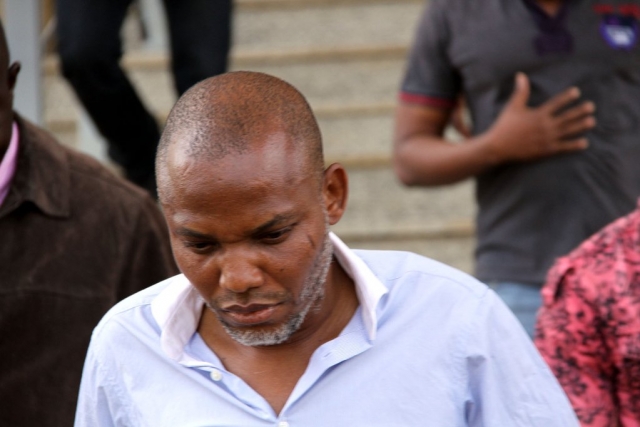
Militant Groups Threaten To Confront Government Over Incarceration Of IPOB Leader, Nnamdi Kanu

Nnamdi Kanu Will Receive Fair Trial He Denied Victims Of Instigated Violence - Lai

Two militant groups in the Niger Delta region have said they are ready to confront the Federal government in battle over its refusal to release the detained leader of the Indigenous People of Biafra (IPOB) and Director, Radio Biafra, Nnamdi Kanu.

The groups, Concerned Militant Leaders (CML) and Niger Delta People’s Democratic Front (NDPDF) made the declaration yesterday in separate statements in port Harcourt, Rivers State, following reports that there were plans by the Federal Government, to use witnesses in mask, to testify against the leader of IPOB, who was charged of treason in court.

Reacting to the report, leaders of the two groups, General Ben (CML) and Precious Iyoyo (aka General playboy), stated that since President Muhammadu Buhari-led government was determined to cause problem in the country particularly in the South-South and South-East zones, by stubbornly refusing to release Kanu, the groups were ready to cripple the economy.

Specifically, General Ben said when the 31 day-ultimatum given to the federal goverment to release the IPOB leader expires tomorrow, Monday, February 22, the battle line would have been drawn.

Ben, in the CML statement, declared that the target areas of the first stage of the uprising would be in Abia and Anambra States, as well as Abuja, the Federal Capital Territory (FCT).

He said that the group’s reason for the two states and Abuja was because they were the major places where Federal Government shed the blood of their “brothers and sisters.”

Lack of Funds is Stalling Anti-Corruption War – Presidency

The Presidency has disclosed that lack of funds is stalling Nigeria’s effort to trace and recover its stolen monies, and prosecute former government officials responsible for the heist.

A letter by the Presidential Advisory Committee on Corruption (PACC) to a United Kingdom-based anti-corruption organization, Global Witness, soliciting assistance in raising funds, revealed that due to the fall in crude oil prices and the general economic downturn, the government lacked the needed funds to pursue recovery of loots.

The letter, dated February 15, 2016, was signed by the Executive Secretary of PACC, Bolaji Owasanoye, and directed to the Director of Global Witness, Simon Taylor.

It stated that the commitment of the government to tackle Boko Haram insurgency, fight corruption and improve the livelihood of Nigerians through job creation, was being hampered by dwindling oil revenue and mounting debts.

Mr. Owasanoye, a professor, argued that the economy could not be revived simply by improving revenue generation, without wiping out corruption and recovering money stolen former officials.

He said ongoing investigations into the diversion of arms funds by the former National Security Adviser (NSA), Sambo Dasuki, and ex-military chiefs, show that significant amount of the money needed by the government to alleviate poverty were still in “the pockets and bank accounts of looters of public funds”.

He said intelligence reports and court rulings elsewhere have shown that there were more funds to be recovered from the immediate past Petroleum Minister, Diezani Alison-Madueke, the fraudulent sale of OPL 245 by Malabu Oil and Gas, a company owned by “a well-known money launderer”, Dan Etete, assets traced to former Delta State Governor, James Ibori, and former military ruler, Sani Abacha.

He however explained that due to the multi-jurisdiction of the cases, and the exorbitant charges of professionals such as lawyers, forensic financial investigators, and the ability of the suspected officials to use part of the alleged stolen fund to challenge the recovery of the fund, the government needed huge flow of resources.

Mobile Internet Transforming How Nigeria Does Business – Sage

With sub-US$50 smartphones on the way, rapid improvements to telecom infrastructure, and the availability of affordable cloud applications, the mobile Internet is rapidly transforming the way that Nigeria does business.

It is empowering enterprises to be more flexible, responsive and efficient than ever before. That’s according to Magnus Nmonwu, Regional Director for Sage West Africa, who says that Nigeria is adopting the mobile Internet as quickly and enthusiastically as it did mobile voice services some years ago. “Mobility is the growth engine of the Nigerian economy,” he adds. “It is helping people to enhance their lives and to improve their standard of living, while enabling enterprises to transform how they operate.”

Magnus Magnus Nmonwu - Regional Director for Sage West Africa
Magnus Magnus Nmonwu – Regional Director for Sage West Africa

According to statistics from the Ericsson Mobility Report, total mobile subscription penetration in Sub-Saharan Africa is about 80% but will grow to 100% and 1 billion mobile subscriptions by 2021. Nigeria, as one of the largest mobile markets in Africa, is leading the trend based on these results. As one example of mobile’s impact on Nigeria’s economy, consider the fact that the Ministry of Science and Technology forecasts that the mobile market will be worth US$166 billion dollars in 2020 and directly employ about 2.7 million people.

New mobile behaviours

“Many of our customers and employees today walk around with smart devices that give them access to apps and information wherever they are,” says Nmonwu. “For example, Facebook’s statistics show that 7.1 million Nigerians access its platform every day. And 100% of its monthly users access Facebook on a  mobile smart phone.”

Tapping into this behaviour gives organisations new ways to interact with employees, suppliers, customers and other stakeholders, he adds. This ranges from mobile marketing, advertising and e-commerce for consumers to mobilising business applications such as the enterprise resource planning (ERP) solutions.

On the road again

Employees and managers are increasingly able to access information on the road to serve customers, speed up decision-making, and save time. A salesperson can now easily check from a tablet or smartphone whether a product is in stock while on-site with a customer, and place the order without going to the office. And managers can now use their time between meetings and at airports more productively.

Mobile technology is also helping HR departments to become more efficient and to build better relationships with employees. For example, companies can offer employee self-service (ESS) across mobile devices to streamline HR processes and engage with employees more effectively.

With mobile ESS, companies can enable employees to file leave applications, submit  doctor’s notes when they’re ill, and make expense claims – all from their mobile devices. They can look up their payslips, change their personal details, and more, all without needing to do paperwork, visit or call the HR department.

The future is mobile and we are giving our customers the power to control their businesses from the palm of their hand,” says Nmonwu. “We connect our customers to accountants and partners with real time and intuitive information about their business.”

Productivity boom

Says Nmonwu: “In addition to the productivity boom, organisations need to adopt mobile business processes and apps to meet the expectations of employees and customers. Today’s consumer and employee wants to interact with companies using accessible, easy to use mobile services and apps.

“Enterprises thus need to start mobile security and device management, so that they can support mobile employees. Today’s consumer wants service on demand from a handset and today’s employee wants to be productive wherever he or she is, at anytime or in any location. With this, we expect to see a great deal of investment into mobile technology in West Africa over the next year or two.”

Banks Imposed N6.2 Billion As Excessive Charges On Customers In 2015 – CBN

The Central Bank of Nigeria has said it has recovered about N6.2 billion from Deposit Money Banks as excessive charges imposed on their customers in 2015.

The apex bank in a statement issued by the Director,Corporate Communications Department, CBN, Alh Muazu Ibrahim warned banks against imposing illegal charges on their customers.

The CBN in the statement said it was concerned about the rising number of complaints bordering on excessive bank charges, noting that in 2015 alone, the apex bank investigated about 6,000 of such cases.

It said the apex bank would continue to enforce the revised guidelines on bank charges, stating that any customer who has been illegally charged should complain at the Consumer Protection Department of the CBN

The statement reads in part,  “The Central Bank of Nigeria has received series of complaints from customers of Deposit Money Banks alleging excessive and in some cases illegal charges from their respective banks.

“The Revised Guide to Bank Charges clearly specifies allowable charges for all banking services and the CBN does not in any way condone the fleecing of banking customers under any guise.

“It was in the quest to provide a strong voice to banks’ customers and moderate the arbitrary charges that the CBN in 2012, established its Consumer Protection Department.

“For the avoidance of doubt, the CBN has investigated over 6000 complaints relating to unauthorised bank charges brought to its notice, following which banks have been compelled to refund the sum of over N6.2bn to affected customers in 2015 alone.

“The CBN wishes to reiterate its resolve to continuously enforce the provision of the Revised Guide to Bank Charges and urges members of the public to report cases of infringement to enable it investigate and apply sanctions on any erring Deposit Money Bank.

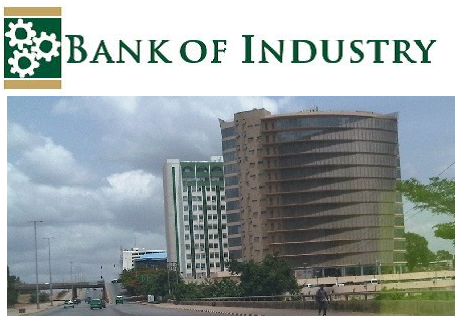
BoI To Disburse Loans Worth N310 Billion To MSMES

BoI

The Bank of Industry (BoI) has said it would disburse at least N310 billion in loans to Small and Medium Enterprises (SMEs) between 2016 and 2019.

Mr Waheed Olagunju, the Acting Director-General of the bank, who disclosed this at a ceremony to mark the appointment of new internal auditors and accountants for the bank in Lagos on Friday, said that the aim of the loans was to support the government’s efforts at empowering SMEs in the country.

“As we all know, SMEs are the engine of the economy and we have been working to support the government’s efforts at up scaling their capacity. To crash the rate of unemployment from the 25 per cent rate to a single digit, the SMEs and manufacturing sector need to be involved. The only issue we have been having with SMEs is that they keep saying that BOI does not disburse to them, but the truth is that banks need track record and character to disburse loans to enterprises.

“The major challenge of SMEs is not loan because asking for a loan at the very beginning of your micro business is not the best way to go. It is better to start from somewhere with assistance from friends and family; from there your track record and character can be monitored even by the business owner himself,’’ he said.

According to Olagunju, BoI has established nine more offices, five digital ICT products and raised its Business Development Support Providers (BDSPs) to 200.

He said with the SME Website, SMEs could use the accounting applications, even from their phones or laptops without having to come over to any of the offices.

He said the BDSPs were there for a token to write proposals, application guides and all that small entrepreneurs would find difficult to present while applying for a loan.

He also urged Nigerians to patronise Made-in-Nigeria products just like other developing economies were doing.

Olagunju said that it was because of one of these reasons the BoI patronised made-in-Nigeria buses and encouraged wearing of traditional attires in its dress code.

6 Hilarious Phone Quirks You Will Find Among Nigerians


Mobile phone penetration in Nigeria is at an all time high! Whenever a trendy gadget is introduced into the market, within a few days, you will find it in the country. A clear example can be found with the current scramble for the latest Apple iPhones. With the growing use of mobile devices, there are a few habits that are unique to Nigerians alone. Jovago.com, Africa’s No 1 hotel booking portal shed more light on some of these quirks.

One person, three different phones

Call it show off or whatever you like, Nigerians use more than one phone. This is no a fault of theirs. To a very large extent, the reason for this is because of the inadequacies of the telecom providers. So, to prevent yourself from being stuck especially when the mobile services are erratic, you can easily switch to your second or third line. However, there are a few people who use more than one phone to create a spectacle.

Disclosing your life history over the phone

In public spaces, many Nigerians discuss private and sensitive matters over the phone. They discuss family brawls, business transactions and their destination over the phone among complete strangers. This has led them to been trailed and attacked by unscrupulous persons. It is advisable to tell the person to call back or simply send them a text. Even with that, there are some who cannot just get their eyes off your phone screen.

Overly respectful

Respecting seniors is a culture embedded in Nigerians. However, what will you say about someone that is so courteous over the phone that they could genuflect or kneel down? As far as the person is not physically present, it is not necessary to curtsy. Some people can use ‘’sir or ma’ more than 5 or 6 times in their phone conversations.

Ignoring unknown numbers

This is a habit that quite a number of Nigerians have cultivated over the years due to unfounded rumours about unknown numbers. Hence, if you use an anonymous number to call a friend or a business partner, they may not pick. Meanwhile, others will just stare at the calling number contemplating whether to pick it or not. The phone is meant for picking calls whether you are familiar with the number or not.

‘I am close to you’

In Lagos, if you do not leave home early, you cannot escape the notorious traffic of the burly city. If you have an appoint for 10 am, you must leave home 6:30 am or 7 am. If you do not, you will either miss your appointment or arrive late. Consequently, To stop your client from leaving, you tell them you are close to Ozumba Mbadiwe when you are actually in one ‘bad’ traffic on Third Mainland Bridge.

Flashing/Please call me I do not have credit

Some Nigerians should be given an award in flashing. Flashing is when a person calls your number and abruptly ends the call immediately it rings. Some individuals can flash you more than five times just because they want you to call them. This can be annoying at times. In other cases, they will call you and the next thing you hear is ‘Please call me, I do not have credit’ and when you eventually send them credit, they will most likely not call you in return.

Recent Posts

Gusau resigns as Tinubu moves to overhaul Nigerian football

Key Points NFF President Ibrahim Gusau has resigned after three years and 11 months in office. General Secretary Mohammed Sanusi and members of the federation's Executive...