The Senate,on Wednesday, February 24, cut the N7.6 billion accrued charges to Systemspecs, commercial banks and Central Bank of Nigeria,CBN, from transfers to Treasury Single Account, TSA, by government agencies to N656.504 million.
The Upper Chamber also ordered the CBN to terminate the one per cent charge for any computation.
It also ordered the CBN to henceforth terminate the renewed contract it entered with Systemspecs in 2013, saying the award was at variance with major terms of agreement contained in the earlier 2011 contract.
It said the termination was necessary in view of the denial by the Office of the Accountant General of the Federation that it knew nothing about the contract.
These resolutions were the aftermath of the adoption of the report of the Joint Committee on Finance, Public Accounts and Banking, Insurance and Other Financial Institutions which investigated the allegation of “payment of N25 billion to Remita” in 2015.
While presenting the report for Senate’s consideration yesterday, chairman of the joint committee, Senator John Enoh, said the committee acknowledged Systemspecs’ provision of quick solution through the availability of its Remita software for the transfers.
However, he said the organisation should only be paid based on CBN’s approved rate band of between N500 and N700 per transaction for electronic transfer or payments as specified in the revised guideline.
The committee further said the reduction of N7.6 billion to N656.6 million was dictated by what it called the use of “upper end of the approved band of N700.00 per transaction for N937,869 transactions between March 1 and November 30, 2015.”
The Director General, Securities and Exchange Commission, SEC, Mounir Gwarzo on Wednesday, February 24, disclosed that over N30 million had been paid to about 530 investors of failed companies in the capital market under the National Investor Protection Fund, NIPF, scheme.
The NIPF was launched by commission in 2015, following complaints by market investors who were unable recover monies invested in bankrupt companies.
The N5 billion-fund is to provide temporary succour to investors who are paid between a minimum of N5,000 and maximum of N200,000 in the event of any failure instead of losing out completely.
Gwarzo, who spoke in Abuja at the opening of a two-day workshop on Capital Market Laws, Ethics and Judicial Interpretation for Superior Court Judges which was organised by the commission, said the measure was among other things aimed at boosting investor confidence in the capital market.
He said: “When we launched the national investor protection fund last year in Lagos, we said we’d complains with respect to a particular operator; they collected people’s money and refused to pay them.”
According to him:”Part of the essence of the Fund is to find a way and means that we can temporarily alleviate thesufferings of those investors; not necessarily to pay the investor what he or she had actually lost but to temporarily give the investor some amount of relief and we’ve paid over N30 million to about 530 investors.”
The SEC boss further explained that the commission’s partnership with the judiciary has become inevitable to strengthen market investments.
South Africa owned telecommunications firm,MTN shares overturned declines and surged as much as 3.2 per cent on the Johannesburg Stock Exchange (JSE), trading 1.7 per cent higher at 130.09 rand at the close of business following news on Wednesday, February 24, that the telco had withdrawn its law suit against the Nigerian government challenging the N1.04 trillion imposed on its Nigerian subsidiary.
MTN Communications Nigeria Limited paid N50 billion to the Nigerian Communications Commission, NCC, as a mark of “good faith” towards reaching an amicable settlement with the Nigerian authorities on the fine.
The company’s shares had declined 32 per cent since the fine, originally set at N1.04 trillion, was made public on October 26, reported Bloomberg.
According to MTN, the decision to withdraw the court case followed the renewed steps it is taking towards a negotiated settlement and to create a conducive atmosphere for further negotiations.
NCC had imposed the N1.04 trillion fine on the telecoms company in October 2015 for contravening the directive on the deactivation of 5.2 million unregistered subscribers on its network.
Subsequently, the fine was reduced by 25 per cent to N780 billion, an amount MTN considered inimical to the survival of the business.
The telecoms giant subsequently sought judicial determination as a means of protecting the local ecosystems valued and supported by MTN’s business.
Although the court advised the parties to the suit to reach an out-of-court settlement, THISDAY gathered that government refused to hold further talks with MTN, asking it to withdraw the case before it could hold further talks on the fine.
MTN Nigeria’s chief executive, Ferdi Moolman, speaking on the issue said: “This is a most encouraging development. It demonstrates a willingness and sincerity by both parties to work together towards a positive outcome.”
He explained that MTN Nigeria paid N50 billion to the federal government as a gesture of good faith and commitment to continue efforts towards an amicable resolution.
He added: “We are hopeful at this stage. Along with the authorities, it is clear that we are collectively committed to working towards a solution that is of mutual benefit to all parties.
The Nigerian and Qatari governments have reached out to Saudi Arabia and Russia, the world’s two biggest oil producers and exporters, to cut oil output.
This is coming after Tuesday, February 23, meeting between President Muhammadu Buhari and Saudi Arabia King, Salman Bin Abdulaziz Al Saudi, during which they both committed to work towards a stable oil market and a “rebound of oil prices”,
A presidency source revealed that the decision to push for output cuts was an offshoot from the lukewarm reception by the markets to last week’s news of Russia and Saudi Arabia’s decision to freeze oil output as January levels.
According to the source, said the Nigerian government, while welcoming the decision to cap output by Saudi Arabia and Russia, the announcement was insufficient to raise crude prices due to the supply glut in the market.
He said: “By OPEC estimates, there is an excess inventory of some 1 million barrels per day, so the objective it to convince Saudi Arabia and Russia to each cut production by at least 500,000 barrels per day in order to lift prices.
“We are pushing for this because even though Iran, which is currently producing about 500,000 per day and is attempting to ramp up production to pre-sanction levels, we all know it will take some months before it can increase production and exports to 1 million barrels per day due to the absence of investments when the sanctions were in place over their nuclear programme.
“So the Minister of State for Petroleum, Dr. Ibe Kachikwu, is reaching out to Russia through back channels to go beyond the output freeze by taking 500,000 barrels off the market, while his counterpart in Qatar is talking to the Saudis to do likewise.
“The target is to remove 1 million barrels per day from the markets to support prices and see if oil can stabilise at $50 per barrel.”
The presidency official disclosed that the reason Russia and Saudi were being targeted was because they are the largest producers and can afford production cuts in contrast to smaller producers.
Buhari is scheduled to visit Qatar before the end of this week and is expected to hold talks with the country’s ruler on the issue.
However, attempts to get Saudi Arabia and Russia to cut output could prove to be a hard sell, as Saudi Arabia, which has remained adamant about retaining market share and taking out costlier US shale oil producers, on Tuesday again ruled out production cuts by OPEC.
The kingdom’s oil minister, Ali bin Ibrahim Al-Naimi, who spoke at the 35th annual HIS Energy CeraWeek convention holding in Houston, Texas, said keeping production at the January levels was the beginning of a long process to raise prices but restated that member countries would not cut production even if they say they would, according to USA Today.
“If we can get all of the major producers to agree not to add additional barrels, then this high inventory we have now will probably decline in due time.
“It is not like cutting production. That is not going to happen because many countries are not going to deliver. Even if they say they will cut production, they will not deliver.
“There is no sense wasting our time seeking production cuts. That will not happen,” he said.
Indications are rife that the Federal Government is set to revoke about 1,500 mining licences and leases on account of dormancy.
This indication emerged on Tuesday just as the Ministry of Solid Minerals Development said it would soon publish the list of the affected mining sites and their owners.
The Minister of Solid Minerals Development, Dr. Kayode Fayemi, had at his maiden press briefing in December 2015 given owners of dormant licences up until March 1, 2016 to use the licences or lose them. However, despite the threat, many licensees were still in default.
In a statement issued on Tuesday, the ministry said it had concluded arrangements to publish the list of owners of the dormant mining licences.
Although the number of defaulters was not given in the statement, it was reliably gathered from an official in the ministry that a list of about 1,500 dormant mining licences and leases had been compiled for revocation.
According to the statement, Fayemi said a situation where four of every five mining licences issued in the country remained unused was no longer acceptable.
The minister spoke in Minna, the Niger State capital, during a one-day working visit to mining sites in the state on Monday.
He said the administration would no longer accept operators who failed to use their licences for the purpose they were issued, adding that such licences would be revoked and given to genuine mining investors who were ready to make use of them.
Fayemi said that most of the land areas that were allocated as mining sites to miners had been acquired illegally.
He added that it was important to sanitise and reorganise the sector in order to realise the sector’s full potential as a major revenue earner.
Diamond Bank Plc has raised the stakes higher in the race for digital innovation in financial services as its mobile app users hit the one million mark, thus separating the management and the Bank as the leader in the transformation of banking services in Nigeria and the continent of Africa.
The one millionth customer who downloaded and registered the Diamond Mobile app on Valentine’s Day, has his savings account domiciled at Okumagba Avenue branch in Warri, Delta State.
Also, twenty eight lucky customers were rewarded for downloading, registering and using the Diamond mobile app last December. Each of the 28 customers received gifts ranging from the new Iphone 6, Apple digital wristwatch, a year cable TV subscription, internet data subscription and cash.
The winners emerged through an online electronic draw, which was conducted among the Bank’s mobile app users that participated in December 2015 Diamond Liberacion promo.
Diamond Bank’s digital initiative has remained revolutionary. It gained accelerated growth in 2014, when Uzoma Dozie, highly techie, took over as the CEO and launched a major redesign of the Bank’s digital focus and strategy aimed at expanding its channels of electronic financial services for its customers and, also, improve the financial lives of the under-banked and the unbanked.
Since then, Diamond Bank has improved on all its digital electronic banking services and led a number of innovative projects that have translated to rapid growth on the retail side. Since 2004, Diamond’s Internet banking subscribers grew astronomically, the Bank introduced the Diamond Magic Cash, Diamond Touch ID and Diamond Y’ello with a host of other digital financial services waiting to be pushed into the market.
Speaking on the increasing popularity of electronic banking channels in Nigeria, Dozie stated that Diamond mobile app “is the sweetest App on the Planet”, and offers more than just banking services.
According to him, Diamond Mobile App features lifestyle solutions which makes banking a convenient, exciting and unforgettable experience. He explained that the app has been upgraded to allow users make, among other exciting services, Local/Foreign Currency Transfers, Foreign Currency Chequebook Request, cheque confirmation and cancellation and many more. These features enable customers make instant convenient funds transfers.
The chief spokesperson of the Bank, Ayona Trimnell, stated that Diamond mobile app, made banking services more exciting by transferring banking services from the traditional banking hall into the mobile gadget of the customer.
“This Mobile App ultimately dissolves the invisible barriers that separates countries and cultures in the delivery of exciting, fast and reliable banking services. Wherever you are in the world, Diamond Mobile App allows you the luxury of doing business and financial transactions using your mobile phone in the comfort of your home”.
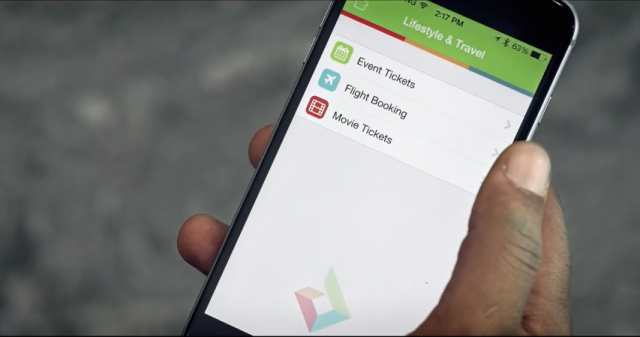
Most interesting is that the new Diamond Mobile App enables the Bank’s customers to switch on/off debit cards, search, book and pay for international and local flights, purchase events and movie tickets (with preview options), transfer funds within and outside the Bank and credit card repayments.
Other exciting features available on the app include airtime top-up and bill payments, account statement request, Diamond Money Transfer and Konga Wallet Top-up.
According to Ayona, the Bank is passionate about “giving back” to its customers, adding that the personalized hassle-free banking that the mobile app offers helps preserve the individuality and lifestyle of each customer.
The winners of the Diamond Liberacion include Chidi Awagu, Okwudili Chidubem Ubosi, Olabode Ronalds Adeniyi, Olufisayo Adeola Animashaun, and Afeisume Francis. Others are Chidi Henry Lemchi, Bessam Louis Joseph, Ogunkola Michael Oluwatosin, Oladipo Olakunle Bob, Owolabi Segun Isaac, Pankaj and Dolly Arora, Okora Joseph Ovat, Afolaogun Rotimi, Olabode Ronalds Adeniyi, Abubakar Zakariyau, Peter Afam Emeleogu, Chinenye Augustine Uzoma, Haruna Ibrahim, Iyajimoh Dorcas Alese, Kenneth Emeka Ogbonna, Agwa Sunday, Friday Domiya and Riliwan Opeyemi Rabiu.
South African mobile telecommunication giant, MTN has withdrawn its suit against the Nigerian Communications Commission, NCC over the humongous fine levied against it by the telecoms regulator.
The telecoms company has also paid N50bn towards an out-of-court settlement of the matter for which it had dragged NCC to court.
The telecom regulator had slammed a fine of N1.04trn on MTN for failing to deactivate 5.1 million unregistered SIM cards. But following the first round of negotiations, the fine was reduced to N780bn to be paid on or before December 31, 2015.
However, as the deadline drew near, MTN dragged NCC before a Federal High Court in Lagos, hiring about eight Senior Advocates of Nigeria to plead its case. It later requested an out-of-court settlement to which the Nigerian authorities say it must pay part of the fine before talks can commence.
The South African company, on Wednesday, finally withdrew the suit in response to a request by the Nigerian authorities.
Speaking about the withdrawal, the Chief Executive Officer of MTN Nigeria, Ferdi Moolman said, “This is a most encouraging development. It demonstrates a willingness and sincerity by both parties to work together towards a positive outcome.”
Moolman noted that MTN paid N50bn to the Nigerian government “as a gesture of good faith and commitment to continued efforts towards an amicable resolution”.
The telecoms company further stated that “We are hopeful at this stage. Along with the authorities, it is clear that we are collectively committed to working towards a solution that is of mutual benefit to all parties. Our industry in Nigeria is an incredibly important example of the remarkable progress in ICT particularly as a much needed catalyst for socio-economic growth and development at this time.”
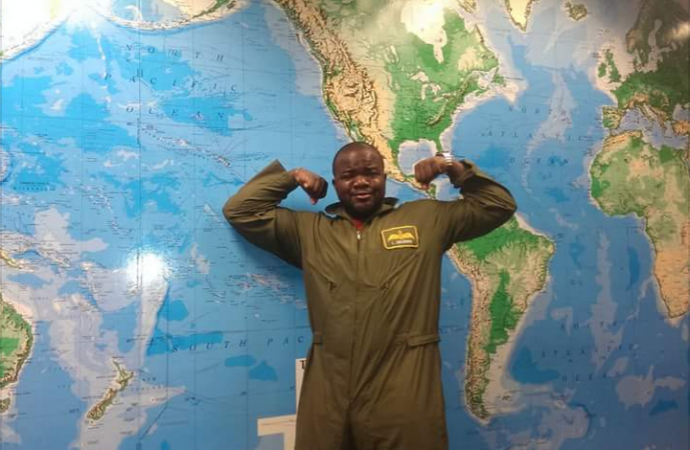
A Nigerian pilot, Mr Ademilola Odujinrin, has announced that he is preparing to embark on a historic solo flight around the world in April.
Odujinrin made this known while addressing aviation correspondents on the proposed mission at the local wing of the Murtala Muhammed Airport in Lagos.
The News Agency of Nigeria (NAN) reports that Odujinrin will be the first African to embark on the adventurous journey which had been accomplished by only 114 persons globally.
This will be Africa’s very first solo flight around the world, starting and finishing in Lagos, Nigeria — the continent’s most populous country.
The journey, which is supported by the Transcend Project, a non-governmental organisation will cost over $1 million and will take him across the seven continents of the world and is expected to take up to six weeks depending on the weather conditions.
The pilot said the visionary expedition was to demonstrate the potential capabilities of Nigeria and its people to achieve extraordinary feats.
“The project aims to inspire Nigeria’s teeming population to begin to conceive a world without borders with unbridled dreams to transform the Nigerian narrative while shattering all stereotypes.
“The planned solo expedition will be achieved flying the aircraft, Cirrus SR22. It has a total payload of about 439kg.
“This particular aircraft with registration number N313CD has been specifically modified for this journey with additional long-range tanks and a HF radio installed for longer stretches of the journey,’’ he said.
Odujinrin, who is married with two children, said he had so far acquired over 4,000 flight hours and worked previously with Nigerian carrier, Arik Air.
According to him, he is currently undergoing physical and psychological training to prepare him for the challenges of operating a flight without any assistance from another person.
Also speaking, the Project Director, Transcend, Mr Ladi Ani-Mumuney, appealed for the support of well-meaning Nigerians and corporate organisations and said the objective of the adventure was to inspire youths that follow their dreams and also promote the image of Nigeria outside the country.
He added that monies realised from the historic event would be channelled to support selected charities, particularly children living in Internally Displaced Persons (IDP) camps in the North-East.
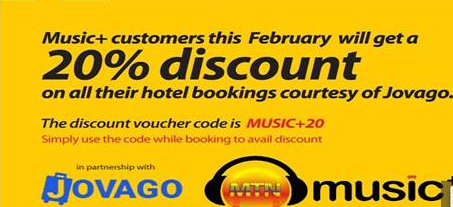
Africa’s largest hotel booking portal, Jovago.com and mobile telecommunications company, MTN have entered a partnership which will deliver to MTN’s Music+ subscribers’, discounts worth 20% OFF on all hotel booking around the country, as a means to providing affordable, convenient and easy accommodation services anywhere in the world.
The partnership with Jovago will deliver to MTN’s Music+ subscribers’ the opportunity to receive fast, easy and secure hotel booking services around the world at 20% discount on even the best individual rates.
Speaking on the launch of the campaign, Kushal Dutta, Managing Director of Jovago said “We are happy to announce this partnership with MTN. With this initiative, you will never be stranded again. Now you can go anywhere in the country, find a place to stay on Jovago.com and save 20% when you use the code MUSIC+20. Nigeria’s mobile penetration is improving each day and this drives Jovago and MTN to provide even better and more affordable services for subscribers.”
With the expansion of its offices to Pakistan, Myanmar and Bangladesh, Jovago now has a large inventory of 25,000 hotels in over 40 African countries and 200,000 hotels worldwide. With its ongoing success, Jovago aims to drive the innovation of its digital services in the hospitality industry in emerging countries. at the best prices possible and global presence in more than 41 countries around the world.
Manufacturers have raised alarm over the scarcity of dollars in the nation’s economy, saying that the development might lead to loss of jobs in the sector as the survival of industries are threatened.
Speaking at the quarterly business luncheon of the Institute of Directors on Thursday, a Director of Daraju Industries Limited, a fast-moving consumer goods company, Mr. Oscar Macaulay, said that they were on the verge of closing down due to the scarcity of foreign currency to purchase raw materials.
He warned that about 400 direct jobs and 2000 indirect jobs were on the verge of being lost, and urged the Federal Government to intervene in order to avert the crisis.
According to him, about 20% of imported finished products from China are competing with theirs, making it difficult to cope with the situation.
The Minister of Industry, Trade and Investment, Mr. Okechukwu Enelamah, confirmed that several of such complaints had been received by the ministry, saying that a decision which would be effective in the short term and long term would be reached.
Enelamah explained that the FG planned to improve on the ease of doing business in the country by identifying the challenges and overcoming them.
The Nigerian Inter-bank Settlement System Plc has revealed that 48% of Point of Sale (POS) machines, acquired by the Deposit Money Banks and given to merchants and business outfits operating in the country in order to enhance the cashless policy, have become dormant.
The NIBSS was set up by the Central Bank of Nigeria and licensed commercial banks and discount houses in 1993 to help streamline inter-bank payments and settlement mechanisms, and to promote electronic payments in the country.
Executive Director, Business, NIBSS, Mrs. Christabel Onyejekwe, who spoke at a joint press conference with the CBN in Lagos on Monday, said out of a total of 120,000 PoS machines in the country, only 62,000 were active, while a total of 100,000 terminals were already registered with the company.
Onyejekwe, who said the NIBSS was constantly in discussion with banks to get the 58,000 dormant PoS devices active, however stressed that electronic payment in the country was growing significantly following the introduction of various incentive schemes by the CBN in collaboration with the NIBSS.
According to her, electronic payments have been growing significantly in Nigeria, with 18 million transactions recorded in December 2015.
The NIBSS director said as part of the efforts to encourage the adoption of e-payment in the country, the CBN and the NIBSS would reward various categories of users of e-payment products on Thursday in Lagos.
The Minister of Power, Works and Housing, Mr. Babatunde Fashola, has said President Muhammadu Buhari had established an inter-ministerial committee to verify claims by state governments of money spent on federal roads, and that the Federal Government would reimburse state governments once their claims were verified.
According to him, the Federal Government has commenced the verification of all federal roads constructed by the Kwara State Government for possible reimbursement.
The minister disclosed this when he paid a courtesy call on the Kwara State Governor, Alhaji Abdulfatah Ahmed, in Ilorin.
For instance, Fashola said the Federal Government had identified Jebba-Ilorin Road as one of the most strategic economic corridors in Nigeria that required urgent attention.
He added that the Federal Government was making efforts to restore normalcy to the road in view of its strategic importance.
Governor Ahmed, on his part, called for more support from the Federal Government in the area of infrastructural development, especially federal roads in the state.
He added that the intervention of the Federal Government on federal roads would ensure cost savings for the state government in addressing other projects left untouched.
Ahmed pleaded with the Federal Government to hasten work on Ilorin-Ogbomosho-Oyo-Ibadan road as well as Jebba-Ilorin road to ease the movement of people and goods from the North to the South-West.
Shoppers are often at the mercy of some of these gigantic malls when it comes to getting the best bargain. These malls located in different parts of Lagos have become notorious for their non-negotiable stance with regards to pricing. They expect shoppers to simply walk in, pay the price on the price tag whether it was hiked or not and leave.
As a bargain hunter, there are certain sins that you must not commit if you actually looking for a good deal. Jovago.com, Africa’s No 1 hotel booking rolls out some of these lapses that bargain hunters must avoid.
Assume the price is non-negotiable
Many walk into large stores and assume that they do not need to negotiate as it may be embarrassing to haggle at a mall as if in a market. However, there are various ways to get a good bargain. You can buy in bulk and request for a discount. Alternatively, you can scavenge for an item that is slightly scratched or dented, then walk to the cashier and demand for a discount. Due to the dent, you may be given 10% to 15% discount.
Ignore social media
Quite a number of retailers are on social media because it is now one of the most effective ways to promote a business. In order to attract new customers and retain others, these malls regularly offer awesome discounts and coupons through their Twitter and Facebook posts. In addition, they usually run social media campaigns where you can get an all expenses paid shopping trip by taking part in the campaign. So, do not ignore social media.
Be an introvert in-store
You may be an introvert by nature but if you want an awesome bargain you must be the opposite – an extrovert. Chatting up the employees and other shoppers about a particular product and upcoming promotions can give you great insight on the item you want to buy. Besides getting a good bargain, you will also make an informed purchasing decision.
Shop on an empty stomach
This may be a funny lapse but shopping on an empty bowel can erode your chances of getting a bargain. This may happen to people that prefer last minute shopping or wake up and simply drive to the mall to buy some groceries. Rather than focus on shopping, you will practically concerned about satisfying your hunger pangs when you are meant to skirt for an incredible bargain. You will end up spending more money if you go an empty stomach. As a rule of thumb, always eat before shopping and continue your shopping later.
Leave your smartphone in the car
Your smartphone is a perfect tool to help make informed purchasing decisions. If you are unsatisfied with the price of a particular item, you can easily google it and in a few minutes, get the price. You may probably have to decide whether to buy from the mall or order online so always arm yourself with your phone when you are in a mall.
At Mobile World Congress, MasterCard has released the results of the Mobile Money Study, which evaluates trends in the mobile environment being discussed online.
The Study found that Nigerians were particularly vocal online when it comes to discussing innovation, with Nigerian posts accounting for 38 percent of the total Middle East and Africa online discussions.
The MasterCard Mobile Money Study, now in its fourth year, in partnership with PRIME Research, analysed over two million conversations across the Middle East and Africa on Twitter, Facebook, Instagram, Forums, Google+ and YouTube. The aim was to discover what excited consumers about payment technology, and what security concerns they have about using digital payment solutions.
With the rapid progression of electronic payments adoption, consumers in Nigeria are increasingly seeking faster, more secure and smarter ways to pay for goods and services. Of all the payment innovations that were discussed online, people were most excited about digital wallets, biometrics, contactless, personal payments and wearables.
MasterCard’s contactless technology enables Nigerians to make everyday purchases quickly and safely, with just a tap of a contactless-enabled MasterCard payment product. This type of payment technology is fast becoming a popular way to transact in markets across the globe, and highlights the increasing demand by consumers for intuitive solutions that fit in with their hectic lifestyles.
Nigerians were particularly interested in the verification possibilities that biometrics solutions like selfie-based facial recognition, fingerprint reading, and heartbeat authentication opened up. With discussions around MasterCard’s “selfie-pay” pilot project, announced in July 2015, reaching more than 150 million consumers during that year.
The Study also found that people were excited about leaving passwords behind as the sole means of securing online transactions. However, given the need for these type of transactions to be protected, MasterCard’s SecureCode is still the best way for Nigerians to protect their personal information when shopping on their favourite online store.
Digital payment solutions are changing the way in which consumers are engaging with the world around them, and Nigerians are at the top of the list of the most eager adopters of these types of technology innovations. As the payment landscape evolves in Nigeria, and across Africa, consumers can expect more advancements from MasterCard.
The Kaduna Chamber of Commerce Industry Mines and Agriculture (KADCCIMA) has disclosed that the Dangote Group as one of the major sponsors of the forthcoming Kaduna International Trade Fair.
The Trade Fair which opens on Friday February 26 to March 6, 2016 has as its theme: Promoting solid Mineral sector for sustainable economic development in Nigeria.
The Director General of the Kaduna Chamber of Commerce Industry Mines and Agriculture (KADCCIMA) Mr. Usman Saulawa said President Muhammadu Buhari is expected to officially open the 37th Trade on Saturday Feb. 27th. He lauded the Dangote Group for the sponsorship, adding that the relationship between the two partners is helping businesses in Nigeria and beyond.
A statement from the Dangote Group said the trade fair will offer the Group an opportunity to display its numerous innovative products which include the recently introduced Dan-Q Seasoning, sachet sugar, salt, tomato paste and noodles, among others.
After a brief meeting with the Nigeria Electricity Regulatory Commission on Monday, power distribution companies have insisted that the increase in electricity tariffs across the country would be implemented regardless of a resolution by the Senate mandating them to revert to the old rate. They stated that the major challenge facing operators in the sector was the fact that the Senate had passed a resolution asking NERC and the Federal Ministry of Power, Works and Housing to suspend the increase in tariffs.
A CEO of one of the DISCOs said: ”The meeting that was to happen today with NERC did not hold as expected and it is not because of any disagreement. It was actually because some of our members could not make it to Abuja. Flights were delayed from Kano and some other parts of the country. So the meeting was adjourned and will be held at a later date when everybody will be able to make it to Abuja.”
The Executive Director, Association of National Electricity Distributors, an umbrella body for the Discos, Mr. Sunday Oduntan, confirmed that the meeting was adjourned, but pleaded with Nigerians to support the power firms.
“We should all try hard to build this industry and I can assure you that NERC and the Discos are working together on this issue,” he said.
The Nigerian stock market closed down on the second trading session of the week amid sell off in some capitalized stocks. The market capitalisation which opened at N8.400 trillion, decreased by N115 billion, to close at N8.285 trillion, yesterday. Similarly, the All-Share Index depreciated by 332.39 points or 1.36 per cent to close at 24,090.98 on Tuesday.
Market breadth was negative with 13 gainers and 26 losers. Unity Bank led the gainers’ table with 7.94 per cent, to close at 68 kobo per share. Wapco followed with a gain of 4.99 per cent to close at N84.52, while Honeywell Flour advanced by 4.38 per cent to close at N1.43 per share.
Continental Reinsurance gained by 3.33 per cent to close at 93 kobo, while United Capital went up by 3.05 per cent to close at N1.35 per share. Diamond Bank led the laggards’ table by 7.38 per cent to close at N1.38 per share. Champion Breweries trailed with a loss of 4.91 per cent to close at N2.71, while Oando declined by 4.90 per cent to close at N3.30 per share.
Dangote Cement declined by 4.88 per cent to close at N133, while Livestock shed by 4.80 per cent to close at N1.19.
The volume of shares transacted went down by 94.2 per cent as investors traded 201.5 million shares valued at N1.3 billion in 1,875 deals. FBN Holdings emerged the most-traded equity, with 66.62 million shares worth N246.95 million. Beco Petroleum came second on the activity chart with 25 million shares valued at N12.5 million, while Guaranty Trust Bank traded 15.93 million shares worth N263.54 million.
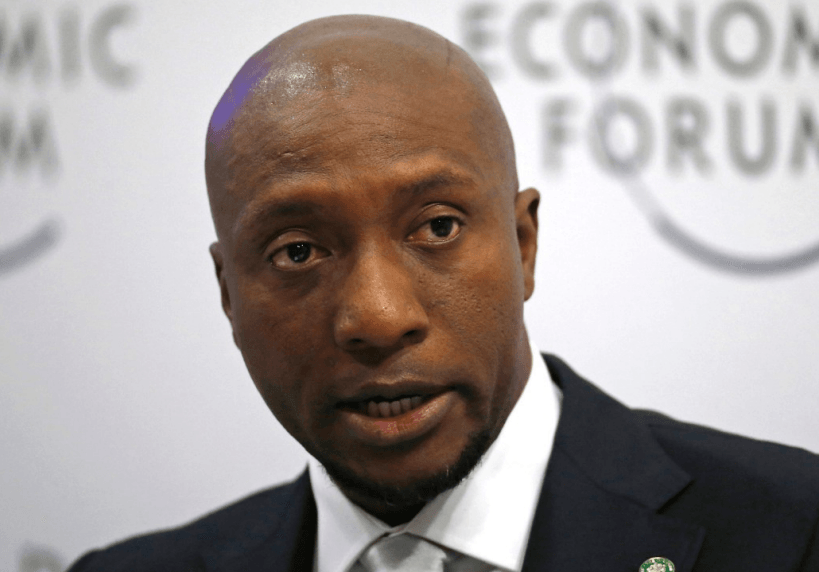
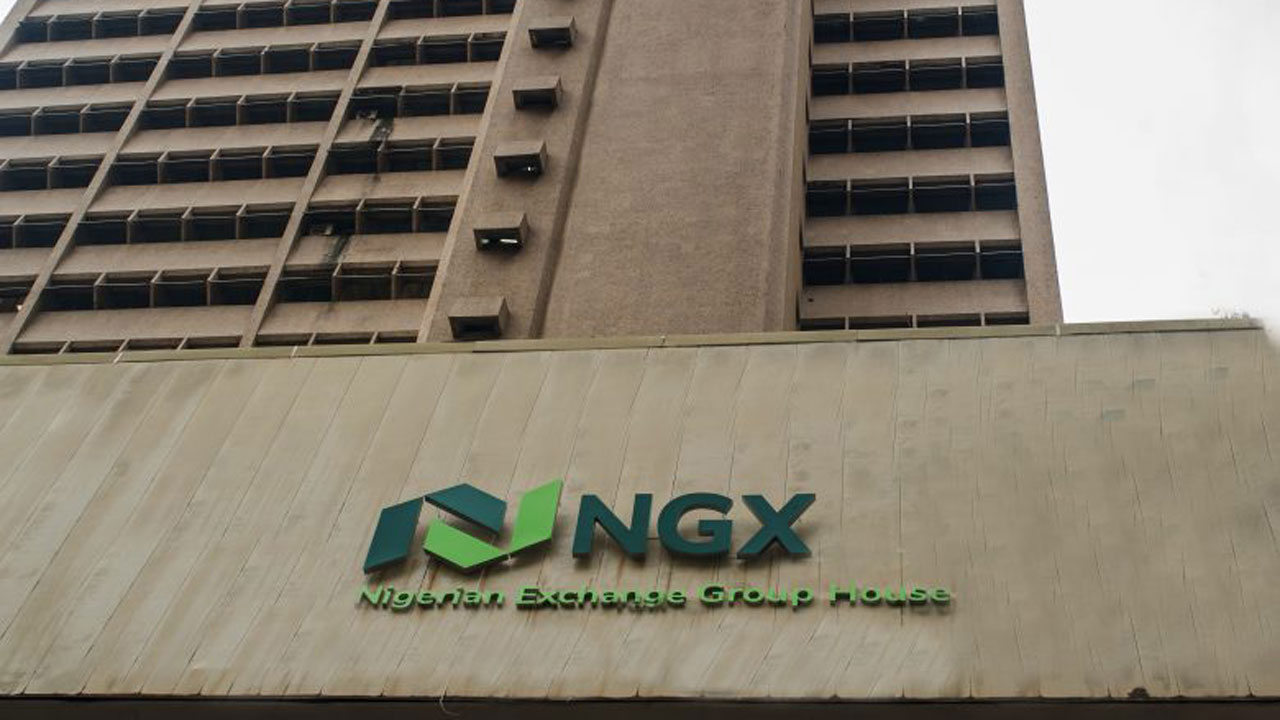
The Nigerian Stock Exchange (NSE) has renewed the contract of its Chief Executive Officer, Mr Oscar Onyema, for another five-year term.
According to reports, Onyema resumed office as the CEO of the Exchange in April 2011, while his initial five-year employment contract would expire on March 31, 2016.
Mr Aigboje Aig-Imokhuede, NSE President, remarked that Onyema’s tenure as NSE’s CEO was marked by outstanding achievements. He expressed confidence that Onyema would continue to implement the exchange business strategies to enhance growth and development.
“The leadership qualities that he has demonstrated in his first term as CEO, in the face of such intense and challenging operating environment, have been exemplary.
“The Council believes that his vision and passion will ensure that the Exchange remained a force to be reckoned with in Africa and beyond,’’ he stated.
Onyema stated on his contract renewal: “I am honoured to remain with the NSE and to continue to lead our dedicated staff as we strive to achieve the Exchange’s vision. I am grateful to the Council for the opportunity to continue such an important work.”
“While there is still much to be accomplished, the support shown by the capital market community has been inspirational, and I look forward to working with the entire eco-system, to meet our objectives,” Onyema added.
New Remittance Corridors to Provide Quick, Low-Cost Money Transfer Options
for M-Pesa Users
Today at Mobile World Congress, HomeSend, the international payment and money transfer hub, announced the expansion of its global framework agreement with Vodafone Group for M-Pesa, including the launch of remittance services into five new markets during 2016.
The two companies will work together to enable the real-time, mobile receipt of remittances by M-Pesa users in the Democratic Republic of Congo, Ghana, Lesotho, Mozambique and Albania. In addition to Kenya, HomeSend has already launched connections for inbound remittances with M-Pesa in both Tanzania and Romania.
HomeSend continues to rapidly expand the reach of their network, with coverage expected to reach more than 70 markets in 2016. These will include 20 new Mobile Money markets, bolstering the interoperability of HomeSend’s network and providing their customers with the ability to send and receive remittances globally via a mobile phone.
Focused on broadening their network and service offering, HomeSend will provide a fast, safe and convenient way to receive remittances by enabling MasterCard payments cards to be used. Several markets are expected to go live with this solution throughout 2016.
Claire Alexandre, Head of M-Pesa Commercial and Strategy, Vodafone, said, “M-Pesa makes money mobile, now increasingly across borders too. We’re delighted to offer our customers more choice to send and receive money from other countries and networks. HomeSend connects them to an extensive global network, offering an affordable, secure and convenient solution for inbound digital money transfers.”
Stephen Doyle, CEO, HomeSend, said, “Vodafone is a pioneer in domestic mobile money services. HomeSend, as the leading global payments hub, remains a natural partner for Vodafone to connect their domestic deployments to users worldwide. We are thrilled to expand our work with Vodafone to bring all-important, cost-effective money transfer services to M-Pesa customers in even more countries.”
Acting managing director of the Niger Delta Development Commission (NDDC), Mrs. Ibim Semenitari, has said that the president Mohammed Buhari has given a mandate to quicken the development of the Niger Delta region.
She revealed that the president had demonstrated his sincerity in changing the face of the region by increasing the inflow of funds for development purposes.
Semenitari noted that in June and December, 2015, the President authorized the release of N22 bn for the development of the region as against the N15 bn that was released in the first half of the year, also, the N24.5 bn Ogbia-Nembe Road in Bayelsa State is nearing completion as the commission had decided to fast-track the project.
She also said that the commission was committed to the speedy completion of the 27km Ogbia-Nembe Road, which it was constructing in partnership with the Shell Petroleum Development Company (SPDC), adding that the Ogbia-Nembe section of the road, with six bridges and more than 50 culverts across very difficult terrain, was only the first phase of a project that would eventually terminate in Brass.
By Boluwatife Oshadiya | August 30, 2026
Key Points
MoMo Payment Service Bank appoints former Flutterwave COO Bode Abifarin as managing director and chief executive officer...