The House of Representatives yesterday asked the Minister of the Federal Capital Territory (FCT), Mohammed Bello, to halt the planned closure of 556 alleged illegal schools operating within the territory. The House also mandated its committee on FCT to investigate the clampdown on the affected schools and report back to the chambers within four weeks.
A member of the House, Albert Abiodun Adeogun (APC, Osun), noted that public schools in the FCT were not sufficient to cater for the educational needs of the increasing population.
He said recent media reports showed that the Department of Quality Assurance of the Education Secretariat of the FCT had concluded all processes and got approval to close down the 556 schools described as “below standard and illegal as soon as funds are available to execute the plan.”
“The fate of the pupils who are in the various purported illegal private schools which have not been approved by FCT administration will impact negatively on the future of the children and destroy the need to improve the literacy rate of Nigerians,” he said.
Meanwhile, the chamber yesterday directed the Nigeria Customs Service (NCS) to stop the incessant killings of residents in the border towns of Gaga, Wurno, Tangaza, Wammako and Kware in Sokoto State.
The House directed its Committee on Customs to conduct a holistic investigation into the matter and report back within two weeks.
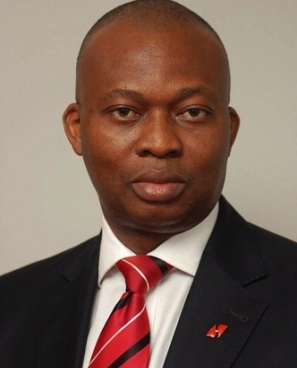
Board of UBA Group has appointed Mr. Kennedy Uzoka as the new Group Managing Director of the bank, with effect from August 1st, 2016 but subject to the approval of the Central Bank of Nigeria. Mr. Uzoka succeeds Phillips Oduoza, who retires on July 31, 2016, after two terms of leading the UBA Group.
The board made the appointment yesterday at a board meeting held at UBA House, Lagos.
Kennedy Uzoka has most recently been leading the transformation agenda of the bank, after returning from completing the Advanced Management Programme at Harvard Business School. Mr Uzoka has over two and half decades of experience in commercial banking, strategy and business transformation. Prior to his sabbatical at Harvard, Mr. Uzoka served as Deputy Managing Director, UBA group and was also the CEO of UBA Africa, responsible for the Group’s operations in 18 countries across Africa.
Mr. Uzoka is a graduate of Mechanical Engineering from University of Benin and holds a Master’s Degree in Business Administration from University of Lagos.
Besides Mr. Uzoka, Victor Osadolor was also appointed as the Deputy Managing Director, UBA Group. Mr. Osadolor brings a strong finance and risk background, having previously served as the Executive Director, Risk and Finance at UBA. Mr. Osadolor also held the position of Chief Strategy Officer at Ecobank Transnational Incorporation. He holds a Bachelor of Science degree in Accounting and is a Fellow of the Chartered Institute of Accountants of Nigeria. He also holds the Advanced Management Programme Certificate of the Harvard Business School.
The Chairman of UBA Group Mr. Tony Elumelu said of both appointments:
“Kennedy brings an extremely strong skill set and is ideally positioned to lead UBA in its next phase of growth. His most recent experience of managing the Group’s increasingly important African business, is particularly relevant, as we all work to build one of the leading financial services franchises in Africa. I have no doubt that both he and Victor with their expertise and depth of business experience will ensure that the Bank is best positioned to deliver on its strategic ambition.
I would also like to take the opportunity to thank Phillips, for all that he has done for the Bank in guiding UBA through a particularly challenging period. The board feels that the strong foundations created during Mr. Oduoza’s term provide an excellent basis for our further success.”
At Integrated Oil and Gas Limited, we are always on the look out for highly skilled, enthusiastic and dedicated people who can contribute to our continuing success. We understand that to a large extent, the ability of our company to be successful depends greatly on human resources, as we are a company positioned for the future, we attract, develop, motivate and retain individuals who have the required skills and knowledge to join hands with us in facing this great future.
We are looking for qualified candidates to fill the position below in our Lagos office:
Job Title: Corporate Affairs and Communication Manager
Location: Lagos, Nigeria
Job Details
This role is responsible for creating and communicating a favorable public image for the organization and to conduct of all external communications.
Focus would be on proactive and meaningful relations with the Community, Government, Media etc
Requirements
Minimum of 8 years relevant experience in similar role, wide skill set- proficiency at organization, communication, problem solving, speaking, writing and research.
African Development Bank (AfDB) – Established in 1964, the African Development Bank is the premier pan-African development institution, promoting economic growth and social progress across the continent. There are 80 member states, including 54 in Africa (Regional Member Countries).
The Bank’s development agenda is delivering the financial and technical support for transformative projects that will significantly reduce poverty through inclusive and sustainable economic growth. In order to sharply focus the objectives of the Ten Year Strategy (2013 – 2022) and ensure greater developmental impact, five major areas, all of which will accelerate our delivery for Africa, have been identified for scaling up, namely; energy, agro-business, industrialization, integration and improving the quality of life for the people of Africa.
We are recruiting to fill the following positions below:
A leading International Travel Organization offering private membership to our Abuja A+B clientele, is recruiting for its busy Apo office in the below position below:
Job Title: Visa Officer
Location: Abuja
Requirements
Minimum of 2 years of processing Visa in an Embassy or Travel Agency.
Must be Abuja based.
Computer Literate.
Good Communication Skill.
Application Closing Date
15th March, 2016.
Method of Application
Interested and qualified candidates should send their Application letter and CV’s to:abujahsarecruitment@yahoo.com with Visa Officer as subject of the mail.
Total is the fifth largest publicly-traded integrated oil and gas company in the world, with 100,000 employees in more than 130 countries worldwide. Our size and performance rank us as one of the top five global oil companies. “We are among the majors that invest the most in exploration. More importantly, our teams are highly motivated. They have a real pioneering spirit we must keep cultivating!”.
We are recruiting to fill the position below:
Job Title: Solar Hybrid Business Developer
Auto req ID: 2654BR Location: Lagos
Employment Type: Regular position
Experience Level Required: 0 – 3 years
Functional Discipline: Strategy Economics Business
Branch: Marketing & Services
Job Description
Implement the Business model of the Hybrid solutions to B to B customers.
Offer solar hybrid solutions to Industrial customers – Telecom, Banks etx.
Design of hybrid solutions for industrial customers
Implementation and project management of stations turnkey solarization projects for 200 stations.
Identify and analyze new project opportunities.
Collaborate with the Sales team (GTEs) to maximize lead generation efforts and strategies.
Takes responsibility for Project controlling.
Develop and initiate strategic input to the business and support ongoing business initiatives
Responsible for the management of customer service, relationships and contracts.
Maintain a good knowledge of the solar market, competitor’s activities and report best practices.
Manage all solar O&M activities in designated project portfolio to maximize system performance
Manage multiple solar sites and contractors.
Functional Discipline:
Inspection/Maintenance
Sales
Industrial Projects
Research Innovation & Develop
General Services.
Candidate Profile
First degree in Electrical Engineering.
Certification in Renewable Energy (Solar) and Project Management will be an added advantage).
A minimum of 2 years experience in Solar Hybrid solutions.
Good analytical, interpersonal and communication skill.
Application Closing Date
11th March, 2016.
How to Apply
Interested and qualified candidates should APPLY
Operations of domestic flights were on Tuesday, March 1 affected by limited supply of aviation fuel, otherwise known as Jet A -1, forcing some carriers, including Arik Air , to delay some flights and cancel others.
According the spokesman of Arik Air , Ola Adebanji, the limited supply has lingered for some days.
”The limited supply of JET A1 (aviation fuel) across the country in the last few days has greatly hampered our flight operations.
He said: “With over 100 flights daily, this limited supply of aviation fuel has resulted, regrettably, into flight delays and sometimes outright cancellations.
Trading activities on the floor of the Nigerian Stock Exchange, NSE, on Tuesday, March 1, sustained upward trading as the All Share appreciated by 1.09 per cent to close at 24,838.31 basis points, compared with the 1.41 per cent appreciation recorded previously.
The market capitalization, which started yesterday with N8.452 trillion rose by 1.10 per cent to close at N8.545 trillion.
However, market turnover closed negative as volume declined by 65.81 per cent against 66.6 per cent uptick recorded in the previous session
Zenith Bank Plc, FCMB Plc and Transnational Corporation Plc were the most active to boost market turnover with Zenith Bank top on market value list.
Evans Medical Plc led the list of active stocks that recorded impressive volume spike at the end of the trading.
Market breadth closed positive as Dangote Cement Plc led 20 gainers against 15 losers topped by Forte Oil Plc at the end of the trading which was an improvement when compared with previous outlook.
Top on gainers’ log was Dangote Cement Plc with a gain of N7.08 kobo to close at N148.83 kobo, followed by Seplat Petroleum Development Company Plc with N3.30 kobo to close at N352.30 kobo, Mobil Nigeria Plc with N2.98 kobo per share to close at N159.95 kobo.
Analysts at the Financial Derivatives Company Limited, FDC, have advised the federal government to strengthen its tax system, which has been described as a more sustainable option to raise government revenue.
The Lagos-based research and investment firm in its latest economic report noted that unlike revenue from oil and other exports, taxes have a very limited vulnerability to external pressure.
The analysts added that it takes less time, effort and cost to improve tax collection than to implement other long-term development plans such as agricultural reformation, construction of refineries that are expected to contribute to revenue.
Many have advocated the revival of the agricultural sector as the way out of the present economic challenge facing the nation. It is expected that agriculture would diversify the nation’s exports and thus expand the supply source of its foreign exchange.
In 2014, total tax revenue from the Federal Board of Inland Revenue was N4.69 trillion, from N4.78 trillion in 2013. From this, the tax to Gross Domestic Product ratio was 5.9 per cent in 2013 and 4.3 per cent in 2014, which was substantially lower than the sub-Saharan African average of 21 per cent in 2014.
To this, the FDC report stated: “This declining trend is not a problem of inappropriate policy but rather one of an inefficient tax collection system. Currently, the Nigerian tax system is generating much less than its potential. Because the tax officials are not well trained and equipped or well-paid and monitored there has been inefficiency and corruption in the past.
“In addition, the wide-spread perception that the government is corrupt and will not efficiently expend the collected revenue for the good of the general public, acts as a deterrent to tax payers. This is further complicated by the unnecessarily onerous process involved in the payment of tax.”
The Joint Admissions and Matriculation Board, JAMB, on Tuesday, March 1, released results of 200,000 candidates who had written the examination even as the test continues.
The Registrar/Chief Executive Officer of JAMB, Dibu Ojerinde, revealed this during the monitoring of the exercise in Abuja and its environs.
He explained that over 200,000 candidates’ results had been released since the examination commenced on Saturday.
Ojerinde spoke just as the Minister of Education, Mallam Adamu Adamu, expressed concern over the plight and difficulties faced by non-computer literate students sitting for the examination.
The minister expressed his reservation when he visited some centres in the FCT to monitor the on-going Unified Tertiary Matriculation Examination (UTME) being conducted by JAMB.
Adamu, however, said though he was satisfied with the conduct of the CBT mode of the examination, he was glad the board had addressed most of his concerns and other Nigerians.
“I seem to be very comfortable and happy with what they are doing. But my question has not been answered; that there may be people who are not computer literate, so, what do you do with them. I do not have reservation about CBT but I have sympathy for those who are not computer literate and there are many of them,” he said.
Athens, Greece-based Frigoglass SAIC, retains the highest stake in Beta Glass Plc, following its decision to reverse sale of its stake.
Beta Glass is quoted on the Nigerian Stock Exchange (NSE).
Frigoglass had in May 2015 signed agreement to divest its majority equity stake to GZI Mauritius Limited, but the parties failed to see the deal through.
Frigoglass SAIC, in a regulatory filing at the NSE, said it has terminated the agreement with GZI Mauritius Limited on the divestment of its glass business, which includes the operations in Beta Glass Plc, because a condition precedent was not met.
Frigoglass stated that GZI did not secure the necessary level of debt financing for the acquisition while the amended offers made by GZI were declined as not reflecting the full value of the glass business and therefore not being in the best interest of Frigoglass and its stakeholders.
Frigoglass noted that its glass business retains its strong local market position and technical excellence, adding that it believes that the glass business will remain the leading glass packaging manufacturer in Nigeria and is ideally placed to capitalise on the long-term beverage consumption growth in Africa, driven by its customers’ sustained investments and the continent’s attractive growth prospects.
“The glass business continues to perform well and remains a valuable asset for Frigoglass, despite challenging trading conditions in Nigeria. During 2015, the glass business delivered on its business plan and successfully completed a furnace rebuild in Nigeria, enhancing its efficiency and capacity. The Dubai based glass business significantly improved its cost base and, consequently, its operating margin,” Frigoglass stated.
The Abuja chapter of Nigeria Society of Engineers, NSE, on Tuesday, March 1, inducted about 66 Engineers as Corporate Members of the organization.
The NSE charged the inductees to uphold and honor the dignity of engineering profession, while cautioning the engineers against falsifying their qualifications or permit misrepresentation of associates’ qualification.
In his address, the Chairman, Abuja chapter of NSE, Yakubu Ali Garba said the three tiers of government must recognize the role of indigenous engineers in infrastructure development.
Ali noted that the fight against corruption cannot succeed without considering good remuneration for engineers adding that most funds lost to corruption were through engineering projects.
He advised inductees to practice according to Engineering Code of Conduct saying that henceforth, they would be held responsible for their actions and inactions.
Director-General, Munir Gwarzo, who addressed members of the House of Representatives Committee on Capital Market on Tuesday, March 1,in Abuja,
Gwarzo also expressed concerns that the Treasury Single Account (TSA) has greatly reduced the capital market regulator’s ability to be flexible.
“What we generate from the market cannot cover more than 50 per cent of our cost, so, more often we have to dip into that fund (funds saved by past SEC administrations) but now with the TSA and other things, that flexibility is being cut off because some of the interest income that we derive from those investment, we don’t enjoy them any longer,” he lamented.
Gwarzo told the legislators SEC is now “running a very tight budget, given that the market has gone down and given that there are aspirations to move the market up. We have to set aside some amount of money.”
The SEC chief also disclosed that for “the budget of 2015, we had projection of N6.9 billion as our income but we were only able to make N4.9 billion because of the state of the market. We no longer take our staff on overseas and local training and our earnings are now 30-40 per cent less than we had in the past.”
SEC also said it aims to attract more retail investors into the capital market to deepen and develop the market.
Gwarzo said: “As a country we have only less than two per cent participation of retail investors in our market. Malaysia has nine per cent, South Africa 19 per cent, US 43 per cent, and UK-13 per cent. So our market is less being participated by the retail investors. Due to the dominance of foreign investors, anytime they move out of the market, the market goes down. Our effort is to see that in the next five to 10 years we raise the level of involvement of the retail investor to at least five per cent.”
Trading activities at the Nigerian Stock Market on Tuesday, March 1 saw a boost with the market indicators appreciating by 1.09 per cent.
Major blue equities lifted Market Capitalization by N92billion or 1.09 per cent to close at N8.544 trillion compared with N8.452 trillion recorded on Monday.
Dangote Cement led the gainers’ table, increasing by N7.08 to close at N148.83 per share. Seplat trailed with N3.30 to close at N352.30, while Mobil Oil gained N2.98 to close at N159.95 per share. PZ industries garnered N1.09 to close at N22.99, while ETI rose by 83k to close at N17.58 per share.
On the other hand, Forte Oil topped the losers’ table with a loss of N33.34 to close at N308.66 per share. Lafarge Africa lost N2.87 to close at N81.65, while Unilever dropped N1 to close at N28 per share. Conoil depreciated by 87k to close at N16.56 and GT Bank shed 9k to close at N15.91 per share.
The volume of shares traded closed lower as investors staked N1.10 billion on 159.74 million shares transacted in 3,080 deals. This was in contrast with 467.24 million shares worth N1.49 billion traded in 2,549 deals on Monday.
The Financial Service Sector remained the most active with Zenith Bank emerging the most traded stock with 21.26 million shares valued N234.83 million achieved in 414 deals. FCMB Group accounted for 21.11 million shares valued N15.87 million exchanged in 126 deals, while Trancorp sold 13.59 million shares worth N14.85 million in 72 deals.
UBA exchanged 13.39 million shares valued N38.43 million transacted in 169 deals and Unity Kapital Assurance traded 11.23 million shares worth N5.61 million in two deals.
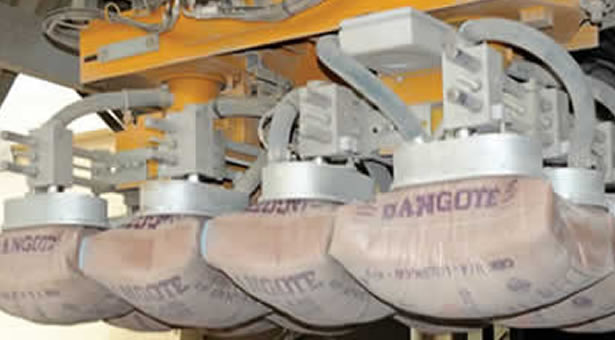
Leading cement manufacturer, Dangote Cement Plc, has declared a profit after tax of N181.3 billion for the financial year ended Dec. 31, 2015.
This was contained in the company’s audited result released by the Nigerian Stock Exchange, NSE, on Tuesday, March 1, in Lagos.
Also, the group profit after tax grew by 13.7 per cent. According, the firm is paying N8 per share as dividend for audited results for the year ended December 31, 2015.
Highlights of the result showed tha revenue up by 25.6 per cent to 491.7 billion as new plants perform strongly across Africa. Earnings before interest, taxes, depreciation and amortization (EBITDA) up by 17.5 per cent to 262.4 billion at 53.4 per cent margin.
This showed that all plants profitable across Africa. Also, earnings per share appreciated by 15.2 per cent to 10.86
Also, dividend went up by 33.3 per cent to 8 per share at 73.7 per cent payout ratio.
Group cement volumes rose by 35 per cent to nearly 19 million tonnes, price reduction drives strong rebound in Nigerian market in the fourth quarter as volumes up 36 per cent and full-year volumes up 3.2 per cent despite severe economic challenges.
The Federal Government, on Tuesday, March 1, reported a major drop in peak power supply through the national grid from over 5,000 megawatts to less than 2,800 megawatts.
The situation was blamed on the incessant vandalization activities launched by miscreants.
The acting Chief Executive Officer of the Nigerian Electricity Regulatory Commission, NERC, Anthony Akah, made the remarks during the signing of Memorandum of Understanding, MOU, with the Consumer Protection Council, CPC,
Akah solicited support of members of the public and the council to collaborate with the service providers and security agencies to ensure security of electrical installations.
He, however, said that the Commission will soon compel electricity distribution companies to publish their meter deployment schedules so as to ensure adherence to the meter roll out plan contained in the performance agreement signed with government by the utility firms.
The Organization of Petroleum Exporting Countries, OPEC, crude production slid in February from the highest level in Bloomberg data, going back 20 years, a survey has revealed.
The Cartel production dropped by 79,000 barrels to 33.06 million barrels a day in February, according to a Bloomberg survey of oil companies, producers and analysts.
According to the data, Nigeria and Iraq led declines, while Iranian production climbed to the highest level in more than three years.
Nigeria’s oil production dropped as Royal Dutch Shell’s Nigerian venture suspended the flow of Forcados crude to the export terminal following a spill.
The country’s oil production fell by 139,000 barrels a day to 1.889 million barrels, the biggest decline in the survey, which noted that Nigerian output is volatile because of political unrest and theft in the Niger Delta region.
Similarly, Iraqi production dropped by 125,000 barrels a day to 4.385 million barrels this month, according to the survey. Iraq, OPEC’s second-biggest producer pumped 4.51 million barrels a day in January, the highest level in monthly data compiled by Bloomberg going back to 1989.
The report which revealed that most of the decline in February output was involuntary, showed Iraq with the biggest production drop due to the stoppage in flow along the pipeline carrying crude from the Kurdish region.
According to an analyst at Petromatrix, Olivier Jakob. “The interruption from Kurdistan is significant because they were a big part of the increase in exports from Iraq, it is prompt supplies and these are large volumes.”
Tariffs imposed on imported automobiles contributed over 50 per cent of revenue generated by the Seme Border Command of the Nigerian Customs Service, NCS, in 2015.
The command’s public relations officer, Mr Selechang Taupyen, who confirmed this, said that the vehicle transit scheme has begun to yield positive results.
Speaking with journalists at the command’s headquarters at Seme Border recently, Taupyen also attributed the high vehicular collections to the synergy and a memorandum of understanding signed between the NCS and Benin Republic Customs, saying that they are responsible for stemming the tide of smuggling activities within the frontiers.
According to him, the customs from the neighbouring country hands over imported vehicles to the NCS and the process of clearing such commodities commences afterwards. This, he said, is a typical element of the vehicle transit scheme which started in 2014. He explained that the NCS and its counterpart in Benin Republic have a good working relationship which ensures that vehicles coming from neighbouring countries are handed over properly for duty to be duly collected for the Nigerian government.
“For last year, the duty collections on vehicles alone was over 50 per cent of the entire revenue generated from the Seme Border Customs Area Command. I think that the collaboration is helping a great deal. It is especially helping us to actualise our vision and that was the reason the new customs area controller did not waste time in extending a hand of fellowship,” he said.
The Islamic Development Bank, IDB, on Tuesday, March 1, revealed that Nigeria was using 75 percent of its revenue to service debts incurred over the years.
The Resident Representative of the Bank in Nigeria, Abdallah Mohammed Kilaiki, stated this during a courtesy visit to the Chairman of the Senate Committee on Local and Foreign Debts, Senator Shehu Sani.
Kilaiki said even though Nigeria’s debt to gross domestic product (GDP) ratio was favorable, servicing 75 percent of revenue on debts was unfavorable.
“The amount the country is using to service debts is 75 to 80 percent of its revenue. The domestic resources being used to service loan is high,” he said.
He advised the Nigerian government to diversify the country’s revenue base and suggested the upward review of taxes.
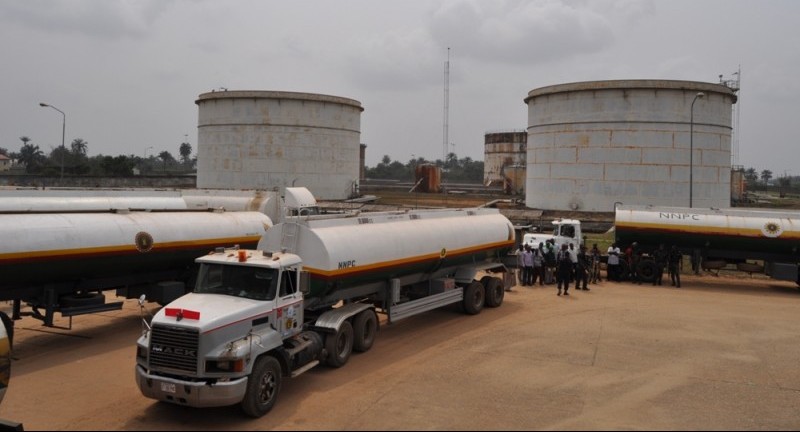
In a bid to stem the growing fuel scarcity in the nation, the Nigerian National Petroleum Corporation, NNPC, has increased its daily supply of petrol to Lagos from 295 trucks (9.7 million litres) as at Monday to 310 trucks on Tuesday,March 1, which is 10.2 million litres.
The Executive Secretary of Major Oil Marketers Association of Nigeria, MOMAN, Obafemi Olawore said marketers received the 310 trucks yesterday, stating that if the same quantity is received today, the long queues at filing stations will ease out by end of the week.
He stated that there are vessels laden with products that were imported by NNPC but the problem is that the Corporation lacks storage and distribution facilities to distribute the products, which accounts for the current situation on ground.
Olawore noted that when the importation ratio was 50:50 between marketers and the NNPC, the distribution situation was not this bad, adding that the 78 per cent importation ratio given to the Corporation may be reviewed in second quarter.
He confirmed that many filling stations were selling at above the regulated pump price, but explained that such situation obtains because the demand surpasses supply and many people sell at whatever price they like to make more profit.