








Home Blog Page 137

Euro Weakens Further Amid Dollar Strength And Unfavorable US-EU Trade Agreement

salary of a woman. euro banknotes in hands on a green background. Income of women in European countries

The euro continued to depreciate, sliding to $1.14—its lowest point since mid-June—as the dollar maintained its upward momentum following the announcement of a controversial transatlantic trade deal. The greenback surged after the U.S. Federal Reserve maintained its monetary policy stance, stirring market unease in the Eurozone.

Investors responded negatively to the newly signed U.S.-EU trade agreement, which imposed 15% tariffs on most European goods—averting the harsher 30% levies earlier threatened by President Donald Trump. Critics argue the deal heavily favors U.S. exporters, causing Eurozone uncertainty.

The U.S. dollar index climbed 2.1% in July, on track for its strongest monthly performance since 2019. The bullish shift follows months of weakening performance in the first half of 2025, suggesting renewed confidence in U.S. fiscal stability.

Although the Fed left interest rates unchanged, Chair Jerome Powell’s hawkish tone—hinting at no guaranteed rate cut in September—fueled the dollar’s rally. Meanwhile, Eurozone GDP data showed a sharp slowdown in Q2, growing by just 0.1% versus 0.6% in Q1, despite beating stagnation forecasts. The uneven growth pattern—contractions in Germany and Italy, expansions in France and Spain—highlighted the bloc’s economic vulnerabilities.

In financial markets, expectations for the European Central Bank to lower interest rates have now been delayed further, with markets projecting a 90% chance of a 25bps cut by March 2026, and only 30% odds for a December 2025 move.

Monex Europe analysts suggested the euro’s weakness may be short-lived, citing resilient French GDP growth (0.3%) and prospects of a medium-term economic recovery in the Eurozone. The euro dipped 0.2% to $1.1522 after touching a one-month low of $1.1515 on Tuesday.
BUA Foods Doubles Profit Before Tax To ₦276bn In H1 2025

BUA Foods Plc has reported a 101% year-on-year increase in profit before tax, reaching ₦276.1 billion for the half-year ended June 30, 2025, according to its unaudited financial statement filed with the Nigerian Exchange Group on Wednesday. Revenue for the period rose by 36% to ₦912.5 billion, boosted by strong performance across the company’s sugar, flour, pasta, and rice business segments.

Notably, the rice division delivered a staggering 2,923% surge in revenue, rising from ₦1.3 billion in the first half of 2024 to ₦39.3 billion in the same period this year.

Gross profit climbed 55% to ₦339.3 billion, with gross margin improving to 37.2%, up from 32.4% a year earlier. Operating profit rose 41% to ₦284.8 billion, while earnings per share nearly doubled from ₦7.27 to ₦14.45.

The company’s total assets increased by 21.7% to ₦1.33 trillion, while shareholders’ equity surged 60.6% to ₦689.1 billion.

Managing Director Ayodele Abioye attributed the strong performance to BUA Foods’ robust fundamentals and diversified operating model.

“These results reflect our operational efficiency and ability to scale amidst evolving macroeconomic dynamics,” Abioye said. “We remain focused on affordability, innovation, and sustainable value delivery across our product lines.”

Segment highlights showed flour revenue jumping 66% to ₦378.2 billion, sugar growing 8% to ₦398.1 billion, and pasta rising 31% to ₦96.9 billion.

On the balance sheet, liabilities declined by 3.4% to ₦644.1 billion, while retained earnings increased by 62% to ₦681.1 billion.

BUA Foods reaffirmed its commitment to investing in backward integration, technology, and capacity expansion to improve food security and position Nigeria as a key agricultural exporter in West Africa.

Osun APC Faults Deployment Of 1,750 Ad-hoc Teachers

Osun Poly Riot: Adeleke Urges Protesters To Stay Calm

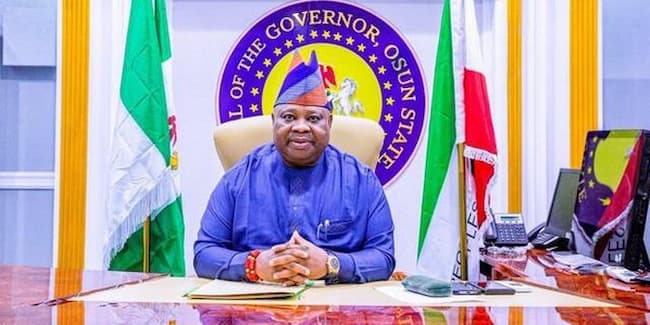
The Osun State chapter of the All Progressives Congress (APC) has criticized Governor Ademola Adeleke for deploying 1,750 ad-hoc teachers under the Imole Corps scheme to public primary and secondary schools, accusing the administration of risking the future of pupils with untrained personnel.

In a statement issued Wednesday in Osogbo, the APC’s spokesperson, Kola Olabisi, described the decision as “confused and misplaced,” alleging that it reflects poor priorities by the Peoples Democratic Party-led government.

“For God’s sake, it defies logic how a government that is constructing five needless flyovers and purchasing luxury vehicles for cabinet members can claim it cannot afford to properly recruit and train teachers,” the statement read.

The opposition party also raised concerns over the fate of thousands of teacher applicants who had already been interviewed but are yet to be employed.

“This strange policy should be condemned by all genuine stakeholders in the Osun education sector,” Olabisi said, describing the move as a “collective calamity.”

However, the state chapter of the PDP defended the governor’s action, describing the deployment as a necessary stop-gap measure due to financial constraints allegedly imposed by the APC-led Federal Government.

In a counter-statement, PDP spokesperson Oladele Bamiji accused the federal authorities of withholding allocations to Osun local governments for the past five months, which he said has delayed the full recruitment process.

“Despite the challenges, the ad-hoc teachers were given training and are working under the supervision of experienced teachers,” Bamiji said.

He further claimed that the delay in releasing local government funds was a political strategy to frustrate the Adeleke administration’s developmental efforts, including teacher recruitment and ongoing infrastructure projects.

“The APC is hellbent on stopping Osun’s development, but the PDP government will not allow it,” Bamiji added. “Osun must escape the cycle of underdevelopment whether APC likes it or not.”

The PDP warned that voters would punish the APC for what it called “inhuman treatment,” insisting that the people of Osun would continue to support the current administration.

MTN Nigeria Reports N414.9bn Profit In H1 2025, Marks 180% Turnaround From Previous Year Loss

How To Join MTN's mPulse Spelling Bee Competition

MTN Nigeria has reported a net profit of N414.9 billion for the half-year ended June 30, 2025—an impressive 180 percent year-on-year rebound from a net loss of N519.1 billion recorded during the same period in 2024.

The turnaround, detailed in the company’s consolidated financial statements, was driven largely by strong revenue growth, improved operational performance, and a drastic reduction in foreign exchange losses.

Total revenue surged to N2.38 trillion in H1 2025, up 54 percent from N1.54 trillion in H1 2024. This increase was driven by robust performance across major revenue streams, notably:

Data revenue, which soared from N726.6 billion to N1.23 trillion

Operating profit rose 193 percent year-on-year to N892.8 billion, up from N304.5 billion in the corresponding period last year, while pre-tax profit stood at N622.3 billion, compared to a loss of N751.3 billion in H1 2024.

Earnings per share (EPS) followed suit, rising to N19.78 from a loss of N24.71 in the previous year.

A key driver of the telco giant’s return to profitability was a sharp decline in net foreign exchange (FX) losses—from N887.7 billion in H1 2024 to just N5.2 billion in H1 2025. The company was among the major beneficiaries of Nigeria’s ongoing forex market reforms, which helped moderate currency volatility and restore investor confidence.

Despite the profit recovery, net assets remained negative, though showing notable improvement—from negative N458 billion at the start of the year to negative N42.5 billion as of June 30, 2025.

Given the residual effect of accumulated losses, MTN did not declare an interim dividend for the period under review.

MTN Nigeria’s capital expenditure during the first half of the year stood at N564.5 billion, funded through net operating cash flow of N955.7 billion, leaving a free cash flow of N391.2 billion.

However, the heavy investments marginally impacted liquidity. The current ratio declined from 0.40 to 0.36, with current liabilities exceeding current assets by N1.23 trillion.

Strategic Progress and Legal Relief

The Board of Directors reaffirmed confidence in the company’s long-term fundamentals, stating that strategic decisions made at the 2024 Extraordinary General Meeting were already “yielding positive outcomes.”

Adding to the company’s positive trajectory, contingent liabilities from legal claims dropped significantly—from N3.99 billion in December 2024 to N0.88 billion by mid-2025, following the resolution of several long-standing litigations.

Outlook

With sustained revenue momentum, reduced FX exposure, and a strategic focus on operational efficiency, MTN Nigeria appears to be charting a steady path to full financial recovery. However, the company still faces pressure to address liquidity constraints and rebuild shareholder value through sustainable asset growth.

Nurses’ Strike Grounds Hospitals Nationwide, Patients Left In Limbo

Public hospitals across Nigeria have been thrown into crisis as the National Association of Nigeria Nurses and Midwives (NANNM) commenced a seven-day warning strike over unmet welfare demands. From Abuja to Lagos, Ibadan, and Yenagoa, patients were left stranded as nurses withdrew services, crippling routine and emergency care in federal health institutions. The strike follows the expiration of a 15-day ultimatum issued to the federal government.

At the National Hospital in Abuja, wards and emergency units were largely abandoned, with patients reportedly discharged prematurely. In Kubwa General Hospital, only skeletal services were available, handled solely by overstretched doctors.

A similar situation played out at Adeoyo General Hospital in Ibadan, where nurses were absent and patients were turned away. In Bayelsa, the Federal Medical Centre and various health posts shut their doors, leaving families confused and in distress.

The strike is backed by a list of demands including a new salary structure, improved allowances, recruitment of more nurses, and creation of a dedicated nursing department under the Ministry of Health.

Union leaders said efforts to resolve the dispute collapsed on Monday after the Minister of Health, Prof. Muhammad Ali Pate, failed to attend a scheduled meeting. The Minister of Labour and Employment, Mohammed Idris, presided over the talks, which ended in a deadlock.

NANNM warned that failure to meet its demands within the seven-day window could trigger an indefinite nationwide shutdown of nursing services.

Confusion In Aviation Ministry As Permanent Secretary Allegedly Defies Retirement Order

The Federal Ministry of Aviation and Aerospace Development is reportedly in disarray following the continued stay in office of its Permanent Secretary, Ibrahim Kana, more than a month after his expected retirement.

Despite reaching the statutory retirement age, Kana has neither exited office nor presented any formal documentation approving a tenure extension, causing widespread unease and confusion among ministry staff.

According to Nigeria’s Federal Civil Service rules, public officers are required to retire at 60 years of age or after 35 years of pensionable service—whichever comes first. These regulations are binding across all federal ministries, departments, and agencies.

Kana, who was appointed Permanent Secretary in June 2021 and became the youngest among his peers at the time, was due for retirement in early June. However, insiders say he has continued to carry out official duties, with no public clarification from the Ministry or the Office of the Head of Civil Service.

A senior official, who requested anonymity for fear of reprisal, described the situation as a growing concern. “His tenure has ended. By every rule, he should be out of office. But he’s still here. Just last week, he even locked up the office for no clear reason,” the source said. “The rules are clear, but enforcement remains weak in our system. This kind of impunity undermines public service integrity.”

The controversy has reportedly split the Ministry, with some directors frustrated by the inaction but hesitant to speak out publicly. A faction within the Ministry had reportedly planned a protest and threatened to petition the Minister over Kana’s continued presence. However, the group suddenly backed down, sparking speculation that political lobbying may be influencing the situation.

Sources allege that Kana has been reaching out to politically connected figures in a bid to secure a tenure extension through the Office of the Head of Civil Service. Such an extension would require the direct approval of President Bola Tinubu.

When contacted, Seyi Oduntan, Deputy Director of Press at the Ministry, dismissed the concerns as unfounded, claiming that Kana had merely taken casual leave after informing the appropriate authorities.

However, Kana himself contradicted that version, stating he was still at work and dismissing critics as “jobless people.”

The standoff has raised questions about transparency and accountability in the civil service. As the Ministry faces increasing scrutiny, it remains unclear whether any formal action will be taken—or whether this will become yet another unresolved controversy within the public sector.

FG Approves 50% Boost In Scholarship Funds To Ease Student Burden

In a bold step toward improving educational access, the Federal Government has approved a 50% increase in scholarship grants across all academic levels for the 2025–2026 academic year. Minister of Education, Dr. Tunji Alausa, made the announcement during a strategy session with Federal Scholarship Board officials in Abuja.

The revised scheme, backed by a ₦6 billion budget, aims to significantly reduce financial barriers for students while realigning Nigeria’s educational investment with national development goals. According to the minister, the reforms support President Bola Tinubu’s Renewed Hope Agenda and align with ambitions to transition Nigeria into a $1 trillion economy through targeted human capital investment.

“These reforms expand merit-based opportunities and increase the financial reach of scholarships at all levels,” Alausa said.

New scholarship amounts include ₦750,000 annually for PhD candidates (up from ₦500,000), ₦600,000 for Master’s students (previously ₦400,000), and ₦450,000 for undergraduates, HND, and NCE students (previously ₦300,000).

In addition, two new scholarship categories have been introduced under the restructured Bilateral Education Agreement (BEA). ₦1 billion is earmarked for students enrolled in STEM and vocational programs at public polytechnics, while another ₦1 billion will support those studying Medicine, Pharmacy, Dentistry, Nursing, and Physiotherapy in public universities.

These changes come with a new award distribution model: 50% of scholarships will go to undergraduates, 25% to Master’s students, and 25% to PhD candidates, with 70% of the total focused on STEMM disciplines.

Inclusivity is also a core pillar of the reform, with 5% of awards set aside for students with disabilities. Over 15,000 beneficiaries are expected to gain from the revamped Nigerian Scholarship Award, Education Bursary Award, and BEA scheme.

Implementation will be supervised by an inter-ministerial committee led by the Ministry of Education, including members from the National Assembly, Federal Character Commission, and Ministry of Women Affairs, among others.

Naira Weakens As CBN Peg Narrows FX Market Spread To Curb Speculation

Federation Account Amasses Over ₦5trn In 6months- RMAFC

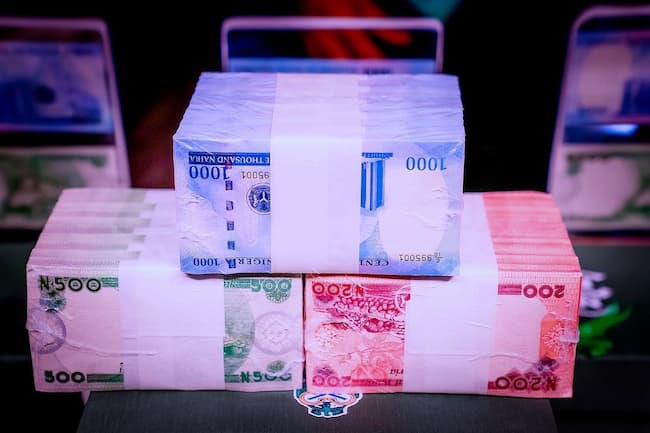
The Nigerian naira slipped against the U.S. dollar on Wednesday amid a modest uptick in demand for foreign payments, as the Central Bank of Nigeria (CBN) continued its intervention to stabilize the exchange market. The gap between the official and parallel market rates narrowed to near zero, eliminating room for speculative trades.

Data from the CBN shows the official FX rate settled at ₦1,534.52/$1, up from ₦1,533.18/$1 the previous day. Intra-day trading hit a high of ₦1,535.50, while the lowest bid closed at ₦1,532/$1. At the close, the rate stood at ₦1,537/$1.

The local currency has been trading within a relatively tight band of ₦1,530 to ₦1,540 in July, supported by CBN’s dollar sales amid a 25% decline in forex inflows last week. In the parallel market, the naira also settled at ₦1,535/$1, as speculative activity diminished.

Analysts say the CBN’s aggressive stance—supporting commercial banks and Bureau de Change operators—has made it unprofitable to bet against the naira. Additionally, investor confidence is being bolstered by improved FX liquidity and recent reforms in monetary policy.

Nigeria’s gross external reserves climbed to $39.27 billion on Tuesday, representing a five-month high and a daily gain of $124.42 million, largely driven by steady FX inflows.

Meanwhile, global oil prices rallied over 1% as geopolitical tensions flared. Brent crude rose by $0.84 to $73.35 per barrel, while U.S. West Texas Intermediate gained $0.92, settling at $70.13. Conversely, gold slipped 1.1% to $3,289.66/oz, while U.S. gold futures dropped 1.4% to $3,336, as stronger U.S. economic data diminished rate cut hopes.

NNPC Rules Out Sale Of Port Harcourt Refinery, Blames Past Leadership For Premature Operation

• Says plant requires advanced technical partners for completion

• Reaffirms commitment to rehabilitation, national energy security

The Nigerian National Petroleum Company Limited (NNPC Ltd) has officially dismissed speculation surrounding the sale of the Port Harcourt Refining Company, reaffirming its commitment to completing its rehabilitation and maintaining ownership of the strategic asset.

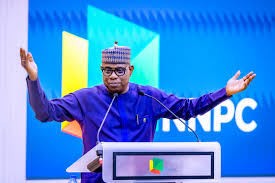
Speaking during a company-wide town hall meeting held at the NNPC Towers in Abuja, Group Chief Executive Officer (GCEO), Bayo Ojulari, clarified that the national oil company has no intention of offloading the refinery. His comments followed recent misinterpretations of his remarks at the 2025 OPEC Seminar in Vienna, where he stated that “all options are on the table,” a phrase which sparked media speculation over possible asset sales.

In a statement issued after the meeting, NNPC noted that Ojulari’s clarification came after extensive technical and financial assessments of the country’s three refineries—Port Harcourt, Warri, and Kaduna. He disclosed that earlier attempts to run the Port Harcourt facility before fully completing its $1.5 billion rehabilitation were commercially unviable and technically flawed—a decision attributed to the actions of previous leadership.

The Port Harcourt refinery, once touted as a symbol of Nigeria’s push for energy self-sufficiency, was recommissioned amid much fanfare in late 2024 after years of inactivity. However, the celebrations were short-lived as the plant ceased operations weeks later, reportedly due to maintenance and technical recalibration issues. The development further strained public confidence following years of unfulfilled promises in the downstream sector.

Controversy around the refinery project deepened after the Economic and Financial Crimes Commission (EFCC) arrested several former managing directors of Nigeria’s refineries over allegations of misappropriating nearly $3 billion meant for rehabilitation efforts.

Despite the challenges, Ojulari assured stakeholders that work was progressing steadily on all three refineries. He stressed that completing the Port Harcourt facility now demands the input of advanced technical partners to ensure its long-term viability and commercial success. Selling the refinery, he warned, would not only erode national value but contradict Nigeria’s broader energy security agenda.

“The decision to retain ownership reflects our commitment to restoring the refinery as a core component of Nigeria’s energy infrastructure,” Ojulari said, adding that the company remains focused on delivering value to Nigerians.

The town hall meeting, attended by hundreds of NNPC employees, was described as a turning point in reinforcing internal alignment with the company’s evolving strategic vision. Executive Vice Presidents from the Upstream, Downstream, Gas, Finance, Business Services, and New Energy divisions delivered progress reports, highlighting reform efforts, operational achievements, and areas requiring intensified focus.

According to the company, the session served not just as a performance update but as a platform for open dialogue, transparency, and renewed leadership accountability.

“This announcement sends a strong message about continuity in Nigeria’s energy strategy and the importance of safeguarding national assets,” the statement noted. “The response from employees was overwhelmingly positive, reflecting confidence in the company’s direction under Ojulari’s leadership.”

Ojulari reaffirmed that NNPC Ltd is transforming into a commercially-driven, professionally-managed entity rooted in transparency, performance, and national responsibility.

“As we advance, we remain resolute in our role as custodians of Nigeria’s energy future. Our focus is clear—rehabilitate, retain, and revitalise,” he said.

NGX Market Capitalization Hits Record ₦88 Trillion As Investors React To Earnings and Dividends

Stock Exchange Closes Trading Week With N30bn Gain

The Nigerian Exchange (NGX) reached a historic market capitalization milestone of ₦88 trillion on Wednesday, fueled by strong earnings reports and interim dividend announcements across multiple sectors.

The All-Share Index (ASI) climbed by 1%, closing at 139,278.67 points and delivering a 35.32% year-to-date return. This surge reflects growing investor confidence and a bullish sentiment surrounding the financial health of listed firms.

Out of the equities traded, 39 gained while 32 declined, reflecting strong buying momentum driven by positive half-year results. Banking stocks led the charge with a 1.94% gain, while industrial goods and commodities also closed in the green.

Daily transaction figures showed that 905.73 million shares worth ₦34.17 billion were exchanged in 36,027 deals. FIDELITYBK led in trade volume (10.16%), trailed by ACCESSCORP, UNIVINSURE, FCMB, and GTCO. MTNN dominated value trades, accounting for 10% of total market value.

Top gainers included MULTIVERSE and ROYALEX (each up 10%), BERGER (+9.97%), DANGSUGAR (+9.97%), and NPFMCRFBK (+9.97%). ABBEYBDS and FTNCOCOA were among the biggest losers, shedding 10% apiece.

The sectoral breakdown showed positive performance in Banking (+1.94%), Industrial Goods (+1.35%), and Commodities (+0.04%), while Insurance and Oil & Gas fell by 0.95% and 0.08%, respectively. Consumer goods remained flat.

At close, the NGX added ₦868.69 billion in value, lifting the total equity market capitalization to ₦88.06 trillion, representing a 1% daily gain.

UAC Of Nigeria Acquires Beverage Giant CHI Ltd. From Coca-Cola Company

UACN Records N3.8 Billion Profit In 2020

In a major shakeup within Nigeria’s food and beverage industry, The Coca-Cola Company has finalized the sale of one of the country’s top consumer goods players, CHI Limited—owner of the popular Chivita and Hollandia brands—to UAC of Nigeria Plc. The transaction was confirmed in a statement issued on Wednesday by Mrs. Zainab Obagun, Coca-Cola’s Head of Public Affairs and Communications.

CHI Limited, known for its dominant presence in the juice and dairy sectors, operates a strong portfolio that includes fruit juices, nectars, still drinks, snacks, and a variety of value-added dairy products. Its flagship brands—Chivita and Hollandia—command leading market shares in fruit juice and dairy beverages respectively, with Hollandia notably recognized as a top brand in evaporated milk and drinking yoghurt.

The acquisition, which is pending regulatory approval, underscores Coca-Cola’s continued shift toward a leaner, asset-light business model that prioritizes scalability and brand focus over direct ownership of manufacturing operations.

Speaking on the strategic deal, Mr. Fola Aiyesimoju, Group Managing Director of UAC of Nigeria Plc, highlighted the alignment of the acquisition with UAC’s growth ambitions across the continent. “Our roots run deep in African enterprise, and this acquisition reflects our enduring belief in the continent’s economic potential,” he said.

Aiyesimoju emphasized that UAC views this move as an opportunity to build upon CHI Limited’s well-established legacy. “We are excited to bring Chivita and Hollandia into the UAC portfolio. These are household names built on quality, consistency, and innovation. We’re eager to support the business into its next chapter of development.”

He also extended appreciation to the CHI Ltd. team, adding, “I commend the management and workforce for building such a respected brand. We’re looking forward to a collaborative journey.”

Mr. Eelco Weber, Managing Director of CHI Limited, also expressed optimism about the company’s future under new ownership. “Chivita and Hollandia are undisputed leaders in their respective segments,” he stated. “This achievement is owed to the relentless efforts of our 5,000+ staff members. Their dedication has not only driven growth but also earned us recognition as a Gold-rated Great Place to Work.”

Weber added, “With UAC’s backing and the strength of our people, we are poised to unlock new levels of innovation, distribution, and customer reach. The horizon looks bright for CHI Ltd.”

While the financial terms of the acquisition remain undisclosed, industry observers view the deal as a signal of renewed investment confidence in Nigeria’s consumer goods sector, despite ongoing economic challenges.

The sale of CHI Ltd. marks a pivotal chapter for Coca-Cola, which first acquired a majority stake in the company in 2016 and had steadily integrated its operations into its West African beverage strategy. Now, with UAC taking the reins, the industry awaits the next wave of transformation under Nigerian ownership.

Bond Yields Ease As Nigerian DMO Surprises Market With Higher Allotment

FGN Bond For Jan. 2021 Oversubscribed

Yields on Nigerian government bonds edged lower in the secondary market following an unexpected move by the Debt Management Office (DMO) during its latest bond auction, catching many investors off guard.

Trading activity in the fixed income space remained mixed throughout the session. While short-dated maturities saw little action, some mid-tenor bonds experienced mild selling pressure, leading to slight yield increases. In contrast, strong buying interest at the long end of the curve contributed to a broader decline in yields. Overall, the average bond yield slipped marginally by 1 basis point on the day.

Market participants reacted to the DMO’s primary market auction, where the agency offered N80 billion worth of bonds—below the usual N100 billion offer. The smaller issuance reflects the federal government’s current tilt away from relying heavily on domestic borrowing to fund its budget deficit.

Among the instruments offered, the 2032 sovereign bond was particularly popular, attracting bids worth N261 billion. The auction results revealed that marginal clearing rates dropped sharply to 15.69% and 15.90%. Despite the lower offer, the DMO ended up allocating N185.93 billion—a move that defied its recent conservative approach and surprised market watchers.

CardinalStone Securities, in a post-auction commentary, noted that the DMO’s decision to oversell signals a shift in issuance strategy, potentially influenced by stronger-than-expected demand and prevailing yield dynamics.

According to the firm’s H1 2025 economic outlook, the federal government has raised a net N3 trillion through FGN bonds and Treasury bills in the first six months of the year. However, it may need to raise an additional N10.08 trillion in the second half to cover the budget shortfall.

While Nigeria leaned heavily on local borrowing in early 2025, analysts anticipate a pivot toward international financing in the latter half. The federal government is reportedly planning to secure $1.2 billion via the DMO and an additional $2 billion from concessional loans through multilateral channels to close the deficit gap.

CBN Denies Targeting Northerners In Voluntary Exit Package

The Central Bank of Nigeria (CBN) has reaffirmed that its 2024 Early Exit Package (EEP) was entirely voluntary and not designed to target or marginalise staff from Northern Nigeria. CBN Deputy Governor (Economic Policy), Muhammad Abdullahi, made this clarification in Kaduna on Wednesday during a plenary session on Governance and Economy at a two-day Government-Citizen Engagement Forum organised by the Sir Ahmadu Bello Memorial Foundation.

Abdullahi explained that the decision to implement the exit package stemmed from overpopulation at the Bank’s headquarters in Abuja, which had raised safety and operational concerns.

“The headquarters was overcrowded to the extent that offices were carved out of emergency exits and passageways, posing serious health and safety concerns,” he said. “Even our insurance company expressed worries over the risks associated with the congestion.”

According to him, the CBN opted for a decongestion strategy, offering a generous voluntary exit package to interested staff. At the same time, some employees were redeployed to CBN branches in Lagos, Kaduna, and other locations with sufficient capacity.

“Some of those who were relocated are now very comfortable and don’t want to return to Abuja,” Abdullahi noted. “This was never about any ethnic or regional agenda.”

He added that the voluntary exit scheme is not new, stating that the apex bank has implemented similar programmes over the past two decades, typically when senior-level staffing becomes too dense.

“In every case, a committee made up of staff is constituted to design the terms, and only those who willingly opt in can benefit. Many have taken the package and gone on to start businesses, including microfinance banks,” he said.

Abdullahi also addressed widespread misinformation regarding the exit of 16 directors, saying the narrative had been distorted to fuel division.

“It’s unfortunate that some people are using false claims to incite the public. Let me be clear: there are many directors from the North still serving in the Bank. The policy was applied across board without bias,” he stated.

To further debunk the allegation of regional bias, Abdullahi cited the example of the Secretary to the Government of the Federation’s son, who was transferred from Abuja to Lagos. “Nobody was exempted. It’s an internal policy designed to ensure operational efficiency and staff welfare,” he said.

The CBN urged Nigerians to reject divisive narratives and support reforms aimed at strengthening the institution.

FG Declares End To ‘Briefcase Farmers’ Era With Sector Reforms

The Federal Government has announced the end of the era of “briefcase farmers” benefitting from agricultural interventions, unveiling a sweeping reform agenda aimed at identifying and supporting only genuine farmers across the country.

Minister of State for Agriculture and Food Security, Senator Aliyu Abdullahi, made this known on Wednesday in Kaduna during a technical session at the Government-Citizen Engagement Forum organised by the Sir Ahmadu Bello Memorial Foundation.

He said the administration of President Bola Tinubu, which inherited a food crisis, is deploying data-backed strategies to revive Nigeria’s agricultural sector, ramp up production, and eliminate elite capture of farming incentives.

“We are ensuring that only genuine farmers benefit from government programmes. No more briefcase farmers,” Abdullahi declared.

According to him, the state of emergency on food security declared by the Tinubu administration remains in force, with targeted efforts focused on increasing output, stabilising food prices, and distributing resources fairly.

“Our priority is simple: ramp up production, reduce food prices, and ensure equitable access to support. We met a food crisis and responded with data-backed, targeted actions,” he added.

As part of the Agro-Pocket initiative, Abdullahi revealed that over 133,000 hectares of wheat have been cultivated across 15 northern states—surpassing the original 130,000-hectare target. Jigawa State alone accounted for more than 50,000 hectares.

He also said the ministry has launched support for 44,500 rice farmers nationwide, alongside plans to upgrade Nigeria’s extension service system, which currently operates with an unsustainable farmer-to-extension-agent ratio of 25,000 to 1.

On agricultural mechanisation, the Minister noted that President Tinubu recently commissioned 2,000 Belarusian tractors and 9,000 farming implements to modernise agricultural practices and boost national productivity.

“These interventions are not cosmetic; they are deliberate efforts to make agriculture competitive and attractive again,” Abdullahi said.

He added that Special Agro-Processing Zones are being developed to enhance market access and value addition, giving farmers higher returns for their efforts.

Abdullahi also highlighted recent breakthroughs in research and innovation, with improved seed varieties of maize, rice, cassava, and tomato—resistant to pests and diseases like the notorious “tomato ebola”—being rolled out by government-backed research institutions.

In the livestock sub-sector, he said the government is prioritising sustainability through the creation of grazing reserves, livestock villages, and transit shelters. He also noted that a national dairy policy is in development.

He announced the completion of three major dam projects—Nwabi Yashin, Nwape, and Amla—unlocking over 2,700 hectares for irrigation. Plans are underway to concession mini-hydro dams to provide off-grid electricity for farming communities.

“This is not just a response to immediate food needs—we are laying the groundwork for long-term resilience,” he said. “We’re reclaiming university farmlands, training youths and women, and reforming governance structures in the sector.”

The Minister called on stakeholders, particularly in the North, to support the reform drive by challenging individuals who sabotage interventions or manipulate the system to marginalise genuine farmers.

“We must call out and discredit those who shortchange the system. The time to act is now,” Abdullahi said.

Marketers Undercut Dangote As Petrol Prices Dip Below Refinery’s Cost

Petrol importers in Nigeria have slashed their prices below those offered by the Dangote Petroleum Refinery, triggering a new round of competition in the downstream oil sector. The price cuts come amid calls by Dangote Group President, Aliko Dangote, for the Federal Government to ban fuel imports in order to protect local refining.

Recent checks show that several filling stations are now selling petrol below ₦860 per litre, while stations affiliated with Dangote—such as MRS and Heyden—continue to sell at ₦865 to ₦875 in Lagos and Ogun States. A station named SGR in Ogun reportedly dropped its pump price to ₦847 per litre.

At the depot level, the price disparity is also evident. Dangote Refinery was said to be selling petrol at ₦820 per litre, while some importers and depot owners—including names like Aiteo and Menj—offered the product at ₦815 as of Tuesday.

Marketers say the price cut is a strategic move to remain competitive, especially after enduring losses when the 650,000 barrels-per-day Dangote Refinery began adjusting prices downward earlier in the year.

According to the National Publicity Secretary of the Independent Petroleum Marketers Association of Nigeria (IPMAN), Chinedu Ukadike, “Depot owners are dropping their prices. Some are selling at ₦815, others at ₦817, while Dangote is at ₦820. NNPC hasn’t adjusted its ₦825 rate yet.”

Ukadike welcomed the competition as a natural outcome of market liberalisation, saying: “This is the benefit of an open market. The President should not ban fuel importation. Market freedom and local refining will ultimately ensure fair pricing.”

However, Aliko Dangote has expressed concerns over continued fuel importation, which he argues is undermining local producers and distorting the market. He recently called on African governments to implement protective measures similar to those adopted in the United States, Canada, and the European Union.

“The ‘Nigeria First’ policy announced by President Bola Tinubu should apply to the petroleum products sector,” Dangote said. “We are now seeing increased dumping of cheap and sometimes toxic petroleum products—blended to standards that would not be accepted in Europe or North America.”

Dangote claimed that some of the imported products are subsidised or sourced from discounted Russian crude, which puts local refineries at a pricing disadvantage. “Because of this, petrol and diesel are being sold at unreasonably low prices—around 60 cents per litre—cheaper than even in oil-producing countries like Saudi Arabia.”

He warned that the unregulated inflow of imported products could erode value for local refiners, discourage future investments, and hurt the broader economy.

Still, marketers disagree with Dangote’s push for a ban, arguing that competition is healthy and necessary for efficiency and consumer benefit. They maintain that Nigeria’s fuel market, if left open and well-regulated, can balance both import activity and local refining without harming either side.

As the pricing battle continues, the outcome may significantly influence Nigeria’s refining sector, the role of private importers, and future government policy in the petroleum value chain.

NNPC Dismisses Plans To Sell Port Harcourt Refinery

The Nigerian National Petroleum Company Limited (NNPC Ltd) has dismissed speculations surrounding the possible sale of the Port Harcourt Refining Company, reaffirming its commitment to completing the plant’s high-grade rehabilitation and maintaining ownership.

Group Chief Executive Officer of NNPC Ltd, Bayo Ojulari, made the clarification during a company-wide town hall meeting held at the NNPC Towers in Abuja, putting an end to weeks of uncertainty over the future of the nation’s most prominent state-owned refinery.

A statement issued by the company on Wednesday read: “The Nigerian National Petroleum Company Limited has officially ruled out the sale of the Port Harcourt Refining Company, reaffirming its commitment to completing high-grade rehabilitation and retention of the plant.”

Ojulari described any suggestion to sell the facility as “ill-advised and sub-commercial.”

His comments followed public concern triggered by remarks he made at the 2025 OPEC Seminar in Vienna, where he had said “all options are on the table” regarding the future of Nigeria’s refineries—a statement that sparked widespread speculation about an impending sale.

Clarifying the company’s stance, Ojulari explained that the current position is not a reversal but is based on ongoing technical and financial assessments of the Port Harcourt, Kaduna, and Warri refineries.

“The ongoing review indicates that the earlier decision to operate the Port Harcourt refinery before full completion of its rehabilitation was ill-informed and sub-commercial,” the statement said.

He added that while rehabilitation works are progressing at all three facilities, the emerging findings point to the need for more advanced technical partnerships to fully complete and optimise the Port Harcourt refinery.

“Thus, selling is highly unlikely, as it would lead to further value erosion,” the company concluded.

Nigeria Hosts 12th BAGAIA Commission Meeting, Reinforces Leadership In Regional Aviation Safety

Nigeria, through the Nigerian Safety Investigation Bureau (NSIB), has reaffirmed its leadership in West Africa’s aviation safety landscape by hosting the 12th Commission Meeting of the Banjul Accord Group Accident Investigation Agency (BAGAIA) in Abuja.

The two-day summit, held from July 28 to 29, brought together officials and representatives from BAGAIA member states — including Ghana, The Gambia, Liberia, Cape Verde, and Sierra Leone — to strengthen regional collaboration and address emerging aviation safety challenges.

With the theme, “Celebrating Our Collective Wins in Capacity Building and Aviation Safety Across the Banjul Accord Group Region and Beyond,” the meeting highlighted the group’s achievements and ongoing efforts to enhance safety standards.

A major development from the meeting was the inauguration of BAGAIA’s Board of Directors, composed of heads of member states’ investigation bureaus. The Board is expected to play a key role in shaping strategic decisions, ensuring accountability, and monitoring the Commissioner’s activities.

Speaking during the opening ceremony, NSIB Director-General, Captain Alex Badeh, stressed the importance of deepening regional ties to address aviation incidents.

“Cooperation among member states is not just a goal but the foundation of our success,” Badeh said. “Aviation incidents transcend borders and demand seamless collaboration. We must move as one.”

He pointed to Nigeria’s support for fellow member states as a testament to its commitment, citing examples such as technical assistance to Liberia’s Aircraft Accident Investigation Bureau and contributions to Ghana’s flight data analysis lab.

“We are celebrating collective wins today,” he added. “They reflect our shared growth, our willingness to learn from one another, and our drive to raise standards across the subregion.”

BAGAIA Commissioner, Charles Irikefe Erhueh, commended Nigeria’s role in the region and encouraged member states to stay committed to the goals of the group despite financial constraints.

“NSIB’s leadership is commendable,” Erhueh said. “What we’ve achieved through collaboration proves that sustained synergy is key to improving aviation safety across the BAG region.”

Yves Koning, EASA Regional Manager for Sub-Saharan Africa, who represented the EU-ASA/BAGAIA partnership, described the EU-funded collaboration as productive and transformative. While the project is set to end on July 31, he assured stakeholders of continued support.

“Although the EU-funded project concludes, we are confident that the progress made will continue through other forms of cooperation,” Koning said.

Discussions during the summit covered performance assessments, long-term technical planning, legal frameworks, and strategies for improving investigative tools. The gathering underscored Nigeria’s growing influence in shaping Africa’s aviation safety agenda and reaffirmed its commitment to regional and continental progress.

Nigerian Eurobond Yields Dip To 8.30% Amid Cautious Global Outlook

DMO Set To Auction N150bn Bond On FG's Behalf

Nigeria’s Eurobond market ended the latest trading session on a slightly positive note, with the average yield declining by 1 basis point to 8.30%. The modest shift was driven by uneven investor demand across the curve, as global markets remained on edge ahead of the U.S. Federal Reserve’s monetary policy announcement.

Traders reported mixed sentiment within the African sovereign debt space, especially among Eurobond investors who preferred to stay on the sidelines pending the outcome of the Federal Open Market Committee (FOMC) meeting. Some buying interest was noted in medium- and long-term Nigerian Eurobond maturities, nudging yields slightly lower.

On the global front, yields on U.S. Treasuries were mostly unchanged during Wednesday’s session. The 10-year Treasury note hovered around 4.33% after a sharp decline the day before, reflecting market hesitance ahead of the Fed’s policy direction. The two-year Treasury yield was stable at 3.871%, while the 10-year rose marginally by 0.8 basis points to 4.335%, based on data from Tradeweb.

While the Fed is broadly expected to hold the benchmark interest rate steady within the 4.25%-4.50% band, analysts believe Chair Jerome Powell might hint at future rate cuts, depending on inflation data and broader economic indicators.

Market expectations have been shaped by a combination of political and economic factors, with some policymakers advocating for a more accommodative stance to support growth. Meanwhile, global oil markets posted significant gains, further influencing investor sentiment.

Brent crude surged by $2.62, settling at $72.66 per barrel, while West Texas Intermediate (WTI) climbed $2.57 to close at $69.28. The rally was driven by geopolitical tensions, including renewed pressure from former U.S. President Donald Trump on Russia, as well as renewed optimism over easing trade hostilities between the United States and key economic partners.

Precious metals also gained, with gold prices inching higher as investors braced for the dual impact of Fed policy signals and ongoing U.S.-China trade negotiations. Spot gold rose 0.34% to $3,326.0 per ounce, while U.S. gold futures ended the session 0.43% stronger at $3,681.70.

Commodities and bond markets alike are expected to move in tandem with the Fed’s policy stance in the coming sessions, as investors weigh risk against return in a volatile macroeconomic environment.

OMO Settlement Strains Liquidity As Funding Rates Remain Volatile In Nigeria

How Much Money Is Spent On Groceries In Nigeria, Other Countries?

Liquidity pressures in Nigeria’s financial markets have intensified following the Central Bank of Nigeria’s (CBN) recent Open Market Operations (OMO), leaving funding rates in a state of flux.

According to an investor note from AIICO Capital Limited, total system liquidity declined significantly by ₦874.3 billion to ₦1.1 trillion. This downturn was primarily attributed to substantial outflows linked to the settlement of the apex bank’s earlier OMO auction.

While a modest ₦41.3 billion inflow from local bond coupon payments provided temporary relief, it failed to sufficiently alter the overall liquidity environment or influence market rates. Consequently, funding rates reflected this mixed state: the Open Buy Back (OBB) rate remained unchanged at 26.50%, while the Overnight (O/N) rate edged down marginally by 4 basis points to 26.96%.

Looking ahead, analysts expect a total injection of ₦185.9 billion into the system on Wednesday. However, these inflows may be offset by scheduled debits for the Debt Management Office’s (DMO) bond auction settlements, which could once again tighten financial system liquidity.

In the interbank market, the Nigerian Interbank Offered Rate (NIBOR) trended upward across most tenors, except for the overnight tenor, which recorded a slight drop of 2 basis points to 26.88%, according to a research note by Cowry Asset Management.

Meanwhile, activity across the Nigerian Treasury Bills (NITTY) curve showed upward movement in yields across several maturities, highlighting a cautious investor sentiment. Despite this trend, secondary market transactions gained momentum, with persistent sell-side activity pushing average yields higher by 2 basis points to 17.66%.

Demand For Treasury Bills Grows As Average Yields Dip To 17.66% In Nigerian Market

The Nigerian Treasury Bills market continued to experience subdued activity in the secondary segment, with investors shifting focus to the newly floated OMO bills, which attracted significant attention.

Following last week’s primary market auction, average returns on treasury bills have declined by 100 basis points. The drop was largely driven by disinflationary signals prompting asset repricing, as policymakers attempt to lower borrowing costs and enhance fiscal stability.

With no primary auction during the midweek, the fixed income market remained tilted toward cautious bargain hunting. As a result, average yields in the treasury bills space edged down by 2 basis points to 17.66%, with increased positioning by banks and institutional investors seeking yield opportunities in naira-denominated assets.

The Central Bank of Nigeria (CBN) has been steadily adjusting returns on risk-free assets to reflect easing inflation trends, thereby lowering spot rates across various tenors. The secondary treasury market responded with renewed interest in longer-dated instruments, particularly the OMO maturity dated 17 February 2026, which initially traded near 22.80% before closing at 23.14%.

Investor sentiment remained positive toward November maturities trading at 16.39%, while July-dated bills witnessed weaker demand. Investment firm Cordros Capital noted a broad-based decline in yields across all curve segments, including the short-term (-1 basis point), medium-term (-2 basis points), and long-term (-2 basis points) ends.

Specific maturities saw stronger investor appetite, particularly the 72-day (-1 basis point), 114-day (-3 basis points), and 226-day (-13 basis points) tenors.

In contrast, the average yield in the OMO segment rose slightly by 2 basis points to 24.7%, underscoring mixed sentiment in the market. Despite falling spot rates, fixed-income yields trended lower during the first half of 2025, driven by high system liquidity, especially in the second quarter.

BizWatchNigeria.Ng
Privacy Overview

This website uses cookies so that we can provide you with the best user experience possible. Cookie information is stored in your browser and performs functions such as recognising you when you return to our website and helping our team to understand which sections of the website you find most interesting and useful.