This handout photograph taken and released by Ukrainian Presidential Press-service late on August 1, 2025 shows the President Volodymyr Zelensky laying flowers in front of a residential building in Kyiv partially destroyed following a Russian missile strike morning on July 31, 2025, amid Russian invasion in Ukraine. Kyiv observed a day of mourning after the deadliest attack in the Ukrainian capital this year, which ripped open a nine-storey residential building, wounding 159 people and claiming the lives of five children. (Photo by Handout / UKRAINIAN PRESIDENTIAL PRESS SERVICE / AFP) / RESTRICTED TO EDITORIAL USE - MANDATORY CREDIT "AFP PHOTO / UKRAINIAN PRESIDENTIAL PRESS SERVICE / HANDOUT " - HANDOUT - NO MARKETING NO ADVERTISING CAMPAIGNS - DISTRIBUTED AS A SERVICE TO CLIENTS
Ukrainian drone strikes overnight have left at least three people dead and two others injured in western Russia, according to statements from regional authorities on Saturday.
In Penza region, a woman was killed and two others injured following a strike on an industrial facility, Governor Oleg Melnichenko disclosed via Telegram. In Samara, Governor Vyacheslav Fedorishchev confirmed the death of an elderly man whose home was engulfed in flames after debris from a downed drone struck the building.
Further south, in Russia’s Rostov region, a security guard was reportedly killed when a drone triggered a fire at an industrial site, according to acting governor Yuri Sliusar.
Sliusar said Russian air defences had successfully “repelled a massive air attack,” destroying drones across seven districts. The Russian Ministry of Defence later confirmed that 112 Ukrainian drones had been intercepted across Russian territory during a near nine-hour assault, including 34 over Rostov alone.
On the Ukrainian front, authorities in the Dnipropetrovsk region reported overnight Russian drone attacks that left three people injured. Several residential buildings, vehicles, and other properties sustained damage, regional governor Sergiy Lysak posted on Telegram.
Moscow has claimed recent territorial gains in the Dnipropetrovsk area, asserting the capture of two villages in what appears to be a continued offensive surge in July. However, Kyiv has denied the presence of Russian forces in that region.
While the conflict has now surpassed its third year, diplomatic solutions remain elusive. On Friday, Russian President Vladimir Putin reiterated his demands for Ukraine to relinquish occupied territories and abandon its bid to join NATO, conditions Kyiv has repeatedly rejected.
Putin maintained that Moscow seeks peace, but “our demands remain unchanged.” Meanwhile, Ukrainian President Volodymyr Zelensky renewed his call for direct talks with Putin.
“The United States has proposed this. Ukraine has supported it. What is needed is Russia’s readiness,” Zelensky wrote on X (formerly Twitter).
Unions in Nigeria’s aviation sector have issued a seven-day ultimatum to the Minister of Aviation and Aerospace Development, Festus Keyamo, over the delayed implementation of a revised salary structure for staff of the Nigerian Airspace Management Agency (NAMA).
In a joint letter dated July 31, 2025, the unions warned that NAMA workers would withdraw their services if the issue remains unresolved—an action that could grind the country’s aviation operations to a halt.
The unions—comprising the Air Transport Services Senior Staff Association of Nigeria (ATSSSAN), National Union of Air Transport Employees (NUATE), Association of Nigeria Aviation Professionals (ANAP), and the Amalgamated Union of Public Corporations, Civil Service Technical and Recreational Services Employees (AUPCTRE)—expressed deep frustration that the salary adjustment agreement concluded over eight months ago has yet to be implemented.
They noted that despite repeated appeals and formal complaints from their members, there had been no progress on the matter. “Our rank and file members, through their professional associations, have expressed in writing their growing disappointment with the non-implementation of the agreement,” the letter stated.
The unions confirmed that a formal notice of industrial action had already been issued by their respective branches and adopted at the national level. “Accordingly, a seven-day notice of withdrawal of services from today, Thursday, July 31, 2025, is hereby issued,” they wrote.
If the impasse is not resolved by August 7, all NAMA workers across the country will begin a total withdrawal of services. The unions have also advised all NAMA clients to take note of the impending disruption.
The Nigeria Immigration Service (NIS) has issued a public advisory urging Nigerians to strictly adhere to the terms and conditions of their U.S. visas, following concerns raised by the United States Government over increasing cases of visa misuse by Nigerian citizens.
In a statement released on Saturday in Abuja, the NIS Public Relations Officer, Akinsola Akinlabi, emphasised that visa holders must comply with the purpose stated in their applications and avoid any actions that could breach U.S. immigration laws.
“The Nigeria Immigration Service wishes to inform the general public of concerns raised by the United States Government regarding the misuse of U.S. visas by Nigerians,” the statement read. “All visa holders are advised to strictly adhere to the purpose stated in their visa applications.”
Akinlabi warned that violating visa terms—such as overstaying or engaging in unauthorised activities—can lead to serious consequences, including deportation, visa revocation, and permanent ineligibility for future travel.
He also advised Nigerian students in the U.S. to maintain active enrollment and avoid unauthorised withdrawal or extended absences, stressing that non-compliance could result in the cancellation of their visas.
In addition, the NIS cautioned against attempts to secure tourist visas for childbirth purposes, noting that U.S. consular officers reserve the right to deny such applications.
Reaffirming its commitment to safeguarding the integrity of international travel, the NIS stated that it would continue to work closely with the U.S. Mission in Abuja to prevent Nigeria from being included in any expanded visa restrictions.
“We urge all Nigerian citizens to comply with U.S. visa regulations, as responsible conduct is key to preserving legitimate travel opportunities for all,” the agency said.
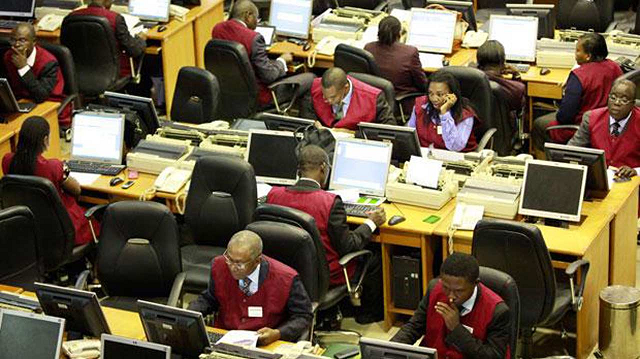
The Nigerian Exchange (NGX) reached a major milestone on Friday, as its overall market capitalisation exceeded ₦89 trillion, boosted by a surge of over ₦948 billion in total equity value. This remarkable increase was fuelled by continued market momentum and fresh share listings, including the recent employee stock issuance by Seplat Energy Plc.
The domestic equities market capped off yet another winning week with a strong bullish close, maintaining its consistent upward trend. According to trading records, the All-Share Index gained 1.00%, rising by 1,399.53 basis points to close at an unprecedented peak of 141,263.05 points.
The total market capitalisation leapt by ₦948.11 billion or 1.07% to close at ₦89.37 trillion. Analysts attribute the slight divergence between the index growth and market cap expansion to the issuance of 11.5 million ordinary shares by Seplat Energy as part of its employee share-based compensation scheme.
Equity dealers attributed the positive performance to selective buying of strong-performing blue-chip stocks. Notable contributors to the rally included UAC of Nigeria, BUACEMENT, BETAGLAS, BUAFOODS, among others, which helped elevate the key market indicators.
Despite the bullish finish, trading volume and value experienced a modest dip. Atlass Portfolio Limited noted that trading activities dropped, with total volume and value falling by 1.51% and 18.22%, respectively. On the day, about 1.08 billion units of shares worth ₦26.85 billion exchanged hands across 34,488 deals.
Among the most active stocks by volume, FCMB Holdings dominated trading, representing 25.70% of the total market volume. It was followed by Fidelity Bank (7.93%), Sterling Financial (5.41%), Universal Insurance (4.15%), and Veritas Kapital (3.85%).
On the value side, Aradel Holdings emerged as the most heavily traded equity, accounting for 12.18% of the total monetary value exchanged on the NGX.
UAC of Nigeria led the gainers with a 9.96% rise in share price, followed closely by BUACEMENT (+9.63%), Veritas Kapital (+9.45%), BETAGLAS (+9.22%), Legend Int’l (+8.84%), Wema Bank (+8.64%), along with 28 other advancing equities.
However, the market also recorded 35 decliners. CHAMPION, Dangote Sugar, and OANDO recorded sharp losses of 10.00% each, while Sovereign Trust Insurance fell by 9.52%, Sterling Financial by 7.14%, and Transcorp by 5.66%. Japaul Gold and Aradel also declined by 4.41% and 1.89%, respectively.
By the end of the session, the market breadth was slightly negative, closing with 34 gainers and 35 losers. Nevertheless, sectoral indices largely posted positive returns.
The industrial sector led the way, climbing 3.49%, trailed by the consumer goods index (+1.61%) and the banking sector (+0.52%). In contrast, the Oil & Gas sector shed 1.73%, and the Insurance sector dipped by 0.29%.
Nigerian equity investors recorded a substantial ₦12.62 trillion gain in July, buoyed by robust rallies that persisted throughout the month. The Nigerian Exchange (NGX) All-Share Index closed the period strongly, delivering historic returns across major sectors and capping off a bullish run that turned heads among local and international investors.
According to a market note from Apex Securities Limited, the dramatic uptick in equities was driven by aggressive bargain hunting, solid financial sector performance, and mounting investor confidence amid improving macroeconomic signals.
The impressive equity rally propelled the year-to-date market return to 35.89%, reflecting a blend of strategic market inflows, fear of missing out (FOMO) behavior, and optimism driven by corporate earnings across key industries. Strong investor appetite for banking, insurance, and oil & gas stocks dominated sentiment throughout the month.
Currency dynamics also played a significant role in shaping the market narrative. Apel Research highlighted that the official naira exchange rate at the end of July stood at ₦1,533.55 per US dollar, showing a modest decline of 0.25% from June levels. This indicates that the exchange rate remained relatively stable, especially after the turbulence seen earlier in the year.
In the parallel market, however, the naira weakened slightly. Despite this, July remained the strongest month for the local currency so far in 2025, with external reserves providing a critical buffer. Reserves increased by $2.15 billion, helping to reduce pressure on the naira and instilling greater market confidence.
On the energy front, analysts noted that rising petrol prices served as a dual-edged sword. The average pump price of premium motor spirit (PMS) in June surged to ₦1,037.66 per litre, representing a 38% year-on-year increase and a 1% rise from May. While these higher prices have strained consumer spending, they have simultaneously improved revenue flows into energy-related sectors and supported government fiscal reforms, including ongoing fuel subsidy removal.
However, the month wasn’t without its international headwinds. Apel Securities Limited reported that the U.S. administration, under President Trump, issued a new executive order imposing a 15% tariff on all Nigerian exports to the United States, effective August 7. This move could potentially dampen Nigeria’s non-oil export prospects unless renegotiated before the effective date.
While the new trade tariff casts a cloud of uncertainty over international commerce, overall economic sentiment remained largely upbeat. A composite assessment of the economy shows positive equity market performance, improving forex liquidity, and manageable inflation risks, though cost-push inflation and global trade politics remain notable concerns.
“Nigeria’s capital markets ended July with the energy of a festival — soaring equities, currency resilience, increased energy revenues, and looming trade worries. The month was, without question, an investor’s delight,” Apel Securities analysts remarked.
Looking ahead, market watchers are turning their focus to Q3, advising investors to remain attentive to inflation trajectories and international trade developments while positioning their portfolios for the next wave of market shifts.
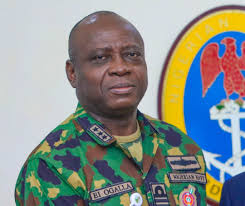
In a strategic move to strengthen security along Nigeria’s inland waterways, the Nigerian Navy has announced plans to establish a naval base in Yauri, Yauri Local Government Area of Kebbi State.
A delegation from the Chief of the Naval Staff, Vice Admiral Emmanuel Ogalla, disclosed on Thursday during a courtesy visit to Governor Nasir Idris at Government House, Birnin Kebbi.
Leading the delegation, Rear Admiral Patrick Nwatu said the decision to expand the Navy’s operational footprint into Kebbi was part of efforts to reinforce maritime security in the hinterland, particularly around the River Niger—an important but increasingly vulnerable national resource.
“The River Niger has served as a vital artery for agriculture, power generation, and transportation. Unfortunately, it is now being exploited by criminal elements for arms smuggling and other illicit activities that threaten our national security,” Nwatu stated.
He noted that while the Nigerian Navy already maintains a base on the Niger State side of the river, the establishment of a new base in Kebbi would enable a more comprehensive presence along the waterway, curbing insecurity and enhancing surveillance.
“With this initiative, we aim to close security gaps and neutralise the criminal networks using the river as a corridor. The expansion will significantly boost our inland maritime operations and benefit communities along the corridor,” he added.
Governor Idris welcomed the development, describing it as timely and strategic given the prevailing security challenges in the southern parts of the state.
“We have never had a naval base in Kebbi, and we are indeed grateful to the Chief of the Naval Staff for recognising the need. The River Niger in Yauri must be adequately secured, and this base will play a critical role in doing that,” the governor said.
He highlighted the strategic position of Kebbi, which shares borders with Niger and Benin Republics, as further justification for a stronger security presence in the region. According to him, the establishment of the base would complement existing efforts to tackle cross-border crime and banditry.
Governor Idris assured the Navy of the state government’s full support, including the provision of temporary accommodation and land for the construction of permanent facilities.
The proposed base is expected to enhance regional security architecture and solidify the Navy’s inland maritime strategy, particularly in the Northwest zone, where waterways remain vulnerable to illicit activities.
• CAS says new base will enhance air power projection, maritime security
• Akwa Ibom donates land, reaffirms commitment to national defence
The Nigerian Air Force (NAF) has established a Forward Operational Base (FOB) in Akwa Ibom State as part of efforts to strengthen its air and maritime security operations across the South-South region and the Gulf of Guinea corridor.
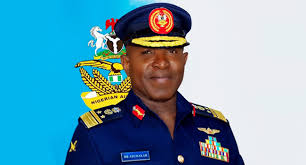
The Chief of the Air Staff (CAS), Air Marshal Hasan Abubakar, disclosed this during a courtesy visit to Governor Umo Eno at Government House, Uyo. He said the new base will bolster air power projection, reinforce national defence infrastructure, and stimulate socio-economic development in the region.
According to a statement issued on Friday by the Director of Public Relations and Information, Air Commodore Edward Gabkwet, the state government donated the land for the establishment of the FOB—an act the CAS described as a significant contribution to national security.
“The Forward Operational Base will serve as a strategic outpost for rapid air response and maritime surveillance, particularly within the Gulf of Guinea axis. It will also provide a secure environment to attract investment and promote tourism in Akwa Ibom and beyond,” Air Marshal Abubakar stated.
He reaffirmed the Air Force’s unwavering commitment to protecting lives and property across Nigeria, noting that the new base would complement existing security structures and further enhance investor confidence in the South-South.
Governor Umo Eno, in his remarks, commended the NAF for its proactive approach to national security and welcomed the establishment of the base as a milestone in the state’s growing strategic relevance.
“We are honoured by your visit, and we view the establishment of this base as an important step in securing our people and supporting national efforts to maintain peace and stability. A safe society is the foundation upon which meaningful development rests,” the governor said.
He assured the military of the state’s continued support in strengthening Nigeria’s overall security architecture.
The Forward Operational Base in Akwa Ibom joins a growing list of NAF installations across the country aimed at improving operational readiness, deterring criminal activity, and ensuring Nigeria’s territorial integrity—particularly in regions vulnerable to maritime threats and cross-border insecurity.
• Tinubu: We must stimulate rural economies for inclusive growth
• States urged to fast-track implementation of ward-based programme
The Federal Government has announced a far-reaching economic stimulus programme targeting over 8.8 million Nigerians across all 8,809 electoral wards in the country, as part of efforts to deepen grassroots development and accelerate inclusive growth.
At the 150th meeting of the National Economic Council (NEC) held on Thursday in Abuja, the council endorsed the Renewed Hope Ward Development Programme (RHWDP)—a ward-based initiative designed to stimulate local economies through direct intervention in rural and underserved communities.
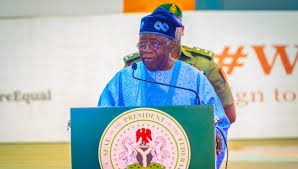
President Bola Ahmed Tinubu, who attended the NEC meeting, underscored the need to drive economic growth beyond the macro level, calling on state governors to prioritise investments that improve livelihoods in rural areas.
“We know the situation in the rural areas. Let us collaborate and do what will benefit the people,” Tinubu charged. “The economy is working, we are on the path of recovery, but we must stimulate growth in the rural areas.”
The RHWDP, presented by the Minister of Budget and Economic Planning, Senator Abubakar Atiku Bagudu, aims to activate economic activity in every ward by supporting a minimum of 1,000 economically active individuals per ward, with a higher threshold for more populous areas.
The programme draws legal backing from Chapter Two of the 1999 Constitution and the Fifth Alteration Act, which mandates government at all levels to promote food security, economic prosperity, and production efficiency.
Bagudu explained that the RHWDP would be jointly implemented by federal, state and local governments and funded through increased revenues accruing to the Federation Account, alongside existing intervention programmes.
“Having stabilised the macroeconomy, the next logical step is to drill down development to the lowest levels,” Bagudu said. “We believe this will generate employment, reduce poverty, enhance food security, and strengthen social protection.”
A National Steering Committee comprising representatives from all six geopolitical zones will supervise implementation, with the Ministry of Budget and Economic Planning serving as the programme secretariat.
The initiative aligns with President Tinubu’s Renewed Hope Agenda, which envisions growing Nigeria’s economy to $1 trillion by 2030. Achieving this target will require annual growth rates of 15 per cent—far above the current rate, which hovers below four per cent.
Governor Hope Uzodimma of Imo State commended the programme, stressing that while federal reforms had boosted revenues, the key challenge was translating that into tangible outcomes for ordinary Nigerians.
“We acknowledged Mr President’s efforts in driving revenue growth, but the real challenge now is ensuring that this increased income makes meaningful impact at the grassroots,” Uzodimma said. “This initiative decentralises development and empowers communities.”
NEC Approves Emergency Flood Response Funding
In a related development, NEC also directed the Federal Ministry of Finance to release emergency funds to all 36 states and relevant federal agencies for the country’s 2025 flood preparedness and response.
This followed a presentation by the Director-General of the National Emergency Management Agency (NEMA), Mrs Zubaida Umar, who outlined a comprehensive national flood risk reduction strategy for 2024–2027. The agency highlighted early warning dissemination, pre-positioning of search-and-rescue assets, and coordination with security agencies as key actions taken so far this year.
However, challenges persist, including poor drainage infrastructure, weak compliance with urban planning laws, and inactive local emergency committees.
Council resolutions urged state governments to operationalise State Emergency Management Agencies (SEMAs), enforce environmental hygiene regulations, and prioritise flood preparedness in annual budgets. Local communities were also directed to take ownership of risk mitigation efforts.
Governors Lament Education Crisis
Meanwhile, state governors at the NEC meeting raised alarm over the worsening crisis in Nigeria’s basic education system, citing high out-of-school rates, poor foundational learning, and systemic underfunding.
Speaking at a parallel State-Level Workshop on Foundational Learning and Out-of-School Children, Chairman of the Nigerian Governors’ Forum (NGF) and Governor of Kwara State, AbdulRahman AbdulRazaq, said the education sector faced a foundational crisis.
“Nigeria is confronted with a crisis,” AbdulRazaq said in a speech delivered by NGF Education Advisor, Leo The Great. “Enrolment does not translate into learning. Foundational skills are critical building blocks for educational progression.”
The governor disclosed that nationwide data indicated a 66 per cent out-of-school rate among primary school-age children and warned that poor education quality was driving high dropout and low transition rates.
He attributed the crisis to inadequate funding, lack of training, poor monitoring, weak local capacity, and minimal support for digital and literacy skills at the foundational level.
The Executive Secretary of the Universal Basic Education Commission (UBEC), Dr Aisha Garba, represented by Deputy Secretary, Technical, Rasaq Akinyemi, echoed the concerns, stressing that systemic reforms were required to deliver quality and inclusive education.
Vice President of Policy and Partnerships at NewGlobe, Ifeyinwa Ugochukwu, added that while access had expanded in some states, major gaps remained in learning outcomes.
With growing revenues from macroeconomic reforms, stakeholders now expect more visible and measurable improvements in citizens’ lives—particularly at the grassroots. From ward-based entrepreneurship and rural infrastructure to disaster response and foundational education, Nigeria’s new development direction hinges on whether collaborative governance can deliver results where they matter most.
You ever notice how, no matter how much your monthly income changes, your data bill doesn’t flinch? It just keeps climbing like a mountain goat. In July 2025, with a staggering 50% hike in telecom tariffs, most Nigerians have found themselves at a crossroads: keep paying for capped plans that vanish faster than ice in the Lagos sun—or finally consider unlimited data.
And sure, unlimited sounds dreamy. No more data exhaustion mid-Zoom. No more forced airplane mode at 10 p.m. But here’s the kicker: not all “unlimited” plans are actually unlimited. That’s where things get tricky—and where this list comes in.
Let’s unpack the 10 cheapest truly unlimited data plans in Nigeria, including those without nasty fine-print speed throttles (we’re looking at you, Fair Usage Policy). Whether you’re an entrepreneur running your entire business from your phone or just someone who can’t afford Netflix buffering at 1 a.m., this list might just save your sanity—and maybe some naira too.
1. Wifiber Broadband – Home Smart Plan (₦15,380)
Speed: Up to 35 Mbps
FUP: None
Validity: 30 days
Wifiber sneaks in as the most affordable on this list—and it’s no slouch in speed either. At just over ₦15k, this plan offers a solid 35 Mbps with no usage caps or hidden speed throttles. But don’t get too excited just yet. You’ll have to live in Lagos, Ibadan, or Abuja to tap into this fiber goodness.
Honestly, if you’re running a home office, streaming 4K Netflix, or trading crypto on Binance, this is a smart pick. Emphasis on Smart—pun fully intended.
2. Ngcom – FiberMax Liteplus (₦15,500)
Speed: Up to 20 Mbps
FUP: None
Setup Cost: ₦70,000
Ngcom’s offer is a close second, but it comes with a hefty setup fee that may scare off casual users. Still, for business-class folks who want consistency and speed, it’s a long-term investment worth thinking about. And yes, this is truly unlimited—no sneaky throttling after 50GB.
Coverage is limited to Lagos, Abuja, and Port Harcourt. So again, it’s a bit of a luxury if you’re outside those regions.
3. Hoop Telecoms – Home Deluxe (₦15,500)
Speed: Up to 15 Mbps
FUP: None
Validity: 30 days
Hoop Telecoms isn’t the most mainstream ISP, but it’s gaining traction for one simple reason: reliability. For the same monthly fee as Ngcom, you get a slightly lower speed cap but no cap on usage or devices.
Its biggest win? Coverage across all 36 states. So if you’re in Kano, Enugu, or even Lokoja, you finally have a real shot at unlimited data.
Okay, this one’s a bit of a shocker—₦100k just to get started? That’s a whole month’s salary for some. But if you can stomach the initial hit, you’ll enjoy uncapped, unthrottled access every month. No strings attached.
Tizeti’s service is concentrated in Lagos, Ogun, and Port Harcourt. So, yeah, they’re selective—but solid.
5. iPNX – Bronze Unlimited (₦22,253)
Speed: 20 Mbps
FUP: None
Setup Fee: ₦55,900
iPNX is the seasoned vet here. Their Bronze Unlimited plan is perfect for professionals who work from home or stream often. The setup fee is kinder than Tizeti’s, and their FTTH technology delivers super-stable speeds.
Keep in mind: speed, not volume, is what you’re paying for here. So if your work depends on uploading large files or hosting webinars, this might be your sweet spot.
6. MTN – FibreX Plan (₦25,000)
Speed: 50 Mbps
FUP: None
Validity: 30 days
MTN’s FibreX plans are surprisingly competitive. We know MTN isn’t exactly your first thought when you hear “unlimited,” but their fiber offerings are fast becoming a go-to for heavy users.
If you’re already in an area where MTN fibre has landed (often in business districts), you’ll get top-tier speed without any weird slowdowns after usage thresholds.
7. Airtel – Unlimited_20 Plan (₦30,000)
Speed: 20 Mbps
FUP: None
Router-only Access
Airtel steps in with a respectable 20 Mbps unlimited option. It’s only available for router users, though—which means you’ll need to pick up an Airtel router (which isn’t free). But the upside? Network coverage across Nigeria. This is where they really shine.
Perfect for SMEs, content creators, or remote teams working from rural areas.
8. Cobranet – UgoFlix (₦32,000)
Speed: 8 Mbps
FUP: None
Location: Lagos
Cobranet’s UgoFlix is a bit slower compared to the rest, but it’s reliable and truly uncapped. It’s best for light users—emails, browsing, and video calls. Plus, the brand has a loyal customer base in Lagos for a reason.
If you’re a solo entrepreneur who needs steady access without all the bells and whistles, it does the job.
9. Cyberspace – Cyber Unlimited Classic (₦33,910)
Speed: Unlisted
FUP: None
Location: Mostly Business Areas
A name from the old guard, Cyberspace’s Classic plan is built for business customers. If your job depends on latency-free internet—think customer support, remote DevOps, or teleconferencing—this may be worth the higher price tag.
Their support is top-notch, which in Nigeria? That’s gold.
10. Swift Networks – Unlimited Supreme (₦45,750)
Speed: Unlimited
FUP: None
Swift Networks rounds out the list with the priciest plan. Is it truly unlimited? Yes. Is it overkill for casual users? Also yes. But if you’re managing a high-bandwidth team or running a creative studio out of your home? This will carry the load.
A Few Cautions Before You Subscribe…
Sure, price matters. But before you rush to pick the cheapest one, here are a few things to double-check:
Coverage Area: Some ISPs only operate in select cities. Always verify service availability in your neighborhood.
Setup Costs: A great monthly rate might come with a heavy one-time fee.
Router Requirements: Some plans require you to use the provider’s router, which may come at an extra cost.
Speed vs. Stability: Don’t chase high Mbps alone—ask about downtime, latency, and actual throughput.
So, What’s the Best Unlimited Data Plan in Nigeria Right Now?
That depends. If you’re in Lagos, and cost is your biggest concern, Wifiber’s Home Smart is a no-brainer. If you’re outside the city and need wide coverage, MTN or Airtel’s plans are more realistic. And for heavy-duty professionals needing uninterrupted performance, Ngcom, iPNX, or Swift could make a long-term difference.
Data is no longer optional—especially for business-class Nigerians. It’s your silent workhorse, your all-day companion, and your weekend binge enabler. So if you’re going to spend on it, spend smart.
Nigerian exports to the United States will now attract a 15 percent tariff following a new executive order signed by U.S. President Donald Trump on July 31, 2025. The order, which modifies America’s reciprocal tariff structure, places Nigeria among nearly 40 countries penalised for what Washington describes as “unbalanced” trade relationships with the U.S.
The tariff takes effect from August 7 and replaces a previously suspended 14 percent duty imposed in April as part of Trump’s broader push to boost domestic manufacturing and retaliate against what he called “decades of unfair trade practices.”
Talks between both countries failed to yield a compromise during the 90-day suspension window, including a one-month extension, paving the way for the new 15 percent rate.
Under the revised tariff framework, countries with which the U.S. runs a trade deficit—like Nigeria—will face a standard 15 percent duty on all exports to the U.S., while countries with a trade surplus will pay a lower 10 percent. Nigeria remains the second-largest U.S. export destination in Sub-Saharan Africa, holding a trade surplus of $3.29 billion with the U.S., according to the Observatory of Economic Complexity (OEC).
Trump’s order insists the new tariff structure is designed to “restore fairness” and curb what it describes as “systemic trade abuse.”
The policy also introduces a steep 40 percent penalty on transshipments—goods rerouted through low-tariff countries before entering the U.S. market—empowering Customs and Border Protection to investigate and sanction suspected evasions.
But trade pressure on Nigeria may not end there.
Earlier in July, Trump warned of an additional 10 percent tariff on exports from any country aligning with the policies of BRICS, a geopolitical bloc seen by some as counterbalancing U.S. influence. Nigeria formally joined BRICS in January 2025, making it a potential target.
“There will be no exceptions to this policy,” Trump said at the time, suggesting Nigeria’s tariff rate could rise to 25 percent.
Nigeria’s major export to the U.S. is crude oil and petroleum products, which account for around 90 percent of the country’s foreign exchange earnings. While crude oil was reportedly exempt from April’s tariff round, it remains unclear whether the same exclusion applies under the current regime.
Non-oil exports such as cocoa, urea-based fertilisers, leather, and value-added products that Nigeria has been pushing into the U.S. market are likely to face higher landing costs, potentially reducing competitiveness.
Trade experts say the development could significantly affect Nigeria’s export revenues and may require a strategic pivot towards alternative trade partners or regional blocs to cushion the impact.
The Federal Capital Territory (FCT) Police Command currently impounds 675 vehicles in Abuja for a range of traffic and safety offences, including the use of tinted windows, unauthorised taxi operations, and obscured number plates.
This update emerges from a press briefing held on Tuesday by the FCT Commissioner of Police, Ajao Adewale, following a security committee meeting chaired by the FCT Minister, Nyesom Wike. The announcement is part of ongoing enforcement efforts under Operation Sweep Abuja, which begins on July 7 to strengthen urban safety and enforce existing regulations.
According to Adewale, several of the seized vehicles operate without proper documentation or pose as commercial transport services to exploit unsuspecting commuters, commonly referred to as “one chance” operations. Others are held for illegal modifications, such as tinted glasses and concealed registration numbers.
In addition to the vehicle seizures, police also detain 273 individuals for street begging and vagrancy-related activities across various parts of the capital. Those arrested are undergoing profiling, with repatriation processes underway for individuals traced to other states. The FCT Social Development Secretariat handles the cases involving beggars, while the National Drug Law Enforcement Agency (NDLEA) takes over drug-related arrests.
The FCT Security Committee describes the operation as impactful and recommends its continuation. Minister Wike instructs security agencies to step up clearance of illegal structures, removal of miscreants, and closure of unauthorised mining sites and makeshift IDP camps, citing growing security threats.
Adewale adds that violations such as driving against traffic and the use of covered plates now attract stricter penalties as enforcement intensifies. He further notes that peace returns to the Gwagwalada Area Council after a recent clash between farmers and herders, with both parties signing a peace agreement.
Operation Sweep Abuja forms part of broader efforts by FCT authorities to enhance public safety, reinforce law and order, and maintain a secure environment for residents and visitors across the capital.
Lafarge Africa Plc has posted a stellar performance in the first half (H1) of 2025, recording a net profit of N132.7 billion — a staggering 352 per cent increase from N29.4 billion posted in the corresponding period of 2024.
According to the unaudited financial results released by the cement manufacturer, the company also recorded a 75 per cent year-on-year growth in revenue, which rose to N517 billion in H1 2025, from N295.6 billion in H1 2024. The sharp rise in earnings, analysts say, reflects not just strong sales momentum but also enhanced operational efficiency across the board.
The group’s revenue growth significantly outpaced the rise in cost of sales, which grew by 50 per cent to N221.2 billion, compared to N147.9 billion in the same period last year. Consequently, gross margin rose from 50 to 57 per cent, pointing to more efficient cost management despite inflationary pressures.
Operating profit surged to N199.7 billion, pushing operating margin to 39 per cent — a 1,700 basis point leap from 16 per cent recorded in H1 2024. Industry watchers attribute this gain to the company’s strategic shift to Compressed Natural Gas (CNG)-powered trucks through its logistics partner, ABC Haulage, a move that mitigated rising fuel and mining costs.
Distribution expenses climbed 37 per cent to N63.7 billion, up from N46.6 billion, yet operational leverage and energy cost efficiency helped Lafarge maintain strong margins.
Record-Setting Q2 Performance
The second quarter (Q2) of 2025 marked a historical high for the company, as revenue reached an all-time quarterly peak of N268.6 billion — a 70 per cent increase over the N157.8 billion posted in Q2 2024.
Despite a 61 per cent rise in operating expenses to N56.3 billion, profitability remained robust. A major contributor was the steep drop in finance costs, which declined by 89 per cent to N1.3 billion from N12.1 billion in the same quarter last year. This propelled after-tax profit for Q2 to N84 billion, a 248 per cent surge from N24.2 billion.
Lafarge Africa’s robust performance is also reflected in its balance sheet. As of June 2025, total assets stood at N1.03 trillion, supported by capital expenditure of N28.9 billion which lifted non-current assets to N619.2 billion, up from N576.5 billion at the start of the year.
While inventories rose 11 per cent to N115.8 billion, cash reserves dipped 12 per cent to N210 billion — largely due to debt repayments and dividend payouts. Nevertheless, the group’s cash generation remained strong.
Liquidity Profile Strengthens
The company repaid contractual obligations totalling N81.6 billion in H1, reducing contract liabilities to N130.8 billion from N212.5 billion. This bolstered Lafarge’s current ratio to 1.04 — outpacing Dangote Cement (0.74) and BUA Cement (0.93).
Notably, Lafarge did not incur new borrowings during the period. Instead, it paid down N1.7 billion in loans and disbursed N83.8 billion in dividends, yet ended the half with a cash balance of N210 billion.
Its cash ratio stood at 0.53, significantly higher than Dangote Cement’s 0.11 and BUA Cement’s 0.33 — an indication of superior short-term liquidity.
A standout metric was Lafarge’s net operating cash flow, which jumped 340 per cent to N82.6 billion from N18.8 billion in the same period last year. After capital expenditure, the firm closed the half-year with a free cash flow of N53.7 billion — a turnaround from a negative N9.03 billion in H1 2024. Though still behind Dangote Cement’s N707.9 billion, the improvement is a testament to strengthened financial discipline.
Lafarge Africa’s H1 2025 results paint a picture of a company consolidating its operational gains while maintaining prudent financial strategies. The firm’s refusal to over-leverage amid a volatile economy, coupled with strategic fuel choices and cost optimisation, has translated into strong dividends and industry-leading liquidity.
Nigeria’s economic structure continues to shift significantly following the latest Gross Domestic Product (GDP) rebasing exercise by the National Bureau of Statistics (NBS), which now uses 2019 as the benchmark year instead of 2010. The updated base year offers a more accurate snapshot of current sectoral performance, capturing fast-growing industries like digital services while correcting for the inflationary distortions of older sectors.
According to the NBS, the country’s GDP at current prices reached ₦94.05 trillion in the first quarter of 2025—reflecting an 18.30% year-on-year increase from ₦79.51 trillion in Q1 2024. However, when compared to the ₦104.47 trillion recorded in Q4 2024, GDP dipped by 9.97%, signaling the effects of seasonal trends and the impact of ongoing monetary tightening.
Despite economic headwinds such as inflation and currency depreciation, Real Estate emerged as the top-performing sector in nominal terms during the quarter, followed closely by Trade, Crop Production, and the Telecommunications & Information Services sector.
Together, Nigeria’s ten largest industries contributed 75.17% of the nation’s nominal GDP, underlining their collective influence on national output.
Nigeria’s Top 10 Economic Sectors in Q1 2025 (Nominal GDP)
10. Textile, Apparel, and Footwear – ₦2.45 Trillion
The local fashion and textile sector maintained its presence in the top 10 despite a dip from ₦2.65 trillion in Q4 2024. Still, the industry grew year-on-year due to strong domestic demand for Nigerian-made garments and shoes. Federal and state-backed SME programs and the revitalization of old textile hubs in Kaduna and Aba played a role. However, input costs and sluggish export traction under the AfCFTA remain concerns.
9. Financial Institutions – ₦2.62 Trillion
The financial services industry posted modest growth, increasing from ₦2.56 trillion in Q4 to ₦2.62 trillion in Q1. The sector accounted for 2.79% of total GDP. Rising interest income and digital banking adoption helped sustain momentum. Investor confidence was further supported by the Central Bank of Nigeria’s recapitalization policy targeting Tier-1 banks. However, liquidity pressure and FX-related losses continue to impact margins.
8. Livestock – ₦3.32 Trillion
The livestock industry experienced the most pronounced quarterly decline among the top sectors, falling 55.67% from ₦7.49 trillion in Q4. Despite the seasonal drop following festive slaughter peaks, the sector still contributed 3.53% of GDP. Poultry farming and increasing dairy consumption remain bright spots, though the sector faces persistent cost challenges from rising feed prices.
7. Food, Beverage, and Tobacco – ₦3.53 Trillion
Manufacturing activity in the food, beverage, and tobacco segment showed resilience, expanding by 3.48% to ₦3.53 trillion. The industry represented 3.75% of GDP, fueled by consistent demand for packaged goods, snacks, drinks, and tobacco products. To navigate currency volatility, many producers leaned heavily on locally sourced inputs, preserving output levels and mitigating forex exposure.
6. Crude Petroleum and Natural Gas – ₦3.67 Trillion
Nigeria’s oil and gas sector rebounded with an 11.8% quarter-on-quarter growth from ₦3.28 trillion in Q4 to ₦3.67 trillion in Q1. While nominal output rose, its GDP share remained subdued at 3.90%. Lingering issues, including pipeline sabotage, underinvestment in upstream projects, and the sluggish execution of the Petroleum Industry Act, have continued to cap potential output gains despite a slight improvement in global oil prices.
5. Construction – ₦5.06 Trillion
The construction industry grew nearly 10% in the first quarter, climbing from ₦4.6 trillion in Q4 to ₦5.06 trillion. Contributing 5.38% to GDP, the sector benefitted from both public investments in infrastructure and private sector-driven residential and commercial developments. Rising input prices, particularly for cement and imported materials, remain a constraint on expansion.
4. Telecommunications and Information Services – ₦7.24 Trillion
With a GDP share of 7.70%, the telecommunications sector demonstrated continued stability, even as nominal output dipped slightly by 1.91% compared to the previous quarter. Ongoing demand for mobile internet, online platforms, and broadband services helped sustain growth. Enhanced rural connectivity, fintech expansion, and growing data center investments further propped up sectoral performance.
3. Crop Production – ₦11.78 Trillion
Agriculture’s dominant segment—crop production—contracted sharply by 38.32%, falling from ₦19.1 trillion in Q4 to ₦11.78 trillion in Q1. Despite the drop, it still made up 12.53% of the economy. Post-harvest declines, insecurity in key farming zones, climate variability, and rising input costs weighed heavily on performance. Nevertheless, government support via fertilizer programs and irrigation projects helped cushion the decline, while inflation kept nominal figures high.
2. Trade – ₦14.59 Trillion
Despite a 27.2% quarter-on-quarter decline from ₦20.04 trillion, the trade sector retained its spot as the second-largest GDP contributor with ₦14.59 trillion (15.52% of GDP). The decline reflected reduced consumer spending, inflationary pressures, and tighter import regulations. Still, the resilience of informal commerce and cross-border activity, along with digital customs innovations, helped keep the sector afloat.
1. Real Estate – ₦16.42 Trillion
Real estate took the lead as Nigeria’s top sector by nominal GDP in Q1 2025, surging by an unprecedented 80.09% from ₦9.12 trillion in Q4 to ₦16.42 trillion. This growth, equivalent to 17.46% of the GDP, was powered by investments in urban housing projects and infrastructure in key cities such as Lagos and Abuja. Demand for residential spaces, commercial buildings, and land continued to rise amid rapid urbanization and expanding middle-class housing needs.
Conclusion
Nigeria’s Q1 2025 GDP figures not only reflect macroeconomic challenges such as inflation and exchange rate volatility but also showcase sector-specific resilience and dynamism. While traditional sectors like oil and agriculture faced headwinds, real estate and digital services captured expanding market share, highlighting the changing face of the Nigerian economy.
The Chairman of the Manufacturers Association of Nigeria (MAN), Ogun State Branch, George Onafowokan, has called on Nigerian manufacturers to embrace alternative financing options such as leasing, equity funding, and green bonds to cushion the impact of economic challenges and sustain industrial growth.
Speaking at the 40th Annual General Meeting of the Ogun State MAN Branch in Abeokuta on Thursday, Onafowokan said the reliance on traditional bank loans had become unsustainable due to rising interest rates and inflation.
“With the Monetary Policy Rate at 27.5 per cent as of May—excluding additional bank charges—servicing commercial loans has become increasingly difficult. The high rates erode profit margins on goods produced with such loans,” he said.
He advocated for alternative financing models such as leasing, equity markets, and support from development finance institutions like the Bank of Industry (BOI), African Development Bank (AfDB), and African Export-Import Bank (Afreximbank).
Onafowokan particularly highlighted leasing as a viable solution for capital expansion, saying, “Factory upgrades and equipment procurement can be achieved through leasing arrangements with ownership options, especially amid forex scarcity and high interest rates.”
He noted the tough macroeconomic conditions manufacturers face, including volatile exchange rates, inflation, high energy costs, and weakening consumer demand.
“In 2024 alone, the naira depreciated to N1,605/$1 from N635/$1 in December 2023 and N447/$1 in 2022. Production costs surged, while warehouses filled up with unsold inventory,” he said.
Despite these setbacks, Onafowokan commended Ogun manufacturers for their perseverance and adaptability in navigating the economic climate.
The AGM featured presentations by the BOI, LECON Finance Company, and Agusto & Co., which offered guidance on funding through capital markets, green bonds, and structured finance.
Onafowokan also drew attention to government-backed financing initiatives like the N75bn Manufacturing Sector Fund and a separate N75bn MSME Intervention Fund, available through BOI at nine per cent interest over one to five years.
“These programmes are important tools for capacity expansion and must be fully utilised,” he stated.
Representing Governor Dapo Abiodun at the event, the Ogun State Commissioner for Industry, Trade and Investment, Adebola Sofela, reiterated the state government’s commitment to improving the business environment through tax harmonisation and infrastructure upgrades.
The National President of MAN, Francis Meshioye, also addressed the gathering and urged both federal and state governments to prioritise local manufacturers through supportive policies and procurement practices.
He called on the Central Bank of Nigeria to resolve the backlog of $2.4bn in unpaid forex obligations to manufacturers, warning that the delays were stifling production and threatening jobs.
Meshioye further advocated for the revival of quarterly industry-regulator engagements, the rehabilitation of key industrial roads in Ota and Agbara, and a clampdown on excessive regulation.
“Regulatory bodies must strike a balance. Overregulation discourages innovation and growth,” he said.
In a technical session, Oritsejimi Ogbobine, Associate Director at Agusto Consulting, encouraged manufacturers to improve their credit ratings and transparency to access funding through debt, equity, and development finance channels.
The event, which marked MAN Ogun’s 40th anniversary, ended with a renewed call for strategic collaboration between the private sector and government to build a stronger and more resilient manufacturing ecosystem in Nigeria.
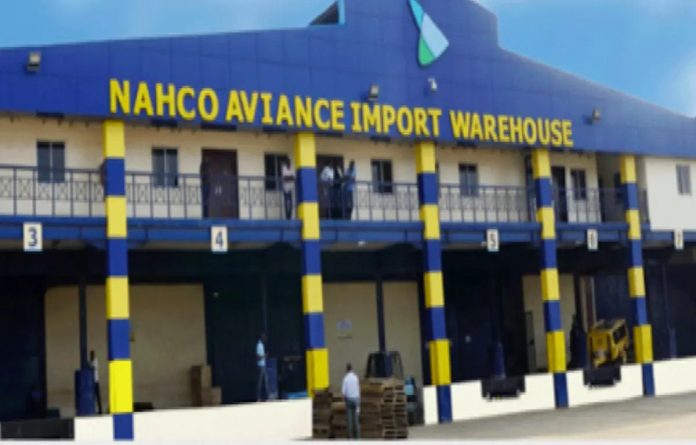
The Nigerian Aviation Handling Company Plc (NAHCO) recorded a 166.7% surge in profit after tax to N8.88bn for the half-year ended June 30, 2025, driven by robust revenue growth and operational efficiency.
According to the firm’s unaudited financial statement filed with the Nigerian Exchange on Thursday, group revenue rose by 102.06%, from N16bn in H1 2024 to N32.33bn in the same period this year. Gross profit climbed 117.7% to N19.16bn, compared to N8.8bn in the corresponding period last year.
Operating profit also grew significantly, up 126.9% to N11.64bn from N5.13bn, while profit before tax rose 148.2% to N11.79bn from N4.75bn. Earnings per share jumped to N4.55 from N1.71 recorded in H1 2024.
Profitability ratios showed marked improvement: gross profit margin increased to 59.26% (from 55%), operating profit margin rose to 36% (from 32.06%), and pre-tax profit margin grew to 36.5% (from 29.7%). Return on assets more than doubled to 20.14%, while return on equity rose to 51.09% from 16.59%.
The strong first-half performance puts NAHCO on track to surpass its 2024 full-year results. Last year, the company posted a profit before tax of N18.70bn—more than double the N8.68bn recorded in 2023—as revenue rose to N53.54bn from N28.40bn.
Reflecting improved operational performance, gross profit in 2024 reached N33.08bn (up from N15bn), while operating profit climbed to N19.84bn from N8.86bn. The company also declared a 134% increase in dividends for 2024, disbursing N11.58bn (N5.94 per share) compared to N4.95bn in 2023.
NAHCO Chairman, Seinde Fadeni, said the company is executing a five-year strategic plan targeting over N300bn in revenue.
“We are implementing a growth strategy that strengthens our core operations and expands into new business areas,” he said. “Our investments in equipment, technology, and employee welfare are central to this plan.”
Fadeni noted that staff salaries had been increased by 50%, and the company is deploying Oracle ERP and HCM systems to support its digital transformation agenda. He also confirmed ongoing efforts to replace all ageing equipment by December 2025.
Group Managing Director, Olumuyiwa Olumekun, highlighted recent milestones, including the launch of the NAHCO Export Packaging and Processing Centre in Lagos and recertification of major stations in Lagos, Abuja, and Kano.
“The export centre, a first in Nigeria, positions our local products for global competitiveness,” he said.
Olumekun added that NAHCO will focus on four strategic priorities—equipment upgrade, digitisation, ESG, and diversification—to sustain growth and deliver long-term value.
“We’re evolving from a ground handling firm into a diversified logistics group,” he said, while expressing gratitude to shareholders, employees, and customers for their continued support.
The Natural Oil and Gas Suppliers Association of Nigeria (NOGASA) has raised red flags over the Dangote Petroleum Refinery’s move to bypass traditional depots and directly supply fuel to end-users, warning that the strategy could destabilize the entire downstream distribution chain.
Speaking during NOGASA’s Annual General Meeting in Abuja, National President Bennett Korie urged the refinery to suspend its planned nationwide direct delivery and instead engage with key industry stakeholders to avoid systemic disruption. He referenced past missteps by the Nigerian National Petroleum Company Limited (NNPCL) that led to the collapse of their retail network.
Korie appealed to President Bola Tinubu to intervene, stating that while the association has supported the Dangote Refinery’s development, a monopoly-style distribution model could threaten thousands of independent operators, jobs, and the integrity of the current fuel marketing ecosystem.
In response, an official from the Dangote Group dismissed the criticism as “anti-progressive,” asserting that the refinery’s plan was designed to eliminate excessive logistics costs and inefficiencies in fuel movement across the country.
Reacting to the development, Petroleum Products Retail Outlet Owners Association of Nigeria (PETROAN) President Billy Gillis-Harry also expressed concerns, urging Nigerians not to celebrate prematurely. He warned that centralizing refining, distribution, and retail functions under a single corporate entity could result in monopolistic pricing and reduced transparency.
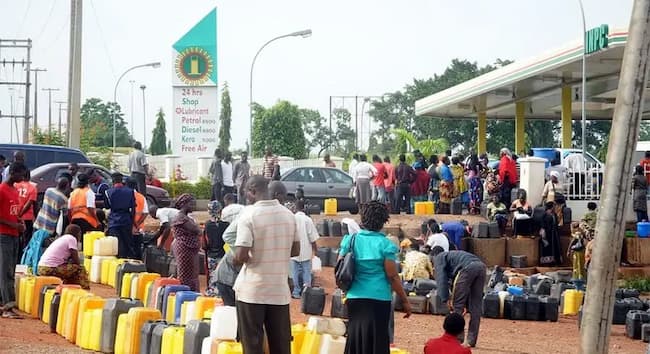
Depot prices have already surged, increasing by 7% from ₦815 per litre on Wednesday to ₦870 per litre on Thursday, intensifying fears of downstream market volatility.
The Dangote Refinery recently announced plans to roll out 4,000 Compressed Natural Gas (CNG)-powered tankers starting August 15 to deliver refined products directly to large-volume consumers such as telecom operators, airlines, manufacturers, and select marketers. The refinery’s estimated ₦720 billion investment in this transport infrastructure is expected to save the Nigerian economy over ₦1.7 trillion annually while boosting productivity among over 42 million MSMEs.
Despite these benefits, NOGASA warns that the move could sideline independent marketers and lead to the dismantling of Nigeria’s existing supply framework. “If the retail outlets are pushed out due to Dangote’s direct sales, restarting the entire chain during disruptions would be nearly impossible,” Korie cautioned.
He also drew parallels to NNPCL’s failed experiment in combining refining and direct retailing, which coincided with the downfall of its domestic refineries.
“We are not opposed to the Dangote Refinery,” Korie stressed. “Our members championed its development. But we must warn against repeating history. We recommend that Dangote focus on refining and wholesaling to marketers, who are equipped to handle last-mile distribution.”
Korie emphasized the importance of collaborative operations that protect all players. “Distributors, especially depot owners and retail station operators, play a critical role in sustaining fuel availability nationwide. Dangote should produce, sell to us, and allow us to handle delivery to the public.”
He revealed that over 50,000 fuel stations and supporting logistics networks could be at risk of collapse if the current distribution model is upended. “Thousands of Nigerians stand to lose their jobs if this isn’t handled carefully,” he warned.
PETROAN President Gillis-Harry echoed this sentiment. “Let’s not forget what monopolies have done in the past. One company refining, stocking, distributing, and even determining price creates a dangerous imbalance. We’ve seen this with cement, where a product that used to cost ₦115 is now over ₦10,000.”
He disclosed that filling station owners are already absorbing losses of up to ₦80 per litre due to the unexpected spike in depot prices.
With the Dangote Refinery now capable of processing 700,000 barrels of crude daily, Gillis-Harry said the company should position itself to compete globally, not dominate Nigeria’s downstream space. He called on regulatory bodies including the Nigerian Midstream and Downstream Petroleum Regulatory Authority (NMDPRA) and the Ministry of Petroleum Resources to immediately enforce pricing control, ensure local crude availability for domestic refineries, and introduce regulations to safeguard industry jobs.
NOGASA, PETROAN, NATO, and other stakeholders are now calling for urgent government intervention and a formal negotiation platform to protect the long-term future of Nigeria’s fuel supply and distribution architecture.
Renowned American director and visual artist Robert Wilson, celebrated for reshaping stage and opera through groundbreaking productions, has died at the age of 83. Wilson passed away peacefully on Thursday in Water Mill, New York, following a brief but acute illness, according to a statement released on his official website. The statement noted that the avant-garde visionary continued working up until his final days.
Best known for his radical, minimalist approach to theatre, Wilson’s body of work spanned original productions and reinterpretations of classical pieces—earning global acclaim but resonating most strongly in France, a country he once described as having given him a “home.”
Wilson rose to international prominence in 1976 with Einstein on the Beach, his seminal collaboration with composer Philip Glass. The nearly five-hour opera discarded traditional storytelling in favour of abstract themes drawn from Albert Einstein’s life. The production, widely regarded as a turning point in modern opera, used movement and light to explore the disruptive nature of space-time.
Earlier, Wilson found success in France with Deafman Glance (Le Regard du Sourd), a seven-hour, near-silent performance that premiered at the Nancy Festival in 1971 and later captivated Parisian audiences. The piece was inspired by a powerful real-life encounter in 1967, when Wilson witnessed a deaf and mute 13-year-old Black boy—Raymond Andrews—being assaulted by police. Wilson later adopted the boy, who became a central influence in his life and art.
Wilson’s signature style featured slow, deliberate body movement inspired by Asian theatre, coupled with precise lighting and stark, dreamlike sets. His work earned him a reputation as a pioneer of visual theatre and a revered figure in avant-garde circles.
Beyond the stage, Wilson collaborated with a range of iconic figures, including choreographer Andy de Groat, singer Tom Waits, actress Isabelle Huppert (Orlando), Lady Gaga (for a Louvre video project), and ballet legend Mikhail Baryshnikov.
“Even after his diagnosis, he remained deeply committed to creating and mentoring,” the tribute on his website stated. “His stage productions, drawings, video portraits, and The Watermill Center will remain enduring pillars of his artistic legacy.”
Born on October 4, 1941, in Waco, Texas, Wilson overcame a debilitating childhood stutter with the help of a therapist who incorporated movement into treatment. By age 12, he was already writing and directing plays in his garage.
After moving to New York in his twenties, Wilson rejected the mainstream theatre scene, aligning instead with avant-garde artists such as Andy Warhol, John Cage, George Balanchine, and Martha Graham.
In 1992, he established The Watermill Center on Long Island as a laboratory for emerging artists from around the world.
Details of memorial services are expected to be announced soon.
The National Bureau of Statistics (NBS) has reported that the average retail price of petrol surged to ₦1,037.66 per litre in June 2025, marking a 38.32% increase from ₦750.17 recorded in June 2024.
This was revealed in the NBS’s latest Petrol Price Watch report released on Thursday in Abuja. Compared to May 2025, when the average pump price stood at ₦1,027.76, the June figure reflected a marginal month-on-month increase of 0.96%.
A breakdown by states showed that Jigawa recorded the highest average price at ₦1,107.52 per litre, followed by Ondo at ₦1,104.80 and Lagos at ₦1,100.29. In contrast, the lowest prices were observed in Yobe (₦950.60), Kogi (₦986.67), and Imo (₦987.86).
Regionally, the North-West had the highest average petrol price at ₦1,062.84, while the North-East recorded the lowest at ₦1,020.15.
In a separate report, the Diesel Price Watch for June 2025 showed that the average retail price of diesel climbed to ₦1,813.81 per litre — a 23.98% increase compared to ₦1,462.98 in June 2024. On a monthly basis, diesel prices rose 3.16% from ₦1,758.26 in May 2025.
Benue topped the diesel price chart at ₦2,541.46 per litre, followed by Adamawa (₦2,355.32) and Plateau (₦2,236.42). The lowest prices were reported in Ondo (₦1,365.71), Anambra (₦1,391.02), and Kogi (₦1,400.00).
Among the geopolitical zones, the South-South recorded the highest average diesel price at ₦1,963.86, while the South-West posted the lowest at ₦1,618.74 per litre.
The Nigerian Exchange (NGX) closed the last trading session of July on a positive note, delivering a year-to-date (YTD) return of 35.89% as investors saw their portfolio values increase by ₦364.55 billion.
The All-Share Index (ASI) rose by 0.42% to close at 139,863.52 points, while market capitalisation advanced to ₦88.42 trillion. The upward movement was supported by strong liquidity and continued demand for equities.
Despite the gains, market breadth remained negative as 28 stocks advanced while 54 declined. Analysts noted a mix of bargain hunting and profit-taking as the cause of the diverging sentiment.
Major gainers included Wemabank, Guinness, Dangote Cement, Aradel, and several other mid-to-large cap stocks that helped sustain the market’s momentum.
Trading activity ended on a mixed note. Total volume increased by 20.97%, while trade value dropped by 3.92%. About 1.1 billion units valued at ₦32.83 billion were traded across 36,890 deals, according to Atlass Portfolio Limited.
In terms of volume, FCMB led with 11.05% of total trades, followed by Univinsure (8.32%), Fidelity Bank (7.37%), Regal Insurance (5.87%), and Royal Exchange (4.28%). WAPCO was the most traded stock by value, accounting for 10.72% of total turnover.
Top gainers were Wemabank and UACN with a 10% increase each. Others included Guinness (+9.96%), Sky Aviation (+9.95%), Mecure (+9.69%), Multiverse (+9.60%), and Custodian Investment (+9.09%).
Meanwhile, 54 stocks closed in the red. Mansard, FTN Cocoa, Learn Africa, and TIP all declined by 10%. Other laggards included HMC Allied (-9.94%), Legend Interiors (-9.40%), First Holdco (-7.59%), Cornerstone Insurance (-5.93%), and Eterna (-5.44%).
Sector performance was largely positive. The banking sector gained 0.08%, oil and gas rose by 0.94%, industrial goods were up by 1.35%, and commodities gained 0.52%. However, insurance and consumer goods sectors fell by 4.31% and 0.02%, respectively.
Despite the mixed breadth, analysts say the strong YTD return reflects investor confidence in market fundamentals heading into the new month.
The naira weakened marginally in July, depreciating by approximately ₦3.85 at the official market, even as Nigeria’s external reserves rose by $2.15 billion during the same period.
According to the Central Bank of Nigeria (CBN) FX update, the naira closed at ₦1,533.33 per dollar at the Nigerian Foreign Exchange Market (NFEM) on Thursday, softening from ₦1,529.27 at the beginning of the month.
On Thursday, the local currency appreciated slightly from the previous day’s ₦1,534.52 as dollar demand eased. The intraday high was recorded at ₦1,535, compared to ₦1,537 on Wednesday, while the lowest traded rate stood at ₦1,533.
Despite the naira’s weakening, Nigeria’s gross external reserves surged by $2.15 billion, climbing to $39.36 billion as of July 30, up from $37.21 billion recorded at the end of June. Analysts attribute this growth to increased dollar inflows from Open Market Operations (OMO) and cautious forex market interventions by the CBN.
Market watchers note that the apex bank has significantly reduced its intervention in the FX market but continues to maintain a close watch to keep the exchange rate within its preferred band.
In a recent note, analysts at Verto FX observed that the CBN is testing the market with different OMO tenors, although short-term offerings have failed to attract strong foreign investor demand. “While annualised yields on primary OMO papers are above 24%, the three-month tenors are not drawing the expected foreign appetite. Investors seem more focused on 6-month to 1-year durations,” the note stated.
The expiration pace of existing OMOs is also expected to increase throughout 2025. Analysts anticipate that the CBN will issue new OMO bills to help investors roll over maturing positions and manage excess liquidity in the system.
However, this strategy is facing fresh scrutiny. Verto FX noted that money supply (M2) has begun to show modest growth, suggesting that some foreign investors may be converting naira proceeds back into dollars upon maturity of OMO investments, potentially increasing pressure on the exchange rate.
Despite these concerns, the naira has remained within a relatively stable range, supported by improved dollar supply and the CBN’s tactical interventions.