







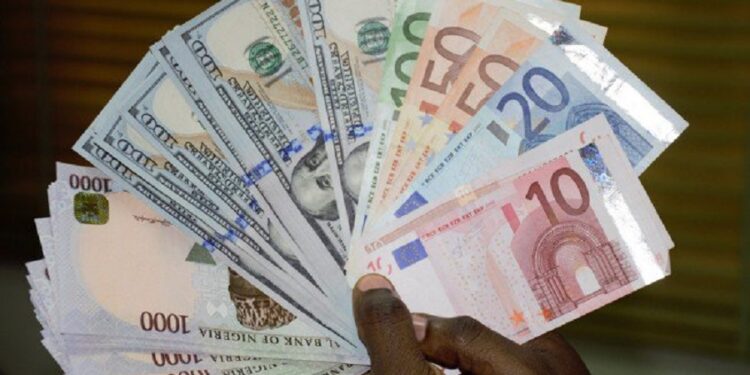
Nigeria’s external reserves have climbed to their highest level in six years, with the Central Bank of Nigeria (CBN) confirming a gross reserve balance of $43.535 billion. The uptick, supported by stronger remittances, improved foreign inflows, and steady hydrocarbon earnings, has boosted the country’s usable reserves.
Fresh data from S&P shows that Nigeria’s usable reserves have risen sharply, now providing approximately five months of coverage for current account payments (CAP)—a significant improvement from 3.4 months recorded in 2024. This expanded buffer strengthens the nation’s capacity to manage short-term external obligations without borrowing.
Breakdown of CBN figures reveals that $42.950 billion of the reserves are liquid, while $585.110 million represents blocked funds—down from a peak of $1.002 billion in Q1 2025. Analysts attribute the decline in blocked funds to the central bank’s ongoing FX reforms, which have eased long-standing repatriation bottlenecks for foreign investors.
The improved FX liquidity marks a reversal of the conditions that once led to Nigeria’s removal from the MSCI Index. Multinational firms and portfolio investors seeking to repatriate capital are reportedly receiving more consistent FX support.
As of early November, total gross reserves had risen by $338 million from levels recorded at the end of October. The position was aided by firmer oil receipts, stronger non-oil inflows, and a persistent trade surplus.
S&P data also indicates that Nigeria’s usable reserves increased to $36.042 billion, up from $29.358 billion in 2024. The ratings agency noted that it deducts approximately $8 billion—borrowed domestically through forwards—from its usable reserve calculation. However, short-term FX borrowed from offshore markets is classified as external public sector debt rather than deducted from reserve totals.
S&P projects that Nigeria’s usable reserves will average about $40 billion between 2025 and 2028, up from earlier estimates of $33 billion.
Economic analysts forecast that the external reserve balance could surpass $44 billion in 2025, supported by improvements in oil production and sustained inflows from non-oil sectors.
On the global commodities front, oil prices climbed sharply after renewed Ukrainian drone strikes targeted Russia’s Novorossiysk export hub, raising concerns over fresh supply disruptions. U.S. WTI crude jumped 2.71% to $60.28 per barrel, while Brent crude advanced to $64.54.
Analysts warn of potential additional price increases as U.S. sanctions on major Russian firms Rosneft and Lukoil come into effect on November 21, posing further supply risks.



 confirming a gross reserve balance of $43.535 billion.)