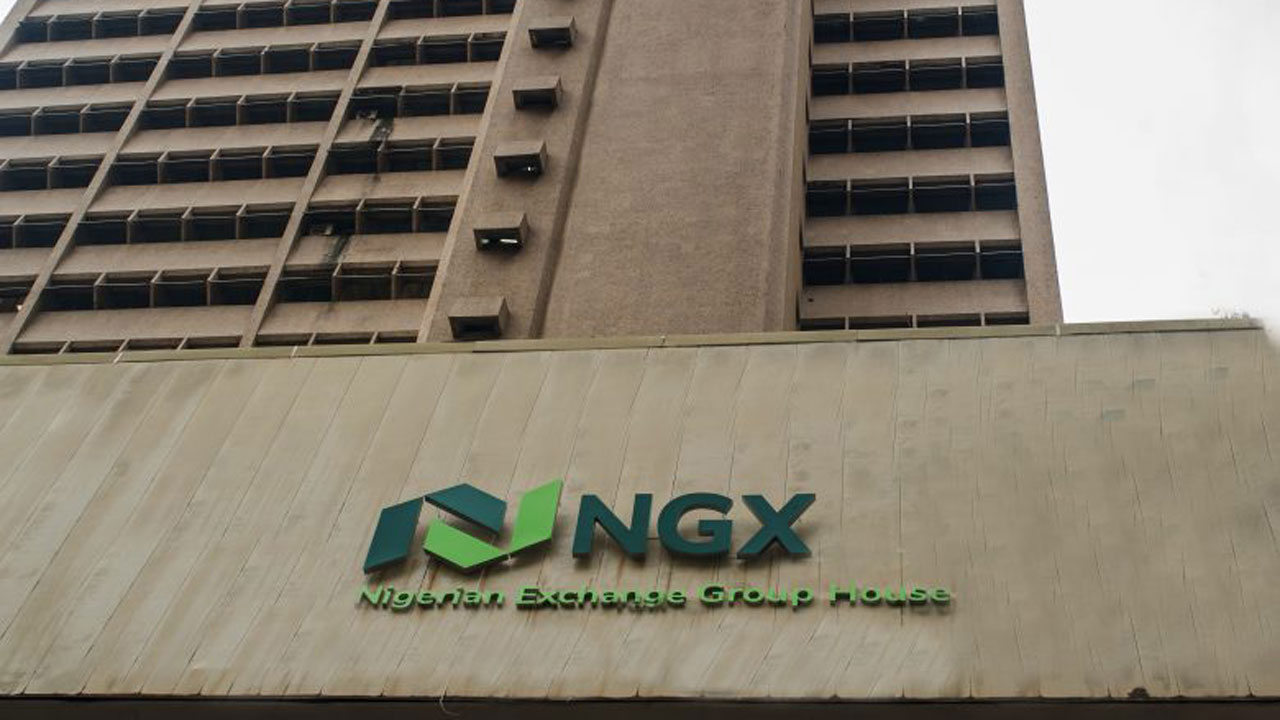








Nigeria’s equities market closed sharply lower on Tuesday as investors wiped off N1.141 trillion in market value in reaction to the latest monetary policy decision by the Central Bank of Nigeria.
The bearish sentiment swept across large-cap counters, consumer goods stocks and insurance equities, dragging key performance indicators into negative territory at the close of trading.
In addition to the rate cut, the Committee adjusted the asymmetric corridor to +50/-450 basis points around the MPR. It retained the Cash Reserve Ratio (CRR) for Deposit Money Banks at 45 per cent and for Merchant Banks at 16 per cent, while keeping the Liquidity Ratio unchanged at 30 per cent.
Market Capitalisation Drops Below N125trn
Data from the Nigerian Exchange Limited showed that market capitalisation declined by N1.141 trillion, representing a 0.92 per cent drop, to close at N124.827 trillion. This compares with N125.968 trillion recorded in the previous trading session.
Similarly, the benchmark All-Share Index (ASI) retreated by 1,778.95 points, equivalent to 0.92 per cent, settling at 194,484.61, down from 196,263.56 posted on Monday. The negative close moderated the year-to-date return to 24.98 per cent, reflecting the impact of renewed profit-taking across major sectors of the market. Market breadth closed negative, with 40 stocks recording losses against 27 gainers.
Sell-Offs Hit Consumer Goods, Insurance and Mid-Caps
Heavy sell-offs were observed in several mid- and large-cap stocks, amplifying the market’s losses. Tantalizers Plc and Daar Communications Plc topped the losers’ table, each shedding 10 per cent to close at N4.86 and N2.25 per share respectively.
BUA Foods Plc declined by 9.99 per cent to finish at N760.60. Ellah Lakes Plc fell by 9.96 per cent to N10.40, while Japaul Gold & Ventures Plc dropped 9.95 per cent to close at N3.80 per share. Overall, 35 additional equities joined the decliners’ list, reinforcing the broad-based weakness that characterised the session.
Banking and Insurance Counters Provide Limited Support
Despite the widespread losses, a handful of stocks recorded gains, offering modest resistance to the sell pressure. Jaiz Bank Plc led the gainers’ chart with a 10 per cent appreciation to N12.76 per share.
Infinity Trust Mortgage Bank Plc followed with a 9.83 per cent rise to N19.00, while FCMB Group Plc advanced 9.72 per cent to close at N13.55 per share. In the insurance segment, Fortis Global Insurance Plc gained 9.09 per cent to settle at 72 kobo, and Sterling Financial Holdings Company Plc rose by 7.50 per cent to close at N8.60.
Trading Activity: Volume and Deals Dip, Value Surges
A total turnover of 1.14 billion shares valued at N53.4 billion was recorded across 72,218 transactions during the session. This compares with 1.3 billion shares worth N31.5 billion exchanged in 95,091 deals in the previous session.
Analysis of the trading statistics indicates a 12 per cent decline in traded volume and a 24 per cent drop in the number of deals. However, the value of transactions surged by 44 per cent, suggesting that high-value trades dominated the market despite reduced participation. Japaul Gold & Ventures Plc emerged as the most actively traded stock by volume, recording 102 million shares exchanged during the day.
Investor Sentiment Remains Cautious
Market analysts attribute the broad-based sell-off to investor repositioning following the MPC’s interest rate adjustment. While a rate cut is typically viewed as supportive for equities over the medium term, short-term volatility often accompanies monetary policy shifts as market participants reassess portfolio allocations.
The latest session underscores heightened sensitivity within the Nigerian capital market to policy direction, particularly at a time when inflation dynamics and liquidity conditions remain central to investment decisions.
With the Monetary Policy Rate now at 26.50 per cent, investors are expected to closely monitor macroeconomic indicators and subsequent guidance from the apex bank to gauge the sustainability of the current policy stance and its implications for equities performance in the coming weeks.