Key points
- The Federal Government and international development agencies have demanded stronger partnerships and increased funding to fix Nigeria’s urban water deficit.
- Representatives from 22 states gathered in Abuja at an infrastructure workshop to review institutional water reforms and execution bottlenecks.
- France has injected over 300 million euros into water infrastructure and supply networks across seven states over the past ten years.
- Statistical data indicates that roughly 30 percent of Nigerians lack access to basic water, while 56 percent lack basic sanitation services.
- Sector experts emphasize that infrastructure deployment must be paired with operational billing efficiency and institutional utility reforms to be sustainable.
Main Story
The Federal Government alongside its international development partners has called for a major upgrade in funding and multi-agency cooperation to address the structural deficit in Nigeria’s urban water supply system.
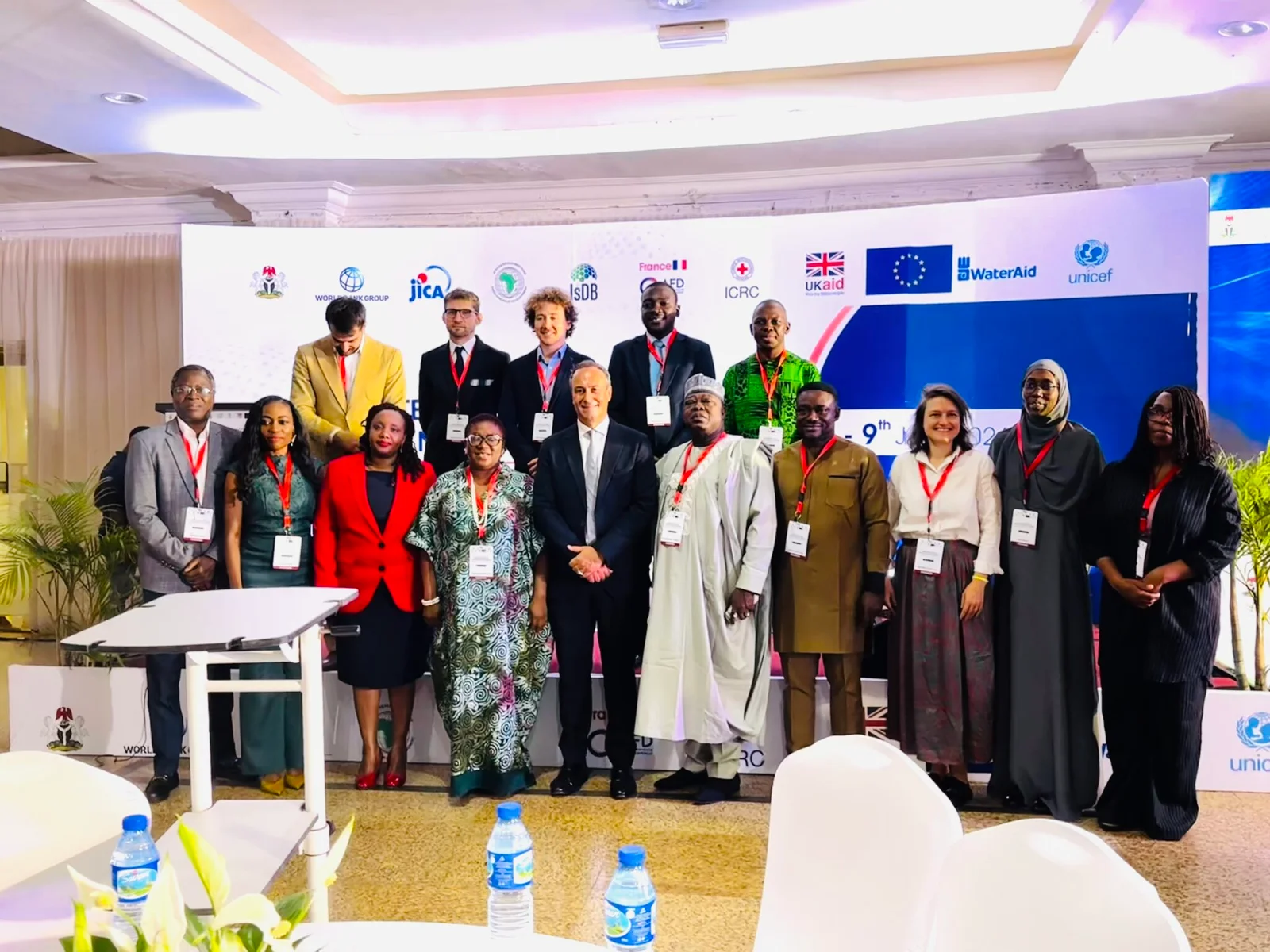
At a specialized sector workshop held in Abuja on Monday, organized by the Federal Ministry of Water Resources and Sanitation, delegates gathered to analyze current field progress, operational challenges, and strategic directions. The session focused on identifying scalable successes from domestic and global projects while clearing hurdles that stall water utility reforms.
Addressing the assembly on behalf of the water and sanitation donor group, the French Ambassador to Nigeria highlighted the significant national attendance as proof of strong local intent to fix public utilities. Despite various state-backed institutional adjustments, substantial infrastructure deficits persist.
Millions of city residents remain cut off from public water lines, leaving them dependent on expensive and unregulated water vendors, private tankers, or local boreholes—which frequently compromise public health safety. To support sustainable solutions, the French Development Agency alone has provided more than 300 million euros over the past decade to fund water projects across seven states.
Federal administrators noted that rapid population expansion, climate change, and wide financing gaps continue to threaten the country’s capability to meet international sustainable development goals. Officials confirmed that approximately 30 percent of citizens are cut off from basic water access, while 56 percent live without standard sanitation facilities.
While interventions supported by groups like the World Bank, African Development Bank, and WaterAid have expanded services in states like Oyo, Taraba, Kaduna, Yobe, and Osun, engineering analysts warn that physical pipes and water treatment plants are not enough. Sustainable progress requires a complete overhaul of utility management, including fixing weak billing systems, curbing illegal connections, and improving cost-recovery frameworks.
The Issues
- Mitigating the financial and logistical impacts of climate change and rapid urban population growth on widening municipal water demand gaps.
- Transitioning urban populations away from unregulated, costly water vendors and self-drilled boreholes to centralized public grids.
- Reforming utility management frameworks to fix weak revenue systems and eliminate illegal line connections.
What’s Being Said
- Emphasizing the urgent social necessity of modernizing the delivery of clean water utilities, the Ambassador of France to Nigeria and ECOWAS, Marc Fonbaustier, stated: “Accelerating access to sustainable, affordable and reliable water services remains a top priority,”
- Commending the domestic awareness of resource management challenges in the face of global environmental changes, Fonbaustier noted: “In some ways, Nigerians are ahead of us because you understand the realities of water security and the widening demand gap.”
What’s Next
- The Federal Ministry of Water Resources and Sanitation will compile the workshop’s findings to guide upcoming public utility investments.
- International development agencies will coordinate technical assistance frameworks to improve billing systems across regional water boards.
- Management teams across the 25 participating states will roll out updated institutional guidelines to improve operational cost-recovery.
Bottom Line
Nigeria and international donors are pushing for a major policy overhaul and increased investment to bridge the country’s urban water gap, with French agencies providing 300 million euros in backing as data shows 30 percent of the population still lacks basic water access.