







KEY POINTS
- Bangladesh and Nigeria have committed to deepening economic ties, with a specific focus on contract farming and high-yield, climate-resilient agriculture.
- During the 55th Independence Anniversary of Bangladesh in Abuja, High Commissioner Miah Md. Mainul Kabir noted that current trade is growing but remains far below its true potential.
- Bangladesh is offering expertise in textiles, pharmaceuticals, and ICT, while Nigeria provides a vast market, energy resources, and expansive arable land.
- Nigeria’s Minister of Foreign Affairs, Yusuf Tuggar, reaffirmed the nation’s commitment to “South-South cooperation,” encouraging deeper private sector engagement in renewable energy.
MAIN STORY
Nigeria and Bangladesh are moving toward a strategic agricultural partnership designed to bolster food security in both nations.
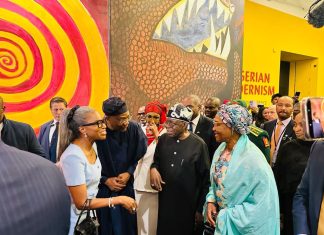
Speaking at a diplomatic reception in Abuja on Thursday, Bangladeshi High Commissioner Miah Md. Mainul Kabir proposed a “contract farming” model that would combine Bangladesh’s advanced, climate-adaptive cultivation techniques with Nigeria’s vast, underutilized arable land.
This collaboration is viewed as a high-priority frontier for two of the world’s most populous developing economies, both of which are currently navigating global commodity disruptions.
Beyond agriculture, the diplomatic engagement highlighted a significant opportunity for industrial exchange.
Bangladesh, a global leader in the ready-made garment (RMG) sector and pharmaceutical manufacturing, is looking to Nigeria as a primary gateway for its products in Africa.
Conversely, Nigeria’s Foreign Affairs Minister, Yusuf Tuggar—represented by Director Bukar Hamman—noted that Nigeria is eager to attract Bangladeshi investment in ICT and renewable energy.
The goal is to move beyond simple commodity trading toward a relationship defined by technology transfer and professional military training, particularly in peacekeeping operations where both nations are major global contributors.
THE ISSUE
The primary challenge identified is the “Untapped Potential Gap.” Despite sharing common values and similar developmental hurdles, the volume of bilateral trade does not yet reflect the scale of their respective economies. There is also a “Logistics and Awareness Barrier,” where private sector players in both countries lack sufficient data on market entry requirements for specialized goods like ceramics or processed foods. To resolve this, both governments are pushing for more frequent “People-to-People” contacts and academic collaborations to build the trust necessary for large-scale, long-term capital investments in agro-processing and manufacturing.
WHAT’S BEING SAID
- “Bangladesh’s expertise in high-yield, climate-adaptive cultivation combined with Nigeria’s vast arable land creates a mutually beneficial foundation,” stated Miah Md. Mainul Kabir, Bangladeshi High Commissioner.
- “We believe we are yet to achieve the true potential of our relationship in terms of trade and investment,” Kabir added regarding the current economic status.
- “Nigeria and Bangladesh have continued to grow their partnership in trade, agriculture, education and defence cooperation,” noted Minister Yusuf Tuggar.
- “Enhanced cooperation will not only benefit our peoples, but also contribute to broader South-South cooperation and global development,” the Minister concluded.
WHAT’S NEXT
- High-level trade delegations are expected to exchange visits in the coming months to finalize frameworks for contract farming pilots in selected Nigerian states.
- The Nigerian Ministry of Foreign Affairs will work with the Ministry of Industry, Trade, and Investment to create “fast-track” incentives for Bangladeshi pharmaceutical and textile firms looking to set up local production plants.
- Additionally, both nations will explore new protocols for professional military training exchange, building on their shared history in UN peacekeeping.
- Finally, a joint ICT forum is being proposed to facilitate technology transfer between the growing tech hubs in Dhaka and Lagos.
BOTTOM LINE
The bottom line is that Nigeria and Bangladesh are looking to each other for “South-South” solutions to food and energy security. By trading Bangladesh’s farming technology for Nigeria’s land and energy resources, both countries are attempting to bypass traditional Western-dependent supply chains. For the average citizen, this partnership could eventually lead to more affordable textiles, more resilient local food supplies, and new opportunities in the digital economy.