







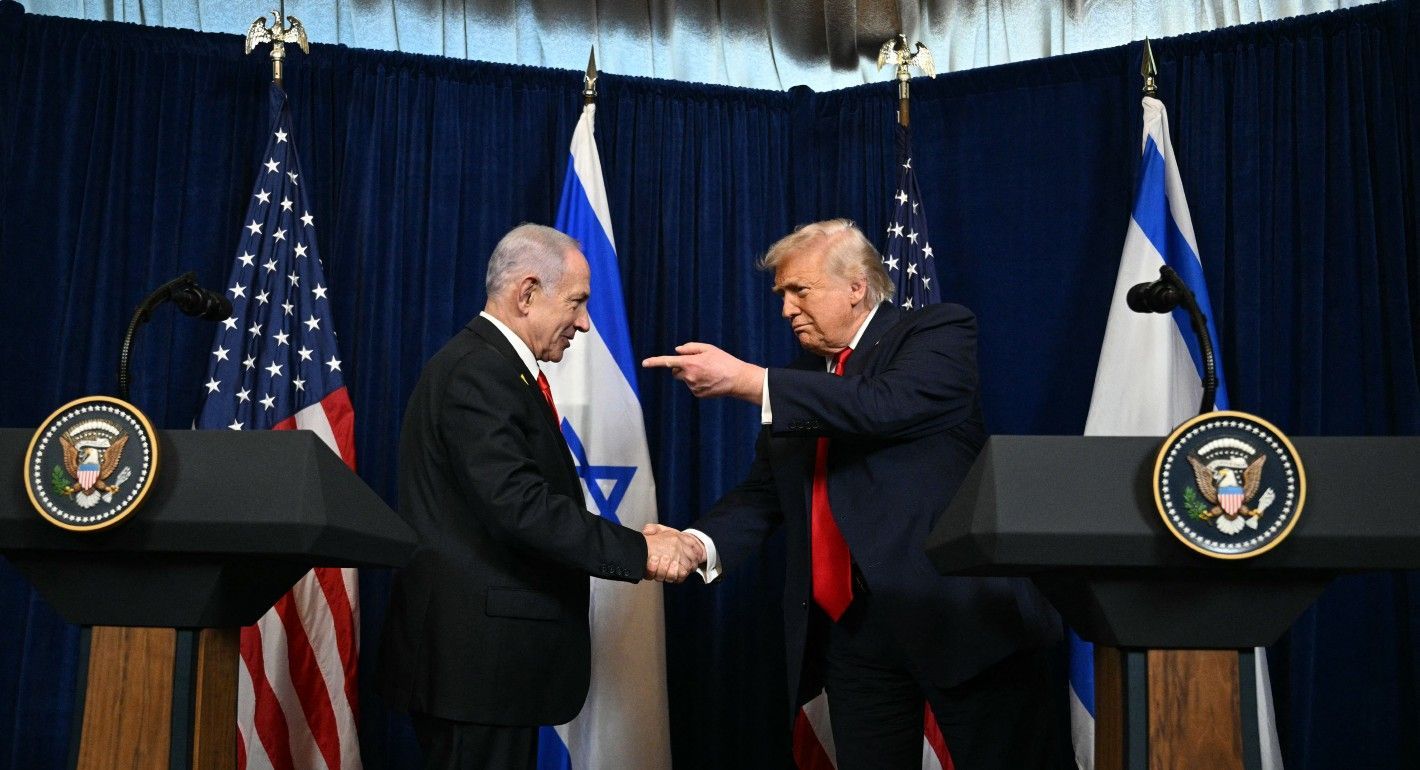
Israel’s Prime Minister, Benjamin Netanyahu, has formally accepted an invitation from United States President Donald Trump to become a member of the newly constituted Board of Peace, a high-level international body designed to address and manage conflict-prone regions across the globe.
In a statement released on Wednesday, Netanyahu’s office confirmed that the Israeli leader had agreed to participate in the initiative, which Trump has positioned as a coalition of world leaders tasked with restoring stability and advancing long-term peace in volatile regions.
According to the statement, the Board of Peace will comprise influential global political figures and will be chaired directly by President Trump, who will also retain a separate role as the official representative of the United States. The board’s founding charter, reviewed by international media, outlines an ambitious mandate that extends beyond any single conflict zone.
While the initiative was initially discussed as a framework for overseeing the post-war reconstruction of Gaza, the charter does not restrict the board’s scope solely to Palestinian territory. Instead, it frames the body as a permanent mechanism for managing post-conflict governance, promoting lawful administration, and preventing the re-emergence of violence in areas facing persistent instability.
Participation in the Board of Peace reportedly comes with a significant financial commitment, with permanent members expected to contribute up to $1 billion to secure their seats—an element that has already generated international debate.
Trump announced the creation of the board last week alongside plans for a subsidiary entity, the Gaza Executive Board, which would operate under the broader structure of the peace initiative. The proposed executive board is expected to include Turkish Foreign Minister Hakan Fidan and prominent Qatari diplomat Ali Al-Thawadi.
Netanyahu has openly objected to the inclusion of Turkish and Qatari representatives, citing strained diplomatic relations and longstanding security concerns. Relations between Israel and Turkey have deteriorated sharply since the outbreak of the Gaza war in October 2023, which followed an unprecedented Hamas-led attack on Israeli territory.
Beyond the executive board, a separate committee of 15 Palestinian technocrats has been established to manage Gaza’s day-to-day civil administration under the second phase of a ceasefire plan announced by Trump in October. The committee is chaired by Ali Shaath, a Gaza-born former deputy minister in the Palestinian Authority, and began preliminary operations in Cairo earlier this week.
Although dozens of countries—ranging from close U.S. allies to geopolitical rivals—have reportedly received invitations to join the Board of Peace, not all have responded favorably. France, a longstanding U.S. ally, has already indicated that it does not intend to participate, underscoring emerging divisions over the initiative’s structure, financing model, and political implications.
As diplomatic consultations continue, the formation of the Board of Peace signals a bold and unconventional attempt by the Trump administration to reshape global conflict management through a centralized, leader-driven framework.