







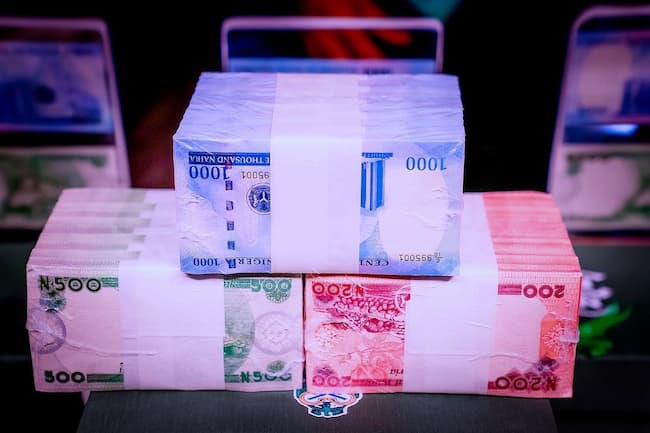
The Nigerian naira continued its upward momentum against the US dollar across various forex markets. This appreciation was fueled by foreign exchange (FX) interventions and increased confidence in Nigeria’s economic policies among foreign investors.
In the official forex market, the naira gained 0.05% against the dollar, closing at N1,509.53 per dollar, compared to the previous rate of N1,510.33, according to data from the FMDQ Securities Exchange.
The recent recovery of the naira is largely attributed to sustained intervention efforts by the Central Bank of Nigeria (CBN). The apex bank has been selling FX to banks to ensure adequate liquidity in the market, balancing the high demand for dollars.
Earlier this week, the CBN sold $55.80 million to banks at rates between N1,504.00 and N1,510.50 per dollar. Additionally, the bank instructed Bureau de Change (BDC) operators to buy $25,000 from authorized dealers to cater to small-scale forex demands, such as travel and school fees payments.
The CBN remains focused on narrowing the exchange rate disparity between the official and parallel markets. The latest update from CardinalStone Limited indicates that the exchange rate at the parallel market improved by 0.65% to N1,535 per dollar. This has significantly reduced the difference between the official and black market rates to N26.
Meanwhile, oil prices remain relatively high due to concerns over supply disruptions in Russia and the United States. Brent crude traded at $76.00 per barrel, up by 16 cents, while West Texas Intermediate (WTI) crude gained 36 cents, reaching $72.21 per barrel.
In contrast, gold prices declined after previously hitting a record high. Spot gold dropped by 0.5% to $2,920.74 per ounce, after peaking at $2,946.85. The decline was driven by a stronger US dollar and ongoing market uncertainties surrounding the latest trade policies of former US President Donald Trump.
Analysts predict further volatility in global markets as geopolitical developments, including potential new tariffs and sanctions, could impact commodity prices and overall economic growth.