









KEY POINTS
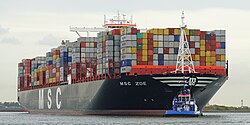
- Mediterranean Shipping Company (MSC) has officially suspended its recently implemented tariff adjustment in Nigeria.
- The decision follows a direct mandate from the Nigerian Shippers’ Council (NSC) issued on Monday to halt the price hike.
- In a customer advisory titled “Temporary Suspension of New Tariff Implementation,” MSC confirmed that the previous pricing regime remains in force.
- The suspension is temporary, pending the outcome of a stakeholders’ meeting to deliberate on the proposed charges and their impact on port users.
MAIN STORY
Mediterranean Shipping Company (MSC) has formally complied with the regulatory directive to freeze its new shipping tariffs. In a customer advisory released in Lagos on Tuesday, the shipping line informed its clients that the controversial price adjustments have been “temporarily suspended.”
This move follows intense pressure from the Nigerian Shippers’ Council (NSC), which had ordered the firm to maintain its existing rates until a formal review process could be completed.
The company stated that the tariff regime applicable prior to the recent increase will remain the standard until further notice. MSC emphasized its commitment to regulatory compliance and transparency, promising to provide prompt updates once the NSC issues a “definitive position.”
The News Agency of Nigeria (NAN) reports that the regulator’s intervention is specifically aimed at protecting port users from unilateral cost escalations while broader economic consultations are ongoing.
THE ISSUES
The primary friction point is the “Regulatory Veto” exercised by the Shippers’ Council. While international shipping lines often adjust tariffs to account for global operational risks—such as the current Middle East instability—the NSC serves as a protective buffer for the Nigerian economy. By forcing this suspension, the regulator is preventing a “cost-push” inflationary spike in the maritime sector.
For MSC, the challenge is balancing global headquarters’ pricing mandates with the localized requirements of the Nigerian market. The upcoming stakeholders’ meeting will be the critical arena for determining whether the proposed increases are justified by actual operational overheads or if they represent an undue burden on local importers.
WHAT’S NEXT
- The Nigerian Shippers’ Council is expected to announce the date for the stakeholders’ meeting within the coming days.
- Port users and freight forwarders are likely to present data during the meeting on how the proposed tariffs would affect the landing cost of essential goods.
- MSC’s legal and commercial teams will provide the regulator with a breakdown of the costs driving the need for a tariff adjustment.
- A final directive will be issued by the NSC following the conclusion of these deliberations, which will then become the new “definitive position” for the shipping line.
WHAT’S BEING SAID
- “The tariff regime applicable prior to the recent increase will remain in force until further notice,” stated MSC in its customer advisory.
- “We remain fully committed to regulatory compliance, transparency, and protecting the interests of our customers,” the shipping line added.
- “The NSC mandated the MSC to suspend the implementation of its newly introduced shipping tariff,” reported the News Agency of Nigeria (NAN).
BOTTOM LINE
The Bottom Line is that the Shippers’ Council has successfully hit the “Pause” button on port inflation. By compelling MSC to issue a formal advisory, the NSC has ensured that no new charges can be legally collected at Nigerian ports for the time being. This provides a vital breathing room for the maritime community as they prepare to debate the fairness of the proposed rates in the upcoming stakeholders’ forum.



 has formally complied with the regulatory directive to freeze its new shipping tariffs...)