








KEY POINTS
- NU Synergy has commissioned two CNG refuelling and conversion facilities in Kano.
- The new stations bring the state’s total to 12, up from zero about a year ago, according to the Presidential Initiative on CNG and Electric Vehicles.
- The initiative’s chairman, Ismaeel Ahmed, says private investment is helping expand Nigeria’s clean mobility sector.
- NU Synergy plans to expand its operations to additional locations.
MAIN STORY
Kano’s compressed natural gas (CNG) infrastructure has expanded with the commissioning of two refuelling and conversion facilities by private company NU Synergy, bringing the state’s total number of CNG refuelling stations to 12, according to the Presidential Initiative on Compressed Natural Gas and Electric Vehicles (Pi-CNG & EV).
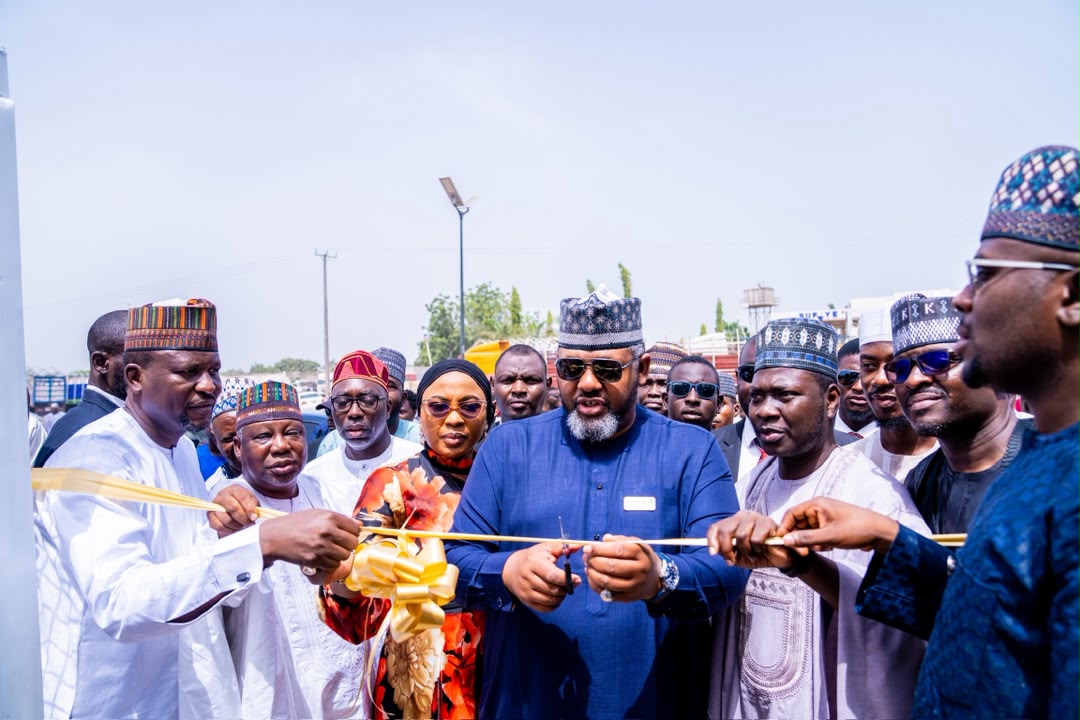
The facilities were commissioned on Sunday at locations along Zaria Road and in Mariri, along Wudil Road. Their opening adds to the infrastructure supporting the adoption of CNG as an alternative fuel for transportation in northern Nigeria.
Speaking at the launch, the Executive Chairman of Pi-CNG & EV, Ismaeel Ahmed, described the development as evidence of what private investment could achieve when investors respond to opportunities in the country’s clean mobility sector.
He said Nigeria’s natural gas resources offered an opportunity to reduce transportation costs by expanding the domestic use of gas as a vehicle fuel.
“The future of transportation must increasingly be driven by more affordable energy alternatives, particularly in a country with significant natural gas resources like Nigeria,” Ahmed said.
“The future belongs to cheaper energy sources for transportation. It is difficult to achieve that with PMS and diesel,” he added.
Ahmed said Nigeria had more than 200 trillion cubic feet of proven natural gas reserves, arguing that greater domestic utilisation of the resource could support investment, employment and technical skills development.
“Nigeria is a gas country, not an oil country. We have over 200 trillion cubic feet of proven natural gas,” he said.
The chairman recounted that NU Synergy’s promoter had approached the initiative a few months earlier with an interest in investing in the CNG sector. Following discussions, the investor was connected with the initiative’s operations and gas teams for guidance and technical support.
“Four months later, this is the story. He is commissioning a CNG station in Kano. Today is one of my proudest moments,” Ahmed said.
He commended the company for completing the two facilities within a relatively short period and described the investment as an example of the private-sector participation needed to expand CNG adoption across Nigeria.
“You are a doer, you are a deliverer, and you have delivered in Kano,” he said.
As part of the launch activities, motorists were offered free CNG refuelling for the day. The event attracted government officials, traditional leaders and private-sector stakeholders.
NU Synergy is also planning to expand to other locations, although details of the proposed expansion were not provided in the supplied report.
THE ISSUES
The expansion of CNG infrastructure could give motorists in Kano more options for reducing fuel costs, particularly where gas is competitively priced and accessible. However, the number of refuelling stations alone does not establish how widely motorists can access the fuel or how much they can save compared with petrol and diesel.
The growth of the CNG market also depends on the availability of vehicle conversion services, reliable gas supplies, station operating capacity and appropriate safety standards. For commercial transport operators, the decision to switch fuels will depend on the upfront cost of conversion, vehicle suitability, refuelling convenience and the time required to recover the investment.
The reported increase from zero stations to 12 within about a year suggests rapid infrastructure development in Kano. The next test will be whether the new facilities attract sustained demand and support wider adoption among private motorists, transport businesses and fleet operators.
For investors, the commissioning demonstrates activity in the emerging CNG market. Continued expansion, however, will depend on commercially viable operations and a reliable supply chain.
WHAT’S BEING SAID
“The future belongs to cheaper energy sources for transportation. It is difficult to achieve that with PMS and diesel.” – Ismaeel Ahmed, Executive Chairman, Pi-CNG & EV
“Nigeria is a gas country, not an oil country. We have over 200 trillion cubic feet of proven natural gas.” – Ismaeel Ahmed, Executive Chairman, Pi-CNG & EV
WHAT’S NEXT
The focus will be on the utilisation of the two new facilities and NU Synergy’s plans to expand its operations. Further growth in Kano’s CNG network will also depend on investment in refuelling infrastructure, conversion services and dependable gas supply.
For motorists and transport operators, the practical measure of progress will be whether CNG becomes a convenient and cost-effective alternative to conventional fuels.
BOTTOM LINE
NU Synergy’s commissioning of two CNG facilities has increased Kano’s reported refuelling station count to 12. The expansion strengthens the state’s CNG infrastructure, but sustained adoption will depend on fuel affordability, access to refuelling, safe vehicle conversions and the commercial viability of the wider ecosystem.





 infrastructure has expanded with the commissioning of two refuelling and conversion facilities by ...)