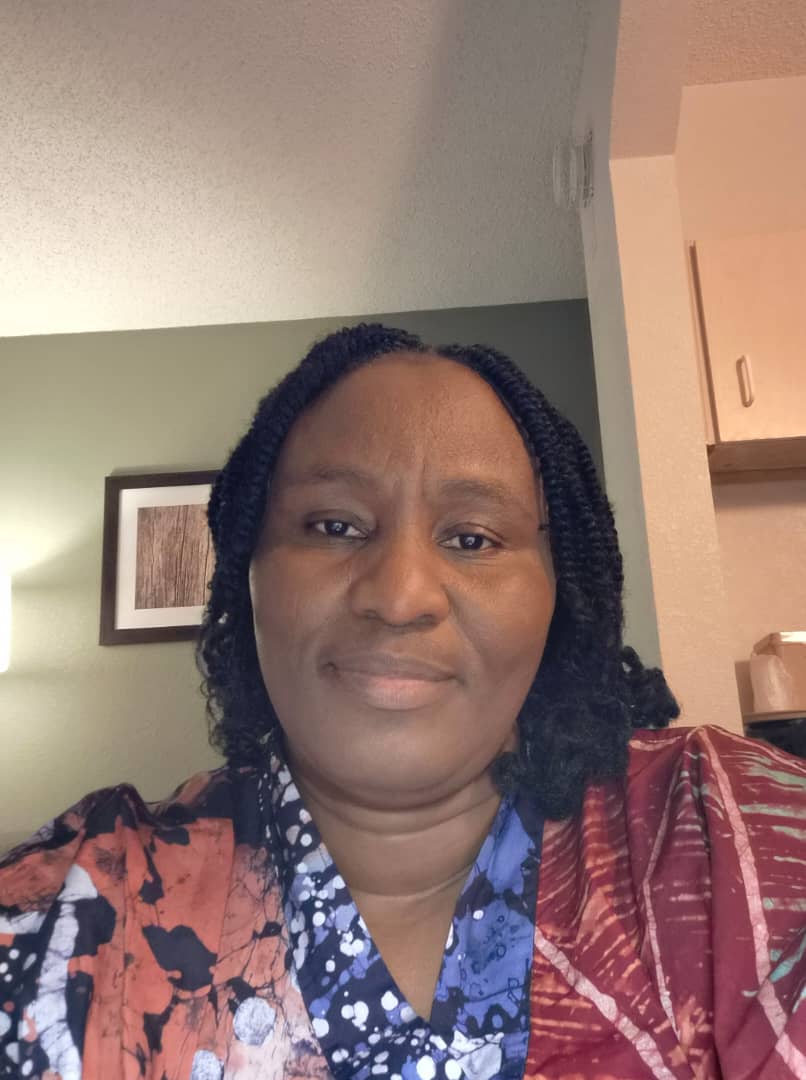
Patience Ayanyemi is a human resources executive, executive search consultant, and business leader with extensive experience in human capital management, executive recruitment, and organisational development. Her expertise covers executive search, recruitment, payroll management, contract staffing, coaching, and outplacement services. She leads one of the region’s foremost executive search and human capital consulting firms, serving organisations across the energy, maritime, logistics, fintech, construction, and other key sectors. In this interview, she discusses building performance cultures in MSMEs, accountability, succession planning, employee development, and the role of leadership in driving business growth.
Why does this conversation, performance culture in MSMEs, matter to you personally, beyond the professional interest?
There is a saying that “What gets measured gets done.” For an MSME to succeed, the business owner must be willing to drive and adopt a performance management culture, even when the company hires only two employees. Every business is established to achieve a set of objectives. The objectives must be clear, milestones must be set, and when the milestones are achieved, there must be a clear reward system and a process for feedback.
Large corporations build performance culture through systems. MSMEs often build it through personality. What are the risks of relying on the latter?
A small or medium size organization may not be able to invest in Performance Management tools; however, that does not mean that the small business is not able to drive or deploy a proper Performance culture and structures in the business. It is the understanding and will of the business owner that determines how much the company can achieve in managing people and driving a performance culture. It starts from when the first employee is hired into the business. A simple documented employment letter that shows the job description and Key Performance Indicators can be used for feedback and performance discussions; it means there must be performance discussions. So driving a proper performance culture in a business goes beyond the personality of the business owner.
What happens to performance standards the day a founder steps back from daily operations?
A business built on a proper structure and intentional succession planning in place should run with or without the owner or visioner. This is the reason we encourage every business owner to document their vision and the strategic intent of the business. Employees or managers working in the business must understand the objective(s) of the business, the mission statement, the core values and the key performance indicators that show success or poor performance of the business. Succession planning is key in every business.
Can family businesses hold people accountable in a culture built on friendship and trust, or does avoiding confrontation to protect relationships come at the cost of the business over time?
Yes, it is possible to hold people accountable only if the expectations are detailed and documented from the beginning of the relationship. It is good to maintain friendship and trust with employees and business stakeholders; however, the expectations must be clear and measurable to sustain the trust and friendship. The business owner brings people into his business to achieve certain objectives of business expansion, drive efficiency and profitability; therefore, he expects everyone in the business to be working towards achieving these sets of objectives and not otherwise. Anyone working otherwise will definitely be working against the business and an enemy of the business.
What does succession reveal about whether a performance culture ever existed in the first place?
A successor must have a proper understanding of the founder’s vision and the business strategic intent. The successor’s ability to drive the short-term and long-term goals of a business reveals the extent of his understanding of the business vision and intent. A successor may struggle to deliver value in the business without an existing performance culture and a clear structure.
Many MSMEs grow revenue without growing people’s capability. Why does that gap appear, and what does it lead to?
An organization that grows revenue without growing people is probably set to only run for a short time. MSMEs must be ready to invest in training and developing workers’ capabilities for their business sustainability. People come with training and work experience that they achieved from their academic fields and previous employment to work for a new organization, they also desire growth in knowledge and career advancement. Therefore, MSMEs must be ready to invest in developing people’s capabilities and training.
What decision does an MSME owner avoid the longest, even when they know it affects performance?
The decision to separate a non-performing employee with whom they have built a personal relationship for some time; however, this inaction can hamper driving a Performance culture in a small or medium-sized business. Business Owners must be fair and transparent when relating to employees; it must be the same standard without favouritism and nepotism.
How do you tell a founder that their leadership style, not their staff, is the reason performance is low?
Founders must be open to feedback. There is a saying, “Feedback is the breakfast of Champions” (Ken Blanchard). Responsibilities come down; feedback goes up. Leaders and business owners must be open to constructive feedback. This is one of the reasons companies do exit interviews when an employee is leaving an organization. It is generally believed that the Employee exiting an organization is more likely to speak up and give unbiased feedback. The use of a suggestion box should also be encouraged, while the founder should attend relevant workshop/seminar periodically where his/her flaws could easily be discovered.
If MSMEs make up the backbone of an economy, what does a weak performance culture across them cost a country, not just a business?
MSMEs account for 46.32% of Nigeria’s GDP and employ 87.9% of the workforce. It means MSMEs must drive efficiency, profitability and wealth sustainability through a performance-driven culture.