







By Boluwatife Oshadiya | April 1, 2026
Key Points
- Federal Government plans Cybersecurity Coordination Council to strengthen national cyber resilience
- Initiative follows rising cyber incidents disrupting banks, telecoms, and public systems
- NITDA, NCC, NDPC, and Galaxy Backbone to drive technical framework and stakeholder engagement
Main Story
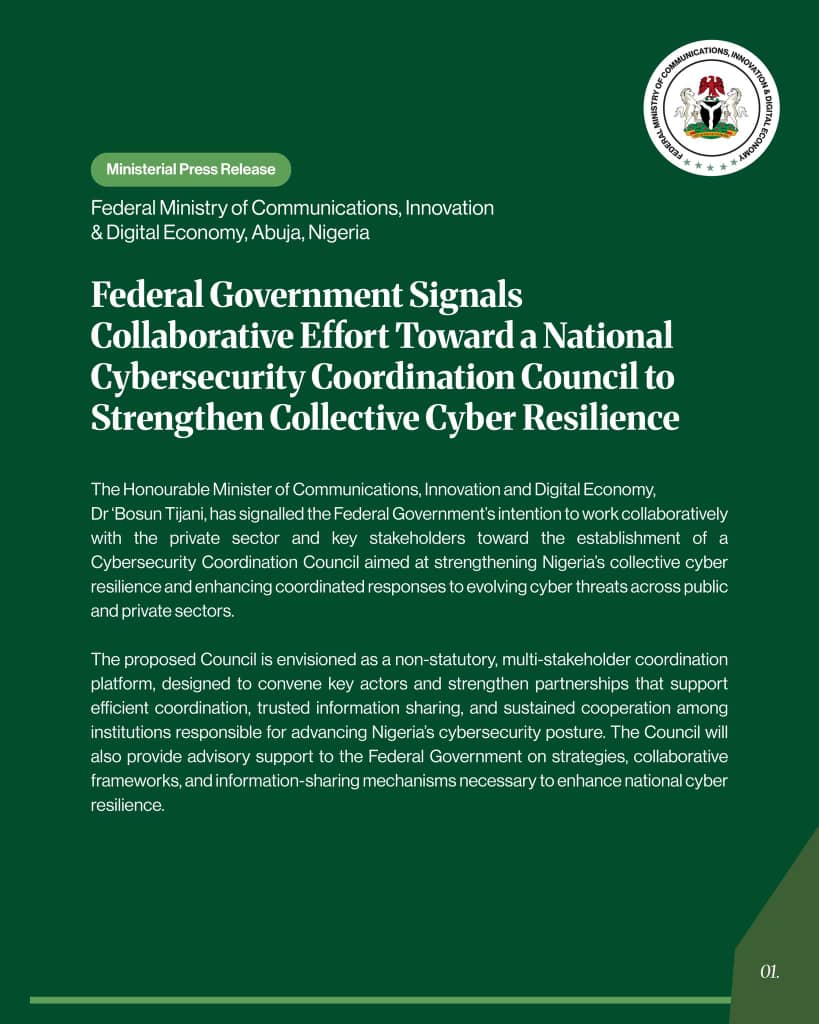
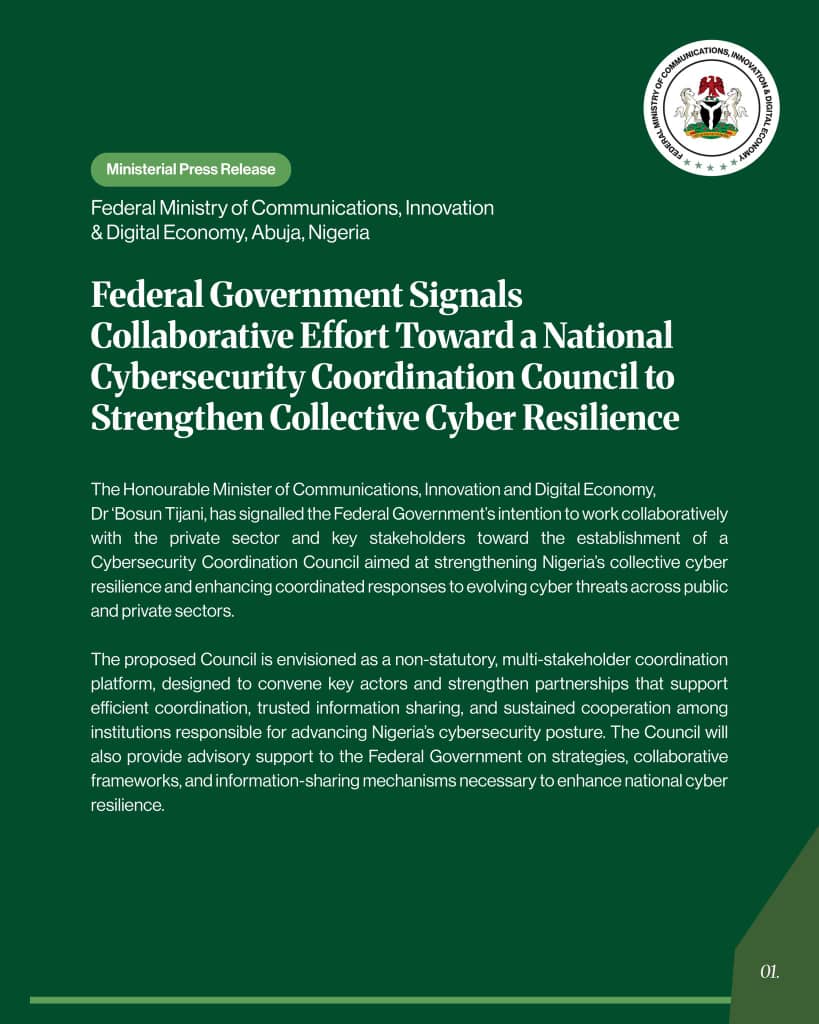
The Federal Government has announced plans to establish a Cybersecurity Coordination Council aimed at strengthening Nigeria’s cyber resilience through structured collaboration between public and private sector stakeholders.
Minister of Communications, Innovation and Digital Economy, Dr. Bosun Tijani, disclosed that the proposed council will function as a non-statutory, multi-stakeholder platform designed to improve coordination, intelligence sharing, and joint response mechanisms against increasingly sophisticated cyber threats.
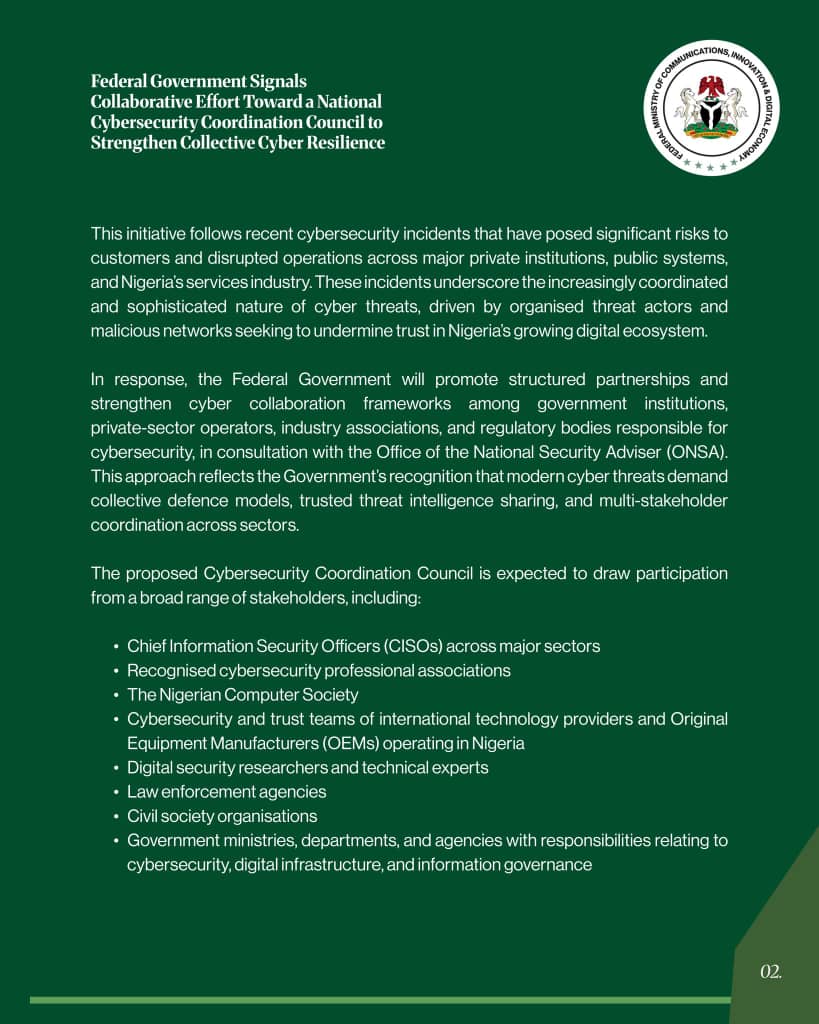
The move comes amid a surge in cyber incidents affecting financial institutions, telecom operators, and digital service providers, raising concerns about systemic vulnerabilities in Nigeria’s expanding digital economy. Industry data indicates that cyberattacks targeting African markets have grown significantly in scale and complexity, with ransomware, phishing, and financial fraud among the most prevalent threats.
Under the proposed framework, the council will bring together Chief Information Security Officers (CISOs), cybersecurity professionals, regulators, law enforcement agencies, and international technology firms to build a unified defence architecture. It will also provide advisory support to the government on cybersecurity policy, governance structures, and operational coordination.
To kickstart the initiative, the Minister has mandated key agencies — the National Information Technology Development Agency (NITDA), Nigerian Communications Commission (NCC), Nigeria Data Protection Commission (NDPC), and Galaxy Backbone — to establish a technical secretariat and develop Terms of Reference for stakeholder engagement.
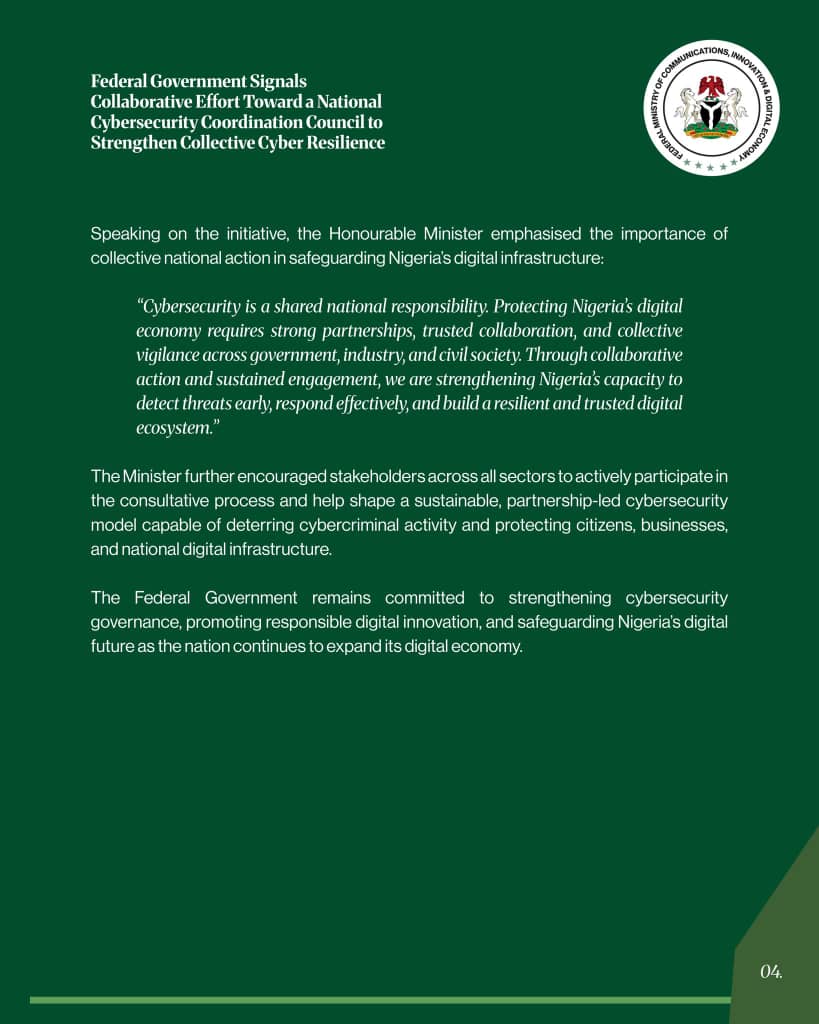
“Cybersecurity is a shared national responsibility. Protecting Nigeria’s digital economy requires strong partnerships, trusted collaboration, and collective vigilance,” Tijani said.
What’s Being Said
“The increasing frequency of cyberattacks on critical sectors shows that isolated defence systems are no longer sufficient,” said a Lagos-based cybersecurity analyst, noting that coordinated intelligence sharing is now a global best practice.
“We expect this council to improve response time and reduce systemic risk exposure across industries,” said an executive at a leading Nigerian financial institution.
What’s Next
- A national cybersecurity industry roundtable is scheduled for April 2026 to formally begin stakeholder consultations
- The technical secretariat, to be housed within NITDA, will release the Council’s Terms of Reference in the coming weeks
- Government and industry players are expected to co-develop operational frameworks, including threat intelligence systems and incident response protocols
Bottom Line
The Bottom Line: Nigeria is shifting toward a collective defence model in cybersecurity, aligning with global best practices as digital risks escalate. The success of this council will depend on execution — particularly the quality of collaboration between regulators and private sector operators.