








Key points
- The Federal Executive Council approved a $1.2 billion financing facility for Section Two of the Sokoto–Badagry Super Highway.
- It also approved a $160 million financing package for rural solar energy projects in Niger State.
- FEC approved N215 billion to expand investments under the Presidential Compressed Natural Gas (CNG) Initiative.
- The projects are aimed at improving transport infrastructure, expanding electricity access and reducing transportation costs.
Main story
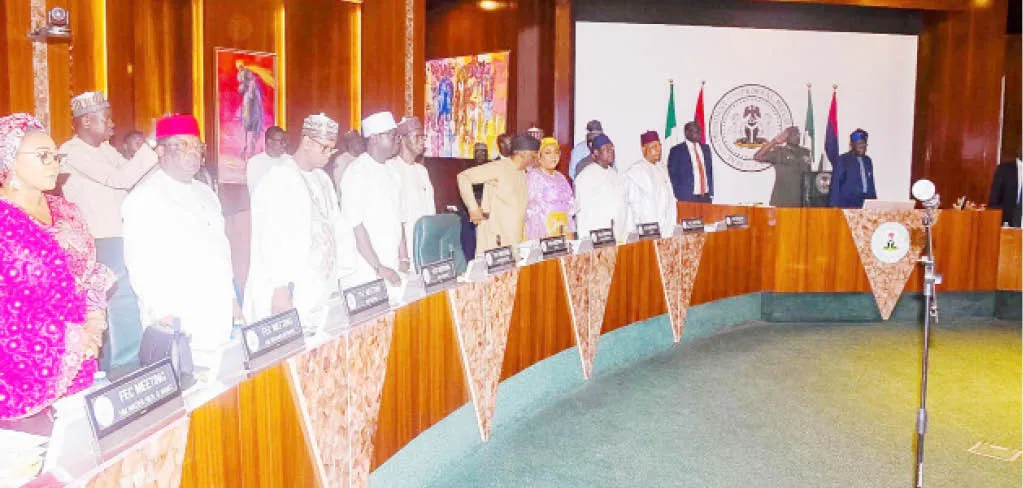
The Federal Executive Council (FEC) has approved a $1.2 billion financing facility for Section Two of the Sokoto–Badagry Super Highway and a separate $160 million package to support rural solar energy projects in Niger State.
The Minister of Finance, Taiwo Oyedele, announced the approvals while briefing State House correspondents after Monday’s FEC meeting.
Oyedele said the approvals formed part of 14 memoranda presented by the Ministry of Finance to the council.
According to him, the $160 million solar energy financing package comprises $150 million from the Islamic Development Bank and $10 million in counterpart funding from the Niger State Government.
He said the project is designed to expand access to electricity in rural communities through solar energy.
Oyedele also said the council approved the $1.2 billion financing facility for Section Two of the Sokoto–Badagry Super Highway in Kebbi State, describing the project as critical to improving connectivity and stimulating economic activities across the 11 states along the corridor.
He said the highway forms part of the Federal Government’s broader infrastructure development programme aimed at strengthening transport networks and supporting economic growth.
The minister further disclosed that FEC approved N215 billion to complete ongoing investments under the Presidential Compressed Natural Gas (CNG) Initiative.
He said the funds would be used to procure CNG buses, electric vehicles, CNG-powered tricycles and establish additional vehicle conversion centres across the country.
According to him, the investment is expected to lower transportation costs while expanding access to cleaner and more affordable transport options.
The issues
The Federal Government is increasing investment in strategic infrastructure, renewable energy and alternative fuel programmes as part of efforts to improve connectivity, expand electricity access and reduce transportation costs. The projects also support broader economic growth and energy transition objectives.
What’s being said
“One of the memos approved by the council was the financing facility of about $1.2 billion for Section Two of the Sokoto–Badagry Super Highway in Kebbi State.” — Taiwo Oyedele, Minister of Finance
“This is aimed at reducing the cost of transportation for Nigerians.” — Taiwo Oyedele
What’s next
The Federal Government is expected to conclude financing arrangements and begin implementation of the approved highway, solar energy and CNG projects in partnership with relevant agencies and development finance institutions.
Bottom line
The latest FEC approvals underscore the government’s focus on transport infrastructure, renewable energy and cleaner mobility as key drivers of economic development and improved public services.



 has approved a $1.2 billion financing facility for Section Two of the Sokoto–Badagry ...)