





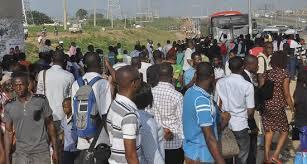
Nigeria’s rising cost of living has taken a sharper turn as new data shows a significant increase in transport fares, particularly for daily intracity travel. The latest figures from the National Bureau of Statistics (NBS) reveal that the average bus fare within cities rose by 26.71 per cent year-on-year in February 2026 , a development that underscores the deepening pressure on household incomes.
But beyond the numbers, what is driving this surge, and what does it mean for commuters, businesses, and the broader economy?
What exactly has changed?
According to the NBS Transport Fare Watch, the average fare for a bus journey within cities climbed to N1,195.75 in February 2026, up from N943.68 recorded in the same period last year. On a month-on-month basis, fares also edged up slightly by 0.74 per cent.
This means that for millions of Nigerians who rely on buses for daily commuting — to work, school, or markets, transport now takes a bigger share of their already strained incomes.
What is driving the increase?
At the heart of the surge is the rising cost of fuel, which remains the single most critical input in Nigeria’s transport system.
Global factors, including tensions linked to the Iran–Israel conflict and broader oil market volatility, have pushed up crude oil prices. These external shocks, combined with domestic pricing realities, have translated directly into higher pump prices.
Transport operators, faced with increased operating costs, have responded in the only way available to them — by raising fares.
The rise is not limited to intracity buses. The NBS data shows a broader pattern across multiple modes of transport: Intercity bus fares rose by 6.13 per cent year-on-year, though they dipped slightly every month, Airfares increased by 21.38 per cent year-on-year, reflecting high aviation fuel costs, Motorcycle (Okada) fares recorded one of the sharpest jumps, rising by 53.26 per cent year-on-year, Water transport fares also climbed by 31.66 per cent over the same period.
This suggests a systemic cost escalation across Nigeria’s transport ecosystem, rather than an isolated spike.
Lagos State recorded the highest intracity bus fares at N1,537.09, reinforcing its position as the most expensive city for daily commuting. This is hardly surprising. Lagos, Nigeria’s commercial hub, has a high demand for mobility, chronic traffic congestion, and heavy reliance on road transport — all of which amplify fare increases when fuel prices rise.
Who is most affected?
Low- and middle-income earners bear the brunt of these increases. For many workers, transport costs are non-negotiable — a fixed daily expense that must be paid regardless of income fluctuations.
As fares rise:
- Disposable income shrinks
- Savings become harder to maintain
- Cost of goods and services increases, as transport costs are passed on
In effect, higher transport fares contribute directly to inflationary pressures across the economy.
Transport is a key component of Nigeria’s inflation basket. When mobility costs rise, the ripple effects extend to food prices, logistics, and the overall cost of living. The latest figures suggest that transport-induced inflation may persist in the coming months, especially if fuel prices remain volatile.
For now, relief appears limited. While intercity fares showed a slight monthly decline, most transport categories continue to trend upward. Without structural interventions, such as improved mass transit systems, alternative energy adoption, or fuel price stabilisation, commuters may continue to face rising costs.
The bottom line
The 26.71 per cent increase in intracity bus fares is more than a statistic, it is a reflection of the growing economic strain on Nigerians. As fuel prices climb and transport costs follow, the daily commute is fast becoming a heavier burden, with wider implications for inflation, productivity, and quality of life.