Key points
- DecisionSpaak Group and the Gbenga Fawehinmi Foundation have signed a strategic partnership to promote artificial intelligence and digital literacy education among secondary school students.
- The initiative will begin with a pilot programme in selected schools in Ondo State before expanding nationwide.
- A ₦50 million scholarship fund has been established to support training in AI, business analytics and other digital skills.
Main story
Technology innovation company DecisionSpaak Group and the Gbenga Fawehinmi Foundation have entered into a strategic partnership aimed at equipping young Nigerians with critical digital and artificial intelligence (AI) skills needed to thrive in an increasingly technology-driven global economy.
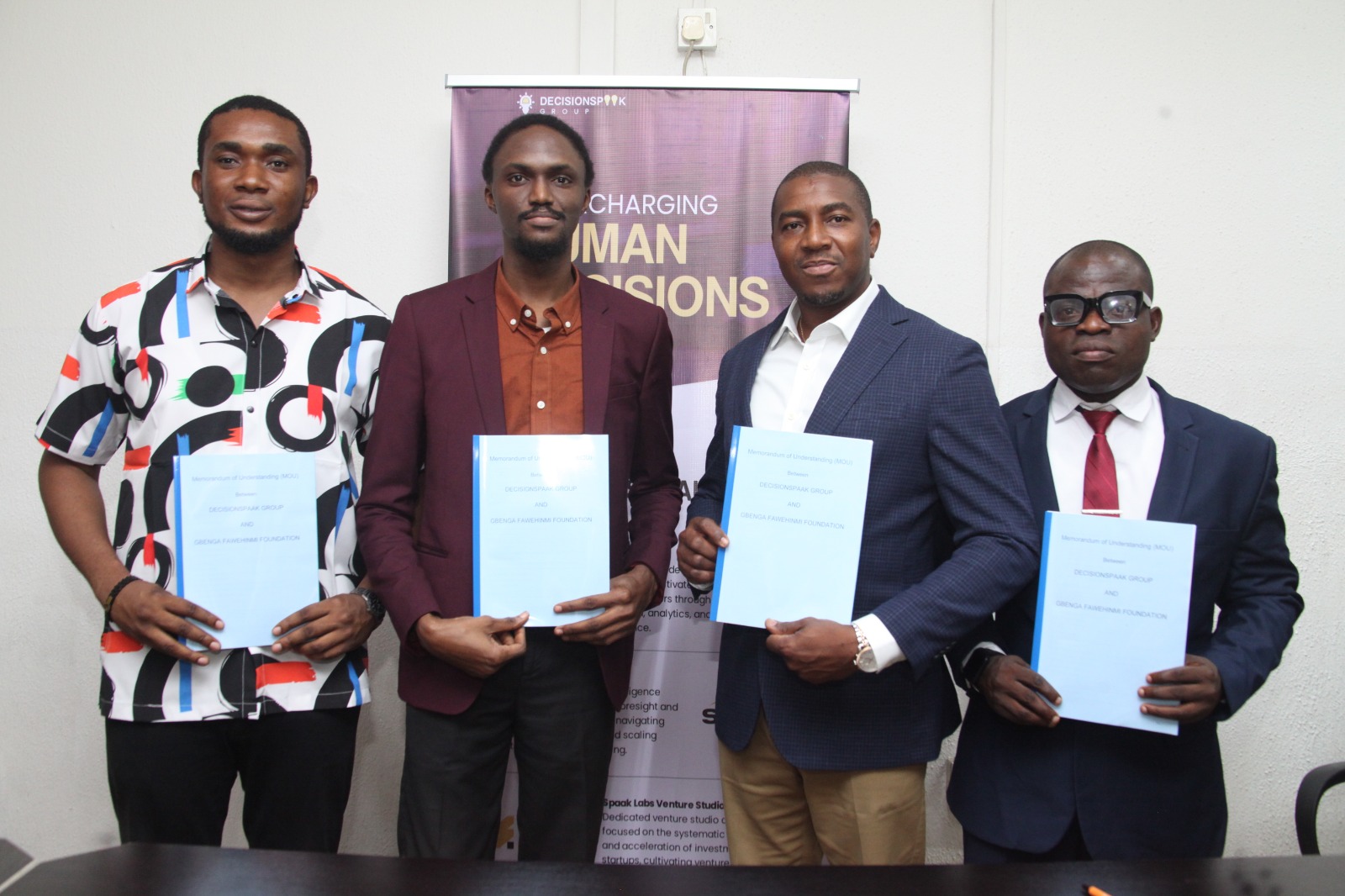
The collaboration was formalised through the signing of a Memorandum of Understanding (MoU) in Lagos, bringing together two organisations committed to expanding access to AI, digital literacy, Science, Technology, Engineering and Mathematics (STEM) education, and innovation opportunities for young people.
Speaking during the signing ceremony, the President and Chief Executive Officer of DecisionSpaak Group, Philip Ade-Akanbi, described the partnership as a timely intervention designed to bridge Nigeria’s growing digital skills gap.
According to him, exposing young people to emerging technologies at an early stage is essential for preparing them to compete effectively in the global knowledge economy.
“We want young people to understand that artificial intelligence is not only for professionals or graduates. Students should be exposed to these technologies early enough to shape their thinking, careers and ability to compete globally,” Ade-Akanbi said.
He explained that the initiative aligns with DecisionSpaak’s broader mission of driving research, innovation, entrepreneurship, startup development and digital capacity-building across Africa.
Ade-Akanbi disclosed that the company has set a target of training 10 million Africans in artificial intelligence and digital skills, building on a network that has already impacted more than 500,000 individuals through training programmes, media platforms and digital learning initiatives.
As part of the effort, the company has established a ₦50 million scholarship fund to support learners pursuing education and certifications in artificial intelligence, business analytics, digital innovation and related technology disciplines.
The programme will also provide access to internationally recognised certifications through accredited training partners, enhancing participants’ competitiveness in the global labour market.
Speaking on behalf of the Gbenga Fawehinmi Foundation, board member Gbenga Agboola described artificial intelligence as a transformative tool capable of democratising knowledge and expanding educational opportunities for underserved communities.
“AI presents an opportunity to democratise knowledge, expand access to learning and empower young people, particularly those from underserved communities. It offers an opportunity to bring knowledge closer to communities and empower young people to become creators rather than consumers of technology,” he said.
Agboola noted that the initiative would not be limited to technical competencies alone but would also focus on developing leadership, creativity, critical thinking and problem-solving skills among participants.
The programme is expected to commence with pilot projects in selected secondary schools across Ondo State before being expanded to other parts of the country based on measurable outcomes and lessons learned during implementation.
Both organisations acknowledged potential challenges, including school approval processes and gaps in digital infrastructure, but expressed confidence that stakeholder engagement and phased implementation strategies would ensure success.
Also speaking, Ishola Oluwademilade Festus, a 300-level Computer Science student at the Federal University of Agriculture, Abeokuta, currently undergoing industrial training with DecisionSpaak, said the initiative reflects the practical and innovation-driven learning environment he has experienced within the organisation.
According to him, exposure to real-world projects has enabled him to apply his technical knowledge to solve practical problems while developing professionally.
The issues
Nigeria continues to face a significant digital skills deficit despite growing demand for expertise in artificial intelligence, software development, data analytics and emerging technologies.
Many secondary school students, particularly in underserved communities, have limited access to technology education, digital infrastructure and industry-relevant training opportunities.
Experts have repeatedly warned that without deliberate investment in digital education, Africa risks falling behind in the rapidly evolving global technology landscape.
What’s being said
Stakeholders say the partnership will:
- Increase access to AI and digital literacy education.
- Prepare students for future technology-driven careers.
- Promote innovation, entrepreneurship and STEM education.
- Support underserved communities through scholarships and training opportunities.
- Equip young people with globally relevant skills and certifications.
- Foster leadership, creativity and critical thinking among participants.
The partners also believe that early exposure to emerging technologies will help position Nigerian youths as innovators and solution providers rather than passive consumers of technology.
What’s next
The programme will be piloted in selected secondary schools in Ondo State, where students will receive foundational training in artificial intelligence, digital literacy and related STEM disciplines.
Following evaluation of the pilot phase, both organisations plan to scale the initiative to additional schools and communities across Nigeria.
The scholarship programme and certification opportunities are also expected to commence as part of the broader implementation strategy.
Bottom line
The partnership between DecisionSpaak Group and the Gbenga Fawehinmi Foundation represents a strategic investment in Nigeria’s future workforce. By introducing artificial intelligence and digital skills education at the secondary school level, the initiative aims to bridge the country’s digital divide, expand opportunities for young people and strengthen Nigeria’s competitiveness in the global digital economy.