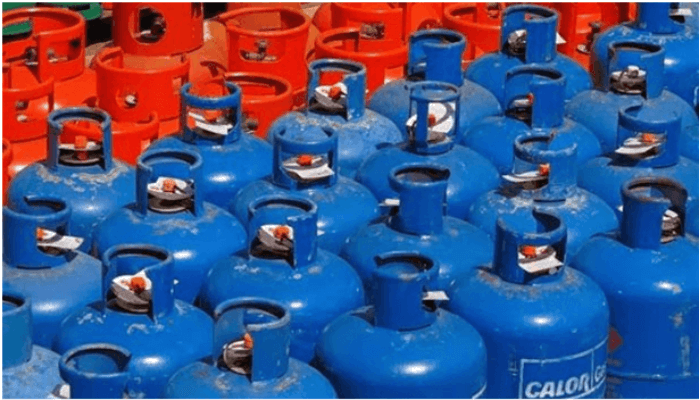
Nigeria’s reliance on imported cooking gas has risen sharply as domestic supply weakens, while the country continues to flare billions of cubic feet of natural gas and export most of its marketed gas despite persistent local shortages.
Key points
- LPG imports increased by 1,400% from 0.1 KT/D in May to 1.5 KT/D in June 2026.
- Domestic LPG supply declined by 10%, falling from 4.0 KT/D to 3.6 KT/D.
- Total LPG supply rose 24% to 5.1 KT/D, driven almost entirely by imports.
- Imported LPG accounted for nearly 30% of Nigeria’s daily cooking gas supply in June.
- Nigeria flared an estimated 301.6 billion standard cubic feet (BSCF) of gas between
Main Story
Nigeria’s dependence on imported Liquefied Petroleum Gas (LPG), commonly known as cooking gas, increased sharply in June 2026 as domestic supply weakened, highlighting continued challenges in achieving energy security despite the country’s abundant natural gas resources.
Data released by the Nigerian Midstream and Downstream Petroleum Regulatory Authority (NMDPRA) showed that LPG imports climbed from 0.1 kilotonnes per day (KT/D) in May to 1.5 KT/D in June, representing a 1,400 per cent month-on-month increase.
The rise in imports coincided with a 10 per cent decline in domestic LPG supply, which dropped from 4.0 KT/D in May to 3.6 KT/D in June.
Despite weaker local production, overall LPG receipts rose by 24 per cent, increasing from 4.1 KT/D in May to 5.1 KT/D in June, largely because of the sharp increase in imported volumes.
According to the NMDPRA data, imported LPG contributed 1.539 KT/D, accounting for nearly 30 per cent of Nigeria’s total daily LPG supply of 5.164 KT/D during the month.
The largest domestic contribution came from deliveries by the Nigeria LNG (NLNG) and SEPNU through marine vessels, supplying 2.335 KT/D, while other gas processing plants delivered 0.805 KT/D via trucks. Local refineries contributed just 0.485 KT/D.
The figures suggest that the improvement in cooking gas availability was driven primarily by imports rather than expansion in domestic production capacity.
Historical data also indicates a fluctuating but increasing reliance on imported LPG. Import volumes stood at 1.6 KT/D in November 2025 before easing to 1.5 KT/D in December, 1.2 KT/D in January 2026, 0.7 KT/D in February and 0.2 KT/D in March. Imports disappeared in April, declined to 0.1 KT/D in May, before rebounding sharply in June.
Meanwhile, domestic gas supply improved marginally during the month, increasing by three per cent to 5.116 billion standard cubic feet per day (Bscf/d) from 4.984 Bscf/d recorded in May.
Separately, data published by the Nigerian Upstream Petroleum Regulatory Commission (NUPRC) revealed that Nigeria flared natural gas worth an estimated $888.24 million between January 2025 and June 2026, despite ongoing efforts to promote domestic gas utilisation.
The report showed that Nigeria produced 4.132 trillion standard cubic feet (TSCF) of gas during the 18-month period and utilised more than 3.823 TSCF, while maintaining an average gas flaring rate of 7.3 per cent.
Overall, the country flared 301.60 billion standard cubic feet (BSCF) of gas during the period. Based on a gas price of $2.84 per million British thermal units (MMBtu), the wasted volume translates to approximately 312.76 million MMBtu, with an estimated market value of $888.24 million.
The NUPRC figures also showed that Nigeria continued to prioritise export markets over domestic consumption. Between January 2025 and June 2026, the country exported 1.506 TSCF of gas while supplying 1.162 TSCF to the domestic market.
This means approximately 56.5 per cent of all marketed gas was exported, compared with 43.5 per cent retained for local use, despite continued shortages affecting electricity generation, manufacturing, fertiliser production and other industrial users.
In 2025 alone, Nigeria produced 2.706 TSCF of gas, comprising 1.456 TSCF of Associated Gas and 1.250 TSCF of Non-Associated Gas. The industry achieved a gas utilisation rate of 92.4 per cent, while 203.97 BSCF, representing 7.54 per cent of production, was flared.
The Issues
- Rising dependence on imported LPG exposes Nigeria to international price volatility and foreign exchange pressures.
- Declining domestic LPG supply undermines efforts to improve access to affordable cooking gas and reduce reliance on firewood and kerosene.
- Continued gas flaring represents significant economic losses and contributes to environmental degradation and greenhouse gas emissions.
- Exporting the majority of marketed gas while domestic industries face shortages raises concerns over energy security and industrial competitiveness.
- The latest figures raise questions about the pace of implementation of the Federal Government’s Decade of Gas initiative aimed at boosting domestic gas utilisation.
What’s Being Said
The Nigerian Midstream and Downstream Petroleum Regulatory Authority (NMDPRA) data indicates that Nigeria’s improved cooking gas availability in June was largely sustained by increased imports, as domestic production declined during the period.
The Nigerian Upstream Petroleum Regulatory Commission (NUPRC) data shows that while gas utilisation remained above 92 per cent, the country continued to flare substantial volumes of natural gas and exported a greater share of its marketed gas than it supplied to the domestic market.
What’s Next
Industry stakeholders are expected to monitor whether domestic LPG production recovers in the coming months to reduce reliance on imports. Attention will also focus on government efforts to expand gas processing infrastructure, reduce gas flaring, strengthen domestic supply obligations and accelerate implementation of the Decade of Gas initiative to improve energy security and industrial development.
Bottom Line
Nigeria’s latest energy data highlights a widening gap between its vast natural gas potential and domestic utilisation. While cooking gas availability improved in June, the gains were driven largely by imports, even as billions of dollars’ worth of natural gas continued to be flared and a greater share of marketed gas was exported instead of meeting growing domestic demand.