








Keypoints
- The Coalition for Affordable and Regular Electricity (CARE) has stated that the privatisation of Nigeria’s power sector has not yet delivered promised improvements.
- Many consumers continue to face significant hurdles, including unreliable supply and the persistence of estimated billing.
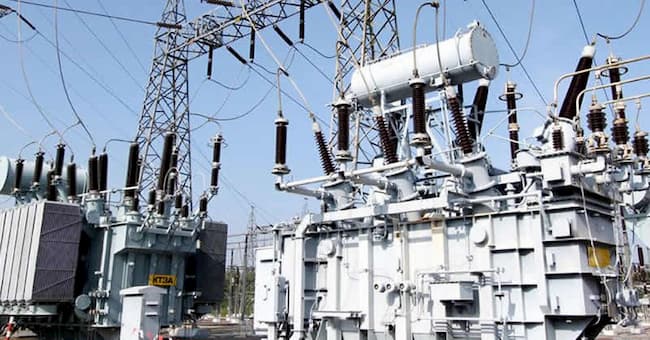
- Infrastructure gaps remain a major issue, with some customers still forced to personally fund transformers and meters.
- The group is calling for a total overhaul of the current management approach to prioritize transparency and consumer protection.
Main Story
According to a report by the News Agency of Nigeria (NAN), the National Coordinator of CARE, Mr. Chinedu Bosah, argued on Sunday in Lagos that the power sector reforms have fallen short of their intended objectives.
The agency noted that despite the transition to private ownership, a vast number of electricity consumers are still struggling to access a reliable power supply. Bosah reported that the expected efficiency gains from the privatisation exercise remain largely invisible to the average Nigerian household.
NAN highlighted that the coalition remains particularly concerned about the performance of electricity distribution companies (DisCos). The report detailed how consumers are often burdened with additional costs for infrastructure that should ideally be provided by the operators.
It was further mentioned that without a significant increase in generation capacity and a more robust transmission network, the goal of stable electricity will continue to be elusive. Bosah emphasized that the current state of the sector is a direct hindrance to the country’s economic growth and the living standards of its citizens.
The Issues
The primary issue identified is the failure of the post-privatisation era to eliminate systemic inefficiencies such as estimated billing and the slow pace of metering. CARE pointed out that the burden of infrastructure investment has unfairly shifted to the consumers, who are frequently asked to finance the repair or purchase of transformers. Furthermore, a lack of accountability among stakeholders has led to a stagnant system where generation and transmission improvements do not match the growing national demand.
What’s Being Said
- “The reform had not achieved all its intended objectives,” Mr. Chinedu Bosah, National Coordinator of CARE, stated during the interview.
- Bosah noted that many consumers still “incur additional costs in accessing electricity services,” including personal investments in meters and transformers.
- He emphasized that “addressing challenges in the power sector remains vital to economic growth and improved living standards for Nigerians.”
- The coordinator added that collaborative efforts among the government, operators, and consumers are “critical to achieving stable and affordable electricity supply.”
What’s Next
- Civil society groups are expected to ramp up pressure on the Nigerian Electricity Regulatory Commission (NERC) to enforce stricter penalties on DisCos for poor service.
- Future policy discussions will likely focus on creating more equitable access to electricity to ensure that low-income areas are not left behind.
- Stakeholders will be watching for new government interventions aimed at strengthening the transmission grid to reduce the frequency of system collapses.
Bottom Line
The critique from CARE underscores a growing consensus that privatisation alone has not solved Nigeria’s energy crisis, and that without radical transparency and massive infrastructure investment, the sector will continue to underperform.




, the National Coordinator of CARE, Mr. Chinedu Bosah, argued on Sunday ...)