









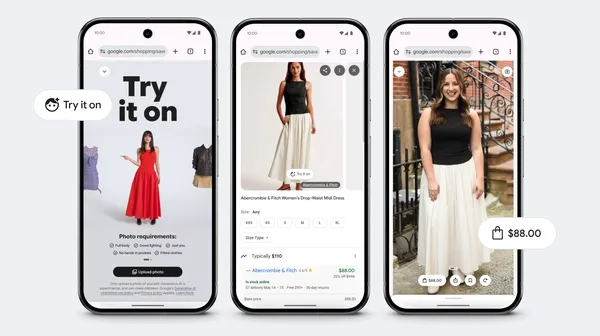
Google has unveiled a massive expansion of its artificial intelligence shopping suite, fundamentally transforming the Gemini chatbot and Google Search into transactional engines. Announced on Sunday, January 11, 2026, at the National Retail Federation (NRF) conference, the update introduces a direct checkout feature that allows users to purchase products via Google Pay immediately after researching them within the Gemini app or Search’s AI Mode.
This move signifies an aggressive push by Google to capture the “agentic commerce” market, competing directly with Amazon and OpenAI to become the primary destination for the entire consumer journey—from the initial spark of an idea to the final payment.
Central to this rollout is the introduction of the Universal Commerce Protocol (UCP). Developed in collaboration with e-commerce giants and payment processors, UCP is an open industry standard designed to provide a common language for AI agents.
Similar to existing protocols like Agent Payments Protocol (AP2) and Model Context Protocol (MCP), UCP allows various LLM-powered systems to communicate seamlessly across retailer websites and payment platforms.
This protocol effectively lays the groundwork for an ecosystem where AI agents can autonomously navigate different interfaces to fulfill user requests, such as finding the best deal, verifying stock, and executing a secure purchase.
For retailers, Google introduced “Business Agents,” a feature that allows brands to deploy their own branded AI sales associates directly within Google Search results. These agents—launching today with partners like Lowe’s, Michaels, Poshmark, and Reebok—can answer specific product questions in a brand’s unique voice, helping to convert browsing shoppers during critical decision-making moments.
Merchants can also leverage “Direct Offers,” a tool that uses AI to determine the optimal time to display exclusive discounts (such as 20% off codes) to a user. Early participants in these pilot programs include high-profile brands like Petco, e.l.f. Cosmetics, Samsonite, and Rugs USA, as well as numerous Shopify merchants.
Further expanding its enterprise reach, the tech giant launched “Gemini Enterprise for Customer Experience (CX).” This tool enables large-scale retailers like Kroger, Target, and Walmart to deploy pre-built, configurable AI agents capable of managing the complete customer lifecycle.
For instance, Walmart users who link their accounts can have Gemini merge chatbot-selected items into their existing online shopping carts, while Papa Johns is utilizing these agents to take natural language orders with intelligent upselling across mobile and kiosk systems.
By standardizing these interactions through UCP, Google aims to provide the flexibility businesses need to scale their AI operations while ensuring a consistent and secure experience for shoppers worldwide.











 conference, the update introduces a direct checkout feature that allows users to purchase products via Google Pay immediately after researching them within the Gemini app or Search's AI Mode.)