






Key Points
- The Nigerian Society of Anaesthetists has called for stronger anaesthesia care throughout the surgical process.
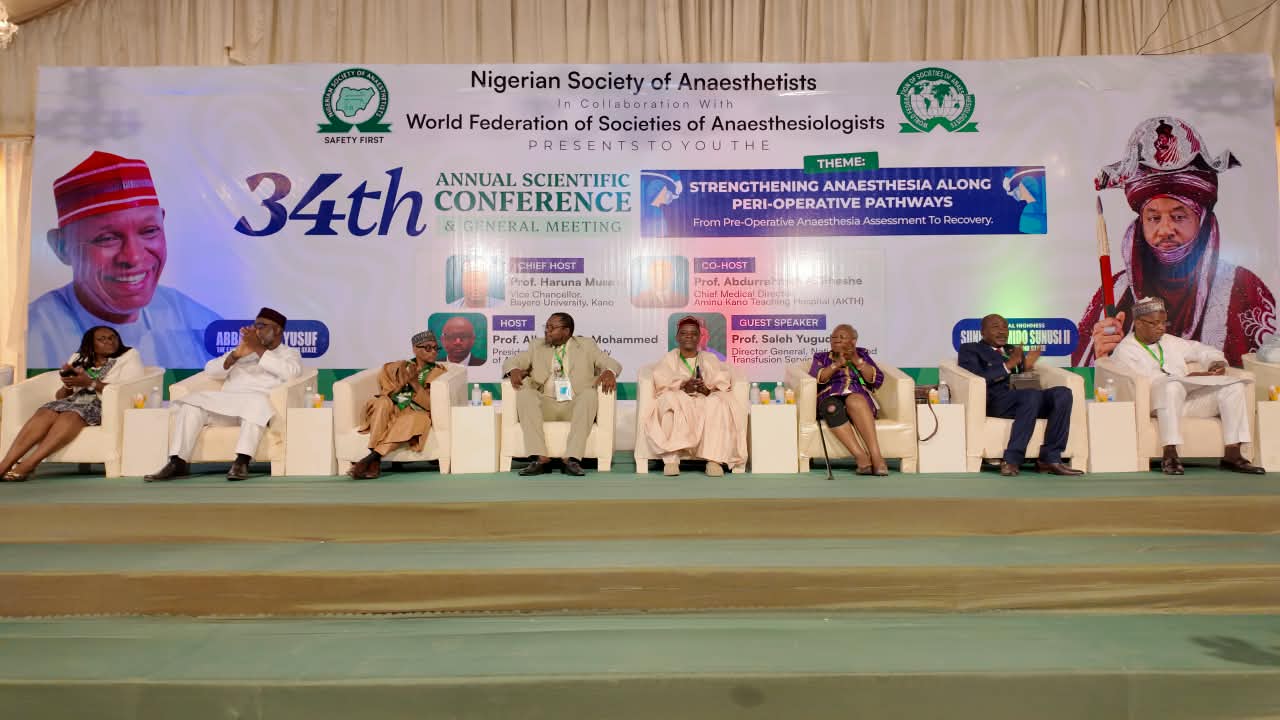
- The association held its 34th Annual Scientific Conference in Kano to promote evidence-based practices and safer patient outcomes.
- The National Blood Service Agency urged anaesthetists to adopt proactive Patient Blood Management and rational blood ordering.
- Kano State Government says it has allocated 20 per cent of its budget to healthcare and recruited more than 2,000 health workers.
- Experts say collaboration among anaesthetists, surgeons, hospitals and blood services is essential to improving surgical safety.
Main Story
The Nigerian Society of Anaesthetists (NSA) has called for stronger anaesthesia services across Nigeria’s healthcare system, stressing the need to improve patient safety at every stage of surgical care, from pre-operative assessment to recovery.
The association made the call during its 34th Annual Scientific Conference in Kano, where medical professionals gathered to examine practical evidence, share innovations and discuss ways to improve anaesthesia services in public and private healthcare facilities.
The NSA National President, Prof. Alhassan Datti-Mohammed, disclosed this on Wednesday, saying the conference was themed, “Strengthening Anaesthesia Along Peri-operative Pathways from Pre-operative Anaesthesia Assessment to Recovery”.
He said the theme aligned with that adopted by the World Federation of Societies of Anaesthesiologists (WFSA), adding that the conference was designed to strengthen the delivery of safe anaesthesia at tertiary, secondary and primary healthcare levels.
According to him, the association had organised four days of pre-conference workshops and training sessions to refresh members’ knowledge, sharpen their clinical skills and introduce new approaches to patient care.
Datti-Mohammed explained that anaesthesia should not be treated as an isolated event performed inside an operating theatre but as a continuous process that begins before surgery and extends through post-operative monitoring, pain management and recovery.
He said strengthening every stage of the process could help prevent avoidable complications and improve surgical outcomes.
The Issues
Safe surgery depends on more than the technical performance of an operation. Patients require proper assessment before surgery, effective monitoring during procedures and careful management after leaving the operating theatre.
Blood availability and transfusion decisions are also important, particularly during operations involving significant blood loss.
Poor preparation, unnecessary transfusions and inefficient use of available blood can place additional pressure on patients and an already limited healthcare resource.
What’s Being Said
The Director-General of the National Blood Service Agency (NBSA), Prof. Saleh Yuguda, said anaesthetists played a critical role in blood management because they assess patients before surgery, anticipate blood loss and make important transfusion decisions.
Presenting a paper titled “Safe Blood, Safer Anaesthesia: Strengthening Patient Blood Management and Rational Blood Ordering Across the Peri-operative Pathway”, Yuguda urged practitioners to move from reactive transfusion practices to proactive Patient Blood Management.
He also called for more rational, evidence-based blood ordering to reduce avoidable anaemia and blood loss, promote safer transfusions and ensure available blood reaches patients who need it.
Yuguda stressed that achieving these goals required collaboration among anaesthetists, surgeons, haematologists, transfusion laboratories, hospitals and the NBSA.
Meanwhile, Kano State Governor Abba Yusuf said his administration had allocated 20 per cent of the state budget to healthcare.
Represented by the Executive Secretary of the Hospital Management Board, Dr Mansur Nagoda, the governor said the state had recruited more than 2,000 health workers, sponsored training for over 100 medical directors and equipped theatre rooms in some secondary healthcare facilities.
What’s Next
The NSA is expected to continue promoting professional training, evidence-based clinical practices and collaboration among healthcare professionals to strengthen anaesthesia services.
Improved blood management, workforce development and better-equipped surgical facilities will also be important to translating the conference discussions into measurable improvements in patient care.
Bottom Line
Safer surgery begins long before a patient enters the operating theatre and continues until recovery. The NSA’s call highlights the importance of strengthening the entire anaesthesia pathway, while improved blood management and investment in healthcare personnel remain essential to delivering safer surgical services across Nigeria.