








Key Points
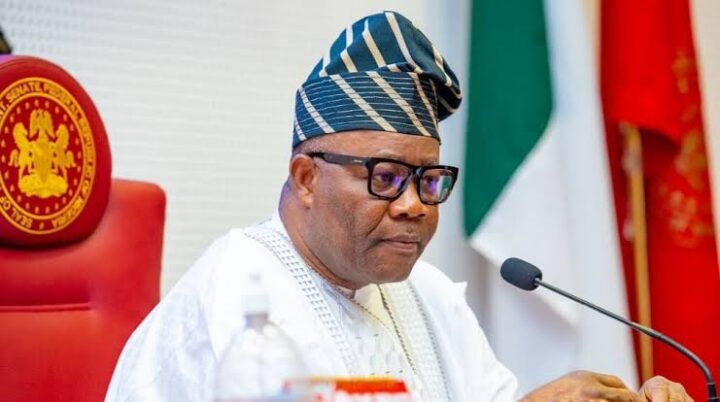
- Senate President Godswill Akpabio has called for the revival of Nigeria’s national airline, Nigeria Airways.
- He said the difficulty of hiring private jets for political campaigns highlights challenges in the country’s aviation sector.
- Akpabio recalled that the defunct Nigeria Airways once operated about 40 aircraft, including DC-10 planes.
- The Senate has urged the Ministry of Aviation to renegotiate Nigeria’s Bilateral Air Services Agreement with China.
- Senators say direct flights between Nigeria and China could improve trade, reduce travel time and limit foreign exchange outflows.
Main Story
Senate President Godswill Akpabio has called on the Federal Government to consider reviving Nigeria Airways, saying the country’s aviation challenges and difficulties in securing private jets for political campaigns highlight the need for a Nigerian-owned national carrier.
Akpabio made the call during Tuesday’s plenary while contributing to discussions on challenges facing the aviation industry and air travellers.
The Senate President expressed concern about the difficulty of securing private aircraft, particularly during the busy December period, when demand for air travel and charter services is expected to increase.
He said the situation had become so challenging that even political campaigns were struggling to secure private jets for hire.
“Watch December and the confusion. Even the private airlines cannot handle. Common campaigns, we cannot see even private jets to hire,” he said.
Akpabio argued that the Federal Government should consider establishing a national airline that would operate under the Nigerian flag and provide additional capacity within the country’s aviation industry.
He called for a motion that would initiate discussions on reviving the country’s former national carrier, Nigeria Airways.
“Somebody should bring a motion that will enable Nigeria to revive its own airline. Nigeria should have Nigeria Airways. A national carrier should birth in this country carrying Nigerian flag as it used to be,” he said.
The Senate President also recalled the operations of the defunct Nigeria Airways, which he said once maintained a fleet of approximately 40 aircraft.
He specifically mentioned the airline’s DC-10 aircraft, which operated international routes, including flights to Saudi Arabia.
Akpabio questioned how Nigeria moved from having a national airline with such an operational fleet to its present aviation situation.
“How did we get here?” he asked, reflecting on the country’s changing position in the aviation industry.
His comments came during deliberations on a motion seeking a review and enforcement of Nigeria’s Bilateral Air Services Agreement (BASA) with China to facilitate direct flights between both countries.
The motion was sponsored by Tahir Monguno, the Senate Chief Whip and senator representing Borno North.
Monguno argued that improved direct air connectivity between Nigeria and China would strengthen economic relations and make international travel more efficient.
He explained that direct flights could reduce travel time, improve supply-chain operations, boost bilateral trade and reduce foreign exchange outflows associated with international travel.
The Issues
Nigeria’s aviation industry continues to face challenges relating to airline capacity, operational costs, international connectivity and the availability of affordable air travel.
The absence of a national carrier has also remained a subject of debate, particularly as other countries maintain state-owned or nationally backed airlines to strengthen their international aviation presence.
Akpabio’s comments have renewed attention on whether Nigeria needs another national airline to improve connectivity, support economic activities and strengthen its position in the global aviation market.
However, establishing a national carrier would require substantial investment, effective management, adequate infrastructure and a sustainable business model to avoid the financial difficulties that contributed to the collapse of the former Nigeria Airways.
The issue of international connectivity is equally important, especially as Nigeria seeks to strengthen trade relations with major economic partners such as China.
What’s Being Said
During the debate, Senator Abdul Ningi, representing Bauchi Central, expressed concern that Nigeria was not benefiting sufficiently from its relationship with China despite the Asian country’s growing influence in the global economy.
Ningi’s comments reinforced the need for Nigeria to review its aviation arrangements with China and explore opportunities to improve commercial connections between both countries.
Monguno, who sponsored the motion, maintained that direct air connectivity would provide economic benefits by reducing travel delays, improving the movement of goods and supporting stronger business relationships.
Following the deliberations, the Senate urged the Ministry of Aviation to renegotiate the existing bilateral air services agreement to establish direct commercial air links between Nigeria and China.
What’s Next
The Ministry of Aviation is expected to review Nigeria’s existing Bilateral Air Services Agreement with China and explore arrangements that would allow Nigerian airlines to operate direct commercial flights to the Asian country.
The Senate’s position also brings renewed attention to the possibility of establishing a national carrier, although Akpabio’s remarks do not amount to an approved government decision to revive Nigeria Airways.
Further discussions would be necessary to determine the financial requirements, ownership structure, operational model and potential benefits of establishing a new national airline.
Bottom Line
Akpabio’s call to revive Nigeria Airways has reopened an important conversation about Nigeria’s aviation future.
While a national carrier could offer opportunities to strengthen international connectivity and promote the Nigerian aviation industry, its success would depend on sound management, financial sustainability and a clear operational strategy.
Beyond the political debate, Nigerians need an aviation sector that provides reliable services, competitive fares and stronger international connections. Whether through a new national carrier or stronger private airlines, addressing these concerns remains essential to the country’s economic development.