





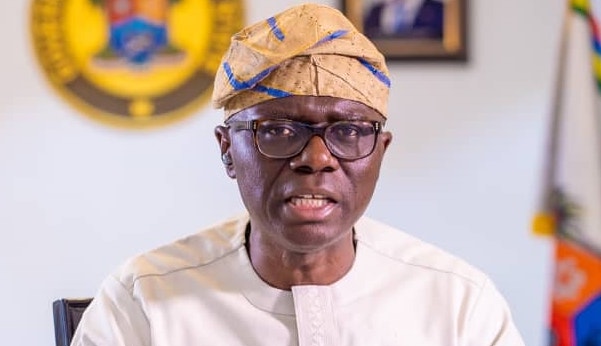
By Kehinde Victor
KEY POINTS
- Lagos State is targeting an economy of nearly $1tn by 2052, up from an estimated $200bn.
- Governor Babajide Sanwo-Olu says predictable policies, efficient infrastructure and credible institutions are essential to attracting long-term investment.
- The governor acknowledged that revenue mobilisation remains a major constraint on funding the state’s development ambitions.
- Delays in land documentation and regulatory processes remain challenges for businesses and investors.
- The state is pursuing transport, port and industrial infrastructure projects to strengthen Lagos’ position as a regional economic hub.
MAIN STORY
Lagos State Governor Babajide Sanwo-Olu has identified infrastructure financing, revenue mobilisation, land administration and regulatory certainty as critical challenges the state must address to achieve its ambition of building a nearly $1tn economy by 2052.
Speaking at the Nigeria-British Chamber of Commerce (NBCC) Meet the Governor Series on Wednesday, 28 October 2026, Sanwo-Olu said Lagos’ ability to attract long-term investment would depend not only on its large market but also on predictable government policies, efficient infrastructure and institutions that businesses can trust.
The governor’s remarks highlighted the gap between Lagos’ economic potential and the practical conditions investors need to operate, expand and earn returns.
He acknowledged that revenue mobilisation remained a major constraint, given the funding required for roads, schools, healthcare, housing and other public infrastructure. He also admitted that delays in land documentation and obtaining the governor’s consent for property transactions continued to affect the ease of doing business.
For companies considering new investments, these issues have direct financial implications. Delayed property approvals can hold up projects, while inadequate infrastructure and uncertain regulatory processes can increase operating costs and make investment decisions more difficult.
Sanwo-Olu said the state was working to improve its administrative processes, expand its revenue base and strengthen the infrastructure needed to support economic growth.
THE ISSUES
The $1tn ambition and the conditions for investment
The Lagos State Development Plan 2052 is a 30-year blueprint designed to grow the state’s economy from an estimated $200bn to nearly $1tn.
According to Sanwo-Olu, the plan emerged from an 18-month study and extensive stakeholder consultations. It contains more than 447 initiatives across 21 strategic sectors.
The framework rests on four pillars: a thriving economy driven by employment, enterprise and investment; a human-centred city with better access to education, healthcare and housing; modern infrastructure covering transportation, energy and digital connectivity; and effective governance supported by institutional capacity, regulatory certainty and accountability.
However, the governor’s presentation made clear that achieving the target will require more than attracting investors. Lagos must also improve the conditions under which businesses operate, particularly the reliability of public services, infrastructure and government processes.
Sanwo-Olu cited the state’s improvement in ease-of-doing-business rankings, saying Lagos had moved from around 28th or 29th position to the top of the national rankings over the past year and a half.
Infrastructure financing and revenue constraints
The governor said Lagos’ budget had increased from about N700bn in 2019 to N4.23tn in 2026, representing roughly a sixfold increase.
He added that the administration had consistently recorded project execution rates above 90%, based on its internal performance assessments.
To finance infrastructure, the state has expanded digital revenue collection and accessed the domestic bond market. Sanwo-Olu referred to a recent financing exercise of about N214bn and reported bond market support of about N200bn for infrastructure needs.
However, he acknowledged that the state’s development requirements continued to put pressure on available revenue.
This presents a major challenge for Lagos. The state needs to finance infrastructure and public services for a population estimated at between 23 million and 25 million people while maintaining the financial credibility required to attract further investment.
Land administration and business costs
Land administration was another area where the governor acknowledged shortcomings.
Sanwo-Olu said the state was working to clear outstanding backlogs in property documentation and improve the process of obtaining the governor’s consent for transactions.
He expressed dissatisfaction with delays attributed to administrative processes, technology and internet disruptions, saying government agencies needed to meet service-delivery commitments and provide clearer timelines.
For businesses, the issue goes beyond paperwork. Delays in securing property approvals can affect construction schedules, project financing and the ability to use property as collateral.
The governor said the state was pursuing improvements to its systems because secure property rights and predictable transaction processes were important to investment and financial credibility.
WHAT’S BEING SAID
Sanwo-Olu’s central message to the business community was that Lagos’ market size and economic opportunities would not be enough to sustain investment without reliable government institutions and infrastructure.
He urged businesses to see the state as a long-term investment destination, pointing to its development strategy around infrastructure expansion, human capital development and private-sector participation.
NBCC President Prince Abimbola Olashore also highlighted Lagos’ importance to Nigeria’s commercial and investment landscape, citing its concentration of financial services, trade, technology, manufacturing, real estate, logistics and professional services.
He said sustaining this advantage would require continuous investment, innovation, effective infrastructure and an enabling environment that allows businesses to operate efficiently and compete internationally.
WHAT’S NEXT
Transport and port infrastructure
Sanwo-Olu identified transportation and logistics improvements as important to Lagos’ competitiveness.
He said additional rolling stock for the Lagos Red Line was expected to arrive in November 2026. The eight-car train sets are expected to accommodate close to 2,000 passengers per journey.
The administration also intends to extend the Blue Line to the Trade Fair area before the end of its tenure, while advancing plans for the green, purple and yellow rail corridors.
On waterways, the governor said Lagos was working to develop about 17 marine terminals with support from the French Development Agency. The long-term objective is to move up to 35% of residents by water, subject to the development of safe and reliable services.
He also pointed to infrastructure around the Lekki corridor, including the Lekki Deep Sea Port, Lagos-Calabar Coastal Highway, Lekki-Dangote Expressway and proposed Seven Axial Road.
These projects are expected to improve connections between ports, industrial facilities and major transport routes, supporting manufacturing, trade and regional distribution.
The governor also highlighted opportunities around the proposed Badagry Deep Sea Port and expansion of the Lagos-Badagry corridor to improve access to neighbouring West African markets.
Support for businesses and workforce development
The state also plans to strengthen support for micro, small and medium-sized enterprises through financing, training and business development initiatives.
Sanwo-Olu cited the Lagos State Employment Trust Fund and technology-focused grants of between N20m and N50m, depending on the requirements and proposals submitted by beneficiaries.
He said Lagos had supported businesses in technology, agriculture, digital marketing and other sectors, with some expanding into international markets.
Human capital development also featured in the governor’s presentation. He identified education, healthcare, housing and skills development as necessary investments for building a productive workforce.
BOTTOM LINE
Lagos has set an ambitious target of growing its economy to nearly $1tn by 2052, but the governor’s own remarks point to the challenges that could determine whether the plan succeeds.
The state must raise sufficient revenue to finance infrastructure, reduce administrative delays, improve transport and logistics, and provide businesses with predictable government processes.
For investors and businesses, the real measure of the Lagos 2052 plan will not be the size of its target but whether these commitments translate into lower operating costs, more reliable infrastructure and better conditions for long-term investment.