






KEY POINTS
- Vice-President Kashim Shettima says women and young people must play central roles in building Nigeria’s proposed $1 trillion economy.
- He called for practical access to finance, institutions and markets beyond training and empowerment programmes.
- Aspire Women Forum says poor record-keeping, lack of business registration, weak packaging and limited access to buyers restrict small businesses’ earnings.
- The forum plans to provide participants with continued communication, referrals and further learning opportunities.
- The masterclass focused on export readiness, access to international markets and sustainable income generation.
MAIN STORY
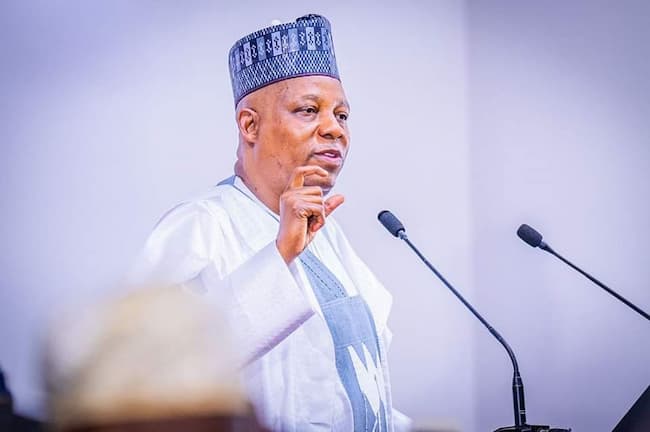
Vice-President Kashim Shettima has called for greater participation by women and young people in enterprise, investment and innovation, saying their economic contributions will be essential to Nigeria’s ambition of building a $1 trillion economy.
Shettima spoke on Wednesday at the Aspire Women Forum masterclass in Abuja, themed “From Survival to Thriving: Empowering Women and Youth for Export Readiness, Global Market Access and Prosperity under the Renewed Hope Agenda”.
He was represented at the event by Inna Binta Audu, Special Assistant to the President on Humanitarian Affairs and Development Partners.
The Vice-President described the transition from survival to thriving as an economic necessity and a national development priority. He said the success of the programme should be measured by improvements in businesses, access to new markets and the livelihoods of participants, rather than attendance figures alone.
“The true measure of this masterclass will not be the number of people in this hall, but the number of businesses that become stronger.
“This also includes the number of entrepreneurs who reach new markets and the number of livelihoods transformed by what is learnt here,” he said.
Shettima said President Bola Tinubu’s Renewed Hope Agenda was built around productive enterprise, investment, innovation and Nigerians’ ability to create value.
He added that government could not achieve the proposed $1 trillion economy without an environment that allowed businesses to start, grow, compete and contribute to national development.
The Vice-President said stronger participation by women and young people could increase production, improve household incomes, create employment and widen opportunities for future generations.
However, he stressed that economic inclusion must go beyond training programmes and empowerment announcements to provide access to the resources and markets people need to earn sustainable incomes.
“It must mean access to the tools, institutions and markets that enable people to convert their skills into sustainable income,” he said.
Shettima commended Aspire Women Forum founder, Dr Zainab Marwa, and the organisation’s partners for convening the masterclass.
Earlier, Marwa said many Nigerians spent long hours farming, sewing, processing food, manufacturing goods and providing services but retained little income at the end of each month.
She attributed the problem partly to weak business records, lack of registration, unsuitable financing arrangements, poor packaging and limited access to buyers.
Marwa acknowledged government efforts to support businesses through initiatives including intervention financing from the Bank of Industry, alongside programmes focused on skills development and digital enterprise. She said the masterclass was designed to help participants understand and access available opportunities.
She also disclosed that the forum had extended participation to young men, alongside women and young women, recognising that unstable incomes affect entire households.
According to her, a dedicated Aspire team would maintain communication with participants and provide referrals and further learning opportunities beyond the masterclass.
Marwa thanked Shettima for the support his office provided to the initiative. She also acknowledged Ngozi Okonjo-Iweala, Director-General of the World Trade Organisation, saying a meeting with her in Geneva had strengthened her resolve. She further commended Queen Onyinye Okpa, founder of Women in Agribusiness, Trade and Export, and other supporters.
THE ISSUES
The central challenge raised at the masterclass is the gap between working hard and earning enough from a business. A farmer, food processor or clothing maker may produce goods regularly but still struggle to increase income if the business lacks reliable buyers, proper records, suitable packaging or access to finance.
These weaknesses can also prevent small businesses from entering export markets. International buyers need suppliers who can meet agreed quality standards, package products appropriately, provide the required documentation and deliver consistently. Without these capabilities, having a product to sell does not automatically translate into export earnings.
Access to finance is another part of the problem. Businesses that lack reliable records or formal registration may find it harder to demonstrate their performance and qualify for financing. Even where government support exists, entrepreneurs need to understand the requirements and determine whether the available financing suits their operations.
Shettima’s emphasis on practical access to resources and markets therefore points to a distinction between teaching people business skills and helping them turn those skills into income. Training can provide knowledge, but businesses also need finance, customers and the ability to meet market requirements.
The forum’s proposed follow-up support could help participants navigate available opportunities. However, the source material does not specify the number of businesses expected to benefit, the financing available through the initiative or measurable targets for exports and income growth.
WHAT’S BEING SAID
“The true measure of this masterclass will not be the number of people in this hall, but the number of businesses that become stronger.
This also includes the number of entrepreneurs who reach new markets and the number of livelihoods transformed by what is learnt here,” – Kashim Shettima, Vice-President of Nigeria.
“Our ambition to build a one-trillion-dollar economy cannot be realised by government alone.
It requires an ecosystem in which businesses can emerge, grow, compete and contribute to national development.” – Kashim Shettima, Vice-President of Nigeria.
“It must mean access to the tools, institutions and markets that enable people to convert their skills into sustainable income,” – Kashim Shettima, Vice-President of Nigeria.
WHAT’S NEXT
The Aspire Women Forum says its engagement with participants will continue after the masterclass through communication, referrals and further learning opportunities.
The practical test will be whether participants can use the knowledge gained to improve their business records, formalise their operations where necessary, prepare products for export and connect with buyers and suitable financing.
The source material does not provide a timeline for the follow-up programme or specific targets for the number of businesses expected to enter new markets.
BOTTOM LINE
Nigeria’s $1 trillion economic ambition will require more than training entrepreneurs. Women and young people need the finance, business support and market access to turn their skills and products into sustainable income. The impact of the Aspire Women Forum initiative will depend on whether participants can translate what they learn into stronger businesses and new commercial opportunities.
Source: News Agency of Nigeria (NAN)