










KEY POINTS
- WHO says COVID 19 killed at least 20 million people and caused more than $10 trillion in economic losses.
- Tedros says the next pandemic is a matter of when, not if.
- WHO has introduced 12 initiatives to strengthen global health security since COVID 19.
- Countries are still negotiating the Pathogen Access and Benefit Sharing system under the WHO Pandemic Agreement.
MAIN STORY
The World Health Organization (WHO) has urged countries to apply lessons from the COVID 19 pandemic and strengthen preparations for future global health emergencies.
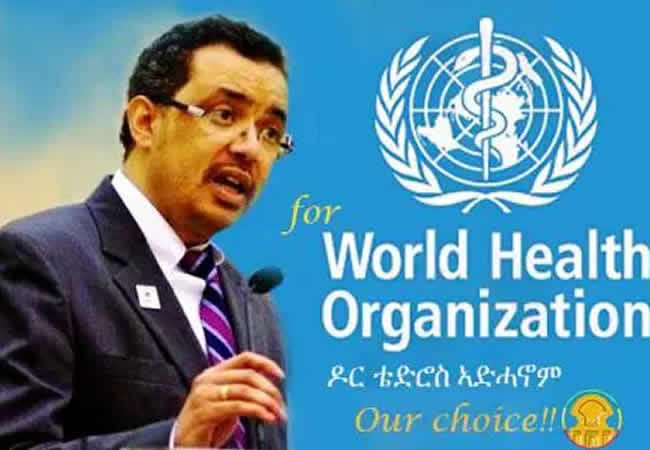
WHO Director General, Dr Tedros Ghebreyesus, made the call on Friday during an online news conference, describing COVID 19 as the most severe global health crisis in a century.

He said the pandemic killed at least 20 million people and caused more than $10 trillion in losses to the global economy, while exposing weaknesses in global health security and worsening existing vulnerabilities.
According to Tedros, the experience demonstrated that countries cannot afford to treat pandemic preparedness as a temporary priority.
He said the next pandemic would come at some point, making preparation a question of when rather than whether another major outbreak would occur.
Tedros pointed to the ongoing Bundibugyo Ebola virus disease outbreak in the Democratic Republic of the Congo as evidence that outbreaks can emerge in any location and pose risks beyond national borders.
He also cited the recent hantavirus outbreak aboard the MV Hondius, saying the incident demonstrated the need for countries to work together when health threats cross borders. He said cooperation between countries and partners, including Spain, helped bring the outbreak under control.
Since the COVID 19 pandemic, WHO has established 12 initiatives covering six major areas of global health security, according to Tedros.
Among them is the Pandemic Fund, established with the World Bank to strengthen financing for preparedness, alongside the Universal Health and Preparedness Review, which is intended to strengthen national preparedness capacities.
WHO also established the WHO Hub for Pandemic and Epidemic Intelligence in Berlin to improve disease surveillance and early warning systems.
Efforts to expand access to vaccines and other health technologies include COVAX, the mRNA Technology Transfer Programme and the Biomanufacturing Workforce Training Initiative.
The organisation also established the BioHub in Switzerland to facilitate international sharing of pathogen samples, while the Global Health Emergency Corps was created to strengthen countries’ capacity to respond to health emergencies.
Tedros noted that member states adopted amendments to the International Health Regulations in 2024, strengthening the international legal framework for pandemic prevention, preparedness and response.
They subsequently adopted the WHO Pandemic Agreement in 2025, which he described as a landmark international legal instrument for strengthening global pandemic preparedness.
The remaining component is the Pathogen Access and Benefit Sharing system, which member states are negotiating as part of the pandemic preparedness framework.
Tedros expressed confidence that countries would resolve their outstanding differences and reach an agreement on the system, which he said was necessary for countries to begin ratifying the Pandemic Agreement and for the agreement to enter into force.
He also rejected claims that the Pandemic Agreement represents a transfer of national sovereignty to WHO, describing such claims as misinformation.
According to him, the agreement was negotiated and adopted by sovereign countries acting in their own national interests. He said the cross border nature of pandemic threats made cooperation necessary.
Tedros said a system in which countries responded to pandemics individually would not work, adding that the same principle was reflected in the political declaration under consideration at the UN high level meeting.
He said the declaration contains commitments to concrete, measurable and urgent action to close existing gaps in pandemic prevention, preparedness and response.
Tedros thanked WHO member states for their commitment and commended Armenia and Rwanda, which co chaired the negotiations on the political declaration.
He said WHO was looking forward to the adoption of the declaration and would support countries in implementing the commitments they make.
THE ISSUES
- COVID 19 demonstrated the scale of the human and economic consequences that can result from inadequate pandemic preparedness, with the WHO putting the death toll at at least 20 million and the economic losses at more than $10 trillion.
- The health threats cited by Tedros extend beyond COVID 19. The Ebola outbreak in the Democratic Republic of the Congo and the hantavirus outbreak aboard the MV Hondius were presented as examples of how outbreaks can create risks that cross national borders.
- WHO’s post COVID 19 response has focused on surveillance, financing, vaccine access, pathogen sharing and emergency response capacity through 12 initiatives covering six areas of global health security.
- The Pathogen Access and Benefit Sharing system remains a key unresolved element of the pandemic preparedness framework. Its completion is linked to the process of ratifying and bringing the WHO Pandemic Agreement into force.
WHAT’S BEING SAID
“The next pandemic was not a question of if it would occur, but when.” – Dr Tedros Ghebreyesus, WHO Director General
“Shared threats require shared responses. – Dr Tedros Ghebreyesus, WHO Director General
“An approach in which every country acted alone would not work against pandemics. – Dr Tedros Ghebreyesus, WHO Director General
WHAT’S NEXT
Countries are expected to continue negotiations on the Pathogen Access and Benefit Sharing system, while WHO prepares to support member states in implementing commitments contained in the political declaration under consideration at the UN high level meeting.
BOTTOM LINE
WHO is urging countries to treat pandemic preparedness as a sustained global priority rather than a response activated only during major outbreaks. Tedros said stronger international cooperation and completion of the remaining pandemic preparedness framework are necessary to prepare for future health emergencies.








 has urged countries to apply lessons from the COVID 19 pandemic and strengthen ...)