









By Boluwatife Oshadiya | July 27, 2026
Key Points
- The Federal Government says the AfCFTA Domestication Bill will provide the legal framework for Nigeria to maximise continental trade opportunities.
- Minister of Industry, Trade and Investment, Dr Jumoke Oduwole, says the legislation will strengthen investor confidence, policy coordination and Nigeria’s enforcement of AfCFTA obligations.
- The House of Representatives says the bill aligns with efforts to improve the ease of doing business and support President Bola Tinubu’s economic reform agenda.
Main Story
The Federal Government has described the African Continental Free Trade Area (AfCFTA) Domestication Bill as a critical piece of legislation needed to position Nigeria to take full advantage of Africa’s single market while protecting the country’s economic interests.
Speaking on Monday during a public hearing on the bill in Abuja, the Minister of Industry, Trade and Investment, Dr Jumoke Oduwole, said the proposed legislation would establish the legal framework for the effective implementation of Nigeria’s commitments under the AfCFTA agreement.
According to Oduwole, the bill will improve transparency and predictability for investors and businesses while strengthening Nigeria’s ability to fulfil its obligations and enforce its rights under the continental trade pact.
“It is clear that the AfCFTA Domestication Bill before us is both timely and necessary. The Bill is not merely about implementing an international treaty. It is about positioning Nigeria to fully harness the opportunities of continental trade while safeguarding our national interests,” Oduwole said.
She noted that the legislation supports President Bola Tinubu’s Renewed Hope Agenda by promoting economic diversification, industrialisation, export expansion, investment promotion and job creation. She added that the Ministry would continue working closely with the National Assembly throughout the legislative process to ensure an effective implementation framework.
Speaker of the House of Representatives, Rep. Abbas Tajudeen, represented by the Deputy Chief Whip, Rep. Isiaka Ibrahim, said the public hearing reflected the House’s commitment to transparent and participatory lawmaking. He said stronger commercial laws are essential to improving Nigeria’s investment climate, encouraging entrepreneurship and enhancing the country’s global competitiveness.
Chairman of the House Committee on Commerce, Rep. Ahmed Munir, urged stakeholders from government, the private sector and civil society to provide constructive, data-driven recommendations to strengthen the bill before its passage.
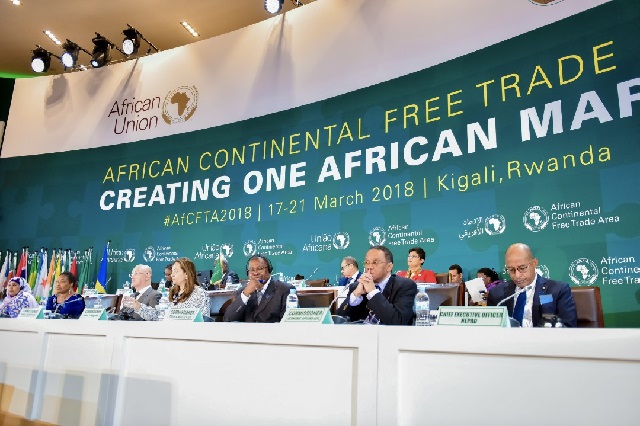
The AfCFTA, which officially commenced trading in January 2021, is the world’s largest free trade area by participating countries, bringing together 54 African nations into a single market aimed at boosting intra-African trade, industrialisation and economic integration.
What’s Being Said
“The Bill will provide the legal basis for coordinated implementation across government institutions and help Nigeria fully harness the opportunities of continental trade while safeguarding our national interests,” — Dr Jumoke Oduwole, Minister of Industry, Trade and Investment.
“As Nigeria pursues economic diversification and greater competitiveness, we must ensure that our commercial laws are responsive to emerging realities, technological advancement and international best practices,” — Rep. Abbas Tajudeen, Speaker of the House of Representatives, represented by Rep. Isiaka Ibrahim.
What’s Next
- The House Committee on Commerce will review submissions from stakeholders before presenting its recommendations to the House of Representatives.
- If passed by the National Assembly and signed into law, the AfCFTA Domestication Bill will provide the legal framework for implementing Nigeria’s obligations under the continental trade agreement.
- The legislation is expected to support Nigerian businesses, particularly small and medium-sized enterprises (SMEs), seeking greater access to African markets under the AfCFTA.
Bottom Line
The Bottom Line: Nigeria has been a signatory to the AfCFTA for several years, but effective implementation has remained constrained by the absence of a comprehensive domestic legal framework. If enacted, the AfCFTA Domestication Bill could strengthen policy certainty, improve investor confidence and better position Nigerian businesses to compete in Africa’s rapidly expanding single market.










 Domestication Bill as a critical piece of legislation..)